
Summary
The cleaning industry is a vital and rapidly expanding sector that encompasses a wide range of services aimed at maintaining cleanliness, hygiene, and safety across residential, commercial, and industrial environments. Driven by increasing awareness of workplace hygiene, sustainability concerns, and employee wellness, the industry includes traditional tasks such as floor, upholstery, carpet, and window cleaning, alongside specialized offerings like disaster cleanup and facility organization. As a fundamental contributor to public health and operational efficiency, the cleaning sector plays a crucial role in ensuring sanitary conditions in offices, hospitals, schools, and manufacturing facilities worldwide.
Globally, the contract cleaning service market was valued at approximately USD 384 billion in 2024 and is projected to grow at an annual rate of 6.4% through 2030, with the broader cleaning services market expected to reach over USD 730 billion by 2032. This growth is fueled by factors such as technological advancements, rising hygiene standards post-pandemic, expansion of commercial infrastructure, and increasing demand for sustainable cleaning solutions. Emerging markets in Asia Pacific, South America, the Middle East, and Africa are experiencing notable growth driven by urbanization and rising disposable incomes.
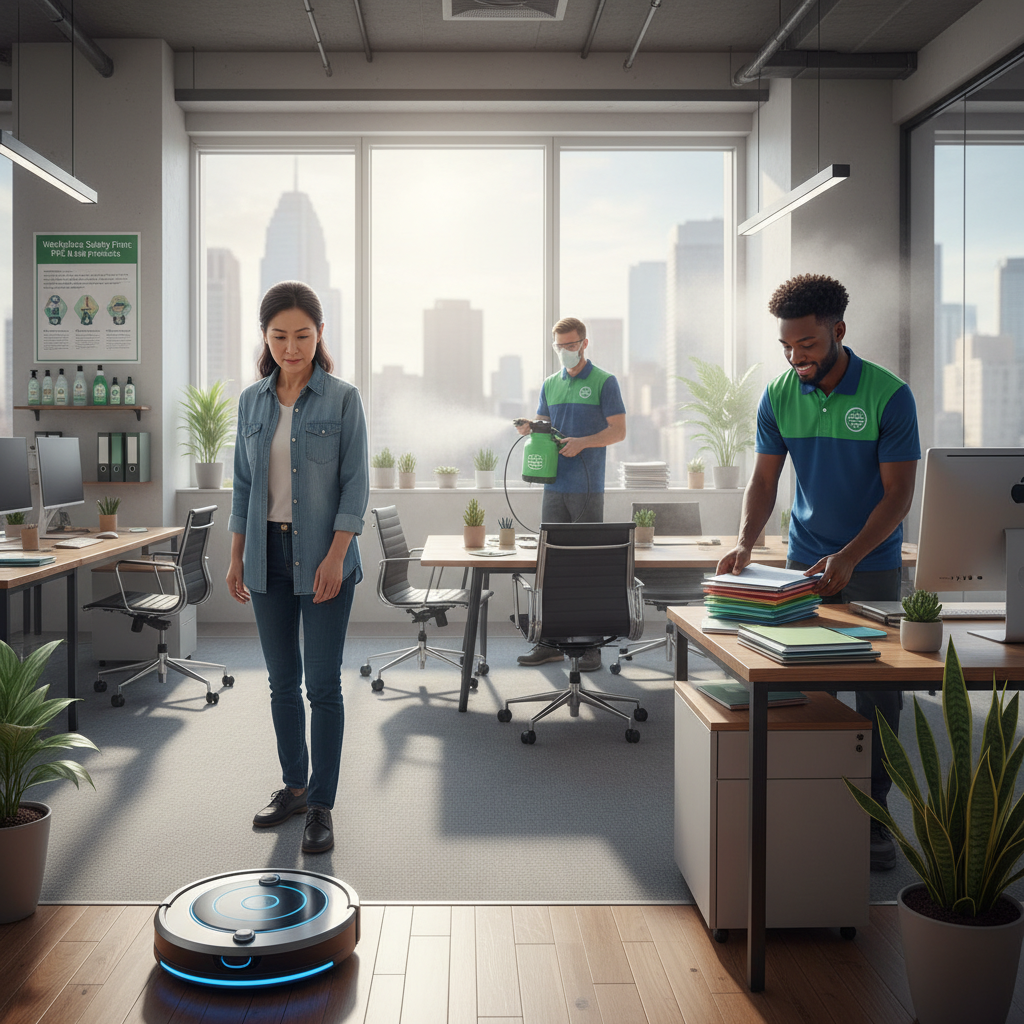
Technological innovation is reshaping the industry, with robotics, artificial intelligence (AI), automation, and Internet of Things (IoT) technologies enhancing cleaning efficiency, precision, and sustainability. Automation tools, including robotic vacuums and electrostatic sprayers, are transforming traditional cleaning operations, reducing labor intensity while allowing workers to focus on higher-skill tasks. Simultaneously, green cleaning practices emphasizing eco-friendly products and certifications are gaining prominence, reflecting a broader commitment to environmental responsibility and human health.
Despite its growth, the cleaning industry faces challenges such as workforce shortages, high employee turnover, rising material costs, and complexities in adopting advanced technologies. Companies are responding with increased employee training, safety programs, and investments in innovative tools to improve retention and operational efficiency. Business models are also evolving, with franchise, subscription-based, and on-demand services providing entrepreneurs diverse opportunities to enter and expand in the market. As the industry continues to evolve, its integration of sustainability and technology positions it as a key contributor to healthier, safer environments worldwide.
Overview of the Cleaning Industry
The cleaning industry is experiencing significant development driven by increasing awareness of workplace hygiene, sustainability concerns, and employee wellness. Cleaning services encompass a range of activities, including floor, upholstery, carpet, and window cleaning, primarily offered by commercial and industrial enterprises to maintain clean and healthy environments. This sector plays a vital role in ensuring sanitation and organization across various settings, with some companies specializing in niche areas such as facility organization, furniture or rug cleaning, and handling large-scale cleanups following natural disasters.
The global contract cleaning service market was valued at approximately USD 383.99 billion in 2024 and is projected to grow at an annual rate of 6.4% from 2025 through 2030. Growth drivers include technological advancements in cleaning equipment, rising hygiene awareness, and an increase in residential and commercial construction activities. However, the industry has faced challenges such as workforce shortages and supply chain disruptions caused by the closure of industries and strict border restrictions, which temporarily hindered market progress.
Sustainability is becoming a central focus in the cleaning industry, with certifications providing credibility to products and services claiming eco-friendly status. These certifications set rigorous standards for environmental impact and safety, enabling facility managers and cleaning companies to make informed decisions that align with sustainability goals and consumer expectations. The environmental assessment process inherent to these certifications ensures that products meet strict benchmarks, fostering trust in green cleaning solutions.
Technological innovation is reshaping the cleaning sector. The integration of robotics, artificial intelligence (AI), and automation is transforming traditional cleaning methods by enhancing efficiency, precision, and sustainability. Robotic vacuum cleaners and automated floor scrubbers are examples of how these technologies are revolutionizing cleanliness in commercial and industrial settings. This digital transformation is expected to continue, influencing workforce dynamics and operational models within the industry.
Additionally, franchise opportunities provide entrepreneurs with proven business models and brand-building potential, supported by detailed market analysis and forecasts that highlight regional variations and growth prospects from 2025 to 2029. Financing growth remains a critical consideration for companies expanding in this sector; while traditional bank loans are common, private equity financing is sometimes pursued by large firms aiming to fund major expansions, albeit with higher risks and demands for control.
Types of Cleaning Services
The cleaning industry encompasses a wide range of specialized services aimed at maintaining cleanliness, hygiene, and safety in various environments. These services are typically categorized based on the nature of the cleaning tasks, the type of facility, and the specific needs of clients.
Residential Cleaning
Residential cleaning services cater to homes, offering routine cleaning to keep living spaces tidy and hygienic. This segment typically requires less capital investment compared to commercial cleaning but emphasizes recurring service contracts for stable revenue.
Specialized Cleaning Services
Some cleaning companies specialize in niche areas such as furniture cleaning, rug maintenance, or responding to large-scale messes like those caused by natural disasters. These services require specific expertise and equipment to effectively address unique cleaning challenges.
Commercial and Industrial Cleaning
Commercial and industrial cleaning services focus on large-scale cleaning operations in workplaces such as offices, factories, hospitals, and schools. These services include floor cleaning, upholstery and carpet care, window washing, and general sanitation to create a healthy and safe environment for employees and visitors. Industrial cleaning, in particular, often involves more advanced technology and equipment to handle the rigorous demands of manufacturing and production facilities.
On-Demand Cleaning Services
On-demand cleaning services provide flexible solutions for clients with fluctuating needs, such as offices with varying occupancy levels. This model allows businesses to maintain cleanliness efficiently without committing excessive resources.
Green and Sustainable Cleaning
Increasingly, the cleaning industry is adopting environmentally responsible practices. Green cleaning utilizes sustainable products and methods that minimize ecological impact while ensuring effective sanitation. This trend is driven by growing awareness of environmental issues and client demand for eco-friendly solutions.
Technology-Driven Cleaning Services
Recent advancements have transformed cleaning services through automation and innovative equipment. Automated floor cleaners, hands-free vacuum systems, scrubber dryers, electrostatic sprayers, UV-C disinfection tools, and autonomous robots enhance efficiency, reduce labor costs, and improve cleaning quality. These technologies also contribute to safer, greener, and more sustainable cleaning operations.
Facility-Specific Cleaning
Certain large-scale facilities, including resorts, theme parks, and healthcare institutions, require extensive and tailored cleaning operations to maintain operational readiness and provide exceptional visitor experiences. These projects often employ comprehensive cleaning strategies integrating advanced technologies and specialized expertise.
Career Opportunities and Workforce
The cleaning industry offers a wide array of career opportunities that extend beyond traditional janitorial roles. Positions range from housekeeping and landscaping for residential areas to specialized roles such as carpet cleaners, pressure washers, and floor buffers, all contributing to the comprehensive maintenance of buildings and outdoor environments. This diversity allows workers to find roles that align with their skills and interests, whether in schools, hospitals, corporate offices, or industrial settings.
A key characteristic of the cleaning workforce is the relatively low barrier to entry. Most janitorial and building cleaning jobs require minimal formal education, often only a high school diploma or equivalent, with on-the-job training being the primary method of skill development. Despite this, interpersonal skills and the ability to interact effectively with clients and coworkers remain crucial for success in these roles. For those seeking to advance their careers, numerous certifications and training programs exist. Certifications such as the Certified Custodial Technician (CCT) and those offered by the Cleaning Management Institute provide specialized knowledge in areas like safety, chemistry of cleaning, and restoration techniques. OSHA training is also commonly pursued to ensure workplace safety and proper handling of hazardous materials.
Employee retention is an ongoing challenge within the cleaning sector, particularly in light of broader workforce shifts such as The Great Resignation. High turnover rates lead companies to invest in their employees through wage increases, benefits, and other incentives to maintain a stable workforce. This focus on employee welfare also requires businesses to adjust pricing strategies to sustain profitability. Additionally, the industry offers significant scheduling flexibility, with many part-time and freelance opportunities allowing workers to balance employment with personal commitments or other interests.
Emerging trends and innovations, such as robotics, building information modeling (BIM), and cloud-based management software, are transforming the cleaning industry and opening new avenues for workforce development and client engagement. Moreover, certifications emphasizing green and sustainable cleaning practices are gaining prominence, reflecting the growing importance of environmental responsibility in the sector. These certifications not only enhance job prospects but also help facilities improve health outcomes and operational efficiencies.
Business Models and Opportunities
The cleaning industry offers diverse business models tailored to varying entrepreneur needs, primarily including franchise, independent, on-demand, and subscription-based services. Each model presents unique advantages that align with different levels of control, support, and brand recognition, which entrepreneurs should consider to meet their long-term goals and operational strategies.
Franchise opportunities in cleaning services provide a proven business model with brand-building potential while lowering the risks associated with starting from scratch. Compared to other industries, cleaning franchises typically require lower initial fees and investments, making market entry more accessible for new entrepreneurs. Franchisees benefit from established operational systems, marketing support, and customer trust, which can accelerate growth and profitability.
Independent cleaning businesses, by contrast, offer greater control and flexibility but may require more effort in brand development and customer acquisition. Success in this model depends on implementing effective strategies that optimize operations, enhance customer satisfaction, and improve profitability.
The on-demand cleaning service model caters to clients with fluctuating needs, such as offices with changing occupancy levels, offering flexible and cost-effective solutions without overcommitting resources. This model supports stable recurring revenue streams by ensuring consistent cleanliness tailored to client schedules.
Subscription-based and bundled service models are gaining traction, especially in regions like Asia Pacific, where urbanization and hygiene awareness are rising. Providers increasingly utilize cloud-based scheduling and customer management software to enhance client experience and operational efficiency. This technology-driven approach facilitates proactive contract renewals, upselling opportunities such as disinfection services, and overall improved customer engagement.
Geographically, significant growth is observed in South America, the Middle East, Africa, and Asia Pacific, driven by rising disposable incomes, fast-paced lifestyles, and increased demand for professional cleaning to maintain hygienic environments. Key players in the market focus on technological innovation, strategic partnerships, and business expansion to secure competitive advantages in these regions.
Moreover, digital marketing through social media platforms such as Facebook, TikTok, LinkedIn, Twitter, Instagram, and YouTube plays a vital role in increasing brand awareness and customer loyalty. These platforms provide direct communication channels between cleaning businesses and clients, fostering stronger relationships and driving market growth globally.
Technological Advancements and Innovation
The cleaning industry has undergone a significant transformation driven by technological advancements and innovation, reshaping how cleanliness is maintained while improving efficiency, sustainability, and service quality. One of the most impactful developments has been the introduction of automation. Traditionally reliant on manual labor with basic cleaning agents like soap and disinfectant, the industry now employs technologically advanced floor cleaners, hands-free vacuum cleaners, and scrubber dryers that can perform many common tasks autonomously. This shift not only reduces labor costs but also enhances environmental protection by minimizing pollutants and conserving water—an important factor in arid regions.
Robotics plays a central role in this technological evolution. Autonomous sweepers, robotic vacuums, and scrubbers are increasingly deployed in large commercial spaces such as office buildings, shopping malls, and warehouses. These machines are equipped with advanced sensors and mapping technologies that allow them to navigate around obstacles and clean hard-to-reach areas efficiently on scheduled routines with minimal human intervention. Collaborations with technology leaders like Qualcomm, NVIDIA, and Intel have accelerated the development of smart, responsive robotic cleaners designed with sustainability in mind. This integration of robotics not only streamlines repetitive cleaning tasks but also frees workers to focus on more complex responsibilities, contributing to improved productivity and workforce advancement opportunities.
The Internet of Things (IoT) and artificial intelligence (AI) are further revolutionizing the industry by enabling smart system cleaning solutions. Sensors embedded within machines and facilities collect real-time data on cleaning performance and environmental conditions. This data can be analyzed by AI to predict cleaning needs, optimize resource allocation, and personalize cleaning protocols tailored to specific areas within a facility. Energy-efficient cleaning equipment now incorporates sensors that adjust operations based on dirt levels, optimizing energy use and maintaining consistent hygiene standards with minimal manual input.
Innovation in cleaning products also aligns closely with sustainability and health concerns. Green cleaning solutions use naturally derived ingredients such as essential oils and plant-based surfactants that are effective while reducing human and environmental health impacts. These biodegradable materials help create safer indoor environments and reduce chemical pollution. In addition, advanced floor finish technologies, including those curable by ultraviolet light, have redefined floor maintenance by enhancing durability and safety.
The integration of these cutting-edge technologies has transformed customer expectations, demanding higher levels of cleanliness and environmental responsibility. Many commercial cleaning companies now leverage data-driven insights and on-demand service models to adapt to fluctuating client needs, ensuring cost-effective and flexible cleaning solutions. By embracing these innovations, businesses in the cleaning industry gain a competitive edge, improve client satisfaction, and contribute to healthier, greener spaces.
Impact of Technology on Employment
The integration of technology, particularly robotics, artificial intelligence (AI), and the Internet of Things (IoT), is significantly transforming employment within the cleaning industry. Rather than displacing workers, these innovations are reshaping job roles and creating new opportunities for employee engagement and productivity. Automation can handle repetitive and routine cleaning tasks more efficiently, enabling workers to focus on higher-impact activities that contribute to a company’s bottom line.
Employees in the cleaning industry are increasingly required to adapt by acquiring new skills, such as operating and maintaining robotic cleaning equipment and utilizing IoT-enabled systems. This upskilling allows workers to collaborate with advanced technologies, ensuring their roles remain relevant and valuable as the industry evolves. Additionally, the use of innovative cleaning tools—such as electrostatic sprayers, UV-C disinfection devices, and autonomous robots—has become more widespread, demanding continuous learning and flexibility from cleaning personnel.
Moreover, the rise of IoT technology is driving unprecedented operational insights and efficiency improvements, further optimizing resource use and streamlining processes across cleaning operations. While some fear automation might threaten jobs, the greater risk lies in companies failing to adapt and remain competitive. When implemented effectively, technology supports workforce productivity and can lead to enhanced job satisfaction by reducing physical strain and monotony.
Environmental Sustainability and Green Cleaning
Green cleaning represents a growing movement within the cleaning industry that prioritizes environmental sustainability and human health by using natural, non-toxic substances and reducing waste. Unlike traditional cleaning methods, which often rely on harsh chemicals and disposable materials, green cleaning employs reusable tools such as cloths and plant-based surfactants to minimize environmental harm and promote a healthier indoor environment. This approach not only ensures cleaner spaces but also contributes to protecting the planet for future generations by cutting down on pollution and waste.
A significant aspect of green cleaning is the emphasis on biodegradable ingredients that break down into harmless components, reducing ecological impact. Essential oils and other naturally derived cleaning agents provide effective cleaning power without compromising safety, offering a healthier alternative to conventional chemical-laden products. Moreover, green cleaning practices generally require more manual effort and the use of eco-friendly tools, reflecting a holistic mindset focused on sustainability and wellness rather than solely on removing dirt and germs.
To help consumers and organizations identify genuinely eco-friendly products, various green certifications have been established. Certifications such as Green Seal and UL’s ECOLOGO verify that products meet rigorous environmental and performance standards, including lifecycle testing to ensure reduced environmental impact from production to disposal. These certifications are vital in distinguishing authentic green products from those merely marketed as “eco-friendly,” providing transparency and credibility that support informed purchasing decisions.
Beyond product validation, green certifications carry additional benefits for facilities and businesses. Certified green cleaning practices can lead to lowered insurance premiums, reduced legal risks,
Industry Challenges and Solutions
The cleaning services industry faces several significant challenges that impact its growth and operational efficiency. Key issues include high labour turnover, skill gaps among workers, rising material costs, and the complexity involved in integrating advanced technologies into cleaning operations. These challenges can hinder companies from scaling effectively and maintaining service quality.
Labour turnover remains a critical concern due to the physically demanding nature of cleaning jobs, which often require prolonged periods of standing, lifting heavy objects, and repetitive movements. Maintaining the physical health and endurance of cleaning staff is essential to meet job demands and reduce turnover rates. Additionally, skill gaps, particularly in safety procedures and handling sophisticated equipment, necessitate ongoing training and certification to ensure workforce competence and compliance with occupational health standards.
To address these issues, industry players are increasingly adopting innovative technologies such as electrostatic sprayers, UV-C disinfection methods, autonomous cleaning robots, and IoT-enabled systems. These advancements not only improve cleaning effectiveness but also reduce manual labor, helping to alleviate workforce challenges. However, the integration of such technologies requires strategic planning and training to overcome complexity and maximize benefits.
Another notable challenge is the rising cost of cleaning materials. Companies are shifting towards green and eco-friendly products, which often come with certification requirements that guarantee safety, sustainability, and operational reliability. Certifications from organizations like EPA Safer Choice, ECOLOGO, and Green Seal help companies ensure product transparency and reduce legal and insurance risks while promoting environmentally responsible practices. These certifications also open access to grants and incentive programs aligned with sustainable operations and green building initiatives.
Safety remains a paramount concern in the industry. Proper knowledge of safety procedures, especially when handling chemicals or operating equipment, is non-negotiable. Implementing robust safety training programs helps protect workers and reduce workplace accidents, contributing to lower insurance premiums and improved employee retention.
Despite these challenges, the cleaning industry offers opportunities for flexibility, including part-time and freelance work, enabling individuals to balance personal commitments with employment. Furthermore, companies leveraging data-driven market analyses can identify emerging risks and niches—such as specialty services and sustainable product lines—to adapt and thrive in evolving market conditions.
Market Trends and Future Outlook
The cleaning industry is experiencing robust growth driven by various macroeconomic and social factors. Globally, the cleaning services market size is projected to increase from approximately $451.63 billion in 2025 to $734.17 billion by 2032, reflecting a compound annual growth rate (CAGR) of 7.19%. The contract cleaning service segment alone was valued at around $383.99 billion in 2024 and is expected to grow at a CAGR of 6.4% from 2025 to 2030. This expansion is fueled by rising awareness of workplace hygiene, employee wellness, and sustainability concerns, especially in commercial and industrial sectors.
Key drivers include the expansion of real estate and commercial infrastructure, particularly in the U.S. and India, which generate greater demand for cleaning services. Additionally, post-pandemic hygiene awareness has intensified the need for sanitation across hospitals, offices, and public venues, further propelling market growth. Emerging regions such as South America, the Middle East, Africa, and Asia Pacific are witnessing significant demand due to rising disposable incomes, fast-paced lifestyles, and government-backed infrastructure initiatives.
Innovation and technology adoption are transforming the industry landscape. Leading companies are focusing on sustainable cleaning products, labor-saving equipment, and digital tools such as IoT-enabled systems, robotics, and AI to improve efficiency and meet evolving client needs. For instance, autonomous cleaning robots, electrostatic sprayers, and UV-C disinfection technologies are increasingly being integrated into service offerings to enhance productivity and hygiene standards.
The market is also witnessing a growing shift towards green cleaning methodologies. Unlike traditional cleaning, which often relies on harsh chemicals and disposable materials, green cleaning emphasizes the use of natural, non-toxic substances such as essential oils and plant-based surfactants that are biodegradable and environmentally friendly. This approach not only promotes human health and environmental sustainability but also aligns with the rising consumer demand for eco-conscious services.
Furthermore, service providers are innovating business models to better suit customer expectations, including subscription-based services, bundled offerings, and cloud-based scheduling platforms, particularly in fast-growing markets like Asia Pacific. The hospitality sector’s expansion and increasing consumer expectations for cleanliness continue to be significant contributors to the industry’s economic impact, especially in regions like the U.S. where growth is expected at a CAGR of 5.6% from 2025 to 2030.
Looking ahead, the cleaning industry is poised for continued evolution driven by technological advancements, sustainability priorities, and expanding global infrastructure. Early adoption of these innovations is essential for service providers to maintain competitive advantage and support the growing demand for cleaner, healthier environments worldwide.
The content is provided by Avery Redwood, Front Signals