
Summary of New Glenn’s Challenges
Blue Origin’s New Glenn rocket, designed as a heavy-lift vehicle to compete in commercial spaceflight, suffered significant setbacks after a catastrophic failure during a May 2026 static fire test. The explosion, rooted in a helium tank rupture, led to extensive damage and a grounding of launches pending FAA approval. This incident compounds earlier issues, including previous underperformance in satellite deployments, raising doubts about New Glenn’s reliability and future timelines critical for both commercial and NASA missions.
Technical Overview
The New Glenn rocket integrates advanced manufacturing with a reusable first stage and an expendable upper stage. Despite its technological innovations, including an upper stage aimed to support lunar missions, recent failures have highlighted serious reliability concerns. Blue Origin, while emphasizing low-cost manufacturing, now faces additional scrutiny as the FAA mandates strict safety evaluations before future flights can occur.
Incident Details and Immediate Consequences
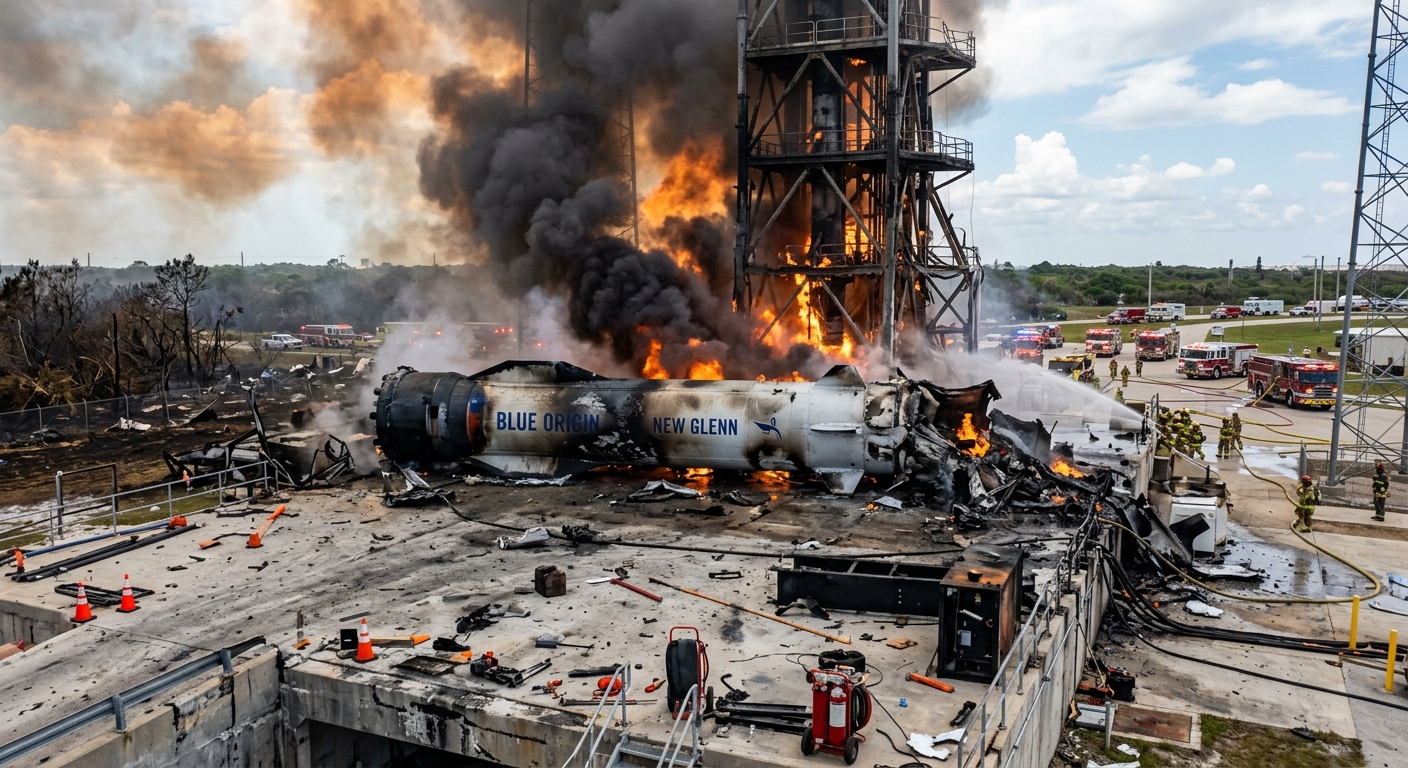
The unsettling events of May 28, 2026, involved a static fire test at Cape Canaveral where the rocket experienced a catastrophic failure. Following a successful ignition of the first-stage engines, a major explosion ensued, leading to the destruction of the launch vehicle and damage to the pad infrastructure. While no personnel were injured, the explosion prompted the FAA to launch an investigation, requiring comprehensive assessments before any resumption of flights.
Root Cause Analysis
The failure during the static fire test stemmed from a cryogenic leak caused by a rupture in a helium tank within the upper stage, which compromised hydraulic functions essential for thrust control. Detailed investigations confirmed these findings, indicating Blue Origin’s need to implement corrective actions focusing on the upper stage’s structural and propulsion integrity. The FAA has stipulated that Blue Origin must resolve all safety issues before returning to flight operations.
Regulatory and Safety Implications
With ongoing regulatory scrutiny following the test incident, Blue Origin must navigate a complex approval process established by the FAA. The company cannot resume launches until all findings from the FAA’s investigation are addressed. This entails transparency in disclosing root causes and implementing necessary safety measures, increasing the pressure for Blue Origin to enhance its safety protocols and communication strategies during crisis situations.
Impact on Future Operations
The recent explosion has severely affected Blue Origin’s operational timeline, significantly delaying its plans for satellite deployments and critical NASA missions. Nonetheless, the company remains committed to refining the New Glenn system with a production goal of 60 upper stages by 2028, indicative of continued faith in demand despite setbacks. Achieving successful operations in a tightly contested market will require overcoming immediate technical and regulatory challenges while ensuring robust safety standards.
Comparative Industry Context
Blue Origin’s strategic emphasis on careful development has increasingly contrasted with competitors like SpaceX, which utilize rapid iteration to drive frequent launches despite encountering failures. Current events underscore the complexities and inherent risks of aerospace innovation, irrespective of the chosen methodology. As Blue Origin seeks to resume flight operations, it will be critical to evaluate not only technological reliability but also how effectively it can respond to the challenges presented within its operational environment.
Looking Ahead
Despite the hurdles presented by the recent test failure, Blue Origin remains cautiously optimistic about the future of New Glenn. The successful resolution of safety concerns and implementation of corrective measures could enhance the rocket’s reliability and restore confidence among stakeholders. As the company continues to evolve its manufacturing practices and respond to the needs of both commercial clients and NASA, the path forward necessitates vigilance and a commitment to ongoing improvement in safety and operational readiness.
The content is provided by Blake Sterling, Front Signals