
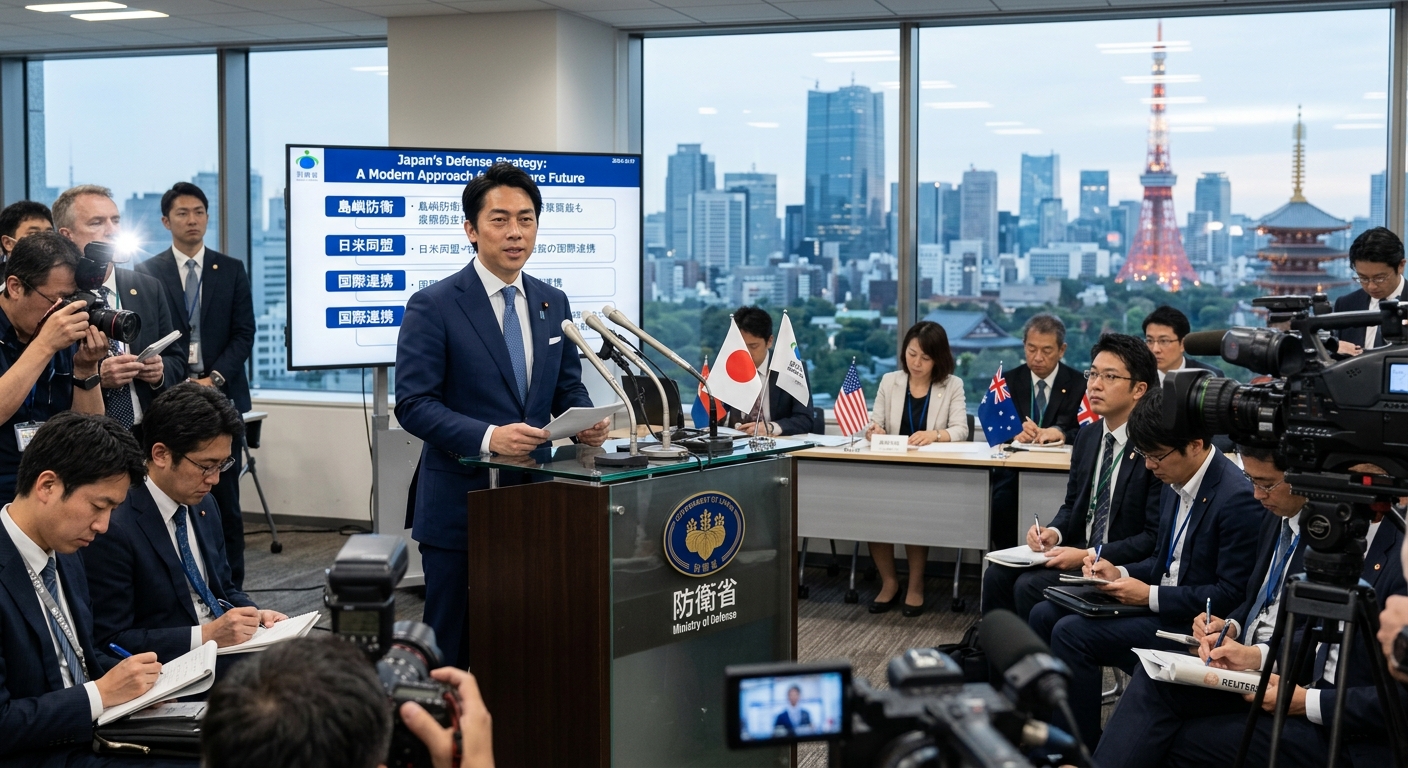
Overview of Japan’s Defense Policy Shift
Japan’s recent defense policy changes, spearheaded by Defense Minister Shinjiro Koizumi, aim to address regional threats while maintaining a defensive posture aligned with its pacifist constitution. The approval of key security documents in late 2022 facilitates a substantial increase in defense spending and capabilities, largely in response to China’s military expansion, North Korea’s missile tests, and geopolitical tensions stemming from the Ukraine conflict. While Koizumi rejects labels of “neo-militarism,” he emphasizes Japan’s commitment to transparency and adherence to international law, seeking to foster trust through dialogue with global partners.
Japan’s Justification for Increased Defense
The context of Japan’s defense enhancement reflects a significant public shift toward supporting greater military capabilities, with approval for increased spending rising significantly in recent years. This shift comes despite Japan’s historical pacifism, shaped by constitutional constraints that renounce war. Koizumi underscores that recent policy changes are not steps toward militarization but necessary measures in response to evolving security threats, reinforcing the notion that Japan’s defensive strategies aim to maintain regional stability and peace.
Rejection of Militarism Accusations
Koizumi has consistently denied accusations of Japan embracing “neo-militarism,” arguing such claims misrepresent Japan’s defensive needs. The Minister contrasts Japan’s military posture with that of China, noting Japan’s lack of offensive nuclear weapons, thereby asserting Japan’s commitment to pacifism within its constitutional framework. International concerns over Japan’s growing military capabilities are viewed by officials as politically motivated, reaffirming that Japan’s actions remain firmly defensive and within the bounds of international law.
Importance of Open Dialogue
Koizumi advocates for open dialogue to clarify Japan’s defense intentions, aiming to counter misunderstandings regarding its military policies. His interactions at international forums, such as the Shangri-La Dialogue, focus on partnerships and bilateral cooperation with nations like Australia and Indonesia. This approach aims to assure regional neighbors while reinforcing Japan’s commitment to collaborative security efforts, addressing both traditional and hybrid threats through enhanced multilateral frameworks.
Impacts on Regional Stability and Policy Evolution
Japan’s evolving defense strategies are a direct response to increasing regional security concerns, leading to a recalibration that includes bolstered defense spending and capabilities. The public’s support for enhanced military readiness reflects a recognition of threats from neighboring nations. However, balancing this assertiveness with pacifist traditions and public sentiment requires careful communication from the government, especially as Japan navigates complex international relations and the implications of potential preemptive strike capabilities.
Furthermore, Japan’s defense transformation may necessitate a rethinking of its defense industry strategy, signaling a shift toward greater self-reliance and technological advancements. This transformation underscores Japan’s intention to play a more proactive role in regional security, fostering collaborations designed to enhance stability within the Indo-Pacific while addressing constitutional and diplomatic sensitivities.
The content is provided by Blake Sterling, Front Signals