
Summary
The establishment of the Department of Justice’s (DOJ) $1.776 billion “Anti-Weaponization Fund” has sparked significant controversy following former President Donald Trump’s lawsuit settlement with the IRS. Intended for individuals claiming wrongful government targeting, critics quickly labeled the fund a potential “taxpayer-funded slush fund,” raising concerns about its implications for political accountability. Bipartisan backlash has ensued, with Senate Majority Leader Chuck Schumer vowing to block disbursements and investigate the fund’s approval process, amidst ongoing legal challenges hindered by a federal injunction preventing fund distribution.
Background and Purpose
The “Anti-Weaponization Fund” emerged from Trump’s settlement over accusations of improper tax information leaks, with the DOJ establishing it to compensate alleged victims of government “lawfare.” Acting Attorney General Todd Blanche asserted the fund was a lawful mechanism for redress. However, as it opened eligibility to a wide spectrum of claimants, its perceived misuse, particularly connected to controversial figures, incited sharp political criticism and legal hurdles aimed at halting its operation.
Political Landscape Post-2024 Elections
The 2024 elections shifted Senate dynamics, with Republicans regaining control and intensifying scrutiny of DOJ actions. This environment influenced discussions around the Anti-Weaponization Fund, as some Republican members expressed unease about its political ramifications. As Senate Majority Leader Chuck Schumer pledged to introduce measures to block the fund, the broader implications for accountability in government became increasingly contentious among lawmakers.
Efforts to Block the Fund
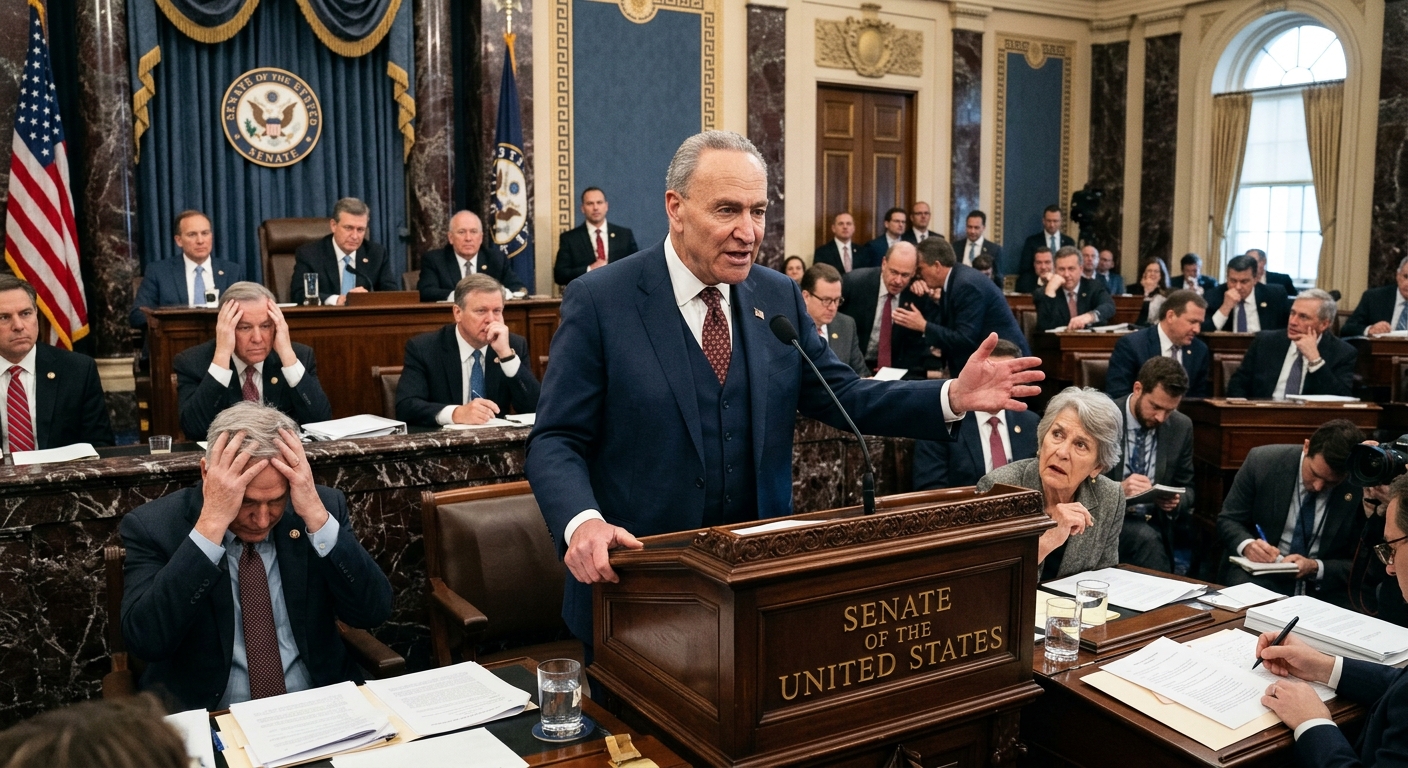
Schumer has committed to legislative maneuvers to halt the fund’s implementation. Plans include forcing Senate votes on amendments to block its disbursement, which Democrats insist must occur before any funds are allocated. The strategy reflects a growing concern over potential misuse of taxpayer money, revealing divisions within the GOP regarding support for the fund while underscoring Schumer’s commitment to aggressive legislative action to ensure accountability.
Legal and Procedural Challenges
Legal actions against the fund include a federal judge’s temporary injunction halting its disbursement, indicating significant legal scrutiny over its legitimacy. The controversies surrounding the fund’s broad eligibility have fueled debates about its intended use. Procedurally, Schumer’s plans to utilize Senate rules to compel votes signal a tactical approach to navigate potential resistance while addressing the fund’s ramifications within the ongoing legislative framework.
Political Responses
Scrutiny of the fund’s intentions has been fierce, with Schumer labeling it a serious ethical violation and ensuring no disbursements occur without rigorous oversight. As Democrats prepare for aggressive legislative action against the fund, they seek to hold all parties accountable, reflecting deep divisions in the Senate and a growing consensus on maintaining governmental integrity amidst accusations of misuse of executive powers.
Ongoing Developments
The ongoing legal and political discourse surrounding the fund reveals a complex interplay of power and governance. With procedural obstacles complicating its disbursement and Democrats vowing to challenge its existence at every turn, the fund continues to symbolize broader tensions regarding accountability and the use of government resources following the 2024 elections. The engagements within the Senate highlight the critical importance of maintaining checks on executive decisions that may risk politicizing the judiciary.
The content is provided by Harper Eastwood, Front Signals