
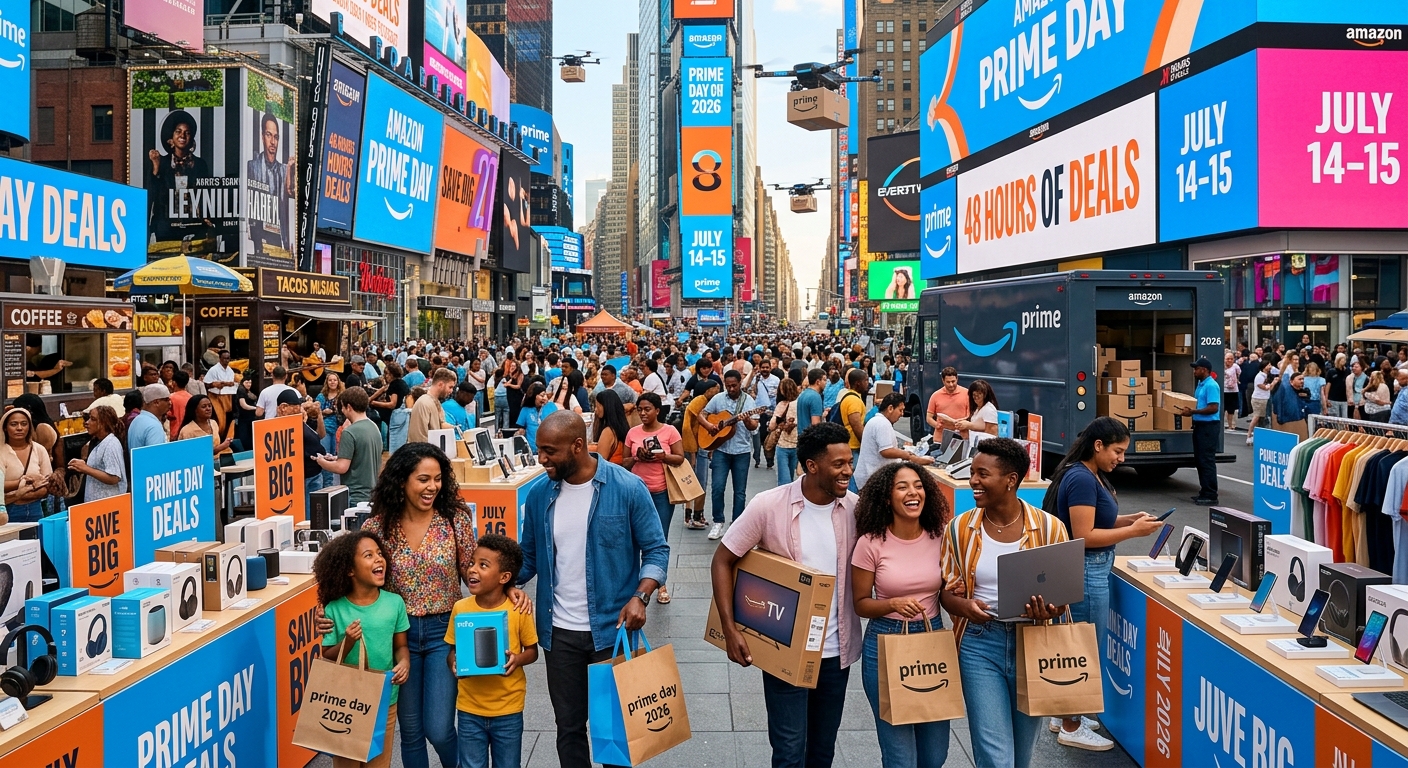
Summary of Prime Day
Amazon Prime Day is an annual shopping event exclusively for Prime members, offering substantial discounts across various product categories. Scheduled for June 23 to June 26, 2026, the event has evolved significantly since its launch in 2015, expanding to a four-day format to engage shoppers more effectively. Prime Day not only boosts sales significantly—over $12.9 billion in 2025—but also drives growth for Amazon Prime subscriptions and third-party sellers, while also raising challenges for sellers in logistics, profitability, and environmental impact.
Understanding Amazon Prime Day
Amazon Prime Day, which originated to celebrate Amazon’s 20th anniversary, has developed into a major global sales phenomenon. Initially lasting 24 hours, the event now spans multiple days, creating urgency for consumers to find exclusive deals. The event emphasizes deep discounts on both Amazon’s private label brands and third-party offerings, attracting wide consumer participation and demonstrating Amazon’s data-driven retail strategy.
History and Evolution
Beginning as a single-day event, Prime Day’s duration and geographic reach have significantly expanded, reflecting changing consumer behaviors. The introduction of Prime Big Deal Days in October showcases Amazon’s strategy to retain consumer engagement beyond the traditional sales calendar. As the format has evolved, seller participation has surged, with 80% of brands engaging in deals by 2023, highlighting the event’s importance in the retail landscape.
What to Expect in 2026
Prime Day 2026 promises a wealth of deals spanning various product categories. Sellers are advised to prepare early, as the four-day format not only enhances sales opportunities but demands strategic inventory and advertising preparations to mitigate risks and optimize profits during this high-traffic period. Adopting effective planning and leveraging support programs can significantly improve sellers’ readiness for the event.
Deals and Product Offerings
During Prime Day 2026, significant discounts will be available on electronics, household items, and fresh groceries, with new additions aimed at enhancing value for members. The emphasis on everyday essentials and innovative shopping tools, such as AI-assisted product discovery, will make the event even more appealing. Additionally, features like “Today’s Big Deals” will drive daily engagement with exclusive, time-sensitive offers.
Technological Advancements
Amazon’s robust technological infrastructure, primarily powered by AWS, supports the extensive operations of Prime Day. The integration of advanced analytics, AI tools, and real-time data processing enhances customer experience, ensuring efficient transaction management during the event. These innovations are crucial for maintaining Amazon’s competitive edge in an increasingly crowded e-commerce market.
Logistics and Supply Chain Challenges
The logistics of Prime Day are intricate, particularly with the four-day format complicating inventory management for sellers. To cope, businesses must adopt robust supply chain strategies, utilizing programs like AWS Countdown for operational support. Addressing these logistics challenges is vital in ensuring fulfillment and delivery performance during peak shopping times.
Preparing for Prime Day 2026
Successful participation in Prime Day requires thorough preparation that includes inventory management, targeted advertising, and strategic deal submissions. Businesses should begin preparations well ahead of the event, considering cost factors and managing advertising budgets effectively. Monitoring Amazon’s updates and implementing strategic support programs can streamline processes and enhance seller performance.
Participation Trends
With about 80% brand participation anticipated, Prime Day continues to attract significant supplier engagement, underscoring its role as a crucial retail event. However, the competitive landscape poses challenges, requiring brands to optimize their marketing investments strategically to capitalize on potential sales spikes.
Influence of Prime Day on Retail
Prime Day has transformed e-commerce, encouraging other retailers to lengthen their promotional events. Its influence extends beyond significant sales figures, prompting innovations in marketing strategies and consumer engagement practices across multiple platforms. As mobile device usage increases, adapting to this trend is essential for sellers to maximize sales during the event.
Challenges and Concerns
Despite its successes, Prime Day faces criticisms regarding the operational complexities it imposes on sellers and potential environmental impacts from increased delivery volumes. The need for strategic planning in response to rising costs, inventory pressures, and competitive advertising landscapes highlights the challenges brands face in navigating this significant retail period.
Future Perspectives
Looking forward to Prime Day 2026, sellers must adopt effective strategies for operational readiness and targeted performance metrics. The focus will be on sustaining sales momentum and consumer engagement throughout the expanded duration, emphasizing the need for sophisticated promotional tactics that align with evolving market behaviors and expectations.
The content is provided by Blake Sterling, Front Signals