
Summary
Electric vehicle (EV) battery recycling is an essential process in managing the growing volume of lithium-ion batteries reaching the end of their usable life. As electric mobility expands globally—with increasing adoption of battery electric vehicles (BEVs), plug-in hybrid electric vehicles (PHEVs), and hybrid electric vehicles (HEVs)—effective recycling has become crucial to mitigate environmental risks, recover valuable materials, and support a sustainable circular economy in the automotive sector. Recycling EV batteries enables the extraction of critical metals such as lithium, cobalt, and nickel, reducing dependency on virgin mining and lowering the carbon footprint associated with battery production by up to 50%.
The lifecycle of EV batteries extends beyond their first use in vehicles, with many batteries undergoing second-life applications such as stationary energy storage before entering recycling streams. The recycling process involves complex mechanical and chemical methods—such as shredding, hydrometallurgical leaching, pyrometallurgical smelting, and emerging direct recycling techniques—to safely recover materials for reuse in new battery manufacturing. These advancements aim to improve material recovery rates, reduce environmental impact, and increase economic viability, addressing challenges like hazardous waste management, logistics, and regulatory compliance.
Regulatory frameworks worldwide are evolving to ensure responsible EV battery recycling, with the European Union’s Batteries Regulation and Extended Producer Responsibility (EPR) schemes leading the way in mandating producer accountability, traceability, and recycled content targets. Meanwhile, other regions, including the United States and China, are developing policies and incentives to foster domestic recycling capacity and sustainable supply chains. However, regulatory fragmentation, economic barriers, and technological limitations continue to impede global recycling rates, which currently remain below 5% for lithium-ion batteries.
Looking ahead, the future of EV battery recycling depends on coordinated efforts among governments, industry, and researchers to overcome existing bottlenecks through innovation, infrastructure investment, and international cooperation. Expanding second-life battery uses alongside improved recycling technologies promises to maximize environmental benefits and secure critical material supply, thereby supporting the long-term sustainability of electric transportation and the broader energy transition.
Background
Electric vehicle (EV) battery recycling has become a critical component in the sustainable management of electric mobility. As the adoption of battery electric vehicles (BEVs), plug-in hybrid electric vehicles (PHEVs), and hybrid electric vehicles (HEVs) continues to rise, the need to manage end-of-life batteries effectively has gained prominence. These batteries, primarily lithium-ion types, provide high energy density and long lifespans, making them the cornerstone of modern electric transportation.
With increasing numbers of EVs on the road, more batteries are reaching the end of their first life and require proper recycling or disposal methods to prevent environmental hazards and recover valuable materials. Recycling EV batteries not only prevents them from ending up in landfills but also ensures the extraction of critical raw materials like lithium, cobalt, and nickel, which are essential for manufacturing new batteries. This closed-loop approach supports a greener future and reduces dependency on newly mined resources, some of which originate overseas but, after recycling, can be considered domestically sourced when processed within countries like the United States.
Transparency and traceability have become key factors in recent legislative efforts, with regulations enforcing strict reporting standards and digital passports to track batteries throughout their lifecycle, ensuring compliance and safety within the EV battery ecosystem. Moreover, the design of batteries is increasingly being tailored for ease of disassembly and recycling, as standardized materials and cell configurations can significantly improve the efficiency and cost-effectiveness of recycling processes.
Beyond environmental benefits, recycling presents economic opportunities by enabling automakers and recyclers to secure essential materials, manage costs, and sustain the electrification of transportation. Proper collection and recycling of smaller lithium-ion batteries from consumer electronics also bolster the battery recycling industry while mitigating safety risks associated with improper disposal. As a result, EV battery recycling is positioned at the forefront of advancing a circular economy in the automotive sector, closing the loop from raw material extraction to end-of-life battery recovery and reuse.
Lifecycle of EV Batteries
The lifecycle of electric vehicle (EV) batteries encompasses multiple stages, from initial production and usage to end-of-life (EOL) management involving reuse, repurposing, and recycling. As the number of EVs grows, significant opportunities and challenges arise in managing these batteries sustainably.
Use Phase and End-of-Life Transition
During their operational life, EV batteries power vehicles efficiently. However, once they reach the end of their usable capacity for driving purposes, their lifecycle does not immediately end. Some batteries may be repurposed for second-life applications such as battery energy storage systems (BESS) for grid support or renewable energy integration, thereby extending their usefulness and reducing demand for new raw materials. Despite this potential, not all used batteries qualify for second-life use, and many components are instead recovered through recycling processes.
Collection and Transportation
At the conclusion of their life in vehicles, EV batteries are collected from a variety of sources including manufacturers, dealerships, and battery service centers. Efficient and safe transportation of these batteries to reuse or recycling centers is critical but can be costly, especially when involving transboundary movements. Adhering to international safety standards during transportation is essential to mitigate risks associated with handling hazardous materials.
Regulatory Frameworks and Producer Responsibility
To ensure proper management of EOL EV batteries, regulatory measures such as Extended Producer Responsibility (EPR) have been implemented, notably in the European Union. EPR places the obligation on manufacturers to take responsibility for the repurposing and recycling of batteries they produce, either by funding or directly managing these processes. EU member states are required to establish registers of producers and enforce compliance with effective, proportionate, and dissuasive penalties by 2025. Similar frameworks are emerging globally to address the environmental and safety challenges posed by battery waste.
Recycling Processes and Environmental Impact
Recycling of EV batteries involves complex procedures to safely extract valuable materials such as lithium, cobalt, and nickel, which can then be reused in new battery production. This circular economy approach not only reduces reliance on virgin mining but also cuts lifecycle emissions by up to 50% compared to producing batteries from raw materials. However, current global recycling rates for lithium-ion batteries remain below 5%, hindered by technological, economic, regulatory, and logistical challenges.
Advanced waste management systems and software support organizations in tracking hazardous waste streams throughout the recycling process, ensuring compliance with environmental and health and safety regulations. Establishing harmonized international recycling standards could facilitate cross-border cooperation, optimize material recovery, and secure feedstock supply for recyclers worldwide.
Future Outlook
Ongoing research and policy development aim to overcome existing barriers by improving recycling technologies, streamlining logistics, and enhancing regulatory frameworks. Collaboration among governments, manufacturers, and recycling industries will be vital to scaling up sustainable EV battery lifecycle management and achieving environmental targets. The integration of second-life applications alongside efficient recycling represents a promising pathway to maximize the environmental and economic benefits of EV batteries throughout their entire lifecycle.
Battery Recycling Process
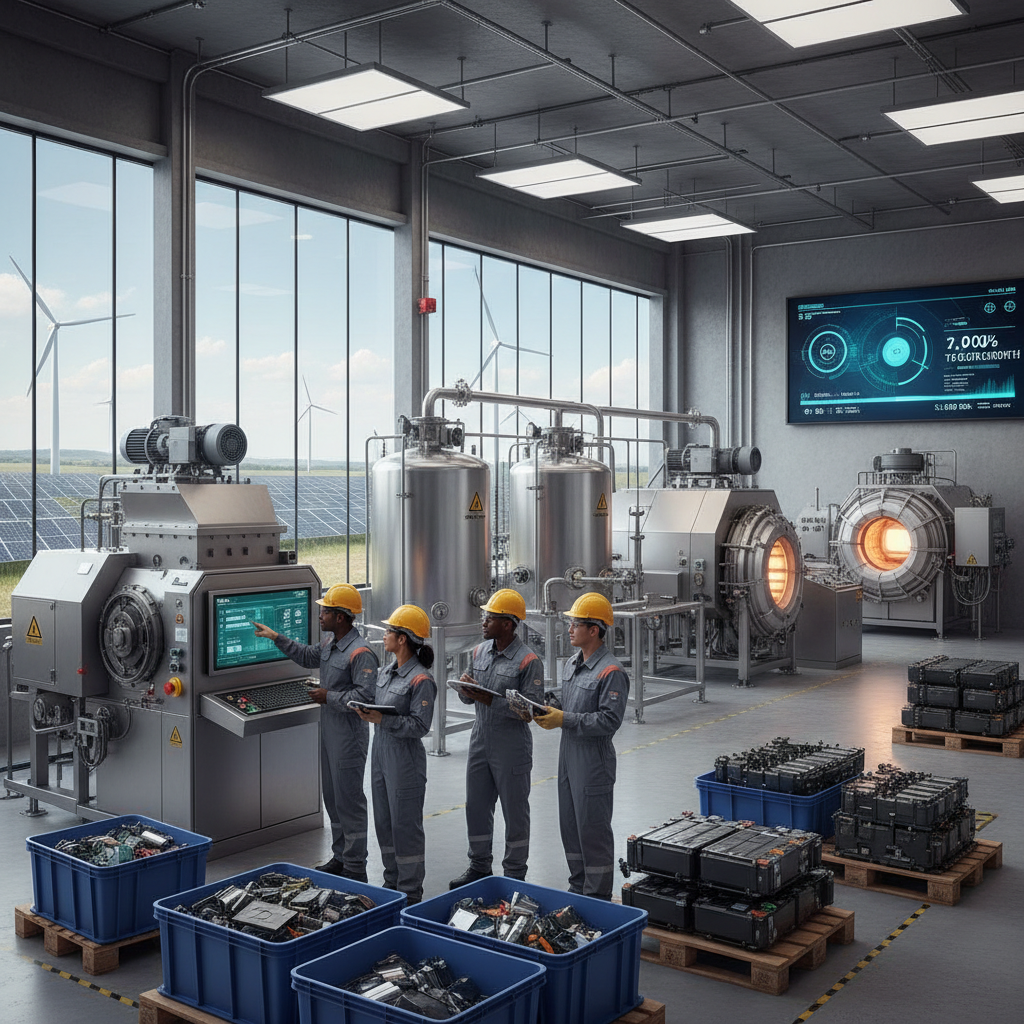
The recycling of electric vehicle (EV) batteries involves a complex, multi-step procedure designed to recover valuable metals while ensuring safety and environmental compliance. This process typically begins with the collection of spent batteries, which may come from dealerships, automobile repair shops, or specialized e-waste collectors. Batteries deemed viable for reuse can undergo refurbishment, including cleaning, drying, and minor repairs, allowing them to be repurposed in new battery assemblies or alternative applications such as energy storage for solar power systems.
Once batteries are collected and evaluated, those no longer suitable for reuse enter the recycling stream, beginning with dismantling and shredding. This mechanical process breaks down battery packs into smaller components, separating cells or modules to facilitate transportation, storage, and subsequent processing. Safety is paramount during shredding, requiring batteries to be discharged or otherwise managed to prevent fire risks.
Following mechanical preparation, the recycling process typically advances through hydrometallurgical and pyrometallurgical methods, the two principal techniques for metal recovery. Hydrometallurgy involves leaching, where shredded battery material is treated with acidic solutions such as sulfuric acid to dissolve metals like lithium, cobalt, nickel, and manganese selectively. After leaching, solid-liquid separation isolates dissolved metals in the liquid phase from undissolved waste solids. This approach offers high metal recovery rates and versatility across different battery chemistries.
In contrast, pyrometallurgy uses high-temperature smelting to extract metals, sometimes without initial shredding. Some recycling strategies combine these methods in a pyro-hydro hybrid process, leveraging the heat-intensive nature of pyrometallurgy and the selective chemical separation of hydrometallurgy to maximize metal recovery from diverse battery sources.
An emerging alternative is direct recycling, which preserves the chemical structure of cathode materials by avoiding dissolution and repurification. This method employs physical processes such as shredding, gravity separation, and magnetic sorting to recover the “black mass”—active material powder from cells—without inducing chemical changes. Direct recycling is cost-effective and facilitates the reuse of cathode materials with minimal processing.
Throughout the recycling workflow, additional mechanical pre-processing is often necessary to separate cell layers and components such as cathodes, anodes, separators, and current collectors. Techniques including sieving, air classification, and magnetic separation are employed to isolate valuable materials for further treatment.
Ultimately, recovered metals from these recycling processes are refined and processed into raw materials suitable for manufacturing new battery components, closing the loop in the EV battery supply chain. The entire operation requires coordinated efforts among technicians, logistics experts, and supply chain managers to ensure safe handling, transport, and processing under stringent protocols.
Environmental Impact
The recycling of electric vehicle (EV) batteries plays a crucial role in reducing environmental harm associated with both battery production and disposal. As EV production rapidly increases, expanding recycling efforts helps mitigate the environmental footprint by decreasing the reliance on new mineral extraction, which is often associated with significant ecological disruption. By recovering valuable materials such as lithium, cobalt, nickel, and manganese, recycling supports a circular economy that lowers lifecycle greenhouse gas (GHG) emissions by up to 50% compared to virgin material extraction and production.
Compared to traditional internal combustion engine vehicles, whose majority of lifecycle emissions result from fuel combustion, EVs shift a larger portion of their emissions burden to the manufacturing phase, including battery production. Therefore, efficient recycling can substantially reduce these upstream emissions by reintroducing recovered materials into the supply chain rather than relying on energy-intensive mining and refining. This is particularly important as the global demand for batteries escalates, with projections suggesting a capacity increase to 11,700 GWh by 2026, intensifying pressure on raw material sources.
Despite these benefits, the current global recycling rate for lithium-ion batteries remains below 5%, limited by technological challenges, economic viability gaps, and regulatory fragmentation. Proper management of hazardous wastes generated during recycling is also critical to ensuring environmental safety and compliance with regulations such as the U.S. Clean Water Act, Clean Air Act, and Resource Conservation and Recovery Act. Emerging recycling technologies, including hydrometallurgical (chemical leaching) and direct recycling methods, offer more environmentally friendly alternatives to traditional high-energy smelting processes, enhancing metal recovery efficiency while reducing energy consumption and emissions.
Furthermore, harmonizing international recycling standards and developing robust domestic recycling infrastructures are essential to overcoming supply chain risks and reducing material losses due to export of end-of-life batteries. This coordination would also contribute to securing sustainable material feedstocks, decreasing dependence on geopolitically sensitive mining operations, and enabling a more resilient EV battery supply chain.
Economic Aspects
The recycling of end-of-life (EOL) electric vehicle (EV) batteries presents significant economic opportunities by enabling the recovery of valuable materials such as cobalt, nickel, lithium, and manganese, which can be reintroduced into battery production. Hydrometallurgical recycling processes, particularly leaching techniques, have demonstrated recovery rates as high as 95% for battery metals, facilitating their purification and reuse in new battery manufacturing. This creates a circular economy model that reduces dependence on virgin mining and lowers lifecycle emissions by up to 50%, offering both environmental and economic benefits.
However, the industry faces multiple economic challenges. Securing a consistent supply of recyclable feedstock is critical but complicated by the risk of losing end-of-life batteries to exports and competition from international players, especially given China’s extensive overcapacity in battery material supply. China’s government actively supports the domestic recycling industry by mandating that electric vehicle manufacturers (EVMs) take primary responsibility for battery collection and recycling, complemented by financial and fiscal policies aimed at bolstering the sector.
In the United States, economic incentives such as those introduced by the Inflation Reduction Act provide up to $7,500 in federal tax credits for EV purchases, contingent upon stringent domestic sourcing and recycling requirements for battery minerals and components. By 2027, 80% of the critical minerals used in EV batteries must originate from North America, countries with free trade agreements, or be recycled domestically, thereby encouraging the growth of local recycling infrastructure and supply chains.
Moreover, harmonized international recycling standards and cross-border agreements are crucial for stabilizing material feedstock supply chains and supporting economic viability in the recycling sector. Establishing common definitions and regulations for new, used, and end-of-life batteries can facilitate global trade of recyclable materials and foster cooperation between countries with varying recycling capacities.
Despite these prospects, current global lithium-ion battery recycling rates remain below 5%, hindered by technological, economic, regulatory, and logistical barriers. Overcoming these obstacles will require continued innovation in recycling technologies, improved policy frameworks such as extended producer responsibility programs, and enhanced collection systems to ensure economically sustainable and environmentally responsible battery recycling.
Technological Advances
The recycling of electric vehicle (EV) batteries has seen significant technological advancements aimed at improving efficiency, sustainability, and material recovery. Current recycling methods predominantly include pyrometallurgical and hydrometallurgical processes, each with distinct advantages. Pyrometallurgy involves dismantling and heating batteries at high temperatures, typically above 500 degrees Celsius, to evaporate electrolytes and recover metals such as lithium salts. Hydrometallurgy, on the other hand, uses liquid chemical leaching to selectively extract valuable metals like cobalt, nickel, lithium, and manganese.
Emerging technologies are combining these methods to optimize metal recovery. For instance, the pyro-hydro hybrid approach integrates the intense heat of pyrometallurgy with the selective chemical treatment of hydrometallurgy, maximizing extraction efficiency from diverse battery sources. Additionally, mechanical processes such as shredding and crushing prepare battery materials to enhance subsequent chemical treatments, ensuring higher precision and yield during metal recovery.
A particularly promising advancement is direct recycling, also known as “cathode to cathode recycling.” This technique preserves the structural integrity of battery components, especially the highly engineered cathode and anode materials, thus reducing the energy and manufacturing steps required to produce new battery components. Direct recycling supports a circular economy by lowering the environmental impact associated with battery manufacturing and disposal. Despite challenges in material synthesis and separation, research is focused on refining direct recycling methods to increase their effectiveness and scalability.
Reuse and repurposing strategies are also being developed to extend the useful life of EV batteries before recycling. Batteries that no longer meet vehicular performance standards can serve as energy storage solutions, thus providing a “second life” and reducing the demand for newly mined raw materials. This second-life application can significantly decrease environmental impacts by extending battery utility and lessening resource extraction pressures.
In response to increasing battery demand, projected to grow over tenfold by 2030 due to EV adoption, recycling technologies are evolving rapidly. Industry and government initiatives, such as those supported by the Biden administration, emphasize building domestic recycling capacity and establishing harmonized international recycling standards to ensure sustainable and resilient supply chains for critical materials.
Regulatory Framework
The regulatory landscape surrounding the recycling and management of electric vehicle (EV) batteries is evolving rapidly across different regions, reflecting a growing emphasis on sustainability, circular economy principles, and critical material security. In the European Union
Challenges and Bottlenecks
The recycling of electric vehicle (EV) batteries faces numerous challenges and bottlenecks that hinder its widespread adoption and effectiveness. Despite the environmental benefits of recycling—such as reducing reliance on virgin mining and cutting lifecycle emissions by up to 50%—the global recycling rate for lithium-ion batteries (LIBs) remains below 5%. Key obstacles include technological limitations, economic viability concerns, regulatory fragmentation, and logistical complexities in battery collection and transportation.
One major challenge lies in the transportation of used batteries to reuse or recycling centers. Batteries often need to be moved long distances, sometimes crossing international borders, which increases costs and complicates logistics due to stringent safety standards imposed by international regulations. Coordinating safe handling, shipping, and processing requires specialized teams of technicians, transport specialists, and supply chain managers working under strict protocols. The complexity of this process is further amplified by the need to comply with varied national and international regulatory frameworks.
Regulatory fragmentation presents another significant barrier. While some regions, such as the European Union, have established specific regulations like Commission Delegated Regulation (EU) 2025/606 to standardize recycling efficiency calculations and documentation, enforcement mechanisms vary widely among member states. This lack of harmonization complicates the development of global recycling markets and cross-border agreements, which are crucial for securing consistent material feedstock. Furthermore, many countries still leave battery recycling regulations to local jurisdictions, leading to inconsistent policies and enforcement levels.
Economic challenges also impede progress. The recycling industry struggles with securing a steady supply of recyclable materials, especially in the face of competition from international players and concerns about losing valuable feedstock to exports of end-of-life EVs. China’s overcapacity in battery material supply further intensifies competition. Developing harmonized recycling standards and international cooperation could help mitigate these issues by facilitating global trade and establishing cross-border recycling agreements, particularly with countries lacking necessary recycling infrastructure.
In addition, technological and design factors influence recycling feasibility. Battery chemistry and pack design significantly impact the resource intensity and profitability of recycling processes. Closer collaboration and information exchange among original equipment manufacturers (OEMs), recyclers, and other stakeholders can encourage “design for sustainability,” making future batteries easier and more economically viable to recycle. Without such coordination, battery material shortages may become a critical bottleneck for the broader electrification transition.
Addressing these multifaceted challenges requires concerted efforts to advance technical solutions, streamline regulatory frameworks, and optimize logistics. Embedding cooperative frameworks across the global value chain will be essential for scaling up battery recycling and achieving sustainability targets in the EV industry.
Future Perspectives
The future of electric vehicle (EV) battery recycling hinges on overcoming a range of technical, economic, regulatory, and logistical challenges through coordinated multi-stakeholder collaboration. While current recycling technologies show promise, large-scale sustainable implementation remains limited, emphasizing the need for cooperative frameworks involving governments, industry, academia, and consumers to enable global scaling and meet sustainability targets.
One key avenue for enhancing sustainability is the reuse of end-of-life EV batteries in second-life applications, such as battery energy storage systems (BESS) that support grid stability and renewable energy integration. This strategy extends battery lifecycle value, reduces waste, and contributes to a circular economy by lowering reliance on virgin material extraction and cutting lifecycle emissions by up to 50%.
Technological advancements are also essential. Emerging recycling methods, including hydrometallurgical and direct recycling techniques, offer more efficient recovery of critical materials like cobalt, nickel, lithium, and manganese, while minimizing environmental impact compared to traditional pyrometallurgical approaches. Several facilities adopting these methods are under development, particularly in the United States, signaling progress toward economically viable and greener battery recycling processes.
Policy and regulatory frameworks will play a pivotal role in shaping the future landscape. Harmonizing recycling standards internationally can facilitate cross-border trade of recyclable materials, enable cooperation with countries lacking recycling infrastructure, and secure critical material supply chains. Establishing consensus on definitions related to vehicles and batteries at various life stages is an important foundational step. Additionally, extended producer responsibility (EPR) schemes, such as those recently enacted in the European Union, shift accountability to manufacturers to manage repurposing and recycling of their products. This approach, gaining traction in multiple U.S. states, represents a paradigm shift in waste management and could drive higher recycling rates and innovation in battery design for recyclability.
To monitor compliance and enforce effective recycling practices, regulatory bodies are instituting registers and penalties with the aim of ensuring adherence to collection and recycling obligations. However, variation in enforcement across jurisdictions may pose challenges, underscoring the need for cohesive policy implementation.
Ultimately, advancing EV battery recycling requires ongoing research and development, investment in infrastructure, and a systemic approach that integrates technical innovation, regulatory alignment, and economic incentives. These efforts will be critical to transitioning from the current transitional phase toward a fully circular and sustainable battery lifecycle.
The content is provided by Harper Eastwood, Front Signals