Summary
Essential Guide to Tackling Facial Dark Spots: What to Expect in 2025
Facial dark spots, commonly known as age spots, sun spots, or hyperpigmentation, are areas of increased pigmentation that affect a broad demographic, particularly adults with sun-sensitive skin and individuals with darker skin tones. These spots arise from various causes, including chronic sun exposure, hormonal influences, inflammation, and genetic predisposition, making accurate diagnosis essential for effective management. Conditions such as postinflammatory hyperpigmentation and melasma represent prevalent types of facial dark spots, often posing challenges due to their persistence and cosmetic impact.
By 2025, advancements in diagnostic technologies—most notably the integration of artificial intelligence (AI), three-dimensional imaging, and sophisticated colorimetric analysis—are revolutionizing the detection and monitoring of facial pigmentation disorders. These innovations enable personalized assessment and treatment planning, improving clinical outcomes while expanding accessibility through at-home diagnostic devices and smartphone applications. Concurrently, treatment modalities have evolved to combine proven topical agents like hydroquinone and tranexamic acid with cutting-edge drug delivery systems, laser therapies optimized by AI, and combination approaches that address both pigmentation and skin texture concerns.
Prevention strategies in 2025 emphasize comprehensive photoprotection, including the use of tinted sunscreens with iron oxide to shield against ultraviolet (UV) and high-energy visible (HEV) light, alongside personalized skincare regimens guided by AI-driven skin analysis tools. These measures, supported by lifestyle modifications such as nutrition optimization, aim to reduce the incidence and progression of dark spots, which remain a significant dermatological and cosmetic concern worldwide.
Despite promising technological and therapeutic advancements, the growing reliance on AI in skincare raises important regulatory and validation considerations to ensure safety, efficacy, and consumer trust. Challenges such as data privacy, algorithmic bias, and proper classification of products underscore the need for rigorous oversight as AI-powered diagnostics and treatments become integral components of facial dark spot management. Overall, 2025 marks a pivotal year in the evolution of hyperpigmentation care, characterized by smarter, more personalized, and technologically sophisticated approaches.
Overview of Facial Dark Spots
Facial dark spots, often referred to as age spots or sun spots depending on their cause, are areas of hyperpigmentation commonly found on the skin. These spots tend to be more prevalent in adults, particularly those with skin that burns easily, and unlike freckles that typically fade without sun exposure, age spots generally persist over time.
One common form of dark spots is postinflammatory hyperpigmentation, which arises following inflammation of the skin. Conditions such as acne can trigger an excess production of melanin, resulting in uneven pigmentation that remains after the inflammation subsides. Another frequently encountered pigmentary disorder is melasma, characterized by symmetrical, blotchy, brownish patches predominantly appearing on the forehead, cheeks, and upper lip.
Pigmentary disorders are notably common among individuals with darker skin tones. Surveys have indicated that dyschromia, which includes various types of dark spots, ranks as the second most common dermatologic diagnosis among Black and Hispanic populations in the United States, contrasting with its lower prevalence in white patients. Given the varied causes and presentations of facial dark spots, individuals uncertain about the origin of their pigmentation changes are advised to seek evaluation from a dermatologist for accurate diagnosis and management.
Causes and Risk Factors
Facial dark spots, often referred to as hyperpigmentation, result from a complex interplay of intrinsic and extrinsic factors. Intrinsic elements such as genetics, age, and skin type significantly influence the development and severity of these spots. For instance, as people age, skin changes naturally occur, which can lead to the formation of age spots or solar lentigines—flat, oval areas of increased pigmentation commonly found on sun-exposed areas like the face, hands, and arms. Additionally, certain genetic predispositions affect skin response to environmental triggers and pigmentation tendencies.
Extrinsic factors also play a crucial role in the formation of facial dark spots. Prolonged exposure to ultraviolet (UV) radiation from the sun or tanning beds is a primary cause, often leading to the development of sunspots or solar lentigines. Lifestyle elements such as diet, environment, and skincare habits further modulate skin health and pigmentation outcomes. Certain medications, including oral contraceptives and drugs that increase photosensitivity, can exacerbate pigmentation by making the skin more prone to dark spots. Nutritional deficiencies, particularly in vitamins B12 and folic acid, have also been linked to hyperpigmentation.
Specific skin conditions contribute to localized pigmentation changes as well. Melasma, characterized by small patches of skin discoloration, is more common in females and pregnant individuals, typically occurring during reproductive years and affecting areas like the cheeks, forehead, and upper lip. Post-inflammatory hyperpigmentation, arising from skin injury or inflammation, disproportionately affects individuals with darker skin tones and is a significant concern in populations with skin of color.
Types of Facial Dark Spots
Facial dark spots encompass a variety of skin discolorations that differ in appearance, cause, and implications. Among the most common are age spots, also known as sunspots, liver spots, or solar lentigines. These are small, flat, dark areas that typically develop on sun-exposed parts of the body such as the face, hands, shoulders, and arms. Individuals with skin that burns easily and those who spend significant time in the sun are more prone to developing these spots. The primary cause of age spots is prolonged sun exposure, which stimulates excess melanin production in localized areas of the skin.
Another prevalent cause of facial dark spots is postinflammatory hyperpigmentation (PIH), which arises following inflammation of the skin. Conditions like acne or other inflammatory skin injuries can lead to excess melanin production in the affected areas, resulting in uneven pigmentation that lingers after the inflammation subsides. This type of hyperpigmentation is especially common in individuals with medium to dark skin tones, where triggers such as skin trauma, hormonal changes, or irritants provoke melanin overproduction.
Melasma is a distinct type of facial hyperpigmentation characterized by symmetrical, blotchy, brownish patches often appearing on the forehead, cheeks, and upper lip. It is closely associated with hormonal changes and frequently affects women, especially during pregnancy or with the use of hormonal contraceptives. Melasma’s pigmentation tends to be more diffuse compared to discrete age spots or PIH patches.
Raised dark spots, such as moles, present differently from flat pigmentation changes. Moles vary widely in size, shape, and color and are generally harmless. However, raised dark spots require careful attention as they may indicate underlying conditions, including skin cancers like basal cell carcinoma or squamous cell carcinoma, especially if they exhibit irregular characteristics. Due to the potential health risks, any new or changing raised dark spots should be evaluated by a dermatologist.
Diagnosis and Clinical Assessment
The diagnosis of facial dark spots, commonly referred to as age spots or lentigines, primarily involves visual inspection by a healthcare professional. Dermatologists often distinguish these spots from other skin conditions based on their characteristic flat, oval appearance and tan to dark brown pigmentation, which typically occurs in areas with repeated sun exposure such as the backs of the hands and face. Accurate diagnosis is crucial as different skin disorders require distinct treatment approaches, and misdiagnosis may delay appropriate therapy.
Clinical assessment of dark spots has traditionally relied on subjective methods, including visual grading and manual evaluation of skin quality and pigmentation. However, these approaches can be inconsistent and lack objectivity. To overcome these limitations, advanced imaging technologies are increasingly integrated into clinical practice. One such method is Line-field Confocal Optical Coherence Tomography (LC-OCT), which enables in vivo 3D imaging of pigmented lesions. This technique assesses parameters such as the volumetric density of melanin in the epidermis and the undulation of the dermoepidermal junction, offering detailed insight into the structural changes associated with dark spots before and after treatment.
In addition to LC-OCT, colorimetric analysis using devices like the SkinCam probe allows for macroscopic evaluation of pigmentation changes, objectively measuring the brightening effects of skincare products in full-face applications. These technologies provide quantitative data that complement traditional clinical assessments, enhancing the precision of diagnosis and monitoring.
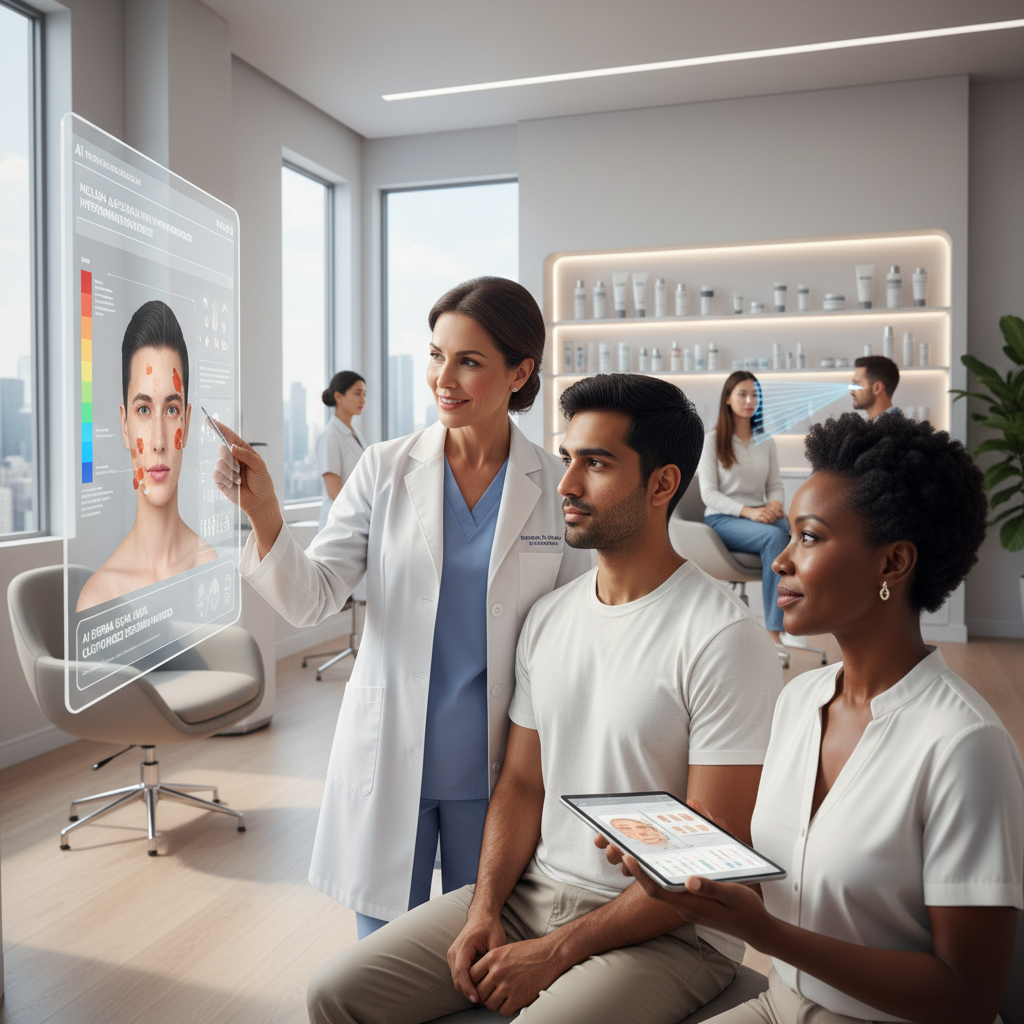
Moreover, the rise of artificial intelligence (AI) and 3D facial recognition technologies is revolutionizing skin analysis. By capturing detailed skin contours and depth, 3D mapping enables accurate detection and evaluation of pores, wrinkles, and pigmentation irregularities with greater precision than 2D imaging. AI-powered skin scanners and hydration monitors are also becoming widely accessible for at-home use, providing real-time detection of dehydration, texture changes, pore size, and dark spots. These devices sync with smartphone applications to deliver personalized skincare recommendations based on continuous skin condition monitoring.
Modern AI skin analysis tools are trained on vast datasets of diverse skin images, improving dermatological accuracy and enabling intelligent diagnostic solutions. Such advancements facilitate more personalized and effective management of facial dark spots, empowering both clinicians and consumers in their skincare decisions.
Treatment Modalities
Facial dark spots, including sunspots, melasma, and post-inflammatory hyperpigmentation, can be managed through a variety of treatment modalities that have evolved significantly as of 2025. These approaches range from topical therapies to advanced procedural interventions, with ongoing innovations enhancing safety, efficacy, and patient personalization.
Topical Treatments
Topical therapy remains the recommended first-line treatment for facial dark spots, with hydroquinone widely regarded as the gold standard due to its potent ability to inhibit melanin production and lighten hyperpigmented areas. However, newer agents such as tranexamic acid have gained prominence, offering comparable or even superior results to hydroquinone with a more favorable tolerance profile. Tranexamic acid is available in topical formulations and as oral medication, making it a versatile option for various patient needs. Additional topical ingredients effective in treating dark spots include niacinamide, vitamin C, kojic acid, azelaic acid, retinol, and cysteamine—each contributing by either inhibiting melanin synthesis, promoting skin cell turnover, or providing antioxidant benefits. Combining these agents with consistent sun protection using broad-spectrum sunscreen (SPF 30 or higher) is critical in both treatment and prevention.
Injectable and Advanced Skin Therapies
Injectable treatments have advanced with next-generation botulinum toxins and dermal fillers that improve longevity, safety, and natural aesthetic outcomes. While primarily used for cosmetic enhancement, these innovations complement skin rejuvenation protocols by addressing underlying skin texture and volume loss that may exacerbate the appearance of dark spots. Additionally, advanced skin-based drug delivery systems such as hydrogels, liposomal formulations, and solid lipid nanoparticles have enhanced the targeted delivery of active ingredients like corticosteroids and acne treatments, reducing systemic side effects and improving efficacy.
Procedural and Laser-Based Treatments
Chemical peels, including glycolic acid (GA) and Jessner’s solution (JS), are valuable adjuncts for certain patients, helping to exfoliate pigmented skin layers and promote renewal. However, caution is advised when using these treatments in patients with richly pigmented skin due to an increased risk of post-inflammatory hyperpigmentation and lesion recurrence. Fractional laser treatments, such as low-fluence Q-switched laser (LFQSL), can be effective for treatment-resistant lesions but require careful patient selection and monitoring to minimize pigmentary complications.
Laser technology for sunspot removal and other pigmentation disorders has made significant strides by 2025. Advances include AI-driven diagnostic systems that tailor laser parameters and protocols to individual skin types and pigmentation patterns, optimizing outcomes while reducing downtime and adverse effects. Modern laser treatments are faster, safer, and more comfortable than earlier modalities, enabling personalized care plans that address specific pigmentation challenges with precision.
Combination Approaches and Emerging Trends
Combining topical agents, advanced delivery systems, injectables, and procedural treatments provides a comprehensive strategy to address facial dark spots effectively. The integration of microneedling with radiofrequency (RF) technology exemplifies emerging trends in skin rejuvenation, enhancing collagen stimulation and improving skin texture alongside pigmentation management. Moreover, the skincare landscape is witnessing the introduction of cutting-edge ingredients such as exosomes, peptides, and spicules that work at the cellular level to promote skin health and mitigate pigmentation.
Advances in Diagnostic and Treatment Technologies by 2025
In 2025, the landscape of diagnosing and treating facial dark spots is being transformed by significant technological advancements, particularly through the integration of artificial intelligence (AI) and innovative drug delivery systems. These developments aim to enhance diagnostic precision, personalize treatment protocols, and improve patient experiences and outcomes.
AI-driven diagnostic systems have become central to modern skincare, offering hyper-personalized analysis that incorporates intrinsic factors such as genetics and skin type, alongside extrinsic influences like environmental exposure and lifestyle. Such tools enable clinicians to precisely detect and monitor skin conditions, including dark spots, with increased accuracy—demonstrated by improvements in UV spot detection accuracy by over 11% in early pilots. The accessibility of AI diagnostics has expanded beyond clinical settings to include at-home devices and smartphone applications, which continuously track skin changes and provide tailored skincare recommendations in real time. Brands and dermatology platforms are investing heavily in these intelligent solutions, which now dominate the market with an estimated 65% share, facilitating virtual skin assessments and personalized product guidance.
Laser and light-based therapies continue to be effective treatment options, enhanced by AI’s ability to optimize laser settings and treatment protocols, thereby maximizing efficacy while minimizing adverse effects. Clinics increasingly employ immersive patient education technologies that allow individuals to visualize procedures and understand expected outcomes, fostering trust and improving cooperation throughout the treatment process. Furthermore, combinations of multiple technologies and personalized treatment plans are gaining traction, pushing non-invasive interventions toward more comprehensive and accessible solutions.
On the pharmaceutical front, advanced transdermal drug delivery systems are revolutionizing topical treatments for hyperpigmentation. Innovations such as hydrogels, liposomal formulations, solid lipid nanoparticles, and microneedle technologies enable targeted and sustained delivery of active ingredients, reducing systemic absorption and minimizing side effects commonly associated with traditional topical therapies. These delivery platforms enhance the efficacy and tolerability of treatments, supporting more consistent and rapid fading of dark spots.
Collectively, these advances signify a shift toward smarter, data-driven skincare that prioritizes precision, safety, and patient-centered care. While challenges like data privacy and algorithmic bias remain, ongoing research and innovation are expected to further refine diagnostic accuracy and treatment personalization, making 2025 a pivotal year in the management of facial dark spots.
Prevention Strategies
Effective prevention of facial dark spots in 2025 begins with consistent and targeted sun protection. Sunscreens containing iron oxide have become essential because they not only shield against ultraviolet (UV) radiation but also protect against visible light, particularly high energy visible (HEV) blue light emitted from the sun and digital screens, which has been shown to contribute to hyperpigmentation by generating free radicals and oxidative stress. Tinted mineral sunscreens with iron oxide are recommended to provide this comprehensive protection, helping to prevent the formation and worsening of dark spots.
In addition to sunscreen, personalized skincare regimens are increasingly emphasized to address the complex interplay of intrinsic factors such as genetics, age, and skin type, alongside extrinsic elements like environmental exposure and lifestyle. The traditional trial-and-error approach is giving way to data-driven strategies, where AI-powered skin analysis tools assess real-time skin conditions—including dehydration, texture, pore size, and pigmentation changes—to recommend targeted preventive products and treatments tailored to individual needs.
Furthermore, lifestyle modifications including nutrition awareness play a supportive role in maintaining skin health and preventing pigmentation issues. Research highlights the importance of diet and functional food products in promoting skin well-being, which complements topical and technological preventive measures.
Regulatory and Validation Considerations for Emerging Technologies
The integration of AI technologies into skincare, particularly for diagnosing and treating facial dark spots, necessitates rigorous regulatory and validation frameworks to ensure safety, efficacy, and consumer protection. In highly regulated industries, compliance with advertising standards is
Market Trends and Consumer Behavior Outlook for 2025
In 2025, the skincare market, particularly in the realm of facial dark spot treatments, is being shaped by rapid advancements in technology and shifting consumer preferences. One of the most significant trends is the increasing integration of artificial intelligence (AI) within dermatological diagnostics and personalized skincare solutions. The global AI skin market is projected to grow from USD 1.79 billion in 2025 to USD 8.26 billion by 2035, at a compound annual growth rate (CAGR) of 16.53%. This surge is driven by heightened demand for precise, non-invasive skin assessments and tailored treatment plans, with AI-enabled tools like facial recognition and skin condition analysis becoming mainstream in dermatology clinics and beauty retail environments.
Consumer behavior is evolving alongside these technological innovations. There is a growing emphasis on personalization and digital engagement, with brands investing heavily in AI technologies to create hyper-personalized care experiences. These technologies not only enable smarter diagnostics but also foster cross-platform innovations that enhance user interaction and treatment adherence. Patients increasingly seek immersive and informative experiences that prepare them for procedures such as laser sun spot removal, helping build trust and improve satisfaction through better understanding of treatment benefits and expected outcomes.
Nutritional awareness is another influential factor shaping consumer choices in 2025. There is an expanding recognition of the role that diet and functional foods play in skin health and overall well-being. This trend is supported by rigorous research and validation efforts covering cardiovascular health, lipid regulation, satiety, and skin benefits, which collectively inform product claims and consumer education initiatives.
Market adoption of AI-based skincare solutions is further bolstered by technological frameworks that improve with continuous use. Systems employing closed-loop “Data–Model–Application” approaches enhance diagnostic accuracy over time, enabling more effective detection of UV spots, wrinkles, acne scars, and even holistic wellness indicators. Early pilot programs demonstrate significant gains in diagnostic precision, underscoring the potential of AI to augment clinical decision-making rather than replace physician judgment.
Lastly, there is a notable trend toward combining different technological modalities and personalized treatment protocols to maximize patient outcomes. Innovations in energy delivery mechanisms are pushing non-invasive fat reduction and other cosmetic procedures toward broader accessibility and enhanced efficacy. Despite these advancements, patients are advised to consult dermatologists carefully due to the cosmetic nature of age spot treatments and potential side effects, as such procedures are generally not covered by insurance.
Together, these market trends and consumer behaviors illustrate a dynamic and patient-centric future for facial dark spot treatments in 2025, characterized by technological sophistication, personalized care, and informed consumer choices.
The content is provided by Blake Sterling, Front Signals