
Summary
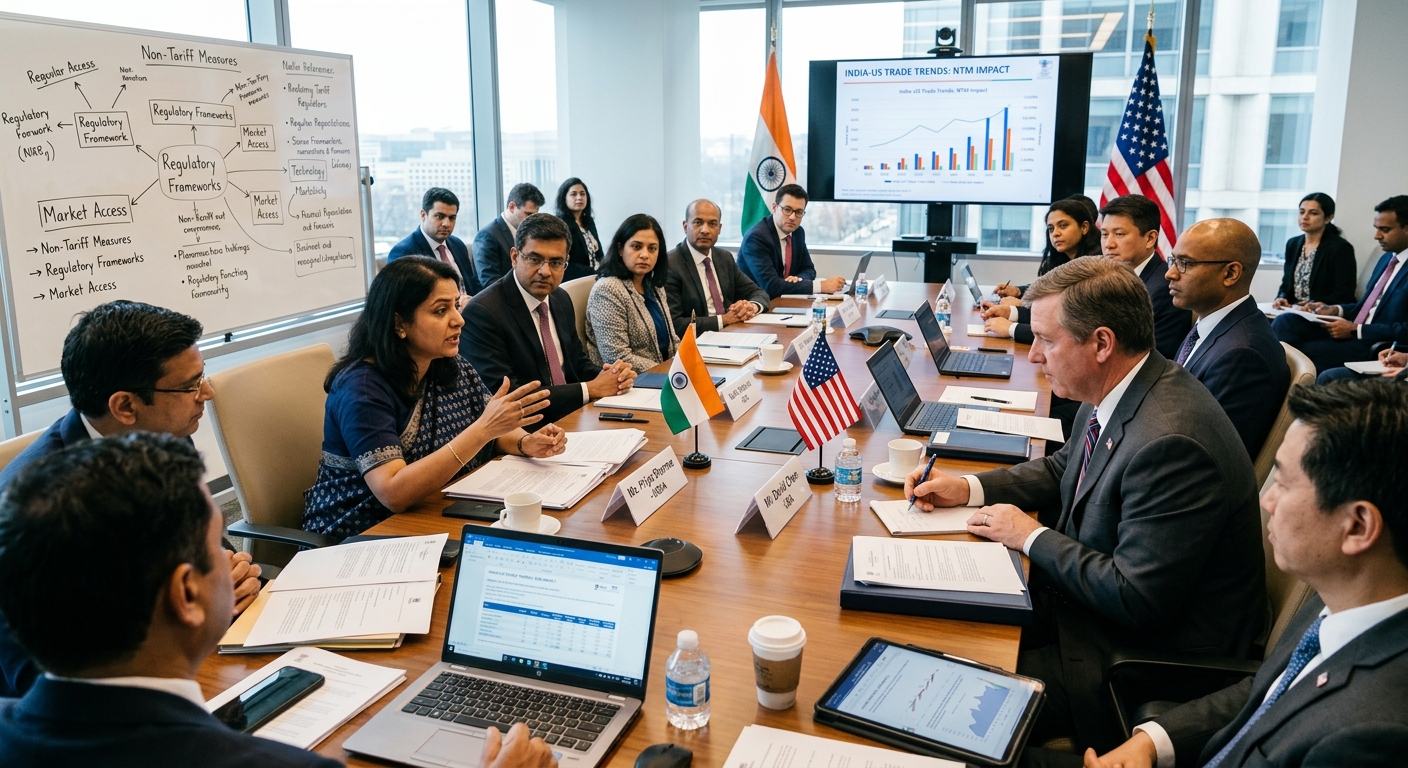
Exploring Non-Tariff Measures: A Collaborative Approach Between India and the United States analyzes the crucial role of non-tariff measures (NTMs) in the trade relationship between India and the United States. NTMs encompass regulatory requirements aside from tariffs, serving both consumer protection and as potential trade obstacles. The article discusses ongoing dialogues aimed at harmonizing these measures, minimizing trade hinderances while respecting regulatory goals.
Current Trade Dynamics
Recent trade discussions between India and the U.S. aim to address challenges posed by NTMs, including India’s complex regulatory framework that includes various import licensing and sanitary and phytosanitary (SPS) measures. U.S. exporters face difficulties due to inconsistent standards, raising costs and complicating compliance. Both countries are actively engaged in negotiations, acknowledging that transparent dialogue and better regulatory alignment can facilitate more efficient trade.
Types of Non-Tariff Measures
NTMs include various regulations that affect trade, such as technical barriers to trade (TBT), import licensing, and quotas. India implements several types of NTMs to protect its market, which can impose compliance burdens on exporters. Understanding these NTMs is essential for U.S. businesses as they navigate import requirements and compliance challenges, impacting their market entry strategies.
Impact on Bilateral Trade
NTMs are significant barriers to bilateral trade, particularly for U.S. exporters trying to enter the Indian market. The complexities of India’s licensing requirements and compliance with technical standards lead to increased costs and market access challenges. In contrast, both nations are working to adapt their policies to facilitate trade, emphasizing the need for ongoing negotiations to reduce these barriers and enhance economic ties.
Legal Framework and Collaboration
The legal structure for addressing NTMs between India and the U.S. is shaped by WTO guidelines, which offer dispute resolution mechanisms for trade issues. Recent bilateral discussions emphasize the importance of compliance and accountability regarding NTMs, ensuring that both nations meet their obligations while negotiating to alleviate trade tensions. Continued cooperation and effective dispute resolution are essential for fostering a stable trade environment.
Future Cooperation and Strategic Opportunities
Prospects for future U.S.-India cooperation include targeting new technologies and strategic industries. Legislative efforts aim to further enhance defense collaboration and secure critical supply chains, which align with both nations’ economic interests. While ongoing negotiations for a Bilateral Trade Agreement focus on addressing NTMs and improving market access, balancing regulatory standards remains a priority to sustain a mutually beneficial partnership.
Challenges and Recommendations
Despite the potential for growth, NTMs can impede the trade relationship when they become overly stringent or inconsistently applied. Continued dialogue to address these barriers is critical for both nations. Efforts should focus on developing good regulatory practices to ensure NTMs serve legitimate trade purposes without restricting market access, facilitating stronger bilateral ties and economic resilience.
The content is provided by Harper Eastwood, Front Signals