
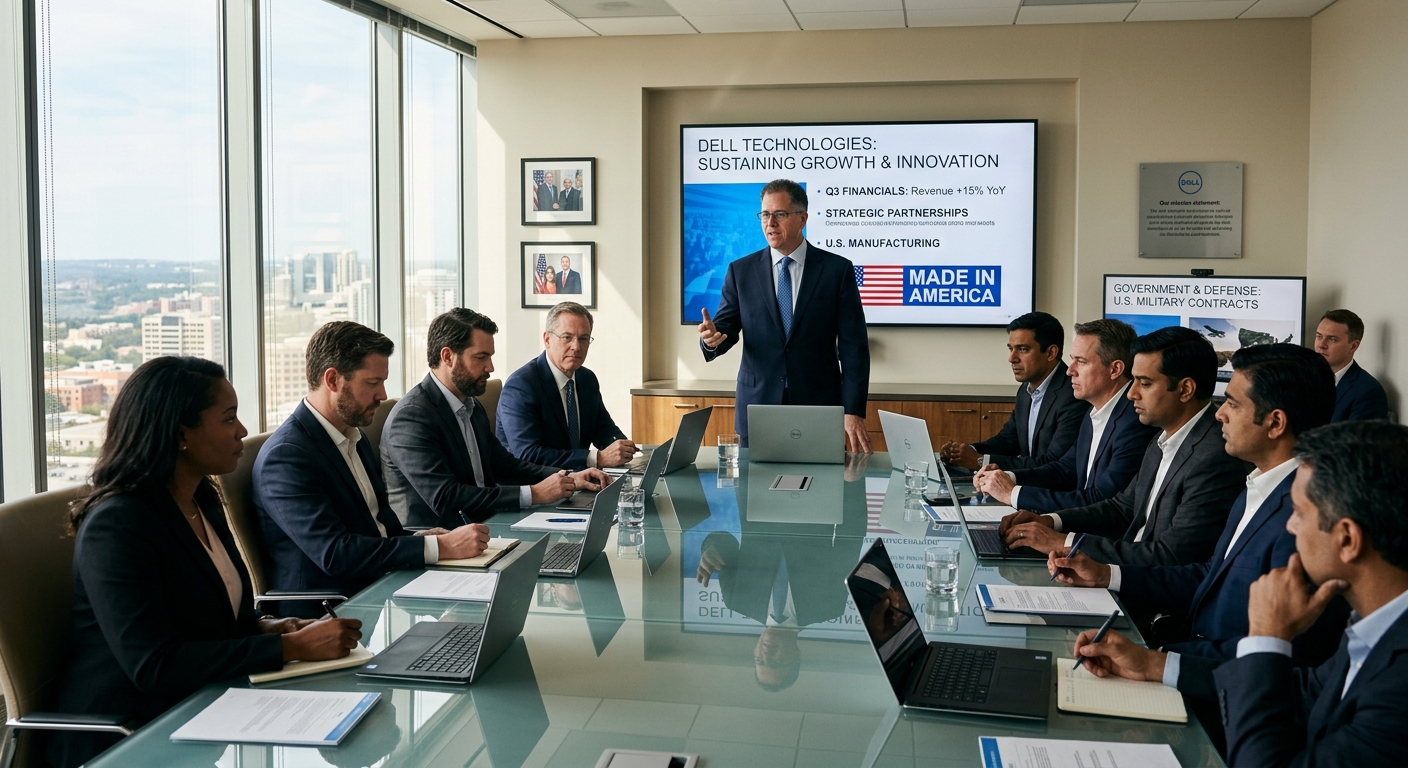
Summary of Michael Dell’s Involvement with the Trump Administration
Michael Dell, founder and CEO of Dell Technologies, actively supported former President Donald Trump, a move that appeared to significantly benefit his company during Trump’s presidency. Dell participated on Trump’s Council of Advisors on Science and Technology and pledged $6.25 billion for “Trump Accounts,” a federal initiative aimed at securing financial futures for American children. This philanthropic endeavor represented a remarkable alignment of business interests with political policymaking.
Under Trump, Dell Technologies secured a $9.7 billion contract from the Pentagon, leveraging public endorsements from Trump himself, which coincided with Trump’s investments in Dell stock and subsequently boosted the company’s share price. While the Department of Defense claimed the contract resulted from a competitive process, critics have raised ethical concerns regarding possible conflicts of interest stemming from these simultaneous financial relationships.
The blend of philanthropic commitments and corporate interests has generated scrutiny around the implications of corporate influence on public policy, sparking debates about ethical practices in combining business with social initiatives. This complex legacy points to the transformative potential of Dell’s philanthropy, raising questions about the precedents set for future public-private partnerships.
Background of Michael Dell and His Philanthropic Ventures
Michael Dell is recognized for transforming Dell Technologies into a leading enterprise by making strategic acquisitions, including EMC Corporation in 2016. He established the Michael & Susan Dell Foundation to promote health, education, and youth development globally, reflecting a deep commitment to philanthropy. His growing connection with Trump began during Trump’s first term, when he was appointed to shape public policy on science and technology, merging corporate interests with governmental objectives.
During this time, Dell Technologies took critical steps, including a return to public markets through a reverse merger after private equity backing. Dell’s strategic positioning within Trump’s administration seemed to enable favorable circumstances, facilitating access to federal contracts and enhancing his company’s capabilities in government dealings. Notably, the pledging of $6.25 billion for Trump Accounts underscored the intersection of philanthropic and legislative initiatives aimed at financial security for American children, further aligning business interests with political priorities.
Early Support and Philanthropic Strategy
Michael and Susan Dell made a significant philanthropic pledge of $6.25 billion to fund “Trump Accounts,” marking a substantial commitment to supporting children’s investment programs under the One Big Beautiful Bill Act. This program was aimed at providing government-seeded investment accounts for millions of American children, reflecting a shift in how philanthropy could interface with governmental initiatives. The Dells positioned their support as a mechanism to create impactful social change through private capital integrated with public programs.
However, this prominent support raised ethical questions due to the timing of major business contracts awarded to Dell Technologies shortly thereafter. Critics voiced concerns over potential blurring between philanthropy and business motives, raising skepticism about connections between the Dells’ charitable contributions and favorable outcomes in federal dealings. This marked a departure from traditional philanthropic routes, indicating a preference for direct engagement with government initiatives rather than relying on nonprofit intermediaries.
Corporate Benefits During the Trump Presidency
Dell Technologies experienced significant financial gains during Trump’s presidency, particularly through a $9.7 billion Pentagon contract for consolidated software and cloud services. This contract followed direct endorsements from Trump, which coincided with his investments in Dell stock, ultimately leading to a surge in the company’s share value. The Pentagon emphasized a competitive process for the contract, although the timing raised ethical scrutiny regarding potential connections between political endorsements and financial benefits for the company.
Critics pointed to the overlap of financial and political interests, suggesting that Dell’s involvement in government initiatives may have influenced contract outcomes. Amid ongoing debates regarding corporate governance and ethics, Michael Dell’s role on Trump’s Council of Advisors further intertwined corporate operations with administration policies, leading to heightened scrutiny around the motivations behind such engagements.
Public and Media Response
The interaction between Michael Dell and the Trump administration has spurred extensive media coverage and public debate about potential conflicts of interest. Critics have emphasized concerns that Dell Technologies’ contracts with the government reflected undue influence from Dell’s position within Trump’s advisory council. Despite Pentagon assertions of a fair procurement process, the close timing of federal contract awards and public endorsements invited skepticism from ethics commentators.
This situation illustrates a broader conversation about the blending of philanthropy with political influence, as it deviated from conventional charitable practices in the tech industry. The Dells’ approach in directly funding government programs raised questions about the effects of private interests on public policy and the implications for governance and ethical conduct in corporate philanthropy.
Long-Term Implications of Dell’s Support
Michael Dell’s support for Trump has left a lasting impact on his corporate strategies and philanthropic ambitions, framing a new paradigm for social initiatives. The focus on programs like the Trump Accounts mirrors a desire to reshape the social contract in innovative ways, akin to historical programs like Social Security. This approach illustrates a commitment to developing social policies that combine private investment with public backing, while also signaling a potential shift away from traditional nonprofit models in favor of direct government collaborations.
The implications of these engagements raise critical questions about the balance between private capital and governmental responsibilities in social progress. As Dell Technologies continues to navigate the complexities of corporate governance, the legacy of Michael Dell’s initiatives will likely serve as a reference for future philanthropic and business interactions within politically charged environments, underpinning ongoing debates about ethical stewardship and corporate responsibility.
The content is provided by Harper Eastwood, Front Signals