
Summary
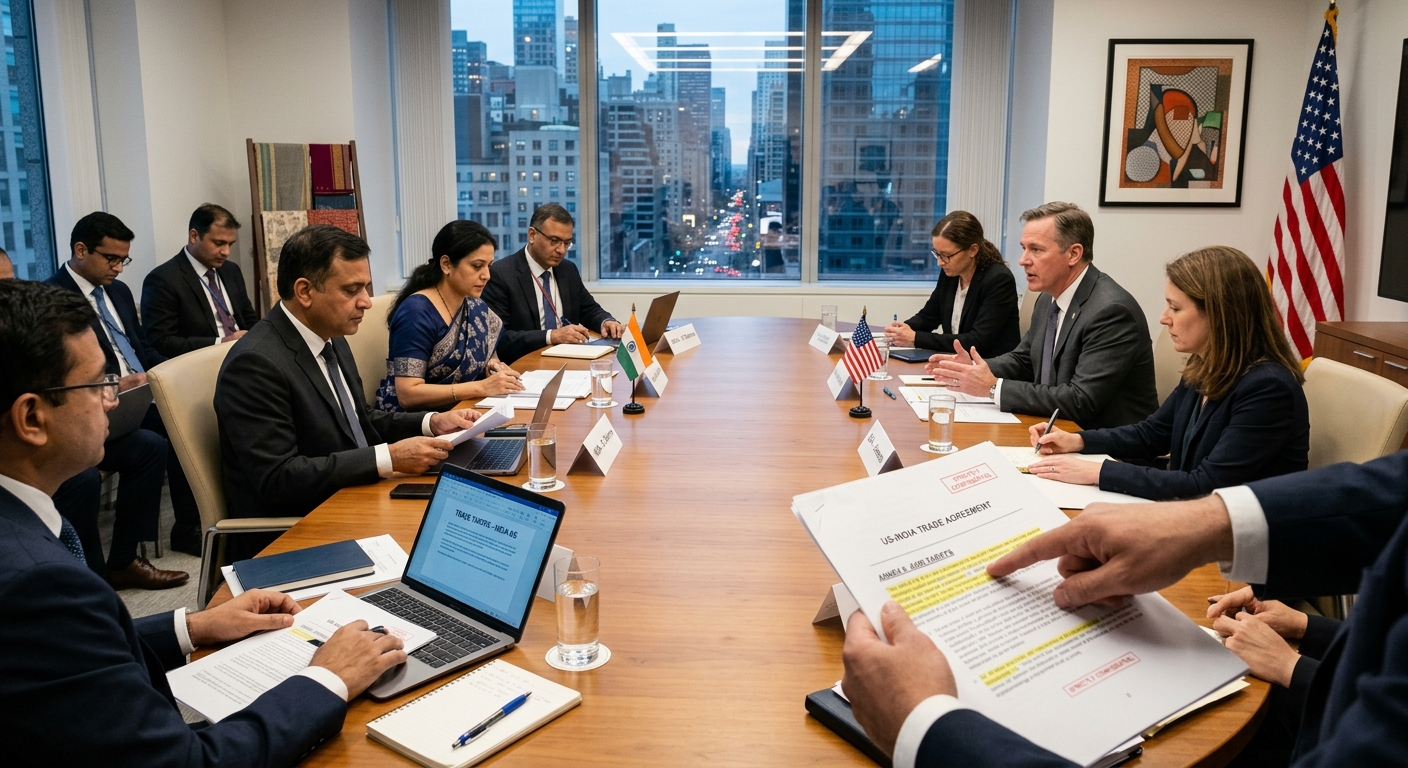
India’s trade discussions with the United States focus on obtaining preferential tariffs, assurances against further tariff increases, and resolving investigations into alleged forced labor in its supply chains. These demands reflect India’s ambition to solidify its role as a prominent trade partner for the U.S. yet are complicated by ongoing scrutiny under U.S. Trade Representative’s Section 301 investigations. The central issue remains the proposed 12.5% duty on certain Indian imports, linked to human rights concerns, which India disputes and seeks to address through negotiations rather than unilateral tariffs.
Trade Demands
India aims to secure preferential tariff treatment and guarantees against future tariff hikes in its negotiations with the U.S. This includes seeking relief from proposed tariffs under the Section 301 investigations related to forced labor. Indian officials stress the importance of commitments that would prevent additional tariffs from being imposed, viewing existing claims as an avenue for pressure within broader discussions rather than legitimate trade barriers.
U.S. Forced Labor Investigation
The U.S. has initiated Section 301 investigations into several countries, including India, regarding forced labor and excess industrial capacity. The forced labor inquiry alleges that India has not effectively banned imports produced by forced labor, prompting discussion of imposing additional tariffs on Indian imports. Despite denying these allegations, India is actively engaging in dialogue to address U.S. concerns and avert the introduction of these tariffs. The outcome of these negotiations is critical as the timeline for imposing tariffs approaches.
India’s Position and Strategy
India maintains a proactive stance in addressing the U.S. allegations regarding forced labor, emphasizing its commitment to dialogue rather than punitive measures. The Indian government views the burgeoning trade agreement as a vital tool to mitigate the impact of potential tariffs and ingraining labor standards directly within the trade framework itself. India also aims to align its practices with international regulations while reinforcing domestic labor laws to enhance credibility with the U.S.
U.S. Trade Strategy
The U.S. Trade Representative has indicated flexibility in adjusting tariff rates post-agreement, making it crucial for India to secure specific commitments against future tariffs. The ongoing Section 301 investigation into forced labor practices underscores the Trump administration’s broader approach to enacting significant trade measures. While navigating these concerns, U.S. officials have committed to considering India’s requests and suggestions within the context of their trade framework discussions.
Impacts on Trade Relations
Trade and investment remain pivotal in U.S.-India relations, characterized by rapid growth with bilateral trade exceeding $119 billion. However, tensions have arisen from U.S. tariffs related to forced labor, affecting India’s labor-intensive export sectors. This situation has compelled Indian businesses to reevaluate operational strategies, including diversifying supply chains to avoid heightened tariffs while continuing dialogues to alleviate these burdens. The ongoing discussions aim to balance effective trade relations with robust labor standards compliance.
Negotiation Developments
Negotiations for a Bilateral Trade Agreement (BTA) have been active, addressing various trade issues, including customs procedures and economic security. Recent rounds of talks have focused on finalizing an interim trade agreement as part of wider discussions. Both nations aim to resolve outstanding issues efficiently while laying the groundwork for further negotiations to enhance bilateral trade dynamics.
Legal Frameworks and Issues
India’s approach to addressing forced labor combines domestic laws and international regulations. Key legislation exists to combat forced labor, yet historical socio-economic conditions contribute to ongoing challenges. The influence of foreign regulatory standards shapes Indian compliance efforts, compelling businesses to adopt practices that align with global labor standards. Continuous monitoring and adherence to these frameworks aim to enhance India’s standing in trade negotiations.
Political Context
The political backdrop of U.S.-India trade discussions is intricate, influenced by strategic priorities and ongoing tensions related to tariffs and international politics. Bilateral negotiations continue amid significant political challenges, yet both parties strive to maintain dialogue and chart a cooperative path forward. Higher-level diplomatic engagements highlight the importance of overcoming barriers while enhancing economic cooperation amidst complex global dynamics.
Outlook
The future of trade relations between India and the U.S. depends heavily on timely negotiations aimed at a final interim agreement and a broader BTA. With key demands for tariff stability and resolution of allegations of forced labor, both countries are navigating a pathway toward enhanced economic engagement. Additionally, India’s participation in broader multilateral frameworks may foster a conducive environment for constructive trade negotiations while advancing shared interests in the region.
The content is provided by Sierra Knightley, Front Signals