Summary
Maximize Your Benefits: Essential Housing Grants for Disabled Veterans in 2025 provides a comprehensive overview of federal housing grant programs designed to assist U.S. military veterans with service-connected disabilities in securing accessible, safe, and independent living accommodations. These grants, administered primarily by the Department of Veterans Affairs (VA), offer critical financial support for constructing, purchasing, or modifying homes to meet the specific needs arising from disabilities incurred during military service. The page outlines key grant programs available in 2025, including the Specially Adapted Housing (SAH) Grant, the Special Home Adaptation (SHA) Grant, and the Home Improvements and Structural Alterations (HISA) Grant, detailing their eligibility criteria, application processes, and funding limits.
These housing grants are notable for being non-repayable benefits that enable veterans to overcome physical and environmental barriers, thereby promoting independent living and improving quality of life. Veterans can often use these grants multiple times over their lifetimes, allowing for adjustments as needs evolve. Additionally, the article highlights how these grants fit within a broader legislative and regulatory framework that includes interagency collaboration between the VA and the Department of Housing and Urban Development (HUD), particularly through programs like HUD-VASH that address homelessness among veterans. This integrated approach underscores the federal commitment to comprehensive housing solutions tailored to disabled veterans.
The page also addresses important considerations for veterans seeking to maximize their housing benefits, emphasizing the need for timely application submission, thorough documentation of service-connected disabilities, and coordination with Veterans Service Officers (VSOs) to navigate the complex eligibility and approval processes. It further discusses how compensation for disabilities can affect eligibility for other housing assistance programs and offers guidance on leveraging additional resources, including state and nonprofit support initiatives, to supplement VA grants.
While these programs provide substantial aid, the article acknowledges ongoing challenges related to administrative procedures, funding adjustments, and access to supportive services, reflecting the dynamic nature of veterans’ housing needs and federal responses. Updates to grant amounts and regulatory requirements in 2025 illustrate efforts to adapt to changing construction costs and evolving veteran populations, ensuring that disabled veterans receive effective and timely housing assistance.
Overview of Housing Grants for Disabled Veterans
Housing grants for disabled veterans provide crucial financial assistance to help veterans and their families secure safe, accessible, and stable housing after military service. These grants are designed to remove barriers that might prevent veterans from living independently and comfortably, especially when adapting to new physical challenges resulting from service-connected disabilities. Eligibility for these grants generally requires that the veteran have a qualifying service-connected disability, which is an acknowledgment by the Department of Veterans Affairs (VA) that a disability or medical condition is directly linked to military service. Additionally, applicants typically need to own or plan to own a home that will serve as their primary residence, though some grants allow for modifications in family members’ homes without ownership requirements.
The VA offers several key housing grant programs, including the Specially Adapted Housing (SAH) grant and the Special Home Adaptation (SHA) grant, which help veterans make medically necessary structural improvements or modifications to their homes. These grants are not loans and do not require repayment; instead, they represent direct financial aid as a form of gratitude for veterans’ service. To apply, veterans must complete VA Form 26-4555 and submit it to their nearest VA regional office for processing and determination of eligibility. Beyond these primary grants, veterans may also qualify for additional housing-related benefits and services that further support their transition to civilian life and independent living.
It is important to note that compensation received for service-connected disabilities can influence income calculations for other housing assistance programs, sometimes improving eligibility by lowering debt-to-income ratios. Veterans are encouraged to explore all available VA housing benefits to find programs best suited to their individual needs.
Types of Housing Grants Available in 2025
The Department of Veterans Affairs (VA) offers several housing grants designed to assist veterans with service-connected disabilities in acquiring, building, or adapting homes to meet their unique accessibility needs. In 2025, the key grants available include the Specially Adapted Housing (SAH) Grant, the Special Home Adaptation (SHA) Grant, and the Home Improvements and Structural Alterations (HISA) Grant.
Specially Adapted Housing (SAH) Grant
The SAH Grant is intended for veterans with the most severe service-connected disabilities. This grant provides substantial financial assistance, with a maximum amount of $121,812 for Fiscal Year 2025, to help veterans construct a specially adapted home from the ground up, build a new accessible home on land they already own, or completely remodel an existing home to accommodate their needs. Eligibility generally requires a permanent and total service-connected disability that significantly impairs mobility or other essential functions. Veterans may apply for this grant by filling out the appropriate VA Form 26-4555 and meeting eligibility criteria that ensure the proposed housing unit is both medically feasible and suitable for their needs, as stipulated by VA regulations.
Special Home Adaptation (SHA) Grant
The SHA Grant assists veterans whose disabilities, while serious, do not meet the criteria for the SAH Grant but still require significant home modifications. In Fiscal Year 2025, the maximum SHA Grant amount is $24,405, increasing slightly to $25,350 for Fiscal Year 2026. This grant helps adapt an existing home owned by the veteran or a family member, modify a home the veteran plans to purchase, or assist with buying an already adapted home. Eligible conditions include loss or loss of use of both hands, certain severe burns, or specific respiratory or breathing injuries that are service-connected. Veterans can utilize the SHA Grant multiple times—up to six times over their lifetime—depending on the extent of adaptations required. The grant is applicable when the veteran uses the funds to buy, build, or change a permanent home or when adapting a family member’s home where the veteran is living temporarily.
Home Improvements and Structural Alterations (HISA) Grant
The HISA Grant is designed to help veterans make medically necessary improvements or structural changes to their current home to improve accessibility and safety. Unlike the SAH and SHA grants, the HISA Grant generally covers smaller-scale modifications and improvements tailored to the veteran’s medical needs.
Additional Support and Eligibility
To apply for any of these grants, veterans must meet eligibility requirements including a qualifying service-connected disability, ownership or intent to acquire a suitable home, and intent to use the property as their primary residence (except for certain cases like Temporary Residence Adaptation grants). The VA also evaluates the medical feasibility and suitability of the proposed housing unit and ensures the cost aligns with the veteran’s financial situation. Veterans can find more detailed application instructions and determine eligibility through VA resources and local providers. For instance, veterans may contact the National Call Center for Homeless Veterans or the Public and Indian Housing Information Resource Center to explore additional housing assistance programs and vouchers. These grants collectively provide vital support enabling disabled veterans to live independently and comfortably by securing homes tailored to their specific accessibility requirements.
Application Process
Veterans seeking housing assistance through the Specially Adapted Housing (SAH) or Special Home Adaptation (SHA) grants must begin by determining their eligibility and then completing the necessary application forms. The primary form required for these grants is the Application in Acquiring Specially Adapted Housing or Special Home Adaptation Grant (VA Form 26-4555). Applicants can submit this form online via the eBenefits portal, by mail, or directly at their local VA regional office.
In addition to the VA Form 26-4555, veterans applying for the Home Improvements and Structural Alterations (HISA) grant must submit VA Form 10-0103 along with a medical prescription supporting the need for home modifications. Medical documentation is essential to confirm eligibility for all housing-related grants, especially demonstrating a qualifying service-connected disability or condition.
Once the application is submitted, the VA reviews the claim and sends a letter notifying the veteran of the decision. Veterans are advised to work with Veterans Service Officers (VSOs) who can provide valuable assistance during the application and any potential appeals process, improving the likelihood of a successful outcome.
For the proposed housing unit, the VA must determine its feasibility and suitability based on the veteran’s disability and personal needs. This evaluation includes ensuring that the property provides a barrier-free living environment and is financially appropriate relative to the veteran’s income and expenses, as stipulated in 38 U.S.C. Chapter 21 § 2101 and 38 CFR 36.4404(b).
Deadlines and procedural updates are periodically announced by the VA. For example, registration for HUD-VASH vouchers must be completed by September 10th, 2025, using specified VA forms and processes. Veterans can also explore other housing programs and support services by contacting the Public and Indian Housing Information Resource Center or local VA offices for guidance.
Maximizing Benefits
To maximize housing benefits as a disabled veteran, it is essential to leverage the full range of available programs and grants designed specifically to support independent living and stable housing. The Department of Veterans Affairs (VA) offers targeted financial assistance such as the Specially Adapted Housing (SAH) Grant and Special Home Adaptation (SHA) Grant, which provide funds to build or modify homes according to the severity of service-connected disabilities. Veterans may be eligible to use these grants multiple times to better accommodate evolving needs.
Beyond these VA-specific grants, veterans can access a variety of federal and state programs that address different housing challenges across regions. Many nonprofit organizations, including those supported by the Home Depot Foundation’s Veteran Housing Grants Program, focus on creating and rehabilitating permanent supportive housing tailored to veterans’ needs. These grants are not loans but direct financial assistance intended to eliminate barriers between veterans and accessible, comfortable homes.
Additionally, programs such as Supportive Services for Veteran Families (SSVF) offer rental assistance and other support services to ensure housing stability. This comprehensive network of federal, state, and nonprofit initiatives works collaboratively to help veterans retain housing, with reported housing retention rates as high as 93% among over 100,000 residents served across California alone.
To take full advantage of these benefits, veterans should complete the necessary applications, such as the VA Form 26-4555 for the SAH or SHA grants, and submit them to their nearest VA regional office. Prompt and accurate application submission facilitates timely processing and approval, allowing veterans to access the financial support needed for home adaptations or acquisitions.
By strategically combining these resources and staying informed about eligibility criteria and application processes, disabled veterans can significantly enhance their chances of securing and maintaining suitable housing tailored to their specific needs.
Legislative and Regulatory Framework
The provision of housing grants for disabled veterans in 2025 operates within a complex legislative and regulatory framework involving multiple federal agencies and statutes. The Department of Veterans Affairs (VA) administers these grants as part of its broader mission to support veterans with service-connected disabilities, offering financial assistance to modify or acquire homes that accommodate their specific needs.
The VA’s funding for housing and related veterans’ services is embedded within its overall budget, which for FY2025 includes $11.7 billion from the Treasury Expense Fund (TEF) allocated to medical services, and a total of approximately $82.7 billion in discretionary and mandatory resources. This budget encompasses disability compensation, education benefits such as the Post-9/11 GI Bill, and various housing-related programs, including grants for home modifications and direct home loan guarantees.
The housing grants themselves—most notably the Home Improvements and Structural Alterations (HISA), Special Housing Adaptation (SHA), and Specially Adapted Housing (SAH) grants—are governed by eligibility criteria requiring a qualifying service-connected disability, current or planned home ownership (with exceptions for Temporary Residence Adaptation grants), and intent to use the residence as a primary home. Veterans may use these grants multiple times, with unused funds carrying over to future needs, underscoring the ongoing nature of support.
In addition to VA-administered programs, collaborative efforts between the VA and the Department of Housing and Urban Development (HUD) have resulted in initiatives such as the HUD-Veterans Affairs Supportive Housing (HUD-VASH) program. This program combines HUD housing vouchers with VA case management services to assist homeless veterans. HUD-VASH operates under regulatory updates outlined in the Federal Register, with the latest HUD-VASH Operating Requirements published in August 2024. These requirements detail the administration of tenant-based rental assistance and the processes by which public housing agencies (PHAs) can apply for waivers or register interest in available funding. The HUD-VASH program’s regulatory framework ensures that funding is geographically allocated based on need and that designated service providers can manage veteran referrals and case management.
The official status of related federal publications, such as the Federal Register postings for notices and funding announcements, remains primarily informational until formal regulations are issued by the Administrative Committee of the Federal Register (ACFR), which governs their legal standing. For example, notices related to Veterans Affairs and HUD-VASH funding, as well as updates to operating requirements and waiver processes, are posted on FederalRegister.gov as unofficial resources pending regulatory approval.
Furthermore, the legislative context for these programs includes appropriations acts such as the Full-Year Continuing Appropriations Act, 2025, which details budget authority for various VA components, including Veterans Benefits Administration (VBA), Veterans Health Administration (VHA), and National Cemetery Administration (NCA). Congressional appropriations and committee reports guide the annual funding and policy directives for these services.
Federal Budget and Funding Allocation
The Department of Veterans Affairs (VA) budget for fiscal year 2025 encompasses both mandatory and discretionary funding sources to support a wide range of veterans’ benefits and services. Mandatory programs, often referred to as appropriated entitlements, finance disability compensation, survivor benefits such as the Dependency and Indemnity Compensation (DIC) program, pensions, Veteran Readiness and Employment (VR&E), education programs including the Post 9-11 GI Bill, life insurance, housing initiatives such as VA-acquired direct home loan guarantees, clothing allowances, automobile grants, adaptive equipment, and burial benefits. Additionally, this funding addresses healthcare expenses related to veterans exposed to environmental hazards, financed through the Cost of War Toxic Exposures Fund (TEF).
For FY2025, the VA estimated expenditures of approximately $11.7 billion from the TEF specifically to support medical services, contributing to a total budgetary allocation of $82.7 billion encompassing both discretionary and mandatory funds. Legislative actions, including the House-passed and Senate committee-approved MILCON-VA appropriations bills (H.R. 8580; S. 4677, 118th Congress), proposed FY2026 advance appropriations matching the President’s request of $75.0 billion. The Full-Year Continuing Appropriations Act of 2025 further guided the funding landscape for VA programs.
This robust budgetary framework underpins VA’s extensive housing assistance programs, reflecting one of the most comprehensive federal commitments to veteran welfare. These allocations enable a multi-dimensional approach that includes direct financial aid, partnerships with local housing authorities, and grants to community organizations, ensuring sustained support for veterans’ housing needs. Through annual adjustments of grant amounts in response to construction cost fluctuations, the VA maintains the relevance and effectiveness of its disability housing grants, which are designed to promote veterans’ independence and quality of life.
Interagency Coordination and Administrative Processes
The administration of housing benefits and grants for disabled veterans in 2025 involves a complex interagency coordination primarily between the Department of Veterans Affairs (VA) and the Department of Housing and Urban Development (HUD). A key example of this collaboration is the HUD-Veterans Affairs Supportive Housing (HUD-VASH) program, which integrates VA health services with HUD housing assistance to provide comprehensive support for homeless and at-risk veterans. This program operates through a collaborative case management model (CCM), where local public housing agencies (PHAs) work with designated service providers (DSPs) funded by Continuums of Care (CoCs) to deliver tailored services to veterans in need.
The HUD-VASH program’s administration is governed by specific operating requirements and waiver processes detailed in federal notices published in the Federal Register. These regulations have evolved through several updates, most recently in 2021 and 2025, to accommodate changing geographic
Resources and Support Organizations
The Department of Veterans Affairs (VA) offers a broad network of resources and support organizations aimed at assisting disabled veterans in securing stable and accessible housing. Among the key support systems is the National Call Center for Homeless Veterans, which can be reached at 1-877-4AID-VET (1-877-424-3838). Veterans can use this service to connect with local Supportive Services for Veteran Families (SSVF) providers, who help veterans and their families access affordable private rental housing, including specialized non-elderly disabled (NED) vouchers for veterans under age 62 with disabilities.
The VA’s housing assistance programs form a comprehensive federal commitment that integrates financial aid, collaborations with local housing authorities, and grants to community organizations like LifeSTEPS. This multi-faceted approach ensures veterans have multiple avenues to receive housing support tailored to their specific needs. For veterans requiring home modifications due to medical necessity, the VA provides Specially Adapted Housing (SHA) grants, which assist severely disabled veterans in building or adapting homes to enable independent living.
Additionally, recent legislative improvements have focused on enhancing access to services for homeless veterans by expanding public transportation options and ensuring timely medical and long-term care support while veterans await placement. These ongoing efforts demonstrate a commitment to providing veterans with stable housing solutions and the necessary supportive infrastructure.
Frequently Asked Questions (FAQs)
Q: How many times can veterans use these housing grants?
Veterans can utilize these grants up to six different times throughout their lifetime. Any unused funds from the grants can carry over to future modifications, allowing ongoing support as veterans’ needs evolve over time.
Q: Are these grants loans that must be repaid?
No, these housing grants are direct financial assistance and not loans. Veterans are not required to repay the funds. The grants aim to remove barriers and ensure veterans can live in accessible and comfortable homes tailored to their disabilities.
Q: What types of home modifications can be covered by these grants?
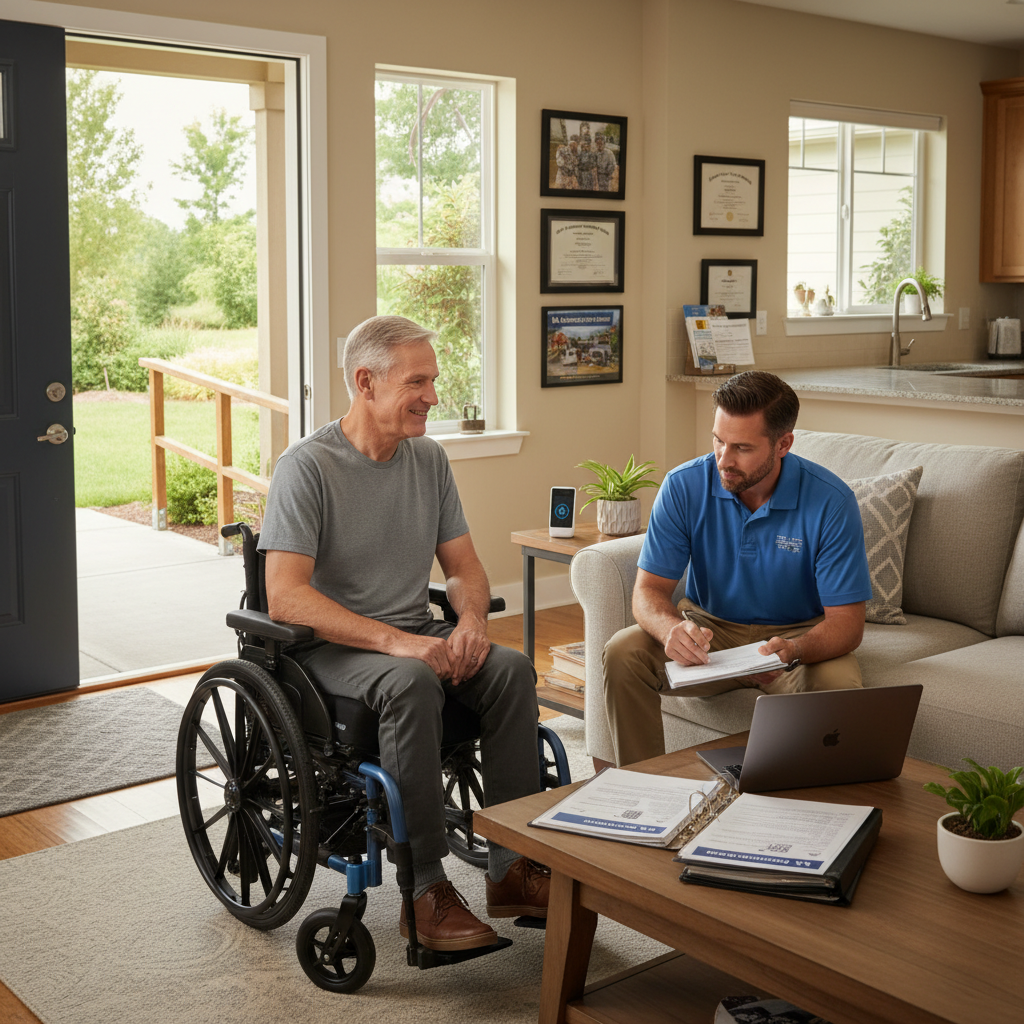
The Specially Adapted Housing (SAH) grants can cover a wide range of modifications, including high-tech solutions such as voice-activated systems and automatic door openers. The Special Housing Adaptation (SHA) grants typically cover targeted modifications like bathroom safety features (grab bars, accessible toilets), wider doorways, and improved pathways.
Q: What are the eligibility requirements for these housing grants?
Eligibility generally requires a qualifying service-connected disability, current or planned home ownership (except for Temporary Residence Assistance (TRA) grants), and intent to use the property as a primary residence. Specifically, the Department of Veterans Affairs determines eligibility for SAH grants, typically requiring a permanent and total service-connected disability.
Q: What kind of property inspections are involved in the grant process?
Several reports and inspections are used to assess the suitability and condition of properties under the VA’s SAH program. These include the Report of Loan Guaranty Existing Housing Unit Inspection and other VA forms designed to ensure that the adapted housing meets the necessary requirements for veterans.
Q: Can the grant amount vary?
Yes, grant amounts vary depending on the severity of the veteran’s disability and the extent of the modifications needed. Veterans may use as much or as little of their grant as required, based on bids from builders and the adaptations necessary.
**Q: Are there deadlines or other important dates veterans should be aware of?
Certain program notices and registration deadlines exist; for example, one notice sets a registration deadline of September 10, 2025. Veterans should stay informed about such dates to ensure timely participation in available programs.
The content is provided by Harper Eastwood, Front Signals