
Summary
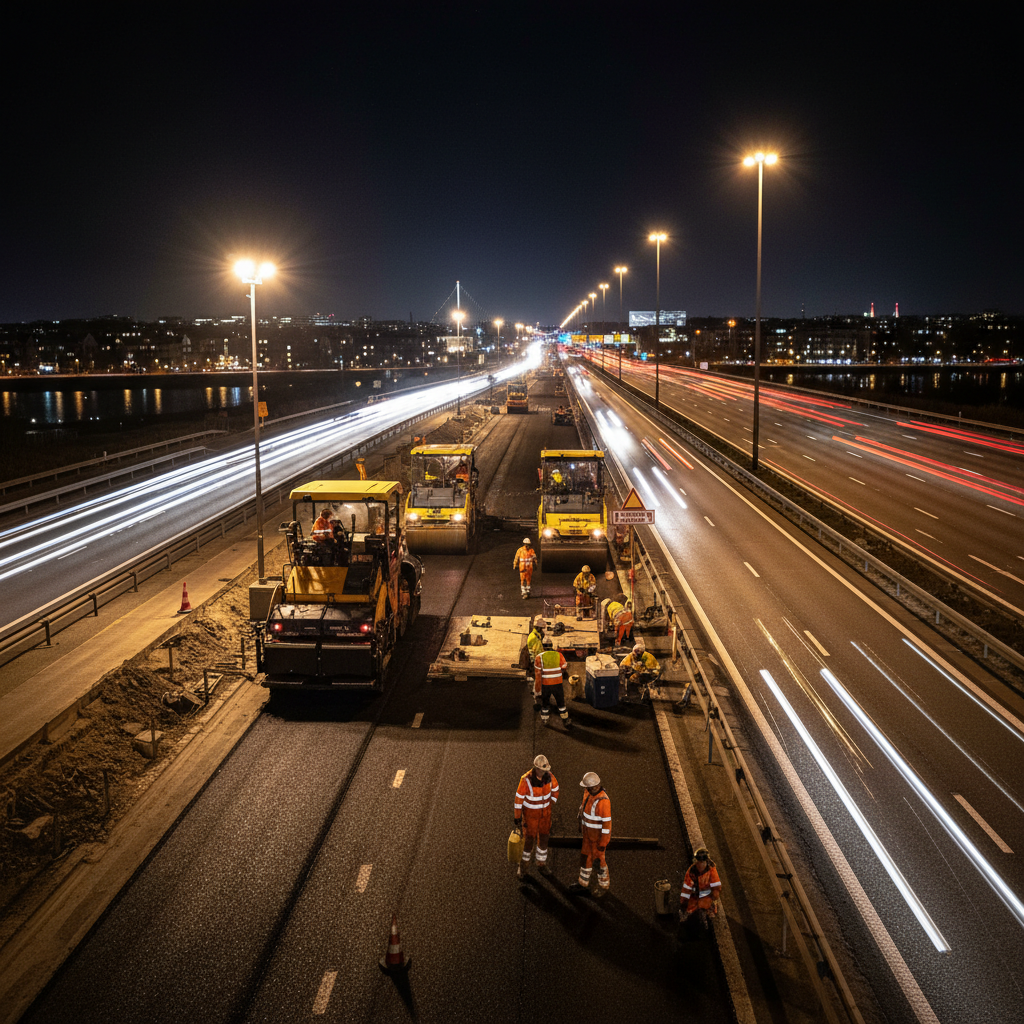
Night work in road construction is a critical operational strategy employed primarily to reduce daytime traffic congestion and improve project efficiency by taking advantage of lower traffic volumes and cooler temperatures. In Denmark, night work is defined as any construction activity conducted between 10 PM and 6 AM, with many roadworks—including bridge paving, surface leveling, and public road cleaning—scheduled during these hours to minimize disruptions to commuters and local businesses. This practice has gained prominence due to its potential to expedite project completion while maintaining smoother traffic flow during peak daytime periods.
The unique challenges of nighttime road construction—such as reduced visibility, increased worker fatigue, and higher traffic speeds—necessitate specialized safety measures and operational protocols. These include the use of advanced lighting technologies like portable balloon lights and LED fixtures, retroreflective road markings, personal safety equipment, and comprehensive fatigue management strategies to mitigate risks to both workers and motorists. Despite these precautions, night work remains associated with elevated safety hazards and long-term health effects linked to circadian rhythm disruption, prompting ongoing research and regulatory attention.
Career opportunities in this sector are diverse, ranging from machinery operation to safety supervision, with employers emphasizing proper training, certification, and adherence to Danish labor regulations that govern working hours, rest periods, and compensation for night shifts. Workforce development efforts focus on equipping workers to handle the physical and mental demands of night shifts, ensuring compliance with collective agreements and fostering a culture of safety.
Looking forward, innovations in lighting, traffic control, and sustainable practices aim to enhance the safety and environmental compatibility of nighttime road construction. These advances seek to balance operational efficiency with worker well-being and public safety, while addressing social concerns such as pedestrian visibility and equitable access to services during night hours. As urban traffic patterns evolve, night work in road construction remains a vital, though complex, component of infrastructure development.
Overview of Night Work in Road Construction
Night work in road construction is an essential practice primarily driven by the need to reduce traffic congestion and operate under cooler temperatures, which enhances productivity and efficiency. Working during nighttime hours allows construction crews to avoid the delays and safety hazards associated with heavy daytime traffic, enabling smoother and faster project completion.
Effective nighttime construction requires specialized measures to ensure safety and visibility. This includes the design of glare-free lighting systems that provide uniform illumination for workers and motorists approaching or exiting construction zones. Proper retro-reflective delineation and efficient lighting are crucial to identify construction vehicles and temporary road markings, minimizing risks and improving operational safety.
The development and implementation of guidelines for nighttime operations focus on optimizing both safety and construction facilitation. These guidelines analyze current practices to recommend strategies that balance visibility, worker safety, and project efficiency, addressing the unique challenges posed by low-light conditions.
Importance of Night Work in Road Construction
Night work plays a crucial role in road construction due to several operational and safety-related factors. One of the primary reasons for scheduling construction activities at night is the significant reduction in traffic congestion, which allows for more efficient and uninterrupted workflow. With fewer vehicles on the road, construction crews can perform tasks that would otherwise cause major daytime disruptions and delays. Additionally, cooler nighttime temperatures contribute to improved working conditions and facilitate certain construction processes, such as pouring and curing cement, which benefit from lower ambient heat.
Beyond operational efficiency, night work is also important for minimizing the impact of road construction on daily commuters and local businesses. Reduced traffic during nighttime hours helps to limit delays and maintain smoother traffic flow during peak daytime periods. However, working at night introduces unique safety challenges, including reduced visibility, increased risk of driver and worker fatigue, and the presence of faster-moving vehicles due to lighter traffic volumes. These risks necessitate rigorous safety protocols, such as adequate lighting, use of personal protective equipment, fatigue management, and effective communication among workers.
Moreover, nighttime operations require a strong commitment to safety at all organizational levels, as the potential hazards in work zones are heightened during these hours. Proactive risk mitigation not only protects workers and motorists but also helps companies avoid significant financial losses related to accidents and productivity downtime. Despite some challenges, the strategic implementation of night work remains a vital component in achieving timely, cost-effective, and safe road construction projects.
Types of Night Work Activities in 2025
Night work in road construction encompasses a variety of activities designed to take advantage of reduced traffic and improve project efficiency while minimizing daytime disruptions. In Denmark, night work is specifically defined as any work conducted between 10 PM and 6 AM. This time frame has become pivotal for numerous construction tasks due to the unique challenges and benefits it presents.
One of the most prevalent nighttime construction activities is bridge paving. According to industry experts, bridge paving projects are commonly scheduled during night hours to reduce the impact on traffic flow and public inconvenience. Besides paving, nighttime operations also include tasks such as cleaning adjacent public roads, filling holes, and leveling uneven surfaces to maintain safety and accessibility around work zones.
To address the operational and safety concerns specific to night work, projects often incorporate specialized procedures. These include arranging noisy machinery at the farthest possible distance from public areas or employing engineering controls to minimize noise impact. Additionally, when overhead cranes operate near public zones, clearing the area and ensuring proper supervision are critical safety measures. Equipment management is also emphasized; for example, operators are trained to turn off machinery when not actively in use, and jackhammers may be enclosed within noise tents to reduce sound levels.
Dust and vibrations are common issues experienced during nighttime construction. Dust tends to be more visible under artificial lighting, accentuating particulates that can affect both workers and nearby residents. Vibrations, especially those in the low-frequency range of 1 Hz to 100 Hz, may propagate through the ground and cause discomfort or even damage to nearby structures and sensitive environments.
Other key activities in nighttime road work involve setting up staging areas for truck cleanouts and implementing strategies to manage the limited workspace available for machinery and equipment movement. High traffic speeds at night and extended working hours, often ranging from 12 to 14 hours, add to the complexity and require rigorous safety and operational protocols.
Technologies and Equipment Used in Night Work
Night work in road construction relies heavily on advanced technologies and specialized equipment to ensure safety, efficiency, and visibility despite the challenging conditions. Effective lighting solutions, reflective materials, and personal safety devices play crucial roles in mitigating the risks associated with reduced visibility and worker fatigue.
Lighting Technologies
One of the most critical components of night work is proper illumination. Portable balloon lights such as POWERMOON have become widely used due to their durability and high performance. These lighting balloons are made from heavy-duty materials like stainless steel, aluminum, and Kevlar, and are weatherproof to withstand outdoor conditions. Equipped with multiple 1000-watt metal halide units or high-output LEDs, they provide daylight-quality, 360-degree illumination that reduces glare and eliminates dark spots on the worksite. Their design enables mounting on various equipment such as pavers, rollers, and brooms, allowing light to surround both the machinery and operator, thereby enhancing visibility and communication among crew members during nighttime operations.
Newer lighting innovations also include light-emitting diodes (LEDs), which offer advantages such as instant full brightness, no cool-down time, and compatibility with various power sources including vehicle batteries and portable generators. These features facilitate quick setup and teardown, making them highly practical for dynamic work environments. Additionally, efforts are ongoing to develop sustainable outdoor lighting that balances safety with environmental concerns such as mitigating skyglow and protecting biodiversity, which is gaining attention in road lighting authorities.
Reflective Materials and Road Markings
Reflective technologies are vital for enhancing driver awareness and guiding traffic safely through construction zones at night. Reflective road studs, which function by retroreflecting vehicle headlights back toward the source, improve lane delineation and hazard recognition over long distances. These studs come in various materials including glass, metal, and ceramic, each offering different levels of durability and reflectivity. Their use in highways, tunnels, and fog-prone areas significantly contributes to safer night driving conditions by providing clear visual cues to motorists.
High-performance road markings are also used alongside reflective devices to define lanes and warn drivers of upcoming construction activity. These markings must be rigorously tested to maintain their effectiveness under different weather and lighting conditions.
Personal Safety Equipment
In addition to site-wide lighting and reflective materials, wearable LED construction lights have been introduced to enhance individual worker visibility. Devices such as the Guardian Angel Elite Series™ provide hands-free illumination, allowing workers to clearly see their surroundings and be seen by others even in poorly lit zones. This added layer of visibility is particularly important in areas beyond the reach of fixed lighting, helping reduce accidents and improve overall safety on the jobsite.
Traffic Control Devices
To manage vehicle flow and protect workers, various traffic control technologies are employed. This includes illuminated or reflective traffic cones that improve visibility at night, some equipped with battery-powered interior lights for additional attention. Proper placement and use of these devices, along with trained flaggers and spotters, help maintain safe traffic speeds and directions through construction areas, further reducing risks associated with nighttime operations.
Operational Methods and Procedural Adaptations
Nighttime road construction requires specialized operational methods and procedural adaptations to address the unique challenges posed by reduced visibility, worker fatigue, and altered traffic patterns. Careful planning and execution are critical to maintaining safety and efficiency during these hours.
One of the foremost adaptations is the implementation of enhanced lighting strategies. Adequate and strategically placed lighting not only improves worker visibility but also increases the perceived safety of pedestrians and motorists navigating the work zone. For example, well-lit intersections can reduce nighttime pedestrian-injury crashes by up to 42 percent. The use of energy-efficient LED luminaires has become a preferred solution, providing cost savings while maintaining high-quality illumination. Lighting should be designed to minimize glare and prevent light pollution, maintaining a balance between visibility and environmental considerations.
Effective communication among team members becomes even more crucial during nighttime operations. Due to limited visibility, reliance on radios, regular briefings, and clear hand signals is emphasized. Language barriers can complicate communication, so the employment of bilingual staff or language support services is recommended to ensure clear and consistent messaging.
Traffic management procedures also require adaptation. With fewer vehicles on the road at night, traffic typically moves at higher speeds, increasing the risk for workers and drivers. When detours or alternative routes are not feasible, clearly marked barriers, prominent speed limit signage, and trained flaggers or spotters help regulate traffic flow and guide heavy machinery operators safely through the work zone. Scheduling work during hours of lighter traffic can reduce exposure to risk and improve overall safety.
Addressing worker fatigue is a vital procedural consideration. Night shifts naturally increase the likelihood of fatigue-related incidents, so implementing fatigue management strategies such as shift length restrictions, scheduled breaks, and monitoring systems helps maintain alertness and health among workers. The use of fatigue mitigation technologies and ongoing fatigue awareness training further supports a safer nighttime workforce.
Finally, ongoing training tailored to the specific challenges of nighttime construction ensures that workers are prepared to handle the unique risks involved. This includes instruction on the use of personal protective equipment (PPE), adherence to traffic safety protocols, and techniques for maintaining situational awareness in low-light conditions. Continuous community engagement and regular safety inspections round out the procedural adaptations needed to foster a culture of safety during nighttime operations.
Career Opportunities and Workforce Development
Nighttime road construction presents diverse career opportunities across various roles such as machine operators, warehouse workers, certified crane truck operators, and personal care or protective services workers who often contribute during late shifts. Employers frequently seek candidates who enjoy hands-on roles, have experience or willingness to learn machinery operation, and possess basic skills like English proficiency. Some positions may be temporary with the potential for permanent contracts, offering flexibility in shifts including mornings, afternoons, and nights, typically structured around a five-day workweek.
The sector demands workers capable of handling challenging conditions such as long hours, night shifts, weekends, holidays, and emergency call-ins, especially during adverse weather like heavy snow. To support this, experienced instructors provide tailored training and certification programs, including the Certificate of Professional Competence (CPC), aimed at enhancing worker confidence, regulatory compliance, and overall safety on the road. Safety training is critical given the unique risks of nighttime work zones, and emphasizes proactive safety practices, fatigue management, and effective communication.
Global companies investing in Denmark prioritize fair employment relationships in accordance with Danish labor law and local labor regulations, ensuring proper compensation and working conditions for employees engaged in night and weekend shifts. Trade unions and representative organizations also play a significant role in supporting construction workers by providing resources and advocacy.
Workforce development efforts focus not only on technical skills but also on mitigating the fatigue and reduced visibility challenges inherent in night work, which can affect worker well-being and safety. By combining rigorous training, strategic planning, and adherence to labor standards, the industry aims to cultivate a skilled, reliable, and resilient workforce capable of meeting the demands of night road construction projects effectively and safely.
Working Conditions and Regulatory Framework
Night work in Denmark is defined as any work performed between 10 PM and 6 AM, with night shifts commonly recognized as occurring between 11 PM and 6 AM. The regulatory framework governing working hours, including night work, is shaped by Danish labor law, which aligns with EU directives and is supplemented by comprehensive collective agreements. These regulations set clear standards for employee working time, rest periods, and compensation for overtime, ensuring fair and safe working conditions.
Employers must adhere to mandatory rest requirements, which include a minimum daily rest period of 11 hours and a weekly continuous rest period of at least 35 hours, typically covering Sunday. For workdays exceeding six hours, workers are entitled to a minimum 30-minute break. While Danish law does not impose specific statutory limits on weekend or night work beyond these rest periods and an average weekly limit of 48 hours, scheduling and compensation are often governed by collective agreements.
Shift work, which may involve rotating schedules or night shifts, is common in sectors such as construction, healthcare, food preparation, and production. These schedules often require workers to adjust their lifestyles and routines to maintain performance and well-being. Employers are legally obliged to ensure adequate safety and health protections for night workers, corresponding to the nature of their tasks.
Collective agreements play a crucial role in Denmark’s labor market by determining pay levels, supplements for overtime, staggered hours, shift work, and weekend work. These agreements also provide mechanisms for dispute resolution, including the right of union organizations to enforce compliance through strikes or picketing. For foreign companies operating in Denmark, collective agreements remain a significant consideration in employment terms and conditions.
In the construction sector, compliance with safety standards is essential, especially during night work, which carries unique risks. Employers and contractors must engage in diligent planning, implement adequate lighting, manage fatigue, and ensure effective communication and training to safeguard workers and the public. Certifications and compliance with quality and safety management systems, such as those provided by Bureau Veritas Denmark A/S, support regulatory adherence and product security within the industry.
Health and Safety Risks for Night Shift Workers
Night shift work in road construction presents several significant health and safety risks that are distinct from daytime operations. These risks persist even after adjusting for factors such as long working hours, socio-demographic characteristics, and lifestyle or work-related factors.
One of the primary concerns is fatigue, which is exacerbated by poor sleep quality commonly experienced by night shift workers. Construction workers often suffer from shorter sleep durations and reduced sleep efficiency due to accumulated fatigue, leading to increased daytime sleepiness during working hours. This sleep deprivation contributes to fatigue, pain, and susceptibility to specific health conditions. Fatigue not only impacts the health
Safety Protocols and Risk Mitigation Strategies
Nighttime road construction presents unique safety challenges that demand comprehensive protocols and proactive risk mitigation strategies to protect both workers and motorists. Establishing a robust safety culture on and off the road is essential to minimize costly injuries and fatalities, as well as to maintain productivity and operational efficiency.
A key aspect of safety is careful planning and thorough training tailored to the specific hazards encountered during night shifts. Workers must be fully aware of the risks, such as fatigue, reduced visibility, and traffic behavior, and be equipped with the knowledge and skills to manage these effectively. Communication between team members becomes even more critical at night due to limited visibility and potential language barriers; the use of radios, regular briefings, clear hand signals, and bilingual support can enhance coordination and reduce misunderstandings.
Lighting plays a pivotal role in nighttime safety. Optimal illumination involves strategically positioning lights in one or two key locations to cover all active work areas, with portable lighting units mounted on equipment such as pavers, rollers, and brooms to ensure operators have clear visibility around their machinery. Lighting design should also consider circadian factors, aiming for lower melanopic daylight efficacy ratios (mDER) between 0.30 and 0.35 at night to minimize disruption to workers’ natural sleep cycles and overall health.
Fatigue management is another critical component of safety protocols. Night workers are more susceptible to fatigue, which can impair judgment and reaction times. To combat this, companies implement shift length restrictions and employ fatigue mitigation technologies and strategies, such as those provided by platforms like Readi, which have been shown to reduce fatigue-related incidents and improve safety and productivity.
Traffic management within work zones is crucial to prevent vehicle-related accidents, which remain a significant risk factor. When rerouting traffic is not feasible, clear barriers, prominent speed limit signage, and trained workers using spotters and flaggers help guide motorists safely through or around construction zones. Scheduling work during periods of lighter traffic, such as nighttime or early morning hours, can further reduce exposure to risk. Additionally, high-performance road markings and signage must be regularly tested and maintained to ensure maximum effectiveness in guiding traffic safely, especially in challenging conditions like fog or tunnels.
Finally, ongoing community engagement and public information campaigns aimed at improving traffic flow during the day can alleviate pressure on contractors to perform hazardous night work, thereby indirectly enhancing safety. Following established guidelines such as the LHSFNA’s Roadway Safety Program and implementing Internal Traffic Control Plans further strengthen risk mitigation efforts.
Together, these safety protocols and risk mitigation strategies form a multi-layered approach that prioritizes the well-being of workers and road users, ensuring that essential nighttime road construction activities are conducted as safely as possible.
Long-Term Health Effects of Night Shift Work
Night shift work is associated with a range of long-term health effects stemming primarily from the disruption of circadian rhythms, which regulate the body’s physical, mental, and behavioral processes on a roughly 24-hour cycle. This disruption, caused by exposure to light and darkness at atypical times, leads to disturbances in the sleep/wake cycle and can contribute to various chronic health conditions.
One of the most significant health risks linked to prolonged night shift work is an increased likelihood of cardiovascular diseases. Studies indicate that women who have worked rotating night shifts for five or more years face a higher risk of death from all causes and cardiovascular disease compared to women who have never worked night shifts. Night shift workers also show elevated inflammatory markers such as C-reactive protein and leukocyte counts, which are associated with cardiovascular disease, atherosclerosis, stroke, and type 2 diabetes mellitus (T2DM).
In addition to cardiovascular risks, night shift work has been linked to metabolic disorders including obesity, hypertension, and metabolic syndrome. The disruption of biological rhythms and sleep deprivation contributes to these conditions, along with gastrointestinal tract problems, menstrual irregularities, and acute respiratory infections. Depression, anxiety, and other mood disorders are also more prevalent among night shift workers due to chronic sleep disturbances and the stress of irregular schedules.
Specific occupational groups, such as construction workers, frequently experience poor sleep quality and shortened sleep duration due to accumulated fatigue and shift work schedules. This leads to daytime sleepiness and increased risk of fatigue-related injuries and chronic pain conditions. Moreover, combined exposure to night shifts and industrial chemicals like metals and pesticides can elevate the risk of breast cancer, particularly when exposure occurs early and over a prolonged period.
Efforts to mitigate these long-term health effects include designing shift schedules that limit night shifts to fewer than eight hours, incorporating frequent rest breaks, and encouraging strategies such as pre-shift napping, circadian rhythm modulation with bright light exposure, and stress reduction activities. Customizing interventions to the specific needs of employers and workers is critical, as no single approach effectively addresses all the risks associated with night shift work.
Economic and Social Impact
Nighttime road construction has significant economic and social implications that influence both the construction industry and the general public. Economically, conducting work during nighttime hours can help maintain smoother traffic flow during the day, reducing congestion and potentially improving productivity for daytime commuters and businesses. This approach is often motivated by the need to minimize disruptions to daily traffic patterns, especially in busy urban areas where daytime road closures could lead to substantial delays.
From a social perspective, nighttime construction presents a trade-off between minimizing public inconvenience and ensuring the safety of workers and road users. While reduced traffic volumes at night decrease some risks, the fatality rate on roadways during nighttime is three times higher than during the day, with a disproportionately high percentage of pedestrian fatalities occurring after dark. This heightened risk necessitates enhanced safety measures, including improved visibility and the deployment of specialized countermeasures to protect both workers and non-motorists. These measures aim to safely connect communities and maintain access to essential services despite ongoing construction activities.
Moreover, the timing of nighttime construction can influence the broader social environment. For example, the increase in evening rush-hour traffic following pandemic-related lockdowns has heightened the importance of effective traffic control and safety equipment to prevent accidents and ensure smooth travel during these critical hours. Employers must carefully consider project scope, site conditions, and available resources when planning nighttime work to balance operational efficiency with safety and social responsibility.
Future Trends and Innovations
Advancements in lighting and traffic control technologies are set to transform nighttime road construction significantly. New developments such as balloon lights, light-emitting diodes (LEDs), highly reflective retroreflective sheeting, and intelligent warning lights offer promising solutions to many challenges traditionally associated with nighttime highway construction. These innovations not only enhance visibility but also improve safety for both workers and road users.
Sustainable outdoor and road lighting efforts are gaining momentum, emphasizing user safety while mitigating negative environmental impacts such as skyglow and biodiversity disruption. These initiatives aim to balance effective illumination with ecological preservation, promoting access to the night sky and fostering discussions on responsible outdoor lighting practices. This approach aligns with broader goals of creating safer, more environmentally conscious construction sites.
Improving nighttime visibility also has social implications, as enhanced lighting increases pedestrians’ perceived safety and security, particularly in disadvantaged communities and underserved neighborhoods. Better visibility facilitates safer access to essential services, addressing equity concerns within urban infrastructure. Consequently, updated lighting designs and traffic control devices are being recommended to improve safety at all government levels.
Additionally, integrating advanced traffic control measures with lighting innovations can optimize construction site safety and efficiency. As the scale and location of construction sites vary, these technologies can be tailored to specific project requirements, accounting for traffic flow and physical obstructions to maximize effectiveness.
The content is provided by Blake Sterling, Front Signals