Navigating Gold Prices: Influencing Factors
The fluctuations in gold prices are directly linked to geopolitical events, particularly the peace talks between the United States and Iran, and monetary signals from the Federal Reserve. As geopolitical tensions rise or fall, investor behavior shifts accordingly; for instance, announcements regarding diplomatic progress can lead to spikes in gold prices, while military actions can quickly reverse these gains. Understanding these correlations is key for investors considering gold as a potential hedge against economic uncertainty and inflation, especially given the current geopolitical landscape and its implications on the energy market.
US-Iran Peace Negotiations and Gold Market Sensitivity
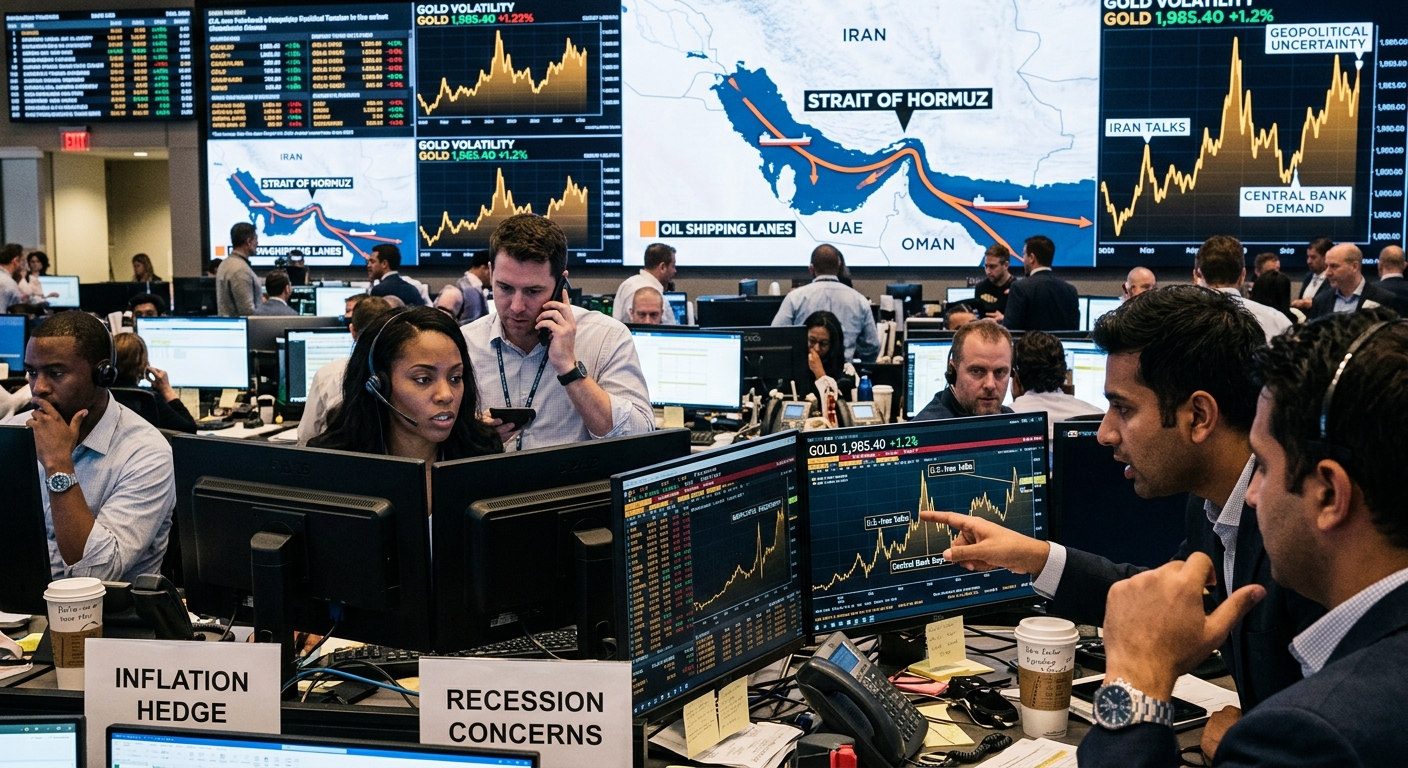
The ongoing peace negotiations are central to the recent volatility in gold prices. Positive developments, such as news of a memorandum of understanding, initially boost prices, as seen with a 1.2% rise following such an announcement. However, these gains are fragile, as military strikes can abruptly alter market sentiment, illustrating how quickly dynamics can change in response to geopolitical tensions in critical regions like the Strait of Hormuz, which further complicates the inflation outlook and investor expectations.
Federal Reserve’s Influence on Gold Trajectories
The Federal Reserve’s monetary policy significantly impacts gold prices. The market reacts to the Fed’s forecasts and guidance regarding interest rates, which affects the opportunity cost of holding gold. For investors, it is critical to monitor these signals; a hawkish stance can lead to declines in gold prices, while speculation about potential rate cuts could enhance gold’s attractiveness as an inflation hedge. Understanding the Fed’s evolving outlook can provide insights into future gold market behavior.
The Role of Economic Data in Gold Pricing
Key economic indicators are vital in shaping gold price movements. Data on inflation, such as the Consumer Price Index (CPI), directly influences gold demand as it emphasizes gold’s position as an inflation hedge. Lower-than-expected inflation numbers may diminish gold’s appeal, while rising figures—particularly alongside geopolitical volatility—tend to increase demand for bullion. Investors should remain alert to these economic releases and their potential impact on market dynamics.
Strategies for Navigating Gold Investment Amid Geopolitical Uncertainty
As geopolitical landscapes influence gold prices, investors face challenges in timing their entries into the market. Strategies like dollar-cost averaging can help mitigate risks associated with volatility. Understanding the complex interplay between geopolitical events, such as US-Iran relations, and overall economic health is essential for making informed investment decisions in gold, ensuring a balanced approach amidst uncertainty.
Market Reactions to Global Developments
Market participants react sharply to geopolitical and economic developments, particularly concerning the US-Iran conflict. As military tensions escalate, expectations regarding interest rates also shift, affecting gold demand. The historical context of previous energy crises offers insight into how these dynamics are amplified today, contributing to fluctuations in gold pricing that investors must navigate adeptly.
Anticipated Market Movements and Expert Insights
Market predictions indicate that gold prices will continue to be influenced by a mixture of geopolitical and economic factors. Expert opinions suggest that easing tensions, particularly regarding sanctions or regional conflicts, could lead to an initial decline in gold prices due to reduced safe-haven demand. However, ongoing concerns about inflation, debt levels, and potential Federal Reserve actions may still support a bullish sentiment in the medium term. Keeping abreast of these factors is essential for those looking to invest in gold as part of a diversified strategy.
The content is provided by Jordan Fields, Front Signals