Summary
Laser treatments for the removal of under-eye bags have emerged as a prominent, minimally invasive alternative to traditional surgical procedures, offering targeted skin tightening, fat reduction, and collagen stimulation with reduced downtime and scarring. These therapies utilize advanced laser technologies—such as Fractional CO2, Erbium, Fraxel, and Endolift lasers—to address mild to moderate puffiness, wrinkles, and pigmentation issues around the delicate under-eye area. Over the past several decades, continuous technological and clinical innovations have expanded the applications of laser treatment in cosmetic dermatology and oculoplastic surgery, making them notable options for patients seeking effective eye rejuvenation without the risks and recovery associated with conventional blepharoplasty.
The development of laser technology dates back to early 20th-century theoretical breakthroughs by Max Planck and Albert Einstein, culminating in the invention of the first laser in 1960. Medical applications rapidly followed, with pioneering dermatologists like Leon Goldman demonstrating lasers’ selective tissue effects in the 1960s. Since then, improvements in laser systems, including the integration of articulated arm handpieces and robotic scanning devices, have enhanced precision and safety, enabling their use in delicate facial areas such as under the eyes. Notably, the Laserlift method and Endolift technology represent recent innovations that dissolve fat cells internally while tightening skin, providing less invasive options tailored to patient needs.
Clinical outcomes generally show significant improvements in skin texture, tightness, and reduction of under-eye puffiness, with faster recovery times compared to traditional surgery, making laser treatments particularly suitable for patients with mild to moderate concerns. However, laser therapy may be less effective for severe sagging or deep fat bulges, where surgical intervention remains the gold standard. Patient candidacy requires thorough evaluation of health status, skin type, and anatomical factors to optimize results and minimize risks, which include temporary swelling, bruising, and rare complications.
Despite early commercial skepticism and technical challenges, support from institutions such as the U.S. National Science Foundation and positive outcomes demonstrated in military studies have bolstered clinical acceptance and ongoing innovation in this field. Regional and cultural preferences influence treatment adoption, with many patients worldwide favoring the natural, subtle rejuvenation that laser therapies offer. As technology advances, combining laser treatments with adjunctive modalities like platelet-rich plasma and radiofrequency continues to enhance effectiveness and patient satisfaction, reflecting a dynamic landscape in under-eye cosmetic care.
Historical Development
The origins of laser technology date back to the early 20th century when Max Planck discovered the relationship between energy and frequency of radiation, introducing the concept of energy quanta in 1900. In 1916, Albert Einstein published the theory of stimulating radiant energy, which eventually led to the invention of the first laser in 1960 by a collaboration of physicists and electrical engineers seeking monochromatic radiation for molecular spectra studies.
The medical application of lasers began shortly thereafter. In 1963, Leon Goldman, often called the “father of lasers in medicine,” was the first to use lasers in dermatology. He demonstrated the selective destruction of pigmented skin structures such as black hairs using Maiman’s laser and explored the potential of ruby and Q-switched lasers for tattoo removal and treatment of pigmented lesions, including nevi and melanomas. This era marked the beginning of the transformative impact of laser technology in therapeutic and cosmetic dermatology.
Ophthalmology and dermatology were among the first fields to explore laser therapy’s biological effects and therapeutic possibilities. The development of new laser systems emitting at varying wavelengths and pulse durations enabled broad surgical applications, including the treatment of vascular and pigmented lesions. In refractive eye surgery, significant advancements occurred by 1989 when Ruiz demonstrated the creation of a corneal flap using a microkeratome, which improved access to stromal tissue without removing the entire corneal disc, contributing to the rise of laser eye surgery as a standard procedure.
Laser treatments have since become a key non-invasive solution for various skin conditions, including the reduction of under-eye bags. The precision of laser technology allows for targeted skin resurfacing, tightening, and collagen stimulation with minimal downtime, offering advantages such as minimal scarring and quick recovery. These treatments are particularly effective for young patients or those with mild to moderate lipoptosis and can also be suitable for cases where surgical outcomes are uncertain or complicated.
In recent years, the commercialization of laser procedures has faced challenges, including early failures and skepticism from investors. However, support from institutions like the National Science Foundation helped sustain development efforts. Notably, a 2006 U.S. Navy study demonstrated that military pilots who underwent laser eye surgery recovered faster and had superior vision compared to conventional surgeries, boosting commercial acceptance.
More recently, novel laser-based techniques such as the Laserlift method have been introduced for under-eye bag treatment. This approach involves melting fat from within to tighten the skin without removing excess skin, offering a less invasive alternative to traditional surgical eyelid correction. Such innovations continue to evolve the field, reflecting decades of technological and clinical advancements in laser therapy.
Types of Laser Technologies for Under-Eye Bag Removal
Laser treatments for under-eye bag removal utilize various technologies designed to target fat deposits, tighten skin, and stimulate collagen production, offering a minimally invasive alternative to traditional surgery. Among the most commonly used laser technologies are Fractional CO2, Erbium, Fraxel, and Endolift lasers, each with distinct mechanisms and applications tailored to the delicate under-eye area.
Fractional CO2 Laser
The Fractional CO2 laser is one of the most widely employed devices for under-eye rejuvenation. It works by creating microscopic, controlled wounds in the skin, which trigger the body’s natural healing process. This response leads to collagen restoration and gradual tightening of the skin, thereby reducing puffiness and improving skin texture. The CO2 laser also targets fat herniation by promoting the repair of damaged tissue around the eyes. Treatment is typically performed under topical anesthesia, allowing patients to resume daily activities within a few days. This laser is especially effective for tightening mild to moderate loose skin and reducing pigmentation-related dark circles.
Erbium Laser
Similar to the CO2 laser, the Erbium laser resurfaces the skin by precisely removing the outer damaged layers, promoting renewal and collagen production. It is valued for its precision and relatively mild recovery time. Erbium lasers are commonly combined with other treatments to enhance results, particularly for patients with mild to moderate under-eye concerns.
Fraxel Laser
The Fraxel laser is a non-ablative technology known for its high precision, making it particularly suitable for the sensitive skin around the eyes. It uses a focused laser wand to treat small patches of aging or damaged skin, stimulating collagen without significant downtime. Fraxel treatments are non-invasive and safe for under-eye areas, providing subtle yet effective improvements in skin tone and texture.
Endolift Laser
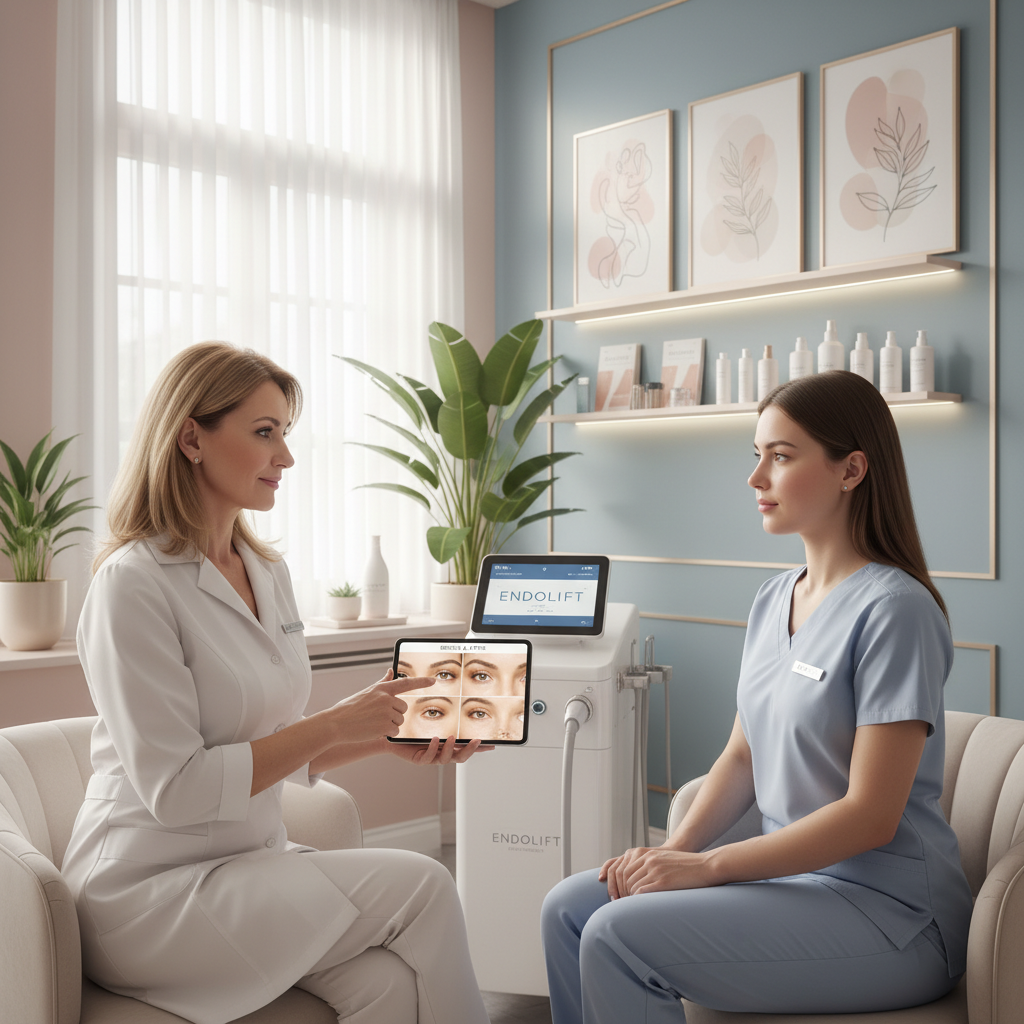
Endolift represents a minimally invasive laser-based technology that tightens skin from within by delivering laser energy directly into the superficial hypodermis via an ultra-thin optical fiber. This approach not only dissolves excess fat cells under the eyes but also stimulates collagen production, resulting in firmer, smoother skin without surgical incisions. Often combined with Fractional CO2 laser treatments, Endolift offers a synergistic effect by addressing both internal tissue tightening and external skin resurfacing for optimal outcomes.
Additional Technologies and Combinations
Beyond individual laser treatments, practitioners may combine laser therapies with other modalities such as platelet-rich plasma (PRP) to enhance skin rejuvenation. PRP leverages growth factors to improve skin tone and texture but is less effective for structural fat bulges. Selection of laser types or combinations often depends on the patient’s specific anatomy, degree of skin laxity, fat pad prominence, and underlying causes of under-eye bags. In some cases, non-laser alternatives or adjuncts like radiofrequency devices (e.g., Agnes RF) are employed to melt fat and stimulate collagen with minimal downtime.
Mechanisms of Action
Laser treatments for under-eye bags utilize concentrated light energy to target specific tissues beneath and on the surface of the skin, promoting tightening, rejuvenation, and reduction of fat deposits. One common approach involves the insertion of an optical fiber beneath the skin near the under-eye area, where laser energy heats the surrounding tissue. This heat dissolves excess fat cells while stimulating collagen production, leading to skin tightening from within the superficial hypodermis, the layer beneath the skin.
Fractional CO2 lasers create controlled microscopic wounds in the skin. These micro-injuries trigger the body’s natural healing response, including the repair of damaged tissue and increased collagen synthesis. The gradual restoration of collagen tightens the skin and reduces fat herniation responsible for under-eye bags. This mechanism of controlled trauma followed by tissue regeneration is key to the effectiveness of laser resurfacing treatments.
Advancements in articulated arm laser systems and the integration of carbon dioxide laser technology have further enhanced surgical precision and efficiency in removing tissue. Articulated arm laser handpieces provide superior control during procedures, enabling surgeons to work more effectively on the eye’s complex structures and achieve better aesthetic outcomes with increased safety.
However, laser resurfacing primarily improves the texture and quality of the skin rather than directly removing fat. In cases where under-eye bags are caused by excessive fat or volume loss, surgical intervention may be necessary to reposition or remove fat deposits. Laser treatments are most beneficial for candidates with mild to moderate puffiness, fine lines, wrinkles, and good overall skin tone. Additionally, lasers can address pigmentation-related dark circles by improving skin thickness, though they are less effective against vascular causes or deep hollows.
In some treatment protocols, lasers are also being explored as drug delivery systems, focusing active substances directly to targeted areas to enhance therapeutic outcomes. Furthermore, laser skin resurfacing is often utilized post-blepharoplasty to improve skin tone, texture, and pigmentation, thereby revitalizing the skin and enhancing surgical results.
Patient Candidacy and Assessment
Determining patient candidacy for laser treatments aimed at removing under-eye bags is a crucial step to ensure safety and optimal outcomes. Candidates must undergo a thorough evaluation to confirm they are healthy enough to tolerate the procedure and to tailor the treatment plan according to individual needs. This assessment typically involves analyzing the patient’s medical history, skin type, anatomy, and aging patterns, as these factors influence both the suitability of laser therapy and the expected results.
For laser blepharoplasty, a surgical approach utilizing laser technology to lift eyelids and reduce sagging, the surgeon must decide if the patient qualifies based on health status and specific eyelid conditions. Ineligible candidates may be those with certain medical conditions or eye impairments that could complicate surgery or healing. Additionally, regular eye examinations are recommended prior to treatment to address any visual impairments that may impact surgical outcomes.
Patients often seek treatment for concerns such as fine lines, wrinkles, hooded eyelids, and saggy under-eye bags. Individual cases, such as a 58-year-old woman presenting with widespread facial wrinkles or a 52-year-old patient with sagging eyelids, highlight the need for personalized evaluation to select the most effective laser treatment or alternative therapies. Professionals may also consider complementary or alternative options like platelet-rich plasma (PRP) therapy, which can be used alongside or instead of laser treatments for eyelid rejuvenation, offering minimal side effects and enhanced safety.
In clinical practice, experienced surgeons specializing in oculoplasty and laser techniques, particularly CO2 laser treatment, provide comprehensive consultations to assess patient eligibility and develop customized plans. These consultations often involve discussion of potential risks, benefits, and realistic expectations, emphasizing that results depend on individual factors including anatomy, lifestyle, and skin tone.
Procedural Details
Laser treatments for under-eye bags and skin rejuvenation involve various techniques aimed at reducing puffiness, tightening loose skin, and improving overall texture by stimulating collagen production. Typically, these procedures are performed by trained professionals who utilize concentrated light energy to precisely target the delicate skin around the eyes.
One common approach is laser blepharoplasty, a minimally invasive surgical procedure where a laser is used to make incisions in the eyelids to remove excess fat and skin. Candidates for this surgery must undergo thorough evaluations to ensure they are healthy enough for the treatment. During the procedure, local or topical anesthesia is applied, sometimes with mild sedation, and a protective metal shield is placed over the eyes for safety. The laser incision allows for precise removal of tissue and is then sealed carefully to promote healing.
Alternatively, non-surgical laser resurfacing techniques such as fractional CO2 and Erbium lasers focus on removing damaged outer skin layers and tightening mild to moderate loose skin. These methods heat the dermis to contract existing collagen fibers and stimulate new collagen formation, leading to skin renewal without external scarring or significant downtime. Patients often experience minimal side effects such as transient swelling, redness, or bruising lasting a few days post-treatment.
Laser procedures can be standalone treatments or combined with other eyelid rejuvenation methods such as traditional blepharoplasty, Botox, microneedling, or platelet-rich plasma (PRP) therapy for enhanced results. Combining laser treatment with surgical procedures can be cost- and time-effective, as it often adds only a few minutes to the overall operation without significant increases in recovery time.
Post-procedure recovery varies depending on the technique used. Surgical laser blepharoplasty generally requires a longer healing period with more downtime, whereas non-invasive laser resurfacing usually allows patients to return to normal activities more quickly. The shorter recovery time and reduced invasiveness make laser treatments an attractive option for patients with mild to moderate under-eye concerns.
Clinical Outcomes and Effectiveness
Laser treatment for under-eye bags has demonstrated significant potential in delivering subtle yet noticeable improvements without the need for invasive surgery. Patients typically experience an immediate improvement in the appearance of eye bags and dark circles following the laser application, with clinically consolidated and more significant results becoming evident after approximately three months. The effectiveness of the treatment depends heavily on individual factors such as anatomy, skin type, aging patterns, and lifestyle, which are carefully evaluated by specialists to tailor the most appropriate strategy for each case.
Case studies illustrate a range of positive outcomes across different age groups. For instance, a 58-year-old female patient showed dramatic improvement in fine lines and wrinkles after a single CO2 laser treatment, resulting in a brighter and fresher facial appearance. Similarly, a 52-year-old patient with hooded eyelids and saggy under-eye bags experienced moderate improvement and expressed high satisfaction after just one noninvasive CO2 session. Even younger patients, such as a 35-year-old with wrinkles and hooded eyelids, achieved a non-surgical eyelid lift and wrinkle reduction with flawless results following one treatment.
Compared to traditional surgical options like lower blepharoplasty, laser procedures offer several advantages, including a shorter recovery time and reduced pain. This makes laser treatment especially appealing for patients with mild to moderate concerns. However, for individuals with excessive skin, deep fat pads, or severe sagging, surgical interventions are often more effective and provide longer-lasting outcomes. The healing process varies notably between these approaches, with surgical recovery typically requiring more downtime and complex post-operative care than laser treatments.
The integration of laser therapy into eye rejuvenation protocols is further supported by advancements combining multiple technologies to enhance outcomes. Moreover, maintaining regular eye care and addressing any underlying visual impairments are crucial for maximizing and extending the rejuvenating benefits of blepharoplasty procedures, whether surgical or laser-based. Visual galleries showcasing before-and-after results of laser under-eye bag removal and related treatments help patients set realistic expectations and understand the range of achievable enhancements.
Risks, Side Effects, and Safety Profile
Laser treatments for under-eye bags, including laser blepharoplasty and other non-invasive procedures, generally offer a favorable safety profile but are not without potential risks and side effects. Patients considered for laser eyelid lift surgery undergo a thorough evaluation to ensure they are suitable candidates and healthy enough for the procedure.
Common side effects following laser blepharoplasty include mild eye irritation or discomfort, which typically resolves shortly after the surgery. Although rare, bleeding can occur during or after the procedure. Temporary skin discoloration, such as bruising around the eyes, is also frequently observed but usually subsides within days to weeks. For example, after Fraxel laser treatment around the orbital area, patients may experience 24 to 48 hours of swelling and redness, along with up to 72 hours of bruising.
Laser treatments like Endolift® offer a less invasive alternative to traditional
Comparative Analysis with Other Treatment Modalities
Laser treatments for under-eye bag removal offer a noninvasive alternative to traditional surgical procedures, providing subtle yet effective improvements with shorter recovery times. Unlike classic blepharoplasty, which involves making incisions to remove excess skin and fat, laser blepharoplasty uses focused energy to tighten skin and reduce puffiness, making it appealing for patients with mild to moderate concerns. However, candidates for laser procedures must undergo thorough health evaluations to ensure suitability for surgery.
When compared to dermal fillers, lasers have distinct advantages and limitations. Fillers can inadvertently worsen eye puffiness if incorrectly applied, especially in patients with preexisting fat protrusions. Conversely, laser treatments primarily target skin laxity, surface irregularities, and fine lines, making them ideal for addressing sagging skin rather than volumetric deficiencies. Platelet-rich plasma (PRP) therapies, another non-surgical option, harness growth factors to rejuvenate skin tone and texture but are less effective for structural concerns like fat bulges. PRP is often used adjunctively with other treatments, such as laser resurfacing or microneedling, to enhance overall outcomes.
Recent technological advances have enabled the combination of multiple modalities to achieve more comprehensive eye rejuvenation. Hybrid fractional lasers, radiofrequency microneedling, and regenerative therapies improve skin elasticity and promote fat repositioning with minimal downtime, addressing limitations of single-method approaches. Furthermore, the availability of customizable platforms and upgraded handpieces allows practitioners to tailor treatments to individual patient needs, optimizing efficacy and cost-effectiveness.
In contrast to noninvasive options, traditional surgical blepharoplasty remains the most effective treatment for patients with severe sagging, deep fat pads, or excessive skin, providing longer-lasting and more dramatic results. Recovery from laser blepharoplasty tends to be faster and less painful than with bladed surgery, which enhances patient satisfaction and reduces downtime. Nonetheless, both surgical and laser procedures carry risks such as infection, scarring, and potential changes in eye function, underscoring the importance of selecting a qualified surgeon and setting realistic expectations through consultation and review of before and after images.
Technological Innovations and Future Directions
The evolution of laser treatments for under-eye bags has been marked by significant technological advancements that continue to enhance safety, efficacy, and patient outcomes. Early challenges in commercializing laser technologies, particularly in ophthalmology, were overcome with critical support from institutions like the National Science Foundation, which helped restore confidence in laser applications after initial setbacks. This foundation paved the way for broader acceptance and innovation in aesthetic laser procedures.
Recent developments focus on minimally invasive and non-surgical approaches that target fat pockets and stimulate collagen production to rejuvenate the under-eye area. Techniques such as laser resurfacing and laser-assisted fat reduction can reduce puffiness and improve skin texture without the need for incisions or resulting scars, making them ideal for patients with mild to moderate concerns. Devices like the Agnes RF, which employ radiofrequency energy in conjunction with laser technology, offer precise and controlled treatments that deliver natural-looking results with minimal downtime.
Additionally, new laser modalities continue to emerge, including specialized excimer lasers with specific wavelengths designed to treat a variety of skin conditions and autoimmune diseases. These innovations indicate ongoing efforts to expand the therapeutic potential of lasers beyond cosmetic applications while improving safety profiles and effectiveness.
Looking ahead, treatments such as the laserlift method are set to become more prevalent. This approach involves melting fat from within to tighten skin without removing excess tissue, offering a less invasive alternative to traditional surgical under-eye correction. However, surgical options may remain necessary for patients with significant skin laxity or wrinkles. The continued refinement of automated scanning systems and pulse modulation also promises to reduce thermal injury and scarring, optimizing treatment precision.
Key Researchers, Clinicians, and Institutions
The development and commercialization of laser treatments for under-eye bags have involved numerous key figures and institutions across biomedical engineering, dermatology, and ophthalmology. Among these, Juhasz, a biomedical engineering and ophthalmology professor at the University of California, Irvine, played a pivotal role. He emphasized the challenges faced during the early stages of bringing the technology to market and highlighted the crucial support from the National Science Foundation (NSF), which helped overcome skepticism from venture capitalists due to earlier failures in laser ophthalmology companies. Furthermore, a 2006 U.S. Navy study demonstrated that military pilots who underwent laser procedures recovered faster and had better vision than those receiving conventional surgeries, providing significant commercial validation for these treatments.
In the field of dermatology, several clinicians have contributed to advancements in laser applications targeting under-eye concerns. Susan Van Dyke, M.D., medical director and founder of Van Dyke Aesthetics in Arizona, envisions lasers evolving into drug delivery systems capable of safely focusing active substances onto treatment areas. The introduction of robotic scanning devices in the 1990s marked a technological leap, allowing precise and uniform movement of the laser beam across the skin and minimizing tissue damage from overexposure. Matthew Kelleher, M.D., a board-certified dermatologist, noted that these scanners improved treatment safety and efficacy. Additionally, practitioners like Dr. Pozner have pointed out that modern laser platforms offer customizable and upgradable handpieces, enabling dermatologists and plastic surgeons to provide more dramatic skin tightening and fat removal results in fewer sessions.
Several institutions have contributed to the safety and efficacy studies of laser treatments. For example, the USC Roski Eye Institute in Los Angeles, represented by Sandy X. Zhang-Nunes, MD, Associate Professor of Clinical Ophthalmology and Chief of Oculofacial Plastics, has advocated for combining laser skin resurfacing with blepharoplasty, noting the safety and variety of laser surgery options available for under-eye rejuvenation. Moreover, Kopelman Aesthetic Surgery and other dermatology centers have promoted combination therapies integrating laser resurfacing with dermal fillers and other modalities such as microneedling and radiofrequency to enhance and maintain results over time.
Historically, the broader scientific foundation for laser technology traces back to collaborations between physicists and electrical engineers, leading to the invention of the first laser in 1960, built upon theoretical work by Albert Einstein on stimulating radiant energy. This fundamental breakthrough underpins the wide range of current laser applications, including the innovative treatments targeting under-eye bags.
Finally, in regions where non-surgical solutions are preferred, treatments like the “laserlift” of the under-eye area have been recognized as safe and effective methods for removing fat pads without invasive surgery, further diversifying the therapeutic options available for patients suffering from persistent under-eye bags.
Cultural, Regional, and Regulatory Perspectives
Laser treatments for removing under-eye bags have seen varying degrees of acceptance and adaptation across different cultural and regional contexts. In Europe, for instance, there is a notable preference for minimally invasive procedures that provide natural-looking results without drastic changes or visible scarring. Patients often seek laser treatments as a safe alternative to traditional surgery, valuing outcomes that maintain a refreshed yet subtle appearance. This cultural inclination towards natural aesthetics has driven demand for advanced laser systems that can be customized and upgraded to offer faster, more effective treatments with fewer sessions.
In the United States, the commercialization and clinical adoption of laser technology have been influenced by both scientific endorsements and regulatory scrutiny. Early challenges in the ophthalmology laser market, including failed ventures and cautious venture capital investment, underscored the need for rigorous validation. Support from organizations such as the National Science Foundation (NSF) played a crucial role in legitimizing the technology, while military studies demonstrating superior recovery and vision outcomes in pilots provided further impetus for wider acceptance. The U.S. regulatory environment emphasizes safety and efficacy, with laser equipment often requiring certification such as the Medical CE mark before clinical use.
Across regions, patient education and personalized consultations remain vital components of treatment planning. Clinics frequently provide thorough comparisons between laser and traditional blepharoplasty options, helping individuals weigh factors such as skin type, severity of eye bags, and personal preferences to achieve optimal results. This patient-centered approach reflects a growing global trend towards tailored cosmetic interventions that balance technological innovation with cultural expectations of beauty and safety.
The content is provided by Avery Redwood, Front Signals