
Summary
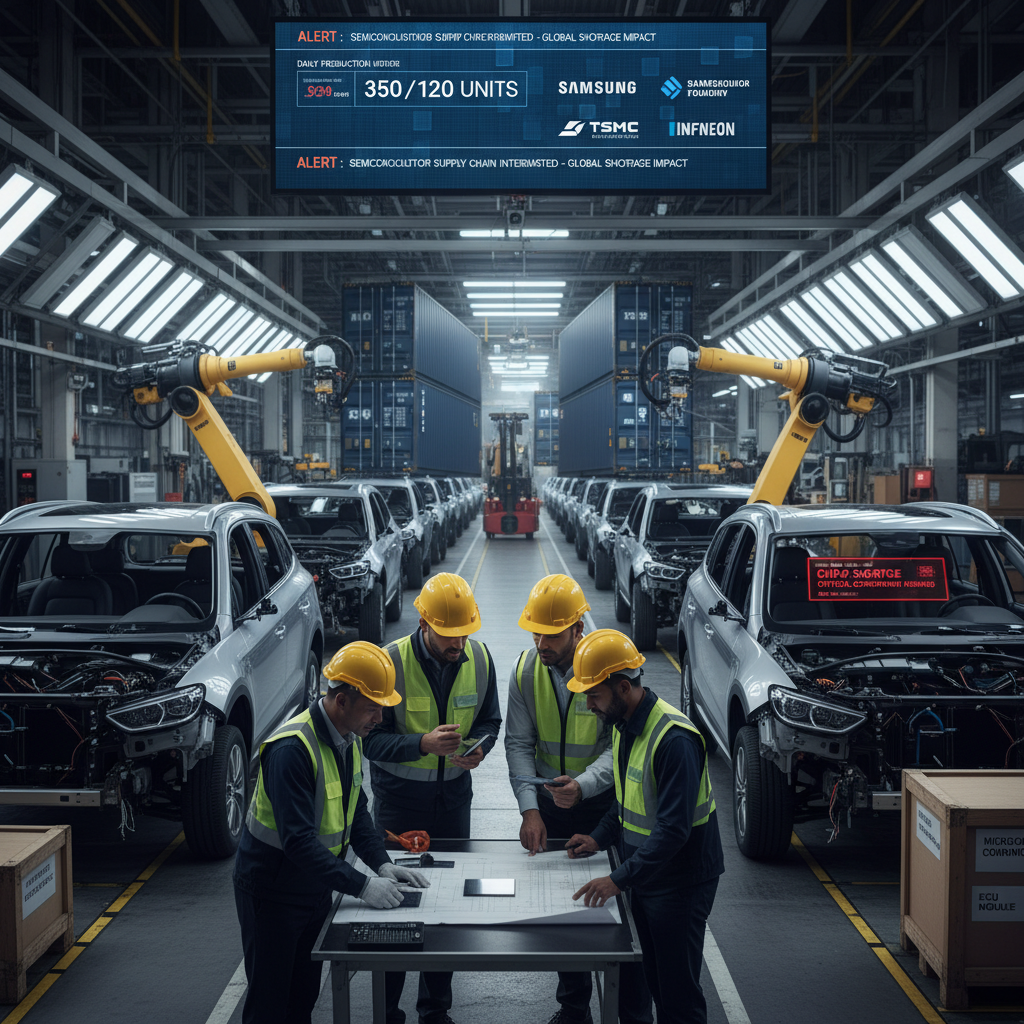
The global semiconductor chip shortage has emerged as a critical challenge for the automotive industry, disrupting vehicle production and exposing vulnerabilities in complex supply chains that heavily depend on a limited number of chip manufacturers. Triggered by a combination of pandemic-related manufacturing disruptions, geopolitical tensions, and surging demand for consumer electronics, the shortage has revealed the fragility of just-in-time procurement models and single-source sourcing strategies widely used in automotive manufacturing. As modern vehicles increasingly rely on thousands of semiconductor components for essential functions—ranging from safety systems to advanced driver assistance and autonomous driving technologies—the scarcity of chips has had widespread operational and financial impacts.
Automakers and suppliers have faced significant production delays, revenue losses, and have been forced to alter vehicle features to conserve scarce semiconductor resources. The shortage’s effects have been compounded by geopolitical factors such as trade restrictions and conflicts affecting critical raw materials required for chip fabrication, highlighting the broader vulnerabilities of global supply networks. In response, industry leaders have pursued diverse strategies including long-term supply agreements, vertical integration of chip manufacturing, and enhanced collaboration with semiconductor producers to improve supply chain transparency and resilience.
Technological innovation is also a key focus, with automotive companies and semiconductor manufacturers investing in advanced chip designs, alternative materials like silicon carbide and gallium nitride, and centralized computing architectures to reduce chip dependency while enabling next-generation electric and autonomous vehicles. These efforts reflect a broader shift in the automotive sector towards a more software-defined and AI-driven future, emphasizing the strategic importance of semiconductors in vehicle performance, safety, and connectivity.
Despite gradual improvements in chip availability by mid-2023, experts caution that the shortage’s effects may linger into the mid-2020s, underscoring the need for ongoing industry collaboration and innovation to build a more adaptable and robust semiconductor ecosystem. The crisis has not only prompted immediate mitigation measures but has also accelerated long-term structural changes aimed at safeguarding automotive production and supporting the sector’s transformation amid evolving technological demands.
Background
The global semiconductor chip shortage has severely impacted the automotive industry, revealing the fragility and complexity of its supply chains. The shortage emerged amid a convergence of factors, including the COVID-19 pandemic, geopolitical tensions, and disruptions in manufacturing and logistics. Automotive manufacturers like Bosch and suppliers such as Aumovio, ZF Group, and Hella faced imminent production halts due to insufficient chip supplies. This crisis exposed the industry’s overreliance on a limited number of semiconductor manufacturers and highlighted the vulnerabilities of just-in-time manufacturing and single-source component strategies.
Automotive supply chains are inherently complex and multi-tiered, involving numerous suppliers at different levels. For example, General Motors sources components from roughly 250 suppliers, who in turn procure chips from a dozen semiconductor companies. Tier-1 suppliers like Continental AG and Bosch rely on Tier-2 suppliers such as NXP Semiconductors, Infineon Technologies, and STMicroelectronics, making coordination and transparency challenging during supply disruptions. Furthermore, competition for chip manufacturing capacity between the automotive sector and high-volume consumer electronics exacerbates lead times and supply shortages.
Semiconductor chips are critical to modern vehicles, which contain on average over 1,700 chips supporting essential functions ranging from power management to advanced safety systems. Approximately 95% of automotive chips are foundational or “legacy” chips, designed to meet stringent automotive-grade requirements such as high reliability under extreme temperature variations, moisture, vibration, and electromagnetic interference. These chips enable critical safety features like anti-lock braking systems, electronic stability control, airbag deployment, and advanced driver assistance systems (ADAS). Increasingly, semiconductors are central to the transition toward smarter, connected, and autonomous vehicles, requiring real-time processing of sensor data from lidar, radar, and cameras to support functions such as collision avoidance and autonomous driving.
The automotive industry’s chip shortage also reflects broader challenges, including geopolitical conflicts and soaring logistics costs. For instance, the diplomatic standoff between China and the Netherlands over semiconductor manufacturers and the conflict in Ukraine have driven supply disruptions and price volatility across raw materials and transportation. These factors, combined with the industry’s dependence on a small pool of semiconductor fabs concentrated in advanced manufacturing nodes, have underscored the need for strategic shifts.
In response, automotive innovators are pursuing various strategies to mitigate risks, including direct engagement with chipmakers to improve supply chain visibility and control, exploring in-house chip design, and investing in technologies that reduce reliance on traditional microchips. The crisis has prompted a reevaluation of supply chain practices and a move toward diversification and resilience to ensure the continued production of vehicles amid growing demand for electric and autonomous models.
Effects of the Chip Shortage on the Automotive Sector
The global semiconductor chip shortage has had a profound impact on the automotive industry, disrupting production schedules, increasing costs, and forcing manufacturers to reconsider their operational strategies. Since the onset of the shortage, original equipment manufacturers (OEMs) and Tier 1 suppliers have struggled to procure sufficient quantities of chips, leading to widespread delays in vehicle production and a significant drop in automotive revenues. This shortage has been particularly acute in the automotive sector compared to other industries such as laptops and white goods, owing to the increasing demand for advanced automotive technologies that require complex semiconductor components.
One of the most immediate effects has been a substantial reduction in vehicle production worldwide. In 2023, global automotive production was down by approximately 23% relative to pre-pandemic levels, translating to an estimated $210 billion in lost revenue for the industry. Many assembly plants across North America and Europe have faced cutbacks, with millions of vehicles removed from production schedules. Some manufacturers have temporarily suspended operations or reduced output, exemplified by Volkswagen’s delay in launching its ID.5 electric vehicle and Stellantis pausing production at certain French plants due to semiconductor shortages.
In response to the scarcity of chips, automakers have adopted various coping mechanisms to sustain production. Some companies have selectively removed features heavily reliant on microprocessors to conserve chips. For instance, BMW eliminated parking assistance and touchscreen functionalities in certain models, while Mercedes-Benz removed high-end audio systems and wireless phone charging options. Although these measures allowed production to continue, they resulted in vehicles with reduced functionality, highlighting the trade-offs caused by the shortage.
The chip scarcity has also exacerbated existing supply chain complexities within the automotive sector. Geopolitical factors such as the conflict in Ukraine have further strained supply chains by impacting the availability of critical raw materials like palladium, krypton, and xenon, which are essential in chip manufacturing.
The shortage has also influenced vehicle pricing and market dynamics. Increased production constraints and demand from economic recovery led to rising used car prices, with some markets experiencing price increases of up to 10% in early 2021. Despite these challenges, by 2023 the automotive industry showed signs of recovery, with global car production increasing by 3% and the chip shortage largely subsiding.
Sourcing Challenges During the Chip Shortage
The global semiconductor shortage has exposed significant sourcing challenges for the automotive industry, stemming from a complex interplay of supply chain intricacies, geopolitical factors, and manufacturing limitations. One of the primary difficulties lies in the automotive sector’s competition with consumer electronics for limited manufacturing capacity at leading semiconductor foundries. This competition is intensified by extended lead times that can exceed four months, which complicates timely procurement and production planning.
The automotive supply chain itself is highly complex and multi-tiered, with original equipment manufacturers (OEMs) relying on Tier 1 suppliers, who in turn source chips from numerous Tier 2 semiconductor manufacturers. For example, a company like General Motors coordinates with about 250 suppliers sourcing chips from at least 11 different semiconductor producers, illustrating the elaborate and fragile nature of the supply network. This complexity exacerbates the difficulties of coordination and visibility across the supply chain, making it harder to anticipate and respond to shortages effectively.
Geopolitical tensions and trade restrictions further aggravate sourcing problems. Critical raw materials such as palladium, a key component in some chip manufacturing processes, are heavily concentrated in regions like Russia, which supplies about 40% of the global palladium market. Trade sanctions and export restrictions pose risks to the availability of these materials. Additionally, noble gases such as krypton and xenon—essential for semiconductor fabrication—have seen supply disruptions linked to conflicts involving major exporters like Ukraine and China.
The transition to more advanced semiconductor process nodes also presents a challenge. Developing and scaling production for cutting-edge chips demands substantial capital investments in manufacturing facilities and infrastructure. This requirement limits the speed at which chip production can be increased to meet surging demand from automotive electrification, autonomous driving, and connectivity applications.
In response to these sourcing challenges, some semiconductor manufacturers have sought alternative suppliers for raw materials; however, ramping up production from new sources can take at least nine months, making it a slow remedy. Moreover, traditional procurement approaches in the automotive industry—often based on short-term demand signals close to production time—have contributed to delays and inefficiencies in securing components.
Strategies Adopted by Automotive Innovators
Automotive innovators have adopted a multifaceted approach to navigate the ongoing global semiconductor chip shortage, focusing on supply chain resilience, strategic partnerships, and technological innovation. These strategies aim to ensure continuity in vehicle production while simultaneously preparing the industry for a more software-centric and AI-driven future.
Supply Chain Diversification and Supplier Collaboration
One of the primary strategies has been diversifying supply chains to reduce dependence on single or limited sources. Since the 2021 semiconductor shortage exposed vulnerabilities tied to just-in-time manufacturing and single-sourced components, many automotive suppliers have expanded their supplier base globally to enhance resilience. Increasing supplier collaboration and visibility into demand forecasts and R&D plans has become essential, enabling better agility and responsiveness to supply disruptions. For example, manufacturers have shifted from strict just-in-time production models to more flexible approaches, including some adjustments in production strategies post-pandemic.
OEMs are also fostering stronger, more strategic relationships with Tier 1 suppliers through improved end-to-end planning and data-driven processes. These measures help mitigate risks associated with inaccurate demand estimates and enable long-term contractual commitments such as take-or-pay agreements, which incentivize suppliers to prioritize automotive chip production. Additionally, joint efforts between OEMs and suppliers to standardize components and reduce variations across vehicle models help smooth demand fluctuations, facilitating more predictable semiconductor orders.
Long-Term Supply Agreements and Vertical Integration
To stabilize supply and production schedules, several leading automakers—including Toyota, Volkswagen, and General Motors—have secured long-term semiconductor supply agreements. These arrangements ensure a steady flow of critical components and minimize disruptions caused by market volatility. Meanwhile, companies like Ford and Stellantis are investing in developing their own semiconductor manufacturing capabilities, a vertical integration approach aimed at gaining greater control over chip availability and reducing reliance on external suppliers. This shift highlights a broader industry recognition that intellectual property and competitive advantage increasingly reside in electronic and software systems rather than traditional mechanical components.
Leveraging Manufacturing Partners and Digital Supply Chain Solutions
Manufacturing partners such as Jabil have played a key role by leveraging their large-scale procurement capabilities and extensive supplier networks to secure semiconductor components on behalf of automotive clients. These partners can connect OEMs with suppliers best suited to meet their operational needs, thereby alleviating some of the supply bottlenecks inherent in the traditional semiconductor supply chain. Intelligent digital supply chain solutions also enhance transparency and forecasting accuracy, helping manufacturers anticipate and react swiftly to changing market conditions.
Technological Innovations and Alternative Materials
In parallel with supply chain measures, automotive innovators are adopting new technologies to improve semiconductor efficiency and performance. There is increasing use of wide-bandgap materials like silicon carbide (SiC) and gallium nitride (GaN), which offer higher thermal efficiency and are critical for electric and autonomous vehicles. Semiconductor companies are also implementing advanced production techniques such as lithography improvements and wafer-level packaging to increase fab yields and throughput.
Moreover, the shift toward software-defined vehicles with centralized computing architectures and AI-native chips is driving a transition from multiple electronic control units (ECUs) to zonal and domain controllers powered by high-performance system-on-chips (SoCs). These developments demand robust cybersecurity features embedded at the hardware level, such as secure boot and anomaly detection, further emphasizing the strategic role of semiconductors in automotive innovation.
Short-Term Mitigation and Industry Collaboration
In the short term, the industry continues to employ traditional tactics such as chip hoarding, production cuts, and supply chain diversification to manage immediate shortages. However, these are recognized as temporary solutions. The long-term resilience of the automotive semiconductor ecosystem relies on increased collaboration among automakers, chip manufacturers, and policymakers to foster investment and innovation across the value chain. This collective effort aims to build a more adaptable and reliable supply network capable of withstanding future disruptions.
Together, these strategies illustrate how automotive innovators are not only addressing the current chip shortage crisis but also laying the groundwork for a future where semiconductor technology is integral to vehicle performance, safety, and connectivity.
Case Studies of Leading Automotive Companies
Several leading automotive companies have adopted diverse strategies to address the global semiconductor chip shortage, reflecting their efforts to stabilize production and future-proof their supply chains.
Toyota, Volkswagen, and General Motors have proactively secured long-term supply agreements with semiconductor manufacturers to guarantee a steady flow of critical components. For example, General Motors signed an exclusive long-term contract with GlobalFoundries to ensure dedicated production capacity for U.S.-made chips, aiming to reduce dependency on fluctuating external markets and stabilize manufacturing operations. Volkswagen Group of America’s CEO Scott Keogh revealed that the company is exploring the use of modular systems with fewer chips per vehicle, moving away from traditional architectures where each system requires a dedicated chip. This approach intends to reduce chip dependency and mitigate future shortages, despite requiring greater initial research and development investment.
Other manufacturers have taken more radical approaches to chip supply challenges. Ford and Stellantis have invested in vertical integration by building their own semiconductor production capabilities, which allows them to exert greater control over the supply chain and reduce reliance on external suppliers. Meanwhile, BMW and Mercedes-Benz adopted feature reduction strategies by removing or disabling non-essential electronics in certain models to conserve microchip usage. BMW eliminated features such as parking assistance and touchscreens, while Mercedes-Benz removed high-end audio systems and wireless phone charging options, enabling continued production with fewer chips but at the cost of reduced vehicle functionality.
These case studies highlight how automotive innovators are not only securing chip supplies through contracts and manufacturing investments but are also redesigning vehicle architectures and features to adapt to current and future semiconductor constraints. Such strategies demonstrate a shift in R&D and supply chain collaboration models, moving away from traditional hardware-centric production toward more flexible, software- and modular-based solutions to enhance resilience across the industry.
Semiconductor Industry Innovations Addressing the Shortage
The semiconductor industry is employing a variety of innovative strategies and advanced technologies to alleviate the ongoing chip shortage impacting the automotive sector. One key approach involves the adoption of cutting-edge production techniques such as advanced lithography and wafer-level packaging, which help maximize the efficiency and yield of semiconductor fabrication plants, thus easing supply constraints. Additionally, manufacturers are shifting their focus from solely optimizing yield to prioritizing fab process quality and reliability, implementing continuous improvement programs and stringent monitoring to reduce defects and ensure consistent chip performance in automotive applications.
To further enhance chip availability, semiconductor companies are exploring chiplet-based designs and three-dimensional (3D) packaging technologies. These advancements improve processing power and energy efficiency within compact automotive systems, allowing for more robust and scalable solutions that address space and power limitations in vehicles. Moreover, the integration of artificial intelligence (AI) chips and advanced compute architectures is enabling the development of intelligent, autonomous, and personalized vehicles, marking a transformative era in automotive innovation. These AI-driven semiconductors support edge computing within vehicles, reducing latency and enabling real-time decision-making critical for autonomous driving and advanced safety features.
Flexibility in production processes has also become vital as automakers and semiconductor manufacturers strive to adapt quickly to fluctuating chip availability. By designing more agile manufacturing systems and reducing the total number of chips required per vehicle through system integration, companies can better manage scarcity pressures and maintain production continuity. Furthermore, to strengthen supply chains, some U.S. automakers are moving towards in-house chip design
Strategic Partnerships and Industry Collaboration
The automotive industry’s response to the global chip shortage crisis has prominently featured strategic partnerships and enhanced collaboration among key stakeholders, including automakers, semiconductor manufacturers, and policymakers. Leading automotive companies such as Toyota, Volkswagen, and General Motors have secured long-term supply agreements with semiconductor firms to ensure a steady flow of critical components, thereby stabilizing production lines and mitigating disruptions. This proactive approach helps cushion the immediate impact of shortages while enabling more predictable supply chains.
Moreover, several manufacturers, including Ford and Stellantis, have pursued vertical integration strategies by investing directly in semiconductor production capabilities. This shift aims to reduce reliance on external suppliers and improve control over the semiconductor supply chain, enhancing resilience against future disruptions. At the same time, semiconductor companies are intensifying cooperation with automotive original equipment manufacturers (OEMs) to better align production with anticipated demand, emphasizing transparent communication and joint planning efforts.
Industry leaders in the semiconductor sector, such as Infineon, NXP, STMicroelectronics, Texas Instruments, and Renesas Electronics, are collaborating closely with automotive manufacturers to develop tailored semiconductor solutions that address evolving vehicle requirements like advanced driver assistance systems (ADAS), electric vehicles (EVs), and Internet of Vehicles (IoV) applications. These partnerships leverage the companies’ technological expertise and scale, allowing them to innovate in power efficiency, processing performance, and functional safety compliance—key areas for next-generation automotive electronics.
Policymakers have also played a crucial role by facilitating industry dialogue and supporting initiatives to strengthen domestic semiconductor manufacturing capacity. However, geopolitical challenges such as export restrictions on key chip suppliers like Nexperia have raised concerns about supply stability in Europe and the United States, prompting industry groups like the European Automobile Manufacturers’ Association (ACEA) and the Alliance for Automotive Innovation to call for urgent resolutions and coordinated action. Recent investments in foundational semiconductor manufacturing facilities, particularly in the U.S., aim to expand capacity and reduce dependence on overseas production, though full supply chain localization remains a work in progress.
Ultimately, the automotive sector recognizes that long-term resilience will depend on continued collaboration across the entire value chain—automakers, semiconductor suppliers, and policymakers alike. By fostering partnerships, sharing demand forecasts, and investing collectively in new technologies and manufacturing capabilities, the industry strives to create a more adaptable and robust ecosystem capable of withstanding future semiconductor supply disruptions.
Impact on Production and Public Communication
The global semiconductor shortage has had a profound impact on automotive production worldwide, leading to significant disruptions in manufacturing and revenue declines. Nearly all major auto manufacturers have faced production halts and backlogs, with annual worldwide production losses estimated at $110 billion by May 2021. The shortage has forced original equipment manufacturers (OEMs) and Tier 1 suppliers to delay vehicle production due to insufficient chip supplies, causing a notable drop in automotive revenues. While other industries such as laptops and white goods have also experienced production cuts, the automotive sector has been particularly hard hit due to its heavy reliance on semiconductors.
Public communication from the automotive industry has reflected the urgency of the crisis. Key stakeholders, including the Alliance for Automotive Innovation—which represents major automakers like GM, Toyota, Ford, and Volkswagen—have called for swift resolutions to supply chain threats, especially amid escalating geopolitical tensions and regulatory challenges such as new U.S. export control rules affecting semiconductor suppliers. Industry associations like ACEA have voiced strong support for urgent strategic action following consultations on the future of the automotive industry.
Automakers have also been adapting their communication strategies by engaging in more transparent and collaborative dialogues with tier-one suppliers and semiconductor manufacturers to better align demand and supply priorities. This includes joint discussions aimed at improving visibility into real demand levels and reducing the inefficiencies caused by overordering in crisis conditions. Furthermore, some premium OEMs have mitigated the financial impact by implementing selective manufacturing and sales strategies designed to optimize margins during periods of constrained supply.
Despite ongoing challenges, mid-2023 marked an inflection point when semiconductor availability began to ease constraints on vehicle production. However, public communication remains vigilant regarding episodic supply chain threats and geopolitical risks, particularly those associated with wafer and packaging capacities concentrated in the Asia-Pacific region. The industry is simultaneously advancing capacity expansions in Japan, Europe, and North America to build long-term resilience. Additionally, the broader impact of raw material shortages—such as increased costs for aluminum and critical gases like krypton and xenon due to the Ukraine conflict—continues to influence pricing and logistics, further complicating supplier selection and operational planning.
Future Outlook
The automotive industry’s response to the global chip shortage continues to evolve, with traditional short-term strategies such as chip hoarding, production cuts, and supply chain diversification still in use. However, these methods are recognized as insufficient for long-term resilience. The future success of the industry depends heavily on fostering collaboration and increased investment across the entire value chain, involving automakers, semiconductor manufacturers, and policymakers working together to build a more adaptable and resilient ecosystem capable of withstanding future disruptions.
Industry experts predict that the chip shortage will persist into the mid-2020s, with a full resolution unlikely before 2023 or 2024. IBM CEO Arvind Krishna, for example, stated that expectations for an end to the crisis by late 2022 were optimistic, and similar sentiments have been echoed by other leaders in the field. This extended timeframe underscores the need for innovative and rapid responses to mitigate ongoing impacts on production and supply.
To strengthen supply-chain resilience, companies are considering strategic investments such as dual-source manufacturing qualifications, supply guarantee pricing models, and volume bundling to enhance negotiation power. Improved transparency across the supply chain—facilitating better supply-demand matching—will enable OEMs and Tier 1 suppliers to implement midterm inventory management strategies, reducing risk and allowing more efficient chip allocation.
Looking ahead, semiconductor technology will play an increasingly critical role in shaping the future of automotive innovation. From enabling autonomous driving systems and connected in-cabin experiences to supporting electric mobility, advanced semiconductor integration is at the core of vehicle transformation. The shift toward centralized computing architectures, AI-native chips, and real-time communication capabilities is driving new designs focused on performance and security, including hardware encryption and anomaly detection. Emerging materials like silicon carbide (SiC) and gallium nitride (GaN) will also enhance thermal efficiency, particularly for electric and autonomous vehicles.
Market forecasts project strong growth for automotive semiconductors, with demand driven by electrification, automation, and connectivity. The sector is expected to grow at a compound annual growth rate (CAGR) of around 6.9% to 11% between 2023 and 2029, with market size estimates reaching up to nearly $100 billion by the end of the decade. Semiconductor content per vehicle is also increasing significantly, with modern vehicles potentially containing between 1,000 to 3,500 chips, and the semiconductor device value per car projected to reach about $1,000 by 2029.
The content is provided by Sierra Knightley, Front Signals