
Summary
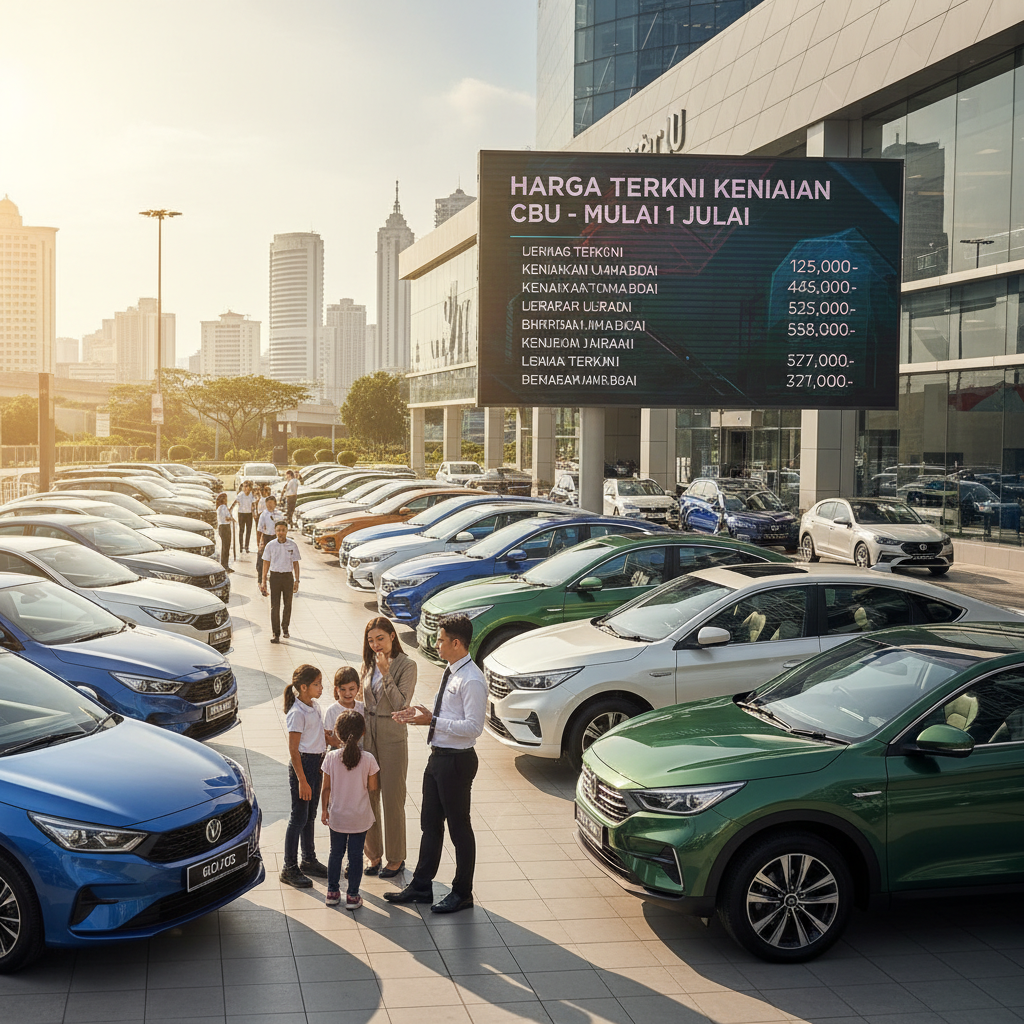
The pricing of fully imported, Completely Built-Up (CBU) vehicles in Malaysia has risen significantly since early 2025 following a major overhaul of the country’s tax calculation methods. The government replaced the long-standing docket pricing system—a fixed, gazetted vehicle valuation method—with a new framework that calculates import duties, excise duties, and sales taxes on each vehicle based on its actual transacted value or Free on Board (FOB) price at import. This shift has resulted in higher and more variable tax liabilities, especially affecting low-volume and niche CBU models due to per-unit assessments and exchange rate fluctuations.
Under the revised tax regime, import duties are fixed at 30%, excise duties range from 60% to 105% depending on the vehicle’s powertrain, and a 10% sales tax applies, all compounded on the vehicle’s FOB or Cost, Insurance, and Freight (CIF) value. These changes, formalized under regulations dating back to 2019 but implemented in stages, aim to align tax assessments with actual market transactions and reduce tax avoidance while encouraging local assembly over imports. The policy is part of Malaysia’s broader automotive strategy, which includes phased removal of tax exemptions for fully imported electric vehicles (EVs) to stimulate domestic EV production.
The new tax framework has provoked mixed reactions. Industry stakeholders warn that increased costs could narrow the price gap between CBU and locally assembled Completely Knocked-Down (CKD) vehicles, potentially discouraging foreign investment in local manufacturing and threatening employment in the sector. Consumers face higher prices amid concerns that the changes may limit vehicle affordability, particularly given Malaysia’s limited public transportation alternatives. While the government emphasizes gradual price adjustments without abolishing excise duties, critics argue that the policy disproportionately burdens buyers and complicates pricing due to exchange rate volatility.
Despite these challenges, the government continues to promote local automotive industry development and environmental goals through targeted incentives for CKD vehicles and EVs, including tax breaks for local EV assembly and infrastructure. The evolving tax landscape has significant implications for Malaysia’s automotive market, influencing manufacturer strategies, consumer behavior, and government revenue objectives.
Background
In Malaysia, the pricing and taxation of fully imported or Completely Built-Up (CBU) vehicles have undergone significant changes beginning in early 2025, leading to noticeable price increases for these vehicles. Historically, the government applied a method known as docket pricing to calculate taxes on imported cars. However, starting January 2025, this method was discontinued and replaced by a system based on the transacted value or the vehicle’s Free on Board (FOB) price upon arrival in Malaysia.
Under the new system, the import duty is fixed at 30%, excise duty ranges from 60% to 105% depending on the vehicle’s powertrain, and sales tax is set at 10%. These taxes are compounded on the FOB price, and the resulting cost reflects real-time factors such as exchange rate fluctuations and individual vehicle pricing. This has particularly impacted car companies dealing with low-volume CBU models, as customs clearance and taxes are now calculated per individual unit rather than using standardized pricing.
The revision in tax calculations is part of a broader regulatory framework introduced by the Ministry of Finance under then finance minister Lim Guan Eng. In 2019, the Excise Regulations (Determination of the Value of Locally Manufactured Goods for the Purpose of Imposing Excise Duty) 2019, known as P.U.(A) 402/2019, was gazetted to redefine the methodology for calculating the open market value (OMV) of locally assembled Completely Knocked-Down (CKD) vehicles, directly affecting their excise duty and selling price. For fully imported CBU vehicles, however, a different system based on Cost, Insurance and Freight (CIF) applies.
The tax revisions have undergone several extensions since their initial planned implementation date of January 1, 2020, with the latest extension granted to the auto industry being the final one, as confirmed by a December 2024 letter from the Ministry of Finance to the Malaysian Automotive Association. The government has also indicated plans to phase out tax exemptions for fully imported electric vehicles (EVs) from new brands starting in 2026, further encouraging automakers to assemble EVs locally to benefit from tax relief.
These changes mark a shift towards a more transparent and individualized taxation process that aligns tax liability with actual transaction values, which, while promoting fairness and government revenue, have contributed to rising prices of CBU vehicles in the Malaysian market.
Revised Tax Calculations for CBU Cars
Beginning in January 2025, Malaysia implemented a significant change in the tax calculation method for fully imported, Completely Built-Up (CBU) motor vehicles, which has led to an increase in their retail prices. The government discontinued the use of docket pricing—previously a fixed gazetted pricing system—and replaced it with a unit-by-unit tax assessment based on the vehicle’s transacted value or Free on Board (FOB) price upon arrival in the country. This shift aligns with World Trade Organisation (WTO) agreements and affects especially those car companies handling lower-volume CBU models.
Under the new system, taxes on CBU cars are computed by applying a 30% import duty, excise duties ranging from 60% to 105% depending on the vehicle’s powertrain, and a 10% sales tax on the vehicle’s CIF (Cost, Insurance, and Freight) value. As a result, the overall tax burden for CBU vehicles has increased, contributing to higher prices in the market compared to completely knocked down (CKD) locally assembled cars, which are taxed differently based on the Open Market Value (OMV).
The revised excise duty regulation, formalized under P.U.(A) 402/2019 and originally targeted for implementation in 2020, has been extended multiple times due to concerns over its impact on the automotive industry amid the COVID-19 pandemic, with the latest extension now set to expire at the end of 2025. The Malaysian Automotive Association (MAA) has warned that the implementation could lead to a price increase of between 10% and 30% for locally assembled cars, narrowing the price gap between CKD and CBU vehicles and potentially affecting investment decisions by foreign automotive players.
Additionally, the removal of docket pricing introduces price variability influenced by fluctuating exchange rates and differences in transaction values across brands, further complicating pricing consistency. Unlike new CBU cars, grey import vehicles—which often consist of used or 13-month-old cars—are less affected by these changes, as their importation values vary widely.
Impact on CBU Car Prices in Malaysia
Since the beginning of 2025, prices of fully imported or Completely Built-Up (CBU) vehicles in Malaysia have experienced an increase due to the government’s implementation of a new tax calculation method. Previously, taxes on imported vehicles were calculated using a fixed gazetted pricing system, which set a predetermined price for tax computation until a model was replaced. This system has been abolished and replaced with a method based on the transacted value, reflecting the actual cost of each vehicle unit upon import. As a result, taxes including import duty, excise duty, and sales tax are now calculated individually for each vehicle based on its Free on Board (FOB) price, which is then compounded with import duty at 30%, excise duty ranging between 60% and 105% depending on the vehicle’s powertrain, and a 10% sales tax.
This change has particularly affected car companies dealing in lower-volume CBU models, as the tax liabilities now correspond to the fluctuating market and currency exchange rates instead of a fixed docket price. Since different manufacturers purchase vehicles in varying currencies, exchange rate volatility between the purchase and import times has caused further variation in the final prices. For example, the exchange rate differences observed between January and July 2025 have directly influenced the tax calculation and thus retail pricing.
Moreover, fully imported vehicles are generally subject to higher taxes and excise duties compared to locally assembled Completely Knocked Down (CKD) vehicles, contributing to their higher retail prices. The revised excise duties on locally assembled cars may narrow the price gap between CKD and CBU models, potentially influencing foreign automotive players’ decisions regarding local manufacturing investments versus importing fully built vehicles.
Economic and Market Implications
The revision of excise duty calculations and the shift from fixed gazetted pricing to a transacted value system have led to significant economic and market repercussions for the Malaysian automotive industry, particularly impacting fully imported Completely Built-Up (CBU) vehicles. Under the new system, the price of each imported vehicle is calculated based on its Free On Board (FOB) price, compounded by import duty at 30%, excise duty ranging from 60% to 105% depending on the powertrain, and an additional sales tax of 10%. This has resulted in increased costs for CBU cars, especially affecting brands with lower sales volumes due to taxes and customs clearance fees now being applied on a per-unit basis.
One major consequence of the revised tax structure is the narrowing price gap between CBU and locally assembled Completely Knock-Down (CKD) vehicles. Previously, CKD cars benefited from lower excise duties, making them more competitively priced relative to fully imported models. However, with proposed price increases for CKD vehicles potentially reaching up to 30%, industry observers warn that this may discourage foreign automotive manufacturers from investing in local CKD production facilities. Instead, these manufacturers might prefer to import fully assembled vehicles to avoid the complexities and costs associated with local assembly, thereby undermining Malaysia’s local automotive manufacturing sector.
This potential shift towards importing CBUs could lead to a reduction in domestic production activity, which poses risks to the local supply chain and employment opportunities. While the government may experience a short-term increase in tax revenue from higher excise duties, the longer-term effects could include diminished sales volumes and a slowdown in industrial investment, which may negatively impact economic momentum seen in 2024. Furthermore, policy experts suggest that rather than extending exemptions indiscriminately, the focus should shift to enhancing the competitiveness of local parts manufacturers and CKD operations within the regional supply chain.
Despite these challenges, the government maintains a commitment to gradually reducing car prices without abolishing excise duties altogether. This approach includes offering import tax discounts for CKD vehicles while keeping prices for CBU cars relatively high to protect local assembly plants. Additionally, the ongoing tax incentives and exemptions for electric vehicles (EVs) and related industries are designed to stimulate adoption and investment in the EV sector, offering a contrasting dynamic within the automotive market.
Government Objectives and Policy Rationale
The Malaysian government’s revised tax calculations on Completely Built-Up (CBU) vehicles form part of a broader strategy to balance industry growth, fiscal revenue, and environmental goals. Central to this approach is the National Automotive Policy, which aims to protect and promote the local automotive industry dominated by manufacturers such as Proton and Perodua through trade barriers and excise duties. These duties have historically made foreign-manufactured vehicles considerably more expensive for Malaysian consumers, effectively encouraging local assembly and manufacturing.
One key objective behind the excise duty revision, based on the open market value (OMV), is to align tax impositions more closely with the actual market transaction values of imported vehicles. This change replaces the previous system, which relied on fixed gazetted pricing, with a formula that incorporates the vehicle’s Free on Board (FOB) price, compounded with import duty, excise duty (ranging between 60% and 105% depending on the powertrain), and sales tax. The government’s rationale includes mitigating tax avoidance and ensuring fairer revenue collection by basing duties on transacted values rather than predetermined fixed prices.
Moreover, the policy revisions seek to foster the development of low carbon mobility through tax incentives targeted at electric vehicles (EVs). While fully imported CBU EVs enjoyed import and excise duty exemptions until the end of 2023, these incentives are set to end, with a one-year extension granted in certain cases to smooth the transition. Locally assembled EVs continue to benefit from exemptions until at least 2025, supporting the local industry’s gradual shift toward environmentally friendly vehicles without causing immediate financial shocks.
The government has also indicated a cautious approach to tax reductions, emphasizing that vehicle price reductions will not come through the abolition of excise duties. Instead, gradual price adjustments are expected through measures such as import tax discounts on Completely Knocked Down (CKD) vehicles, which are imported in parts and assembled locally, thereby supporting domestic manufacturing and employment. This approach ensures that while consumers may benefit from somewhat lower prices, the local automotive industry remains competitive and protected from sudden market disruptions.
Finally, the revised tax policies contribute to a projected increase in federal revenue, with estimates suggesting a 2.3% rise to RM12.8 billion in 2024 due to the phasing out of EV tax incentives and other adjustments. This increased revenue is essential for the government to support ongoing economic and environmental initiatives while managing the automotive sector’s evolving landscape.
Reactions from Stakeholders
The revised excise duty calculations on completely built-up (CBU) vehicles in Malaysia have elicited mixed reactions from various stakeholders within the automotive industry. Industry observers and market participants have expressed concern that the increased tax burden could negatively impact car sales and disrupt the supply chain. Specifically, some analysts predict that a potential 30% rise in prices for locally assembled completely knocked down (CKD) cars may narrow the price gap between CKD and CBU vehicles. This shift could lead foreign automotive companies to reconsider their investment in local manufacturing in favor of importing fully assembled cars instead.
Local automotive brands, notably Proton and Perodua, which dominate the Malaysian market and benefit from government protection policies, have seen the tax regime as a crucial element supporting their competitive advantage. However, the higher excise duties on foreign cars have contributed to significantly elevated prices for imported vehicles, arguably among the highest in the world, which affects consumer choice and market dynamics.
CBU car importers, particularly those dealing with lower-volume models, are among the most affected by these changes. Fluctuations in exchange rates compound the tax impact, leading to varied price increases across different models and brands. Customs clearance procedures and individual unit taxation further exacerbate these challenges.
Meanwhile, industry insiders have called for the government to focus on enhancing the competitiveness of local parts manufacturers and CKD operations within the regional supply chain rather than extending tax exemptions further. Some suggest that any remaining exemptions for CBU vehicles should be granted only as transitional measures to facilitate the shift toward CKD production, with a clear endpoint beyond 2025.
Controversies and Criticisms
The revision of excise duties on Complete Build Unit (CBU) vehicles in Malaysia has sparked considerable controversy and criticism from various stakeholders. One primary concern is the negative impact on consumers who face higher car prices, which critics argue will make mobility more difficult, especially given the country’s insufficient public transportation infrastructure. Opponents suggest that rather than increasing taxes on cars, efforts should be focused on improving public transport systems to alleviate traffic congestion and enhance accessibility.
The local automotive industry, particularly companies handling lower-volume CBU models, has also expressed strong dissatisfaction. These companies face higher costs due to customs clearance and fluctuating taxes that apply individually to each vehicle unit. Additionally, the variability of exchange rates adds complexity and unpredictability to pricing, further exacerbating the financial strain on these businesses. This has raised fears of job losses and the potential decline of local factories, as the price gap between locally assembled Completely Knock Down (CKD) vehicles and imported CBU units narrows, potentially undermining the competitiveness of local manufacturing.
While the government has assured a gradual reduction in car prices through targeted measures such as import tax discounts on CKD vehicles, it has clarified that excise duties on vehicles will not be abolished or reduced. This stance has disappointed many consumers hoping for broader tax relief and cheaper vehicle options. Furthermore, a market observer has warned that the revised excise duties could adversely affect car sales and disrupt the overall automotive industry supply chain, signaling potential long-term consequences for the sector[
Future Outlook
The outlook for fully imported (CBU) electric vehicles (EVs) in Malaysia suggests a challenging landscape ahead due to evolving tax policies and import regulations. While current exemptions on import duty and excise duty for fully imported EVs have been extended until December 31, 2025, these incentives are temporary and subject to change, potentially leading to price increases in the near future. Notably, existing EV models are exempt from new rulings, but upgraded models introduced between 2023 and 2025 remain subject to the RM100,000 floor price policy, which has already influenced pricing structures in recent years.
Industry experts predict that, once the exemption period ends, pricing for CBU EVs will rise significantly, possibly by 30% or more, driven by the reimposition of excise duties and import taxes based on transacted vehicle values and fluctuating exchange rates. This expected price surge may compel automotive players to reconsider their strategies; rather than importing fully assembled vehicles, manufacturers might increasingly opt for local assembly to remain competitive, as seen with current CKD producers such as Proton, Perodua, Volvo, Chery, Mercedes-Benz, and TQ Wuling.
The government’s ongoing support for local EV assembly is also reflected in the incentives provided to manufacturers, including exemptions on Approved Permit (AP) fees until the end of 2023 and tax breaks for charging equipment manufacturers valid through 2032. Moreover, BYD’s planned manufacturing plant at KLK TechPark in Tanjong Malim, expected to be operational by the second half of 2026, exemplifies the shift towards local production prompted by these regulatory changes.
The content is provided by Avery Redwood, Front Signals