Summary
The New Energy Asia (NEA) joint venture represents a significant milestone in Malaysia’s effort to accelerate the adoption and infrastructure development of electric vehicles (EVs) within the country and the broader ASEAN region. Formed through the collaboration of DRB HICOM Engineering (HESB), Hangzhou Flash Charging (HFC), and Malakoff Corporation Berhad, NEA serves as the official distributor of advanced EV charging equipment, integrating cutting-edge fast-charging technology with renewable energy solutions to support Malaysia’s transition towards carbon-free transportation and sustainable energy systems. This initiative aligns closely with national policies such as the National Automotive Policy (NAP) 2020, National Energy Policy (NEP) 2022-2040, and the Low Carbon Mobility Blueprint (LCMB) 2021–2023, which collectively aim to position Malaysia as a regional leader in clean mobility and net-zero carbon emissions by 2050.
Malaysia’s strategic focus on expanding EV charging infrastructure responds to growing domestic demand and regional trends, with an interim goal of deploying 10,000 public chargers by 2025 to alleviate range anxiety and enhance accessibility. NEA’s business-to-business model emphasizes distribution and aftersales support, offering a comprehensive portfolio of AC and DC fast chargers—ranging from 7.4 kW AC units to liquid-cooled DC chargers delivering up to 450 kW—capable of rapidly replenishing modern EV batteries in minutes. The joint venture also prioritizes localizing manufacturing within Malaysia to strengthen regional supply chains, promote domestic investment, and comply with regulatory frameworks favoring Malaysian ownership.
The venture’s deployment strategy incorporates integrated solar and energy storage solutions to address the intermittent nature of renewable energy sources, ensuring a reliable and sustainable power supply for fast-charging networks. Collaboration with government agencies, industry partners, and international stakeholders under mechanisms such as the National EV Steering Committee and Task Force has been critical to overcoming infrastructural, technological, and regulatory challenges, fostering innovation and coordinated growth in the EV ecosystem. Malaysia’s geographic advantages, combined with robust investment and supportive policies, position NEA as a pivotal contributor to the country’s green energy transition and ASEAN’s evolving electric mobility landscape.
Despite promising advancements, challenges remain, including the need for expanded public charging access, faster recharge times—especially for two-wheeled EVs—and adherence to evolving cybersecurity and regulatory requirements. Nevertheless, the NEA joint venture’s comprehensive approach to equipment distribution, technical support, and local capacity building reflects Malaysia’s commitment to sustainable economic growth, environmental stewardship, and inclusive social development within the region’s fast-growing EV market.
Background
Malaysia has been proactively positioning itself as a regional leader in the transition towards sustainable mobility through extensive policies and initiatives aimed at increasing the adoption of electric vehicles (EVs). Central to this effort are government frameworks such as the National Automotive Policy (NAP) 2020, the National Energy Policy (NEP) 2022-2040, and the Low Carbon Mobility Blueprint (LCMB) 2021-2023, which collectively emphasize decarbonization and the promotion of energy-efficient vehicles. The government has set ambitious targets, including having 700,000 EVs on the road by 2030 and achieving 15% of annual new vehicle sales as EVs under the LCMB, with an eventual goal of net-zero carbon emissions by 2050 under the 12th Malaysian Plan.
To support the rapid growth in EV adoption, Malaysia is focusing on expanding and enhancing its EV charging infrastructure. The interim target aims to install 10,000 EV chargers by 2025 to alleviate range anxiety and accessibility concerns. Investment in this sector is significant, with RM81.3 million approved for EV charging components in 2024 alone, signaling robust growth in local EV charger manufacturing. This infrastructure expansion includes the deployment of AC chargers with smart capabilities offering multiple output levels (7.4 kW, 11 kW, and 22 kW) alongside advanced energy storage systems designed to meet increasing domestic and commercial demand.
Regionally, Malaysia is part of a broader Southeast Asian trend where countries like Thailand, Indonesia, Singapore, and the Philippines are witnessing accelerated EV adoption supported by government incentives and technological advancements in fast-charging technologies. Fast-charging infrastructure is especially crucial, as DC charging can replenish an EV in approximately 15 minutes, making long-distance travel more feasible and enhancing consumer confidence. However, challenges such as the intermittent nature of renewable energy sources necessitate the integration of smart grid technologies and energy storage solutions to ensure reliable and sustainable power supply for EV charging.
Malaysia’s geographical advantage provides ample solar irradiation and potential wind energy resources, enabling the development of an eco-friendly charging network powered by renewable energy. Such a strategy aligns with national objectives to reduce greenhouse gas emissions and foster sustainable growth. Furthermore, the collaborative approach involving government bodies, industry players, and international partners has been pivotal in crafting pragmatic and locally tailored solutions, facilitated by entities such as the National EV Steering Committee and Task Force.
The establishment of joint ventures and partnerships, such as the collaboration involving New Energy Asia (NEA) with firms like Fuelling Malaysia, Pro-Net, and Malakoff Green, reflects this commitment. These alliances aim to accelerate innovation in clean mobility solutions and the distribution of advanced EV charging equipment across Malaysia. This multi-stakeholder engagement is essential to addressing infrastructural and technological challenges associated with the widespread adoption of zero-emission vehicles, thereby securing Malaysia’s place at the forefront of the regional green energy transition.
Formation of the Joint Venture
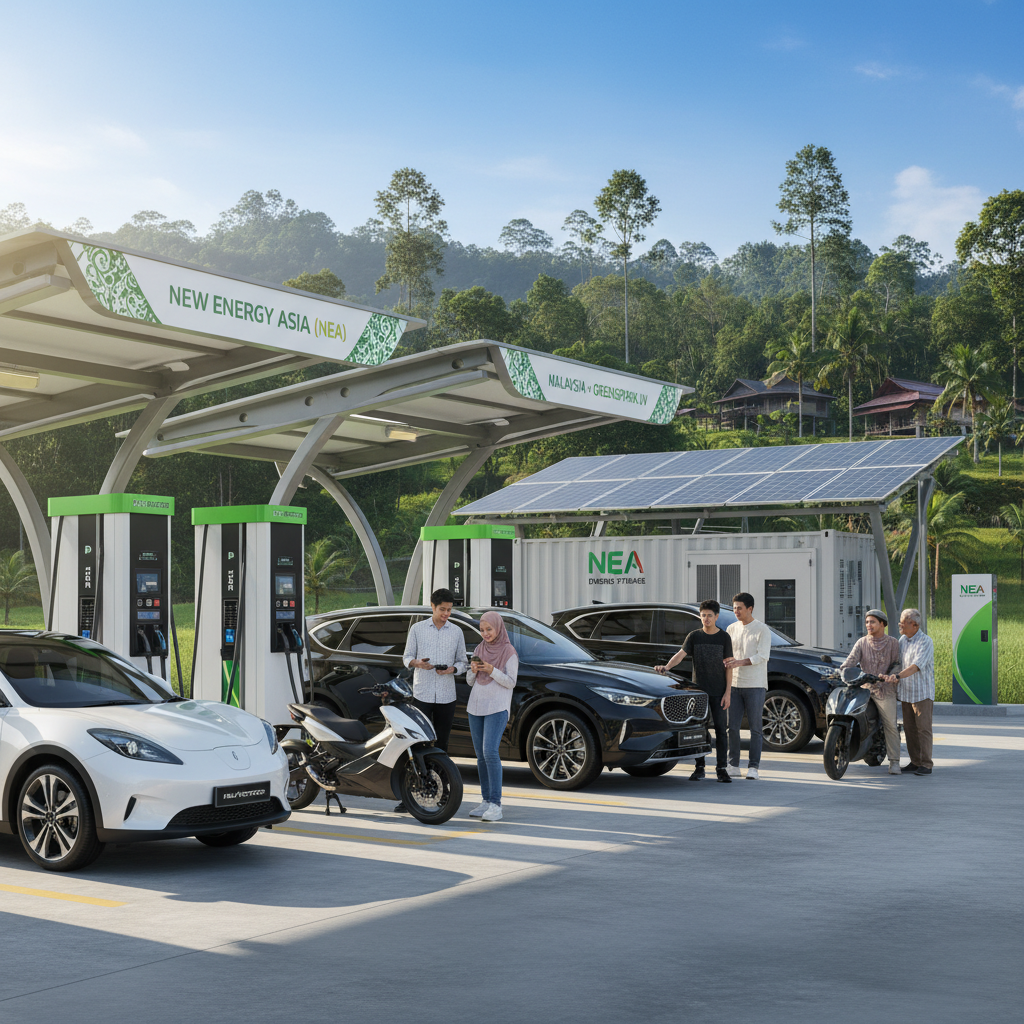
The joint venture, named New Energy Asia (NEA), was established through the collaboration of DRB HICOM Engineering (HESB), Hangzhou Flash Charging (HFC), and Malakoff Corporation Berhad. This partnership aims to act as the official distributor for electric vehicle (EV) charging equipment in Malaysia and the broader ASEAN region. The formation of NEA reflects a strategic effort to advance clean mobility solutions by integrating solar and EV charging technologies, thereby supporting Malaysia’s transition toward carbon-free transportation and sustainable energy.
The launch of NEA was marked by a series of memoranda of collaboration with key stakeholders such as Future Fuelling Malaysia, Pro-Net, and Malakoff Green Solutions. These collaborations are designed to foster innovation in energy solutions and charging infrastructure, targeting both passenger and commercial EV markets. NEA’s initial focus includes providing after-sales service and technical support for charge point operators (CPOs), alongside building workforce expertise through comprehensive training programs conducted in partnership with Hangzhou Flash Charging in China.
This joint venture aligns with Malaysia’s national agenda to promote EV adoption and infrastructure development, supported by government initiatives such as the National EV Task Force (NEVTF) and the National EV Steering Committee (NEVSC). The partnership leverages cross-industry expertise to address technological challenges associated with EV charging, facilitating the deployment of integrated solar and charging solutions and advancing the country’s goal of achieving 10,000 charging stations by 2025. Through NEA, the consortium seeks to catalyze the growth of the EV ecosystem, supporting Malaysia’s vision for inclusivity, sustainability, and a greener future within ASEAN.
Business Model and Market Strategy
New Energy Asia (NEA) operates with a focused business-to-business (B2B) model, concentrating on the distribution and aftersales support of EV charging equipment rather than functioning as a charge point operator (CPO). This strategic approach allows NEA to leverage its partnership with Hangzhou Flash Charging (HFC), a subsidiary of Lotus Technology, to offer a comprehensive portfolio of EV chargers that includes both AC chargers and a range of DC fast chargers. The DC chargers vary from air-cooled units with outputs between 30 kW and 240 kW to liquid-cooled models capable of delivering 300 kW to 450 kW, meeting the fast-charging demands of high-performance EVs such as the Lotus Emeya, which can recharge from 10% to 80% battery capacity in just 14 minutes.
A core element of NEA’s market strategy is its commitment to localizing manufacturing within Malaysia, aiming to bring production capabilities closer to key Southeast Asian markets. This localization effort aligns with the broader industry trend in resource-rich countries like Malaysia and Thailand, which seek to capitalize on their automotive manufacturing assets to enhance regional EV manufacturing capacity. Additionally, NEA’s business model fits within Malaysia’s regulatory framework, which favors Malaysian-owned enterprises; under government schemes, producer companies must be at least 51% Malaysian-owned while user companies require a minimum 70% Malaysian ownership, thereby encouraging domestic participation and investment.
NEA’s strategic positioning in Malaysia is well-timed, coinciding with rising EV adoption and growing infrastructure needs in Southeast Asia. Increasing environmental awareness, government incentives, and technological advancements in fast-charging technologies are driving rapid expansion of public charging infrastructure across the region, including Malaysia, Thailand, Indonesia, Singapore, and the Philippines. However, challenges remain, such as the limited availability of public chargers and the lengthy recharge times particularly for two-wheeled electric vehicles (2WEVs), which NEA and industry stakeholders recognize as critical areas requiring further development to achieve ambitious market growth targets.
The company’s focus on aftersales service is integral to its market strategy, ensuring customer satisfaction and reliability in the adoption of advanced charging technologies. This approach supports the broader national objectives outlined in Malaysia’s National Automotive Policy (NAP) 2020, National Energy Policy 2022-2040 (NEP), and Low Carbon Mobility Blueprint 2021-2023 (LCMB), which collectively aim to reduce carbon emissions and position Malaysia as a regional leader in energy-efficient vehicle technology.
EV Charging Equipment and Technological Innovations
New Energy Asia (NEA), a joint venture established by Hicom Engineering and Hangzhou Flash Charging (HFC), has significantly expanded the distribution of advanced electric vehicle (EV) charging equipment across Malaysia and the ASEAN region. As the exclusive distributor of HFC’s portfolio, NEA offers a comprehensive range of charging solutions, including both alternating current (AC) chargers and direct current (DC) fast chargers.
The DC fast chargers distributed by NEA include air-cooled models with outputs ranging from 30 kW to 240 kW, as well as liquid-cooled variants capable of delivering between 300 kW and 450 kW. These high-power chargers are designed to maximize the charging potential of modern EVs, such as the Lotus Emeya, which supports charging rates up to 400 kW and can recharge from 10% to 80% in just 14 minutes. On the AC charging side, NEA provides smart AC chargers configurable to output levels of 7.4 kW, 11 kW, and 22 kW, catering to a variety of home and commercial charging needs.
Beyond hardware, NEA also supplies advanced energy storage systems that support the growing demand for both residential and commercial energy management solutions. These systems play a crucial role in addressing the intermittency challenges posed by renewable energy sources like solar and wind, ensuring a reliable and consistent power supply for fast-charging infrastructure. Integrating smart grid technologies, such as demand response and battery storage, helps balance electricity loads during peak charging times, enhancing grid stability and sustainability.
Malaysia’s EV charging infrastructure is rapidly expanding, with over 3,350 charging stations installed as of October 2024, including nearly 1,000 DC fast chargers and over 2,300 AC chargers. DC fast chargers are vital for enabling long-distance EV travel by replenishing 80% of a battery’s capacity in approximately 30 minutes, while AC chargers remain the cost-effective choice for urban environments. The deployment of new DC charging locations by key operators such as Gentari, JomCharge, ChargEV, and TNB Electron further accelerates infrastructure growth and accessibility.
Training and calibration efforts are underway to ensure compatibility between charging equipment and the latest EV models. NEA collaborates with original equipment manufacturers (OEMs) and partners to conduct online training and address any technical challenges faced in Malaysia, thereby maintaining high standards of service and performance.
The combined efforts of NEA and its partners contribute to Malaysia’s vision of integrating renewable energy with EV charging infrastructure, promoting environmental sustainability and energy security. This approach not only reduces greenhouse gas emissions but also supports the country’s international environmental commitments, fostering long-term economic resilience and encouraging technological innovation within the EV sector.
Deployment and Operational Plans
The New Energy Asia joint venture aims to significantly accelerate the deployment of electric vehicle (EV) charging infrastructure across Malaysia, leveraging strategic partnerships and existing assets to meet rising demand. The venture will operate as a financially self-sufficient entity, enabling focused investment and operational agility to deliver over 500,000 barrels of oil equivalent per day in the midterm through integrated energy solutions, including EV infrastructure expansion.
Central to the deployment strategy is the rapid scaling of public charging points to support the country’s ambitious target of 10,000 chargers by 2025. As of early 2025, Malaysia has already installed over 4,100 public EV chargers nationwide, supported by initiatives such as PLANMalaysia’s MEVnet dashboard that monitors infrastructure growth. This expansion is underpinned by substantial investments, including RM81.3 million approved in 2024 alone for EV charging component manufacturing, highlighting a robust growth trajectory in the local charger production sector.
Operational plans emphasize the installation of fast-charging technology, including ultra-fast DC chargers like the XPeng x Charge+ 350kW hypercharging stations, to reduce recharge times and enhance convenience, particularly for two-wheeled EVs (2WEVs), which currently face challenges with charging speed and availability. The venture is committed to collaborating with government-linked companies to ensure cohesive infrastructure deployment aligned with national energy transition policies, including Malaysia’s National Energy Transition Roadmap (NETR) introduced in 2023.
Furthermore, the strategic location of operational hubs, such as facilities within the Pengerang Integrated Complex (PIC) in Johor, offers logistical advantages due to proximity to major international shipping lanes. This positioning facilitates efficient distribution and servicing of EV charging equipment, enabling the venture to cater to domestic demand as well as broader Asian markets.
To ensure smooth deployment, the venture will also navigate regulatory considerations, including compliance with zoning, land use, building, construction, and power licensing requirements, while addressing evolving cybersecurity and data privacy standards under legislation like Malaysia’s Cyber Security Act 2024. These measures are integral to maintaining operational integrity and consumer trust as the EV ecosystem expands.
Collectively, these deployment and operational plans position the New Energy Asia joint venture as a pivotal player in transforming Malaysia’s EV infrastructure landscape, supporting sustainable mobility growth and advancing regional energy transition goals.
Economic, Environmental, and Social Impacts
The introduction of the New Energy Asia joint venture to transform EV charging equipment distribution in Malaysia aligns with the nation’s broader economic, environmental, and social goals. Economically, Malaysia is leveraging its established automotive and resource sectors to strengthen local electric vehicle (EV) manufacturing capabilities, creating new investment opportunities and enhancing industrial competitiveness in the Southeast Asian region. The joint venture benefits from Malaysia’s supportive policies, including the National Automotive Policy (NAP) 2020, the National Energy Policy (NEP) 2022-2040, and the Low Carbon Mobility Blueprint (LCMB) 2021-2023, which collectively facilitate the growth of the EV ecosystem through infrastructure development and business facilitation by agencies such as MIDA. Furthermore, market players like Blueshark Ecosystem anticipate exponential growth in EV adoption, particularly in two-wheeled EVs (2WEVs), which are expected to outperform markets in Europe and East Asia over the next decade, further boosting economic activity.
From an environmental perspective, the joint venture supports Malaysia’s commitment to decarbonization and carbon neutrality by 2050, contributing to a greener and more sustainable energy transition. The deployment of widespread EV charging infrastructure directly addresses barriers to EV adoption, such as insufficient public chargers and long recharge times, facilitating a shift away from fossil fuel dependence and reducing greenhouse gas emissions in the transportation sector. This initiative complements broader national efforts under the National Energy Transition Roadmap (NETR) and the National EV Task Force’s strategies, which prioritize renewable energy integration, energy efficiency, and green technology innovations to lower the country’s carbon footprint.
Socially, the joint venture enhances inclusivity and shared progress in line with Malaysia’s ASEAN leadership theme for 2025, “Inclusivity and Sustainability.” By fostering collaborations among government bodies, industry stakeholders, and international organizations through structures such as the National EV Steering Committee and Task Force, the project encourages stakeholder engagement and co-creation of solutions tailored to local needs. This participatory approach
Collaboration with Government and Industry Stakeholders
The development and deployment of EV charging infrastructure in Malaysia are driven by a multi-stakeholder approach that emphasizes strong collaboration between government entities, industry partners, and international organizations. Central to this effort are the National EV Steering Committee (NEVSC) and the National EV Task Force (NEVTF), established by the Ministry of Investment, Trade and Industry (MITI). These bodies facilitate coordination among diverse stakeholders to ensure policies and initiatives are pragmatic, comprehensive, and tailored to the Malaysian context, accelerating the adoption of zero-emission vehicles and e-mobility innovations.
A key partnership underpinning this collaboration is the MY Energy Consortium, which represents Malaysia and comprises Tenaga Nasional Berhad (TNB) and Petronas. This consortium works jointly with international counterparts, including PetroVietnam Technical Services Corporation (PTSC) from Vietnam’s Petrovietnam group and Singapore-based Sembcorp Utilities, to develop and distribute EV charging equipment. This trilateral joint venture exemplifies Malaysia’s commitment to regional cooperation and leveraging expertise to bolster its EV ecosystem.
Moreover, Malaysia’s strategic vision aligns with its leadership role in ASEAN, particularly as it assumes the chairmanship in 2025. The country’s focus on inclusivity and sustainability is reflected in policies such as the National Automotive Policy (NAP) 2020, National Energy Policy 2022-2040 (NEP), and the Low Carbon Mobility Blueprint 2021-2023 (LCMB). These frameworks underpin Malaysia’s ambition to achieve carbon neutrality by 2050 through enhanced energy efficiency, renewable energy adoption, and green technologies, with the EV sector positioned as a core element in this transition.
In addition to government and consortium partnerships, the collaboration model extends to Original Equipment Manufacturers (OEMs) and property developers, expanding the reach of EV infrastructure to residential and commercial properties. This inclusive approach supports the integration of fast-charging stations in modern condominiums and public spaces, enhancing accessibility and convenience for EV users nationwide.
Collectively, these collaborative efforts not only drive infrastructural development but also encourage innovation in energy management, including the integration of smart grid technologies and advanced energy storage solutions. This is vital for addressing challenges posed by the intermittent nature of renewable energy sources and ensuring reliable, efficient charging services across Malaysia.
Investment, Funding, and Financial Commitments
The development of renewable energy and electric vehicle (EV) charging infrastructure in Malaysia is supported by a combination of government incentives, private sector investments, and strategic joint ventures. Malaysia’s renewable energy sector benefits from a variety of green technology tax incentives aimed at both service providers and consumers of green technology assets. Additionally, the government guarantees 60% of loan amounts and provides a 2% rebate on the interest or profit rates charged, with profit rate referring to the Shariah-compliant equivalent of interest in Islamic finance, which is deeply integrated into Malaysia’s banking system.
A significant joint venture has been established under a memorandum of understanding to develop 2GW of renewable energy projects in Malaysia, with the first phase targeting the development of 1GW of projects specifically in Sarawak. This initiative highlights Malaysia’s promising landscape for joint ventures in sectors such as data centres, electric vehicles, and renewable energy. The government’s restructuring of targeted fuel subsidies aims to redirect savings to incentivise the establishment of EV charging infrastructure, addressing critical barriers such as range anxiety among potential EV buyers.
Moreover, the formation of NewCo, a new entity managing 19 energy assets across Indonesia and Malaysia (14 in Indonesia and 5 in Malaysia), is set to invest over $15 billion in the next five years. This investment will focus on developing approximately 3 billion barrels of discovered reserves and exploring an additional 10 billion barrels. The deal, signed at the ADIPEC energy conference in Abu Dhabi, aligns with Eni’s “satellite” strategy, which involves creating spin-offs centered on specific business sectors to foster growth and independence. Together, these financial commitments and strategic investments underscore the robust support and multi-faceted approach toward accelerating Malaysia’s renewable energy capacity and EV infrastructure expansion.
Challenges and Solutions
The widespread adoption of electric vehicles (EVs) in Malaysia faces significant infrastructural and technological challenges that require coordinated efforts among various stakeholders. Key obstacles include the need for extensive charging infrastructure, the integration of renewable energy sources, and the development of supportive policies that suit the local context. Addressing these issues demands collaboration between government bodies, industry partners, and international organizations to ensure pragmatic and comprehensive solutions.
To overcome these challenges, Malaysia has established frameworks such as the National EV Steering Committee and Task Force, which facilitate stakeholder collaboration and co-creation of strategies aimed at accelerating the adoption of zero-emission vehicles, particularly electric trucks and other e-mobility innovations. Furthermore, the government supports the transition through incentive schemes like tax reliefs for individuals installing home chargers and the Green Technology Incentive – Green Investment Tax Allowance (GITA), which encourages companies to invest in charging infrastructure.
A strategic approach to infrastructure development involves joint ventures that combine expertise in renewable energy and EV charging solutions. For example, partnerships with companies such as DRB HICOM Engineering, Hangzhou Flash Charging, and Malakoff Corporation Berhad focus on integrated solar and EV charging systems, promoting carbon-free mobility while advancing technical knowledge sharing and exploring regional business opportunities across ASEAN. Additionally, renewable energy projects, including a 2GW initiative in Malaysia with a 1GW phase in Sarawak, provide the clean energy backbone necessary for sustainable EV charging networks.
Policy initiatives like the Low Carbon Mobility Blueprint (LCMB) 2021–2023 set ambitious targets to increase the number of EVs on Malaysian roads from 2,000 to 700,000 by 2030. This blueprint emphasizes expanding charging infrastructure and providing grants for research and development within the automotive industry. It aims for 15% EVs in new vehicle sales initially, with the National Energy Policy targeting 38% by 2040 to align with Malaysia’s 2050 net-zero carbon emission goal. These context-specific strategies leverage Malaysia’s resource advantages and existing automotive industry to promote an inclusive and sustainable transition to electric mobility in Southeast Asia.
Beyond infrastructure and policy, Malaysia’s engagement in carbon transport and capture infrastructure, exemplified by ventures like Jules Nautica Sdn Bhd, reflects a broader commitment to energy and environmental partnerships. Such multi-dimensional efforts underscore the holistic approach adopted to address the challenges of EV adoption while advancing sustainable energy development.
Future Prospects and Regional Influence
The future of electric vehicle (EV) adoption and charging infrastructure in Malaysia and the broader Southeast Asian region appears highly promising, driven by strong government commitments, technological advancements, and regional collaboration. Over the next decade, Southeast Asian countries are expected to experience exponential growth in the two-wheeler EV (2WEV) market, with projections indicating that this region will surpass Europe and East Asia in EV adoption rates. This growth is underpinned by Malaysia’s government policies, such as the National Automotive Policy (NAP) 2020, the National Energy Policy (NEP) 2022-2040, and the Low Carbon Mobility Blueprint (LCMB) 2021-2023, which collectively support the country’s transition to renewable energy and sustainable transportation.
The commitment to increasing renewable energy sources, with a target of 70% of the energy mix coming from renewable energy by 2050, complements the advancement of EV technologies and local manufacturing capabilities. The introduction of affordable EVs by domestic manufacturers is anticipated to further accelerate EV adoption, contributing to broader economic growth and sustainability in Malaysia. The growth of the EV market is also expected to stimulate competition, innovation, and cost reductions, creating a resilient and sustainable economy centered on electric mobility.
On a regional scale, countries like Thailand, Indonesia, Singapore, Malaysia, and the Philippines are witnessing rapid expansion in public EV charging infrastructure, driven by rising EV popularity and government initiatives. Technological improvements, particularly in fast-charging capabilities, are enhancing the accessibility and convenience of charging networks. Notably, Singapore boasts the largest public charging network with a market share exceeding 30%, while cross-border charging infrastructure extends along 5,000 kilometers of highways spanning Singapore, Malaysia, Thailand, Vietnam, and Cambodia. This regional connectivity is exemplified by partnerships such as XPENG’s collaboration with Charge Plus, which provides access to over 3,800 charging stations, fully linking major expressway networks across these countries.
The New Energy Asia (NEA) joint venture is poised to play a critical role in this evolving landscape by focusing on the distribution and aftersales support of EV charging products in Malaysia. Although initial products will be imported from China, NEA plans to establish local assembly operations within Malaysia’s Automotive Hi-Tech Valley (AHTV) in Tanjung Malim, aiming to localize production after establishing market presence for approximately one and a half to two years. This strategy aligns with Malaysia’s advantage as a resource-rich nation with an existing automotive industry, positioning the country to leverage its assets for enhancing local EV manufacturing and fostering inclusive electric mobility transitions.
Additionally, regional projects such as the utility-scale renewable energy development in Riau, Indonesia, with plans to export electricity to Singapore via subsea cable, indicate growing interconnectivity and cooperation in Southeast Asia’s energy and EV sectors. However, challenges remain, such as potential gas supply shortfalls in Indonesia, which underscore the urgency of accelerating renewable energy and EV infrastructure development across the region.
The content is provided by Sierra Knightley, Front Signals