
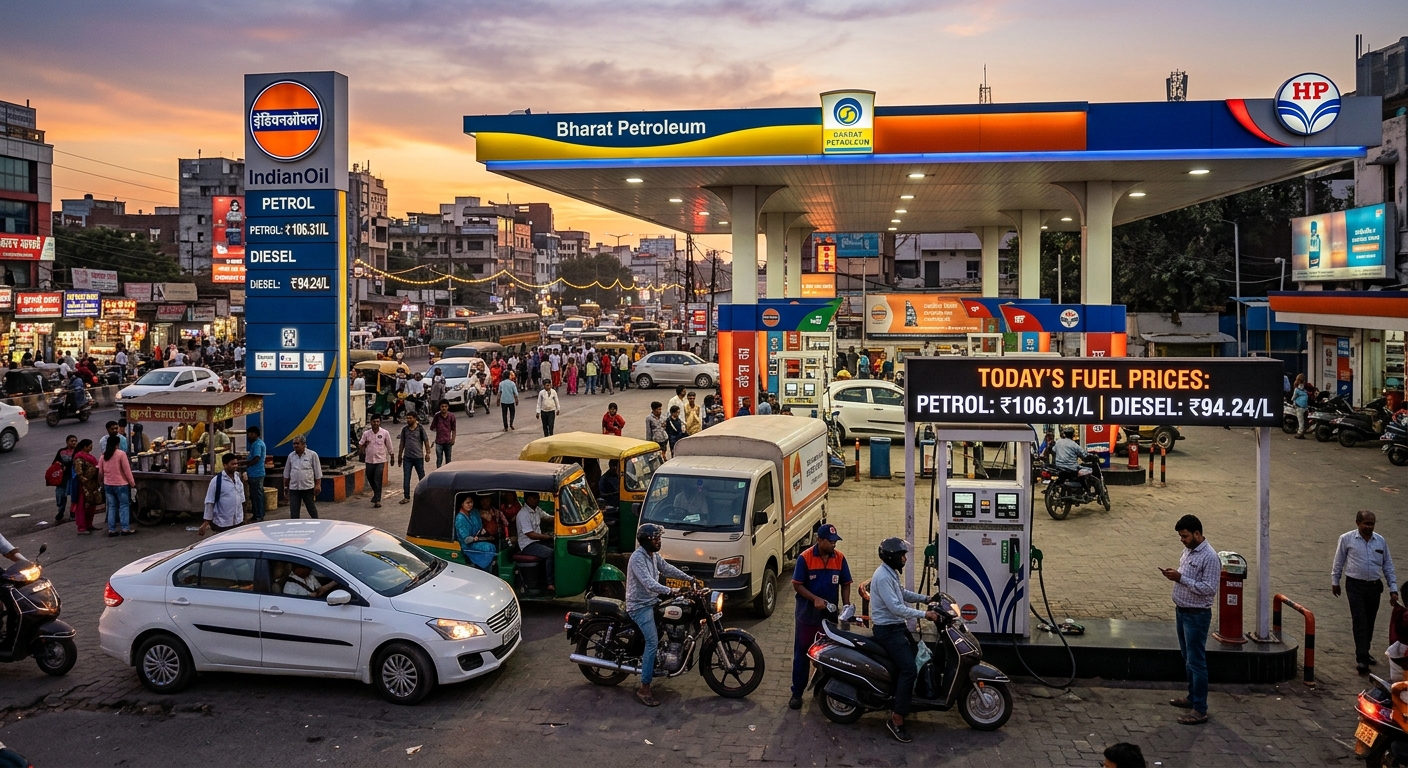
Summary of Current Dynamics
Rising fuel prices in India spotlight the financial landscape of state-owned Oil Marketing Companies (OMCs) like Indian Oil Corporation (IOC), Bharat Petroleum (BPCL), and Hindustan Petroleum (HPCL). These companies control over 90% of the fuel retail market and traditionally operate with thin profit margins of 1–3%, largely due to government interventions that absorb under-recoveries to protect consumers. Recently, despite these constraints, OMCs reported a significant profit increase to ₹77,821 crore for fiscal year 2025–26, stirring discussions about their role amid escalating global oil prices and domestic pricing strategies.
Understanding Fuel Pricing in India
India’s fuel pricing system intertwines dynamic international crude oil pricing with governmental regulation, impacting how OMCs adjust retail prices. While prices are meant to reflect global market trends, political considerations often lead to alterations that limit volatility, especially during critical periods like elections. The three major OMCs manage price settings amidst these dynamics, absorbing losses to keep prices stable, while government policies significantly influence the overall pricing structure, leading to varying margins depending on international fluctuations.
Trends in Fuel Prices and Market Pressures
Fuel prices in India have seen considerable volatility driven by global crude rates and geopolitical factors. Recent adjustments have raised petrol and diesel prices, leading to approximately ₹500 crore in daily losses for OMCs even post-adjustment. This situation highlights the tightrope OMCs walk between absorbing increased costs and maintaining consumer affordability, as price stability can shift due to international pressures and domestic policy decisions, complicating their financial outlook.
Financial Impact on OMCs
The recent global oil price spike has pressured OMCs, pushing them to absorb considerable losses while maintaining retail prices. Although gross refining margins have improved, persistent marketing losses challenge their profitability. Future projections indicate that OMCs may adjust marketing margins, but segments of the business remain sensitive to fluctuations in crude prices and government regulations, particularly amid ongoing global uncertainties.
Role of Government Regulations
The government significantly influences fuel price regulation in India through a complex framework that encompasses taxes and subsidies. Local tax variations lead to different fuel prices across states, complicating the pricing landscape. While measures like excise duty cuts aim to shield consumers, they can strain OMC profitability and future investment capabilities, necessitating a balance between consumer protection and the financial health of these companies.
Economic Effects on the Public
Increasing fuel prices impact household budgets and inflation, putting pressure on disposable incomes and leading to higher transportation costs. Such escalation in logistics expenses enhances retail prices for essential goods, amplifying inflation across the economy. The interplay between high fuel prices and consumer spending patterns could hinder economic growth, raising concerns about future monetary policy and fiscal stability.
Ongoing Criticism and Regulatory Challenges
OMC profit increases have come under scrutiny, viewed by some as excessive gains during global turmoil. Critics point to the narrow operating margins that persist despite high revenues, indicating a potential risk to future investments and sustainability. The politically sensitive pricing system complicates financial planning for OMCs, revealing challenges in aligning profitability with consumer affordability amidst ongoing government interventions.
Future Considerations for OMCs
Looking ahead, OMCs confront potential profitability challenges due to sustained high crude prices and the need for regular adjustments in retail prices. Strategies must adapt as government interventions continue to play a pivotal role in managing price stability. OMCs are also diversifying operations and investing in alternative energies to align with evolving market dynamics and governmental energy policies, indicating a broader shift towards sustainable energy solutions while grappling with current market realities.
The content is provided by Jordan Fields, Front Signals