Summary
Dental clips are specialized dental attachments designed to improve the retention, stability, and comfort of removable dentures and partial dentures, particularly benefiting seniors managing missing teeth. These clips come in various types—including precision attachments, clasps, bar and clip systems, magnetic attachments, and snap-on dentures—each tailored to address specific clinical needs and patient preferences. By securely fastening prostheses to remaining natural teeth or dental implants, dental clips enhance chewing function, speech clarity, and overall oral health, significantly improving quality of life for elderly patients.
The evolution of dental clip technology has introduced advanced materials and innovative designs aimed at optimizing mechanical performance and patient comfort. Modern clips utilize durable metal alloys such as cobalt-chromium, as well as non-metallic options like acetal resin, which offer improved aesthetics, retention, and resistance to deformation. Magnetic attachments provide a simplified snap-in mechanism advantageous for seniors with reduced manual dexterity, while implant-retained systems like bar and clip attachments and mini-dental implant connectors have expanded treatment possibilities by combining removable prosthesis convenience with implant-level stability.
Despite their benefits, dental clips present challenges related to maintenance, aesthetics, cost, and patient adaptation. Proper oral hygiene is critical to prevent complications such as stomatitis or tissue irritation caused by food accumulation around clips. Additionally, visible metal clasps may affect patient satisfaction, though advances in material science have mitigated these concerns through thinner, more discreet designs. The cost of dental clips and ongoing maintenance can also pose barriers for some seniors, underscoring the importance of personalized treatment planning and professional follow-up to ensure long-term success.
Overall, dental clips represent a valuable, minimally invasive, and cost-effective solution for many seniors requiring tooth replacement. Their diverse designs and material innovations continue to evolve, offering tailored options that address functional, aesthetic, and practical considerations in geriatric dental care.
Types of Dental Clips for Seniors
Dental clips come in various types and designs, each tailored to meet specific needs related to denture retention, stability, and patient comfort. For seniors, understanding these types can help in selecting the most suitable option for managing missing teeth.
Precision Attachments
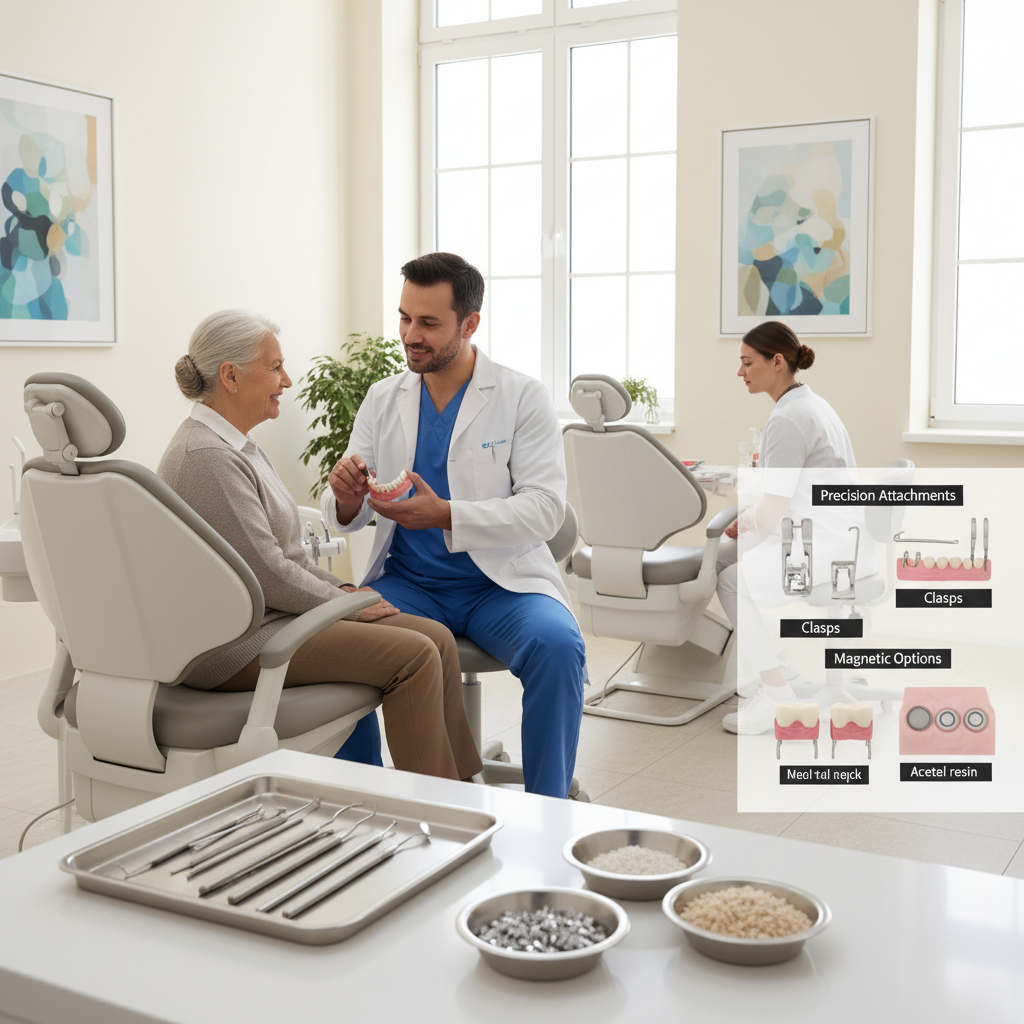
Precision attachments are more sophisticated clips consisting of a metal matrix (female part) housed within the abutment crown or implant, and a closely fitting patrix (male part) attached to the denture framework. This intra-coronal retention system offers a hidden and aesthetic method of securing partial dentures without visible clasps. With advances in implant dentistry, precision attachments can be integrated with implant housings, providing improved stability and ease of use for seniors.
Clasps for Partial Dentures
Clasps are among the most common dental clips used to secure partial dentures by gripping the patient’s remaining natural teeth. Custom-made to fit comfortably and discreetly, these clasps provide retention and stability, preventing the denture from shifting or slipping during use while allowing easy removal for cleaning. They are categorized based on their placement and design, with the combination clasp being a notable example, which includes a cast reciprocal arm and a wrought wire retentive clasp for better functionality. The key to successful clasp selection lies in choosing a direct retainer that controls tipping and torquing forces on abutment teeth while balancing retention, tissue compatibility, and aesthetic considerations.
Bar and Clip Attachments
Bar and clip systems offer a reliable solution for denture retention, especially for mandibular complete dentures. In this system, a metal bar splints dental implants or abutment teeth, and removable dentures attach securely via clips that snap onto the bar. This design provides stress-breaking action and distributes occlusal forces evenly, enhancing stability and patient satisfaction. Typically, the bar length is optimized to accommodate two clips, requiring sufficient inter-arch space to function effectively.
Magnetic Attachments
Magnetic clips use rare earth magnets, such as Samarium-cobalt or Neodymium-iron-boron, to secure dentures in place. These attachments require less complex dental laboratory work and are particularly suitable for elderly patients with reduced manual dexterity, as they allow the denture to “snap” in and out with ease. Magnetic systems generally offer comparable retention force to other attachment types but tend to require less maintenance due to their durable magnetic force.
Snap-On or Clip-On Dentures
Also referred to as clip dentures, snap-on dentures are removable dental prostheses that attach to the remaining natural teeth or implants using clips or clasps. They are designed to restore both function and aesthetics, providing an improved alternative to traditional dentures by enhancing stability during daily activities. These systems are especially beneficial for seniors who still have sufficient bone density to support dental implants, which serve as the foundation for clip attachments.
Orthodontic Clips
Though less common in seniors, orthodontic clips are specialized dental clips designed to assist in minor tooth movements or retention following orthodontic treatments. They apply gentle pressure to guide teeth into proper alignment over time and help maintain dental corrections achieved through braces or clear aligners.
LOCATOR and Mini-Dental Implant Systems
Modern dental clip systems such as the LOCATOR R-Tx and mini-dental implant (MDI) attachments have been developed to improve denture function and aesthetics. These systems utilize housings and O-rings to retain overdentures or partial dentures securely on implants, offering enhanced patient outcomes through better fit and retention.
Mechanical Function and Design
Dental clips play a crucial role in the retention, support, and stability of removable prostheses such as dentures and partial dentures. Their mechanical function is primarily focused on resisting dislodging forces along the path of insertion, thereby enhancing patient satisfaction and prosthesis performance. The design of these clips must balance mechanical effectiveness with biological and functional considerations to optimize stress distribution and minimize trauma to abutments and supporting tissues.
Retention and Stress Management
Retention is defined as the quality inherent in a dental prosthesis that resists forces of dislodgment during use. Properly designed clips contribute significantly to this by securely attaching the prosthesis to natural teeth or implants. To prevent excessive torque on abutment teeth, especially in distal-extension dentures, stress-breaking mechanisms are incorporated into clip designs. These may include stress-releasing clasp assemblies that allow controlled movement and reduce harmful occlusal forces during function. The overall objective in clip design is to distribute occlusal stresses evenly between the retained abutments and the denture-supporting soft tissues. By doing so, clips help maintain the health of abutment teeth and surrounding structures, which is essential for long-term prosthetic success. Additionally, maintaining proprioception through retained root abutments enhances functional performance compared to conventional dentures without attachments.
Types of Mechanical Attachments
Mechanical retention in dental clips can be achieved through various designs and materials. Metal clips, typically made from stainless steel or cobalt-chromium alloys, provide robust retention and durability. These materials allow for thin, discreet designs that offer superior strength and wear resistance, thereby prolonging denture lifespan while minimizing visual impact. Metal clips are customizable for a precise fit, optimizing both function and esthetics.
Non-metallic options, such as Acetal resin, have gained popularity due to their favorable properties, including lower surface roughness, improved retention, and resistance to deformation over time. Studies have shown that Acetal resin clasps outperform alternatives like Valplast in terms of long-term retention and durability, making them a preferred choice for non-metallic partial denture clasps.
Magnetic Attachments and Innovations
An alternative mechanical design involves magnetic attachments, which use rare earth magnets like Samarium-cobalt (SmCo) or Neodymium-iron-boron (NdFeB) to secure the prosthesis. These magnetic clips utilize direct adhesion techniques, where the keeper is cemented to the root and surrounded by resin composite, simplifying laboratory requirements and enhancing ease of use, particularly for elderly patients with reduced manual dexterity. Magnetic attachments provide comparable retention force to conventional attachments but tend to retain their magnetic properties longer, reducing the need for frequent maintenance and component replacement.
Enhancements in Clip Design
Recent innovations focus on improving patient comfort and prosthesis functionality. For example, clips with narrower coronal geometry facilitate easier seating of dentures and reduce patient discomfort. New retention insert designs resist edge deformation, enhancing the longevity and reliability of the attachment system. Compatibility with all implant systems ensures versatility, allowing seamless integration with existing prosthetic workflows. Additionally, materials such as soft silicone in related applications (e.g., bib clips) feature widened straps to reduce pressure and enhance comfort during extended wear, illustrating the broader trend toward user-friendly design improvements in dental attachments.
Benefits of Using Dental Clips for Seniors
Dental clips provide several important benefits for seniors who require tooth replacement solutions, enhancing both function and quality of life. One of the primary advantages is improved retention and stability of dentures. By securely fastening dentures in place, dental clips prevent slippage, which can be a common issue with traditional removable dentures. This secure fit allows seniors to eat, speak, and engage in social activities with greater confidence and comfort.
Another significant benefit is the stimulation of jawbone health. Dental clips used in conjunction with dental implants help maintain bone density by transmitting the natural forces of chewing to the jawbone. This stimulation prevents bone resorption, a common problem associated with conventional dentures that do not engage the bone, thereby preserving facial structure and oral health over time.
Dental clips also contribute to improved speech clarity. Loose or poorly fitting dentures can cause difficulties with pronunciation as they may shift during talking. By holding the dentures firmly in place, clips enable clearer and more confident speech, enhancing social interactions and overall communication.
From a maintenance perspective, some types of dental clips, such as magnetic attachments, offer easier handling and reduced maintenance requirements. Magnetic clips, for instance, provide a strong yet simple snap-in mechanism that is particularly beneficial for elderly patients with limited manual dexterity. These magnetic systems also tend to retain their retention force longer than other attachments, resulting in fewer replacements and less frequent maintenance.
In addition, the use of dental clips can help reduce the risk of oral health complications. Proper retention minimizes movement that could irritate gums or cause sores, reducing the likelihood of infections such as stomatitis or bacterial infections that may escalate to serious conditions in vulnerable seniors. Ensuring a proper fit and retention with dental clips thus supports better hygiene and oral tissue health.
Clinical Considerations in Clip Selection
When selecting dental clips for seniors, several clinical factors must be carefully evaluated to ensure optimal fit, function, and patient comfort. A comprehensive assessment of the patient’s oral health status, including dental alignment, occlusion, and periodontal condition, is essential before determining the most appropriate clip type and design. The choice of clips should also consider the patient’s bone density and jawbone condition, as age-related bone loss can impact the stability and longevity of the prosthesis.
An important consideration is the occlusal load distribution. Rests placed on abutment teeth must be appropriately sized and positioned to direct forces along the long axis of the tooth without interfering with the patient’s occlusion, thereby preventing excessive stress and potential damage to the supporting structures. Stress-breaking clasps or flexible materials like Valplast are often preferred to reduce torqueing forces on abutment teeth and enhance comfort. Additionally, for seniors who are concerned about aesthetics, clear or tooth-colored clasps offer a less visible alternative to traditional metal components, although they may have limitations in durability and retention.
Patient lifestyle and dexterity are also critical factors. Seniors with diminished manual dexterity may require simpler designs that are easier to insert, remove, and clean. Oral hygiene maintenance remains crucial, as poor hygiene can exacerbate periodontal disease and compromise prosthesis success. Furthermore, systemic health conditions common in older adults, such as hypertension or rheumatoid arthritis, may necessitate medical consultation and special precautions during treatment planning.
Installation and Adjustment Process
The installation of dental clips, particularly for seniors addressing missing teeth, begins with a professional consultation. A dentist or orthodontist evaluates the condition of the patient’s remaining teeth, bite, and gum health to determine the most suitable type of clip or orthodontic appliance. This initial assessment often involves advanced imaging technologies to produce custom-fitted devices tailored to the individual’s dental structure, ensuring optimal fit and function.
Once the appropriate dental clip type is selected—ranging from traditional metal braces to removable clips or overdenture attachments—the practitioner proceeds with fitting the device. For removable overdentures, precise attachments such as precision attachments consisting of a metal matrix and closely fitting patrix are used to enhance retention and stability. These attachments are carefully placed to distribute stress evenly between the abutments and the supporting soft tissues, promoting comfort and functionality.
Following installation, an adjustment period is expected during which users may experience initial discomfort or difficulty adapting to wearing the clips. Proper care and maintenance guidance are provided to ensure the longevity and hygiene of the device, as poor maintenance can affect treatment outcomes. Patients are also instructed on insertion, removal, speaking, and eating with the new dental appliance to facilitate a smooth transition.
Routine follow-up appointments are critical to monitor the condition of the clips, identify early issues such as bacterial buildup or structural wear, and make necessary adjustments or replacements to maintain effectiveness and comfort. Overall, the process emphasizes personalized care and professional supervision to maximize the benefits of dental clips for seniors managing missing teeth.
Maintenance and Oral Hygiene for Seniors
Proper maintenance and oral hygiene are essential for seniors using dental clips to ensure the longevity of the prosthesis and overall oral health. Daily cleaning of dental clips should be performed with a soft-bristled toothbrush and non-abrasive toothpaste to prevent damage to the materials and remove food debris and plaque buildup. Special cleansers designed for dentures and clips can also be utilized to maintain cleanliness and hygiene effectively.
Seniors may face challenges in cleaning their dental devices due to decreased dexterity, making routine care guidance and assistance important. Removing dental clips and dentures at night allows oral tissues to recover, reducing the risk of irritation and infections such as stomatitis, which can otherwise lead to more serious complications like pneumonia in vulnerable individuals.
Regular dental check-ups play a critical role in monitoring the fit, function, and condition of dental clips and the supporting oral tissues. These appointments enable dentists to make necessary adjustments, perform professional cleanings, and detect potential issues early to prevent major problems. Additionally, denture replacement should be considered when signs of wear, poor fit, or discomfort arise, as recommended by dental professionals.
Educating seniors about proper storage, removal, and maintenance routines enhances their comfort and confidence with dental clips, promoting better oral health outcomes and quality of life. The combination of consistent hygiene practices and professional care is fundamental to ensuring that dental clips remain stable, functional, and comfortable for elderly patients.
Common Challenges and Risks
Dental clips, while offering significant benefits in the management of missing teeth, present several challenges and risks that users, particularly seniors, should be aware of. One of the primary concerns is the complexity of maintaining proper oral hygiene. Food particles can easily become trapped around the clips, necessitating adjustments to daily cleaning routines to prevent irritation and infections such as stomatitis or bacterial complications. Failure to maintain adequate hygiene can lead to gum and neighboring teeth irritation, causing discomfort and potential oral health issues.
Another challenge involves the aesthetic impact of dental clips. Metal clasps, although durable and providing strong retention, may be visible and cause some individuals to feel self-conscious, especially if the clips are made from traditional metals. However, advancements in materials such as cobalt-chromium alloys have allowed for thinner and more discreet designs, partially mitigating this concern.
Cost is also a significant consideration. Dental clips can be expensive, and ongoing maintenance—including adjustments, repairs, and replacements due to damage from falls or pressure—can contribute to cumulative costs over time. Additionally, users often face an adjustment period during which discomfort or difficulty in adapting to the clips may occur. Loose or poorly fitting dentures can cause sore spots, mouth sores, and
Patient Perspectives: Benefits and Challenges
Patients using dental clips, particularly seniors, often report a range of benefits alongside certain challenges throughout their treatment journey. One of the primary advantages highlighted is the enhanced stability and retention provided by bar and clip attachments, which significantly improve denture fit and patient satisfaction. This reliable fit enables active individuals to engage confidently in physical and social activities without concern for shifting or discomfort.
Moreover, dental clips and overdentures offer a transformative solution by restoring both function and aesthetics, thereby boosting comfort and confidence for wearers. Personalized care plays a crucial role in achieving optimal outcomes, as tailoring solutions to each patient’s unique needs ensures long-term comfort and satisfaction. Regular consultation with dental professionals helps address individual suitability and specific requirements, which is vital for effective treatment and clip maintenance.
Despite these benefits, patients must be aware of certain challenges. The initial adjustment period can involve discomfort or difficulty adapting to wearing dental clips. Additionally, proper maintenance and care are essential to preserve clip longevity and hygiene, necessitating a commitment from users. Financial considerations also present a notable barrier, as dental clips can be expensive and may not be affordable for all individuals.
Cost and Accessibility
Dental clips for teeth alignment and replacement offer a cost-effective alternative to more complex dental treatments such as orthodontics and full braces. Prices for dental clips vary widely, typically ranging from approximately $50 for standard over-the-counter models to over $500 for customized options that involve direct dentist participation. The final cost is influenced by factors such as the materials used, design complexity, and professional involvement in the fitting process. Compared to other dental prosthetics like veneers, which can cost between $800 and $2,500 each, dental clips present a more affordable option for many patients.
Accessibility to dental clips is generally favorable, with over-the-counter versions readily available, making them a viable choice for seniors and others who may face financial or mobility challenges accessing specialized dental care. However, ongoing maintenance and hygiene considerations can contribute to additional costs over time. Proper cleaning routines are essential since food particles can become trapped in the clips, complicating oral hygiene and possibly increasing dental visits or associated expenses.
In terms of patient satisfaction and overall accessibility, studies have shown that ease of access and affordability greatly influence the perception and utilization of dental services. For example, research into dental service satisfaction in Melbourne highlighted the importance of cost and service availability in patient decision-making. Moreover, while implant-supported dentures are gaining popularity as a stable long-term solution, their higher cost and sometimes medical contraindications make dental clips and removable partial dentures more accessible and practical for many seniors.
Insurance coverage for dental appliances varies and may affect affordability. Some dental plans, such as those offered by Humana, provide individual dental insurance options that include coverage for various dental appliances, potentially easing the financial burden on seniors and caregivers when selecting suitable dental treatments.
Comparison with Other Dental Prosthetic Solutions
Dental clips serve as a versatile option within the broader spectrum of dental prosthetics, primarily designed to secure dentures and partial dentures by attaching to remaining natural teeth or implants. Compared to traditional dental prosthetic solutions, dental clips offer several distinctive advantages and considerations.
Unlike fixed bridges or dental implants, which often require invasive procedures such as tooth preparation or surgical implant placement, dental clips provide a non-invasive alternative for restoring tooth function and aesthetics. This non-invasive nature makes them particularly appealing for seniors or patients seeking to avoid surgery or extensive orthodontic treatment. Metal clips, typically made from stainless steel, ensure durability and a strong hold, enhancing the retention and stability of removable prostheses like dentures and partial dentures.
However, while metal dentures secured with clips offer robust functionality, they may be more susceptible to mechanical damage such as fractures from accidental drops or excessive pressure, necessitating repairs or replacements. Additionally, metal partial dentures with clips might not provide the same level of stability or long-term permanence as dental implants or fixed bridges, which integrate directly into the jawbone to offer superior support.
Advancements in implant-retained prosthetics have introduced bar and clip attachment systems, which significantly improve denture retention and patient satisfaction by anchoring prostheses to implants embedded in the jawbone. These extracoronal attachments provide enhanced stability compared to traditional clasps, and intra-coronal retention designs hide the attachment mechanisms for improved aesthetics. With the growing use of mini-dental implants, partial dentures can now be secured entirely via implant housings, offering an innovative approach that combines the removability of dentures with the stability of implant-supported prostheses.
Recent Advances and Innovations
Dental clip technology has experienced significant advancements aimed at improving stability, comfort, and functionality for denture wearers, particularly seniors. Traditional dentures primarily relied on suction or adhesives to remain in place, which often lacked the necessary stability for many patients. The introduction of denture clips has transformed this experience by providing a more secure attachment for removable dentures, enhancing both comfort and confidence for users.
One notable innovation involves the refinement of clip and clasp materials. Acetal resin has emerged as a preferred non-metallic material for partial denture clasps due to its superior properties in terms of roughness, retention, and resistance to deformation over time. This is contrasted with other materials such as Valplast, which demonstrated lower durability in long-term use. Metallic clasps made from modern alloys like cobalt-chromium offer strong retention and longevity, while maintaining a thin, discreet design that improves aesthetics and reduces the visible impact of the denture. These metal alloys also resist wear and tear better than many alternatives, contributing to a longer lifespan for the dental prosthesis.
Design improvements have focused on enhancing patient comfort and ease of use. For example, newer clip systems feature narrower coronal geometry, which facilitates easier denture seating and reduces discomfort. Additionally, innovative retention insert designs have been developed to resist edge deformation, with adjustable retention values ranging from zero to high, allowing customization to individual patient needs. Importantly, these systems are designed to be compatible with all implant platforms, increasing their versatility and ease of integration with existing dental treatments.
Advances also extend to related dental accessories that improve the overall patient experience. Autoclavable dental bib clips made from flexible medical-grade silicone provide hygienic, lightweight, and skin-friendly options that reduce pressure during prolonged wear. These clips are individually wrapped to maintain cleanliness and are compact and easy to carry, reflecting a growing emphasis on patient comfort beyond the denture itself.
Orthodontic treatment techniques have also played a role in the evolution of dental clip applications. Procedures involving bonding and the application of continuous pressure via dental clips or aligners allow gradual shifting of teeth into optimal positions. This has expanded the functional use of dental clips beyond simple retention, integrating them into comprehensive treatment plans that address both aesthetic and structural dental concerns.
The content is provided by Blake Sterling, Front Signals