Summary
Transform Your Living Room with Stunning Wall Art Ideas offers a comprehensive exploration of how diverse styles, materials, and arrangements of wall art can dramatically enhance the aesthetic and emotional atmosphere of living spaces. Wall art is more than mere decoration; it serves as a powerful form of personal expression that shapes the ambiance, mood, and identity of a room. By integrating various art forms—from textured mixed-media pieces and eco-friendly living walls to bold abstracts and classical Renaissance-inspired motifs—homeowners can curate environments that are both visually striking and emotionally resonant.
The page highlights popular wall art types, including textured sculptures made from wood, metal, and fabric, typography that conveys meaningful or playful messages, traditional tapestries, and nature-inspired installations that promote sustainability and wellbeing. It also covers beginner-friendly DIY projects, offering accessible creative avenues for personalizing living rooms with unique, tactile, and colorful artworks. Moreover, it details the materials and tools involved in creating wall art, emphasizing the blend of traditional craftsmanship with modern innovations such as digital prints and mixed media assemblages.
In addition to styles and materials, the article addresses the crucial roles of placement, arrangement, and color coordination in achieving harmony and balance within living spaces. It discusses how wall art interacts with various interior design themes—ranging from rustic lodge styles to minimalist and Renaissance-inspired interiors—thereby shaping spatial perception and emotional impact. The page also delves into historical influences, illustrating how Renaissance and Baroque artistic techniques continue to inform contemporary wall art through their use of vertical space, dramatic contrasts, and ornate details.
Contemporary trends and controversies around sustainability, technological integration, and preservation are also examined. The growing demand for eco-friendly art made from recycled or natural materials reflects an increasing awareness of environmental impact, while innovations like interactive digital installations expand creative possibilities. The page stresses the importance of proper maintenance to preserve artworks’ longevity and vibrancy, noting challenges related to material degradation and market dynamics. Altogether, this comprehensive guide equips readers with the knowledge to thoughtfully select, create, and care for stunning wall art that transforms living rooms into expressive, nurturing, and visually captivating environments.
Popular Types of Wall Art for Living Rooms
Wall art in living rooms serves not only as decoration but also as a powerful form of personal expression that can transform a space’s atmosphere and emotional tone. Various types of wall art are trending, each bringing unique textures, materials, and stories to enhance living areas.
Textural and Mixed-Media Wall Art
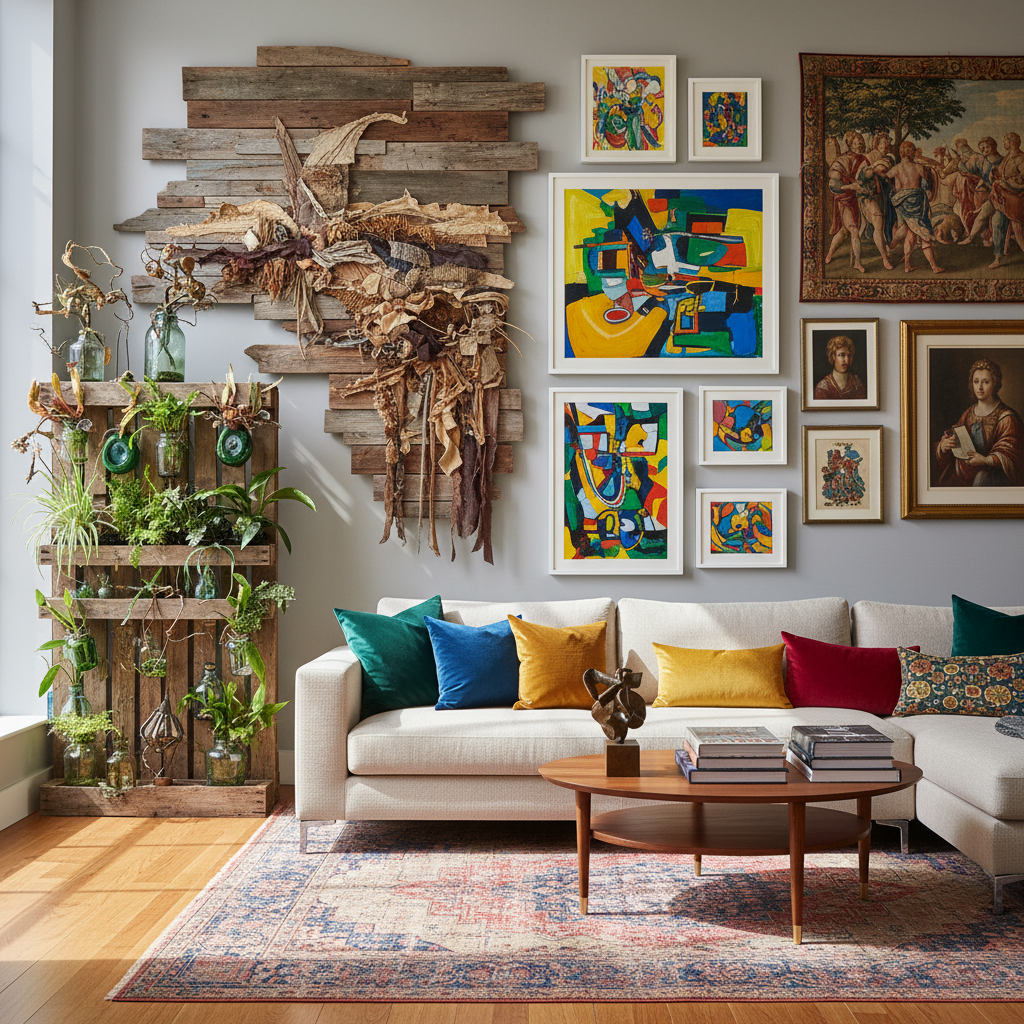
Textured wall art pieces are gaining popularity for adding depth and tactile interest to living rooms. Materials such as metal, wood, ceramic, and glass are used to create sculptural decor that introduces a three-dimensional effect, providing a distinct outlook on the space. Additionally, mixed-media approaches, such as incorporating embroidery with wool and threads onto canvases, offer a dynamic blend of traditional painting and textile art, often resulting in visually compelling 3D imagery. Paper art, especially high-quality designs that mimic a DIY feel without requiring actual crafting, is another favored option for adding texture and authenticity.
Typography Wall Art
Typography art remains a chic and modern choice, featuring inspiring quotes or playful phrases that make strong statements and spark conversations in living rooms. Popular phrases like “Live, Laugh, Love” or quirkier sayings bring personality to the space, allowing homeowners to “wear their heart on their walls” while adding a contemporary flair. The often monochromatic color schemes of typography art help draw attention to emotional subtleties and details that vibrant colors might overshadow.
Tapestries and Traditional Woven Art
Though relatively rare in everyday home settings, tapestries offer a rich historical and textural element to wall decor. European tapestries woven before the twentieth century are especially prized for their craftsmanship. Unlike paintings, tapestries are not painted but woven, sometimes imitating other textiles like silks or velvets. Modern tapestry production combines both traditional and improvisational weaving techniques, allowing for a wide variety of designs.
Eco-Friendly and Nature-Inspired Art
Sustainability is a rising trend in wall art, with increasing demand for pieces made from recycled or natural materials. This eco-conscious approach often features nature-inspired themes that connect the indoor space to the environment. Living walls and moss art are particularly innovative examples, as they not only enhance visual appeal but also improve indoor air quality and acoustics through self-sustaining ecosystems of live plants.
Bold and Multi-Panel Pieces
For those looking to make a dramatic impact, vibrant and colorful abstract art or lively landscapes are resurging in popularity. Large multi-panel artworks that span multiple sections of a wall create a bold and dynamic focal point, energizing the room with color and scale.
Rustic and Lodge-Themed Art
Rustic wall art themes featuring wildlife motifs such as bears and moose are ideal for cabin or lodge-style homes. These pieces quickly and effectively change the ambiance by introducing elements of nature and rugged charm, often found in dedicated collections designed for rustic living spaces.
Collectively, these popular wall art types offer diverse options for homeowners seeking to refresh their living rooms with meaningful, stylish, and texturally engaging decor.
Materials and Tools for DIY Wall Art
Creating DIY wall art involves a diverse range of materials and tools, enabling personalized and creative home decor that suits various styles and budgets. Common materials include wood, canvas, textiles, paper, and mixed media elements such as vintage jewelry or fabric swatches, which can be combined to create unique and textured pieces. Wood is frequently used as a base, often enhanced with decorative techniques like carving, marquetry, or painting, while textiles like tapestry incorporate intricate weaving methods to produce rich, tactile artworks.
Essential tools for DIY wall art projects typically consist of stencils, brushes, rollers, rulers, craft knives, scissors, glue, tape, and double-sided tape to assemble and affix components securely. For textile or embroidery-based art, threads and wool replace or complement paint to add a three-dimensional effect, with artists sometimes opting for box canvases to combine traditional and contemporary approaches. Protective gear such as dust covers and masks is recommended during the creative process to maintain safety and cleanliness.
The use of recycled or nature-inspired materials is also popular, reflecting current trends toward sustainability and bold, colorful designs that bring energy to living spaces. Additionally, multi-panel art formats and assemblages combining various materials provide dramatic visual effects and opportunities for storytelling through art. Overall, the wide array of materials and tools available allows DIY enthusiasts to experiment and express their creativity in transforming their living rooms with stunning wall art.
Beginner-Friendly DIY Wall Art Projects
DIY wall art offers an accessible and enjoyable way for beginners to personalize their living spaces with unique decor. Many projects require only a few basic materials and tools, making them perfect for those new to crafting or art creation. Simple techniques such as using watercolors on a blank canvas to create abstract designs allow colors to flow and blend naturally, encouraging imagination and creativity without the need for advanced skills.
Paper-based projects are another excellent option for beginners. Cutting and arranging colorful paper shapes onto poster boards or canvases can produce vibrant and easy-to-execute artwork. These projects require minimal supplies—such as scissors, glue, and various paper types—and can be customized to suit any style or color scheme. Additionally, utilizing unconventional materials like old cabinet panels or interior doors as oversized canvases can yield modern, minimalist wall art with a unique flair, further expanding the creative possibilities for novices.
For those seeking to add texture and dimension, rope art and three-dimensional flowers crafted from materials like metal or paper can provide tactile interest while remaining beginner-friendly. These pieces introduce subtle depth to any room and complement a range of interior styles, including boho and minimalist aesthetics.
Safety and cleanliness are important considerations in any DIY project. Beginners should always wear protective gear such as dust masks and use dust covers when working with paints, adhesives, or sprays to ensure a safe crafting environment. With these beginner-friendly projects, anyone can confidently explore their creativity and transform their living rooms into personalized art galleries that reflect their individual style.
Popular Styles and Their Effects on Living Room Atmosphere
Wall art plays a significant role in shaping the ambiance and emotional tone of a living room. Different styles not only complement interior design but also influence mood and spatial perception, making the choice of artwork a crucial element in home décor.
Renaissance-Inspired Art
Incorporating Renaissance-style furniture with contemporary elements can create a refined and charming living space. This style emphasizes decorative details such as selvedges, friezes, columns, and intricate carvings, often paired with glossy surfaces in light, bright colors like ivory, white, and mother-of-pearl. Deep, saturated hues in accessories and textiles further enhance the elegance of Renaissance-inspired décor, lending a sophisticated and timeless feel to the room.
Abstract and Modern Art
Abstract floral wall art merges botanical beauty with modern design, offering versatility for various spaces including living rooms. These pieces range from oversized canvases to subtle neutral prints, easily elevating the décor while maintaining a clean aesthetic. Modern wall art often features bold pops of color or abstract forms that add energy and vibrancy. When combined thoughtfully with textured elements like rugs or curtains, these styles create a balanced yet dynamic environment.
Typography and Word Art
Typography wall art allows homeowners to express personality and provoke conversation through inspiring quotes or playful phrases. Statements such as “Live, Laugh, Love” or quirkier sayings bring a modern, chic vibe to living rooms, serving as focal points that engage visitors immediately. The minimalist nature of typography art also highlights emotional depth by focusing on words rather than color or imagery.
Minimalist and Neutral Tones
Minimalist art, especially in raw or neutral materials, offers an authentic and calming presence. Using textures such as rope or three-dimensional paper flowers introduces tactile interest without overwhelming the space. Neutral shades—ranging from beiges to earth tones and charcoal—are particularly effective in creating soothing atmospheres that reduce stress while adding sophistication. This style favors subtlety, emphasizing simplicity and refined elegance.
Line Drawings and Murals
Line drawings provide a minimalist yet stylish aesthetic, making them popular choices for murals that span living room walls. Their simplicity delivers an effortless sense of style, often imparting a contemporary and artistic flair to interiors without dominating the décor.
DIY and Mixed Media Art
Creating DIY wall art can add a unique, personal touch to the living room. Simple projects using canvases and paint allow for abstract, large-scale designs that make bold statements behind couches or beds. Mixed media assemblages combine various materials to produce rich, tactile experiences, often exploring deeper themes such as memory or identity. These types of artworks actively engage with the room’s ambiance throughout different times of day, contributing dynamically to the space.
Emotional Impact of Colors and Styles
Colors within wall art dramatically influence mood and perception of space. Warm colors like red energize, while cool tones such as blue foster calmness and relaxation. Green often balances and harmonizes a room’s atmosphere. Lighter, cooler shades can make a living room appear larger and more airy, whereas darker hues add coziness but may visually shrink the space. Selecting art with these effects in mind helps tailor the emotional response, whether aiming for tranquility, stimulation, or balance.
Art styles can also communicate specific emotions: serene landscapes with soft blues and greens promote peacefulness, while bold pop art creates lively energy. By thoughtfully integrating art that resonates with personal feelings and desired atmospheres, homeowners can transform their living rooms into expressive, nurturing environments that reflect their inner worlds.
By exploring these popular wall art styles and understanding their emotional and spatial effects, anyone can curate a living room that is not only visually stunning but also supportive of well-being and mood.
Materials and Mediums in Living Room Wall Art
Living room wall art can be created from a wide variety of materials and mediums, each offering unique textures, aesthetics, and effects that contribute to the overall ambiance of the space. Selecting the right materials can enhance the visual interest of a room while complementing the existing décor.
One popular material is wood, often used not only for paintings or framed art but also as paneling or sculptural elements. Wood finishes can range from raw and natural to lacquered or painted, providing warmth and a lived-in feel to the space. Techniques such as carving, marquetry, and the addition of decorative motifs like pilasters or cornices can elevate wooden art pieces to a classical or Renaissance-inspired style. Wood is also frequently combined with other materials like metal or glass to create sculptural wall décor that adds a three-dimensional effect and a dynamic outlook to the room.
Textile-based mediums, such as canvas and fabric, are common for printed or painted artworks. Different fabric weaves affect ink absorption, making materials like unbleached linens and high-thread-count cottons ideal for achieving rich color and detail. Tapestries and textured fabrics can also add depth and softness to walls, contributing to a cozy atmosphere.
Paper art, including three-dimensional flowers made from paper or metal, provides tactile interest and can serve as a beautiful focal point without overwhelming the space. High-quality paper designs can mimic a DIY aesthetic without requiring the creator to craft the pieces themselves, making them accessible and versatile for various décor styles.
Innovative natural materials like rope and cork are increasingly popular for creating minimalist or boho accent walls. Rope art, especially when framed, adds subtle texture, while cork walls offer an unexpected surface that complements most art styles and adds both visual and acoustic benefits.
Living walls and moss art incorporate live plants into wall installations, creating a self-sustaining ecosystem that not only beautifies but also improves air quality and room acoustics. These living artworks engage actively with the environment, changing with light and time of day to influence the room’s mood dynamically.
Metal, ceramic, and glass are also favored materials for sculptural wall décor. Their reflective and tactile qualities bring a modern or contemporary edge to the living room and can be used to craft unique, eye-catching pieces that stand out against matte or textured backgrounds.
In addition to standalone pieces, a curated collection of smaller artworks using various materials can be arranged to form gallery walls. This approach allows for mixing mediums such as wood, fabric, metal, and paper to personalize the space without overwhelming it.
Placement and Arrangement of Wall Art
The placement and arrangement of wall art play a crucial role in transforming a living room, impacting not only the aesthetic appeal but also the spatial perception and emotional atmosphere of the space. A well-thought-out arrangement can dramatically elevate the look and feel of any room by directing the viewer’s attention, creating focal points, and enhancing the overall flow and mood.
Spacing between artworks is essential for achieving a balanced and cohesive look. Smaller pieces are generally best spaced 2-3 inches apart, while larger artworks can have slightly more room, with gaps of about 3-6 inches. Too much space may cause the arrangement to feel disconnected, whereas too little can make it feel cluttered. Consistency in placement height, typically around eye-level when seated, allows the art to breathe and attracts the right focus, ensuring the pieces harmonize well within the room.
The size of the wall art also significantly affects spatial perception. Large pieces can make a room feel more expansive and open, anchoring large walls and preventing them from feeling empty. Conversely, smaller pieces grouped thoughtfully can create a cozy, intimate atmosphere, adding interest without clutter. For example, an artwork’s width being at least two-thirds of the furniture beneath it—such as a 40-inch canvas above a 60-inch sofa—helps maintain proportion and cohesion in the design.
Beyond size and spacing, the arrangement style influences the room’s emotional and visual dynamics. Layered or overlapping elements within a piece can add depth and complexity, enhancing spatial perception and making the artwork—and by extension the room—feel more multi-dimensional. Strategic positioning, like placing a bold piece on a focal wall, creates a sense of grandeur and makes the space feel more dynamic, while a gallery wall of smaller artworks evokes warmth and personality.
Finally, the idea of negative space is also important. Leaving some wall areas blank or ensuring appropriate distances between art arrangements can help avoid overcrowding and highlight individual pieces more effectively. This balance between art and
Harmonizing Wall Art with Interior Design Themes
Wall art serves as a vital component in unifying and elevating interior design themes, offering both aesthetic appeal and emotional resonance within living spaces. By carefully selecting artwork that complements a room’s style, color palette, and mood, homeowners can create cohesive environments that express personal tastes while enhancing spatial dynamics.
Matching Art with Design Styles
Different interior design themes call for distinct types of wall art to maintain harmony and accentuate the overall decor. For example, rustic-themed homes benefit from nature-inspired pieces featuring wildlife such as bears and moose, which effortlessly reinforce a cabin or lodge atmosphere. Industrial interiors, characterized by raw materials like metal and brick and neutral tones, pair well with art that reflects minimalism and functional aesthetics. Conversely, Bohemian styles embrace eclectic and colorful artworks that mirror their diverse patterns and textures, while Mid-Century Modern designs thrive with retro-inspired prints that feature clean lines and organic shapes.
The enduring influence of classical styles, particularly those from the Renaissance and Baroque periods, continues to inspire contemporary art choices. These periods emphasized vertical space and elaborate decorative details—such as columns, pilasters, and ornate moldings—that contribute a timeless elegance to interiors. Modern reinterpretations of these classical elements maintain their relevance by blending tradition with contemporary sensibilities, as seen in the works of artists who reimagine these historical motifs for today’s aesthetic.
Color Coordination and Emotional Impact
Color plays a crucial role in the integration of wall art within a room’s design, significantly affecting mood and spatial perception. Warm tones in artwork can invigorate and energize a space, whereas cool tones tend to soothe and calm. When working with neutral color schemes, introducing wall art with a contrasting or complementary color can add vibrancy and interest without overwhelming the room. For instance, a minimalist white space can be enlivened by a bold, colorful piece that serves as a focal point.
In Renaissance-inspired interiors, the use of harmonious mid-tones and pastel shades promotes a majestic yet balanced atmosphere. Rich colors such as burgundy and emerald green are typically reserved for accent pieces, upholstery, or accessories to draw attention subtly without creating sharp contrasts. Neutral earth tones in wall art also provide a serene backdrop, helping to banish stress and cultivate a tranquil environment.
Creating Balance and Focal Points
Strategically arranging wall art is essential to achieving a balanced interior that highlights both the artwork and the room itself. Large, impactful pieces or minimalist triptychs can create strong visual statements and focal points without overpowering the space. Thoughtful placement directs viewers’ attention and enhances the room’s flow and emotional atmosphere. Additionally, incorporating personal connections through art—such as landscapes of favorite outdoor spots or abstract works that evoke specific memories—adds warmth and sentimentality, transforming simple decor into cherished mementos.
By harmonizing wall art with interior design themes, homeowners can transform blank walls into inspiring visual experiences that reflect their personality and lifestyle while enhancing the aesthetic and emotional quality of their living rooms.
Historical Influences on Wall Art Development
Wall art has evolved significantly through history, shaped by distinct artistic movements and cultural shifts that have influenced its form, style, and purpose. Two of the most impactful periods in the development of wall art are the Renaissance and Baroque eras, each leaving a lasting legacy on how art interacts with architectural spaces.
During the Renaissance, wall art was characterized by the use of frescoes and trompe-l’œil techniques, which created depth and artistic illusions that transformed flat surfaces into immersive visual experiences. Decorative elements such as columns, pilasters, and ornate moldings were often integrated into the artwork, drawing inspiration from ancient temples and classical architecture. This period emphasized craftsmanship and the use of rich materials like marble and wood, contributing to an overall atmosphere of timeless elegance and refinement within interiors. The Renaissance style continues to inspire contemporary interior design, where reproductions of classic paintings and sculptures serve as focal points that bring historical elegance and cultural depth to modern spaces.
Following the Renaissance, the Baroque period introduced a dramatic and emotive approach to wall art, emphasizing movement, contrast, and grandeur. Artists such as Caravaggio and Rubens employed intense light and shadow to capture the most dramatic moments of action, creating theatrical scenes full of emotional intensity. This use of vertical space reached new heights, both literally and metaphorically, marking a significant evolution in artistic expression. Baroque art’s rich colors, deep contrasts, and dynamic compositions captivated viewers, transforming walls into powerful storytelling canvases that engaged audiences on a visceral level.
Together, the Renaissance and Baroque periods laid the groundwork for the dynamic relationship between art and interior space that continues to influence contemporary wall art. Today, technological advancements have expanded the possibilities for artists, enabling digital prints, interactive installations, and eco-friendly materials that reflect the globalized and multifaceted nature of modern society. This historical lineage underscores how wall art remains a vital form of personal expression, capable of transforming ordinary rooms into extraordinary environments.
Manifestation of Renaissance and Baroque Techniques in Contemporary Wall Art
Contemporary wall art frequently draws inspiration from the artistic innovations of the Renaissance and Baroque periods, particularly in the use of vertical space, dramatic expression, and elaborate decorative details. During the Renaissance, walls were often adorned with frescoes and trompe-l’œil techniques, creating depth and visual illusions that enhanced the architectural space. This approach combined rich materials such as marble and wood with ornate moldings, columns, and pilasters, producing an atmosphere of timeless elegance that continues to influence modern interior design.
The Baroque period expanded upon these foundations by introducing a heightened sense of drama and emotional intensity in wall art. Artists like Caravaggio and Rubens employed strong contrasts of light and shadow to produce theatrical scenes full of movement and grandeur. This emotive style elevated the use of vertical space, literally and metaphorically, to create immersive visual experiences that captivate viewers.
Modern abstract vertical wall art often channels this Renaissance and Baroque mastery of spatial dynamics. Vertical canvases echo the dynamism and emotional depth characteristic of Baroque compositions while reinterpreting them through contemporary forms and color palettes. These artworks serve as modern portals to the profound artistic expressions initiated during these influential periods, blending historical technique with present-day creativity.
Textile and furniture choices in Renaissance-inspired interiors also inform current trends. Luxurious fabrics like silk, velvet, and brocade, along with embroidered textiles, contribute to a rich tactile experience that complements the visual impact of wall art. Gilding and a harmonious color palette avoiding harsh contrasts—favoring pastels and rich jewel tones such as burgundy and emerald green—enhance the overall majesty and cohesion of the space.
Contemporary Artists and Designers Incorporating Historical Elements
Contemporary artists and designers often draw inspiration from historical art and design traditions, reimagining them within modern contexts to create unique and compelling works. This blending of past and present not only revitalizes classical styles but also bridges cultural and temporal divides, enriching contemporary living spaces.
Artists such as Dairo Vargas, Alexey Golovin, Johnny Morant, and Sofia Fotiadou exemplify this approach by skillfully merging Renaissance and Baroque aesthetics with contemporary themes and techniques. Their work evokes the timeless emotions characteristic of classical art while engaging with modern discourse, demonstrating how historical heritage continues to influence and inspire today’s creative expression.
Designers incorporate historical elements through materials and motifs as well. For instance, wrought iron accents—a hallmark of Renaissance ironwork known for its artistic as well as functional qualities—are integrated into modern interiors in forms such as stair railings, chandeliers, decorative wall pieces, and furniture frames. These accents not only add a touch of timeless elegance but also contribute durability and versatility to the décor, thereby embedding a piece of history into everyday urban living environments. Similarly, Renaissance-style houses and interiors feature large volumes of imposing furniture crafted from luxurious raw materials, often adorned with classical decorative motifs like cornices, mouldings, pilasters, and intricate carvings, continuing the tradition of opulence and craftsmanship in a contemporary setting.
The fusion of contemporary and classical elements also extends to material combinations and architectural features. Modern designers skillfully mix contemporary materials such as glass and steel with traditional components like marble or detailed plasterwork. Examples include sleek staircases with iron balustrades featuring Renaissance-style scrollwork or open-plan rooms showcasing Renaissance-inspired ceiling frescoes paired with minimalist furniture. This synthesis creates dynamic interiors that honor historical artistry while embracing modern aesthetics.
In the realm of art mediums, digital technology further enables the revival of classical styles. Digital manipulation allows photographs and prints to be rendered on traditional surfaces like rice paper or silk, while LED art and mixed media assemblages introduce innovative forms that expand the tactile and visual experience of wall art. These technological advancements empower artists to reinterpret classical themes in ways that resonate with contemporary audiences, enhancing the ambiance of living rooms with dynamic and multifaceted pieces.
Through such creative integrations, contemporary artists and designers continue to celebrate and reinterpret historical art, ensuring its relevance and vitality in modern living environments.
Trends in Wall Art
Wall art continues to evolve as a dynamic and influential element in interior design, reflecting both personal expression and broader cultural shifts. Contemporary trends highlight a diverse range of styles, materials, and thematic approaches that enable homeowners to create spaces that are both visually appealing and emotionally resonant.
Contemporary and Technological Influences
Technological advancements have significantly broadened the possibilities for wall art, introducing digital prints, interactive installations, and the use of eco-friendly materials. These innovations allow artists to blend cultural influences and historical styles in novel ways, reflecting the increasingly globalized nature of modern society. Additionally, eco-conscious production methods and sustainable materials are growing in popularity, aligning with broader environmental awareness in design choices.
Color Palettes and Stylistic Choices
Emerging color trends for 2025 feature a wide spectrum of palettes, including Zen, Vintage Revival, Sunrise, Bold and Beautiful, and Nordic. These themes offer everything from tranquility and nostalgia to bold, striking statements, catering to varied aesthetic preferences. In more traditional or Renaissance-inspired interiors, a harmonious use of mid-tones and pastel shades predominates, with rich tones like burgundy and emerald green used strategically on upholstery and decor to add depth without sharp contrasts. For neutral spaces, the trend encourages injecting bursts of color through statement pieces, such as vibrant artwork that enlivens otherwise subdued rooms.
Personalization and Storytelling
Personal connection remains at the heart of selecting wall art. The trend emphasizes choosing pieces that resonate with individual tastes, interests, and life experiences. This can include travel photography, family portraits, or artworks that tell a meaningful story, effectively transforming rooms from mere physical spaces into environments that reflect personal identity. Typography wall art is also gaining popularity, offering a modern and chic way to make statements or share inspiring quotes, which can spark conversation and add character to living rooms.
Practical Considerations and Market Dynamics
Preserving the integrity of wall art is increasingly recognized as essential, with recommendations to place artwork away from direct sunlight or to use UV-protective framing to maintain color vibrancy. Proper storage in cool, dry conditions is also advised to prevent damage from humidity and temperature fluctuations. On the market side, custom packaging is becoming an important factor in enhancing customer experience, with personalized packaging expected to grow significantly. Staying connected with the art community and leveraging proactive platforms helps artists and sellers stay ahead in this dynamic field.
Emotional and Psychological Impact
Beyond aesthetics, wall art is acknowledged for its influence on mental health and emotional wellbeing. Choosing art mindfully can create spaces that not only look beautiful but also foster supportive and nurturing environments. This underscores the role of art as a powerful form of personal expression that can shape mood and atmosphere in subtle but meaningful ways.
Maintenance and Care of Wall Art
Proper maintenance and care are essential to preserve the beauty and longevity of wall art. To protect colors from fading, it is advisable to place artwork away from direct sunlight or use UV-protective glass in frames. This precaution helps maintain the vibrancy of the pieces over time. When storing art, it should be kept in a cool, dry place to prevent damage caused by humidity and temperature fluctuations.
For DIY wall art projects, safety during creation is important. Using protective gear such as dust covers and masks can ensure cleanliness and minimize health risks while working with various materials. These precautions are especially important when handling paints, sprays, or repurposed objects.
Staying updated on evolving trends, such as eco-friendly art made from sustainable materials, can also inspire periodic refreshes of your living space and encourage conscientious care practices. Ultimately, proper placement, careful handling, and mindful storage all contribute to maintaining wall art as a meaningful and lasting element of home decor.
The content is provided by Sierra Knightley, Front Signals