
Summary
Transform Your Space: Explore Stunning Living Room Sets offers a comprehensive guide to selecting, designing, and maintaining living room furniture that combines style, functionality, and comfort. Living room sets typically include coordinated pieces such as sofas, loveseats, chairs, and accent tables designed to create a cohesive and inviting atmosphere. These sets come in diverse styles ranging from traditional and modern to Scandinavian and Mediterranean, allowing homeowners to tailor their spaces to personal tastes and practical needs.
The choice of living room furniture involves careful consideration of materials, construction techniques, and design principles. Wood, metal, glass, and leather each bring distinct aesthetic and durability qualities, while innovations in joinery and multi-functional furniture enhance longevity and space efficiency. The page also highlights the influence of historical design movements and non-Western cultures on contemporary living room aesthetics, illustrating how tradition and global perspectives shape today’s interiors.
Current trends emphasize mixing styles and textures to add depth and personality, balanced by consistent color schemes and thoughtful furniture arrangement. Embracing warm neutrals and multifunctional pieces, as well as integrating smart home features, reflects evolving lifestyles and technological advancements in home design. Additionally, environmental sustainability is a growing priority, with an emphasis on renewable materials like bamboo and durable construction that supports long-lasting use.
This article also addresses practical aspects such as maintenance and care for different furniture materials to ensure longevity, alongside style guidance that navigates prominent trends and design philosophies. By offering a thorough exploration of living room sets, the page serves as a valuable resource for those looking to transform their living spaces into stylish, functional, and enduring environments.
Overview of Living Room Sets
Living room furniture sets vary widely in composition, typically including two or more pieces that coordinate in style, color, and upholstery to create a cohesive look. Common configurations range from two-piece sets, such as a sofa paired with a loveseat or chair, to larger arrangements featuring sofas or sectionals combined with loveseats and accent chairs. Some sets expand further to include smaller accents like living room tables, ottomans, stools, or storage units such as cabinets, providing both style and functionality in one package.
Choosing the right set involves considering both functionality and aesthetic preferences. For instance, a sectional may suit those who entertain frequently, offering ample seating, while a more formal space might benefit from a sofa paired with armchairs. Quality and comfort are also key factors, with attention paid to the materials used and ergonomic design. Popular styles range from traditional sets, which often feature classic elements like rolled arms, carved wood accents, and luxurious fabrics, to modern designs characterized by clean lines and minimalist aesthetics.
Accent pieces such as upholstered chairs add versatility to living room sets by providing additional seating and allowing for the mixing of design styles within a space. Armchairs, which tend to be more comfortable and substantial than occasional chairs, serve both functional and decorative purposes, enhancing the overall layout.
In addition to seating, some living room sets incorporate multifunctional elements like storage ottomans that can double as coffee tables, helping maximize the utility of the space. For example, corner entertainment centers are designed to fit snugly into room corners, optimizing space usage while providing a dedicated area for media equipment.
Types of Living Room Sets
Living room furniture sets come in a variety of configurations and styles, allowing homeowners to create comfortable and aesthetically pleasing spaces tailored to their needs. Sets typically include two or more pieces, with common combinations featuring a sofa or sectional paired with a loveseat or matching chair. Some sets may also include additional seating options such as loveseats, settees, or accent chairs, making it easy to mix and match according to room size and function.
Popular Styles
Traditional
Traditional living room sets emphasize classic designs with elegant details such as rolled arms, carved wood accents, and ornate fabrics. These sets often feature rich colors and luxurious materials, delivering a timeless and sophisticated atmosphere. Essential elements include sofas with cabriole legs, camelback sofas with bold prints, and Chesterfield sofas. Complementary furnishings like simple coffee tables and marble-top consoles enhance the overall cohesion. Accessories such as elaborate curtains, painted portraits, and framed family photographs are frequently used to enrich the setting.
Modern
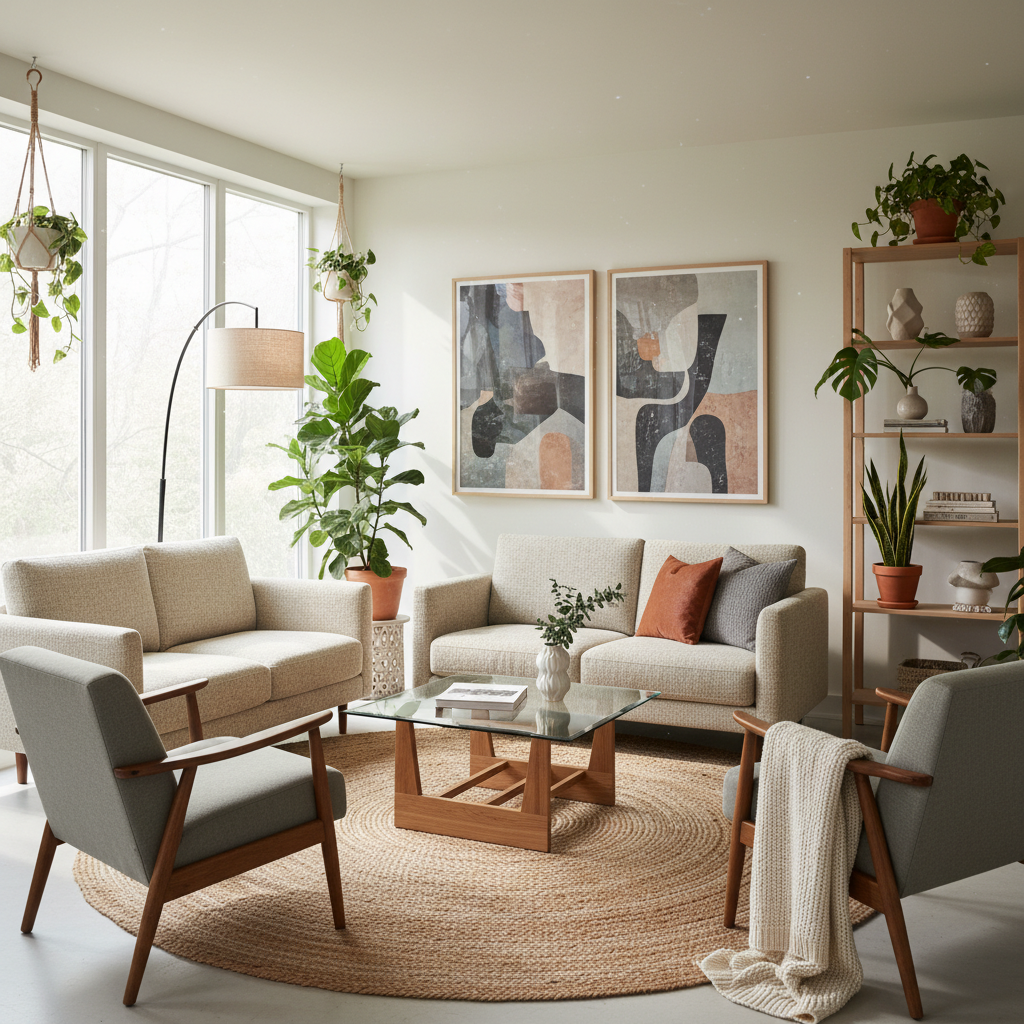
Modern living room furniture is defined by clean lines, minimalistic designs, and a strong focus on functionality. Modern sets often showcase neutral color palettes combined with streamlined shapes and rich textures. This style integrates organically shaped coffee tables, contrasting black accents, natural wood elements, and mixed materials like metal and glass. Bold textile choices in colors like avocado, burnt orange, and gold can be used to add personality while maintaining the aesthetic’s characteristic simplicity and openness.
Scandinavian
Scandinavian living room sets are known for their classy and sophisticated look, blending antique-style stressless furniture with artistic interior elements. This style emphasizes simplicity, functionality, and natural materials, creating serene and inviting spaces. Neutral or white finishes on furniture combined with tasteful artwork complement the décor, making the Scandinavian theme a popular choice for those seeking elegance without excess.
Mediterranean
The Mediterranean style evokes a beach-like ambiance with rustic-colored wallpapers, tiled floors, and pine wood furniture. It brings a natural and earthy touch to living rooms, drawing inspiration from coastal living. This style is one of the most popular themes, celebrated for its warm and inviting atmosphere that connects indoor spaces with nature.
Country
Country-style living rooms reflect American folklore or French rural traditions, often incorporating handmade textiles, indigenous materials, and simple accents. This theme focuses on cheerful colors and homely decorations, including picture frames and animal or human figurines displayed on white-painted shelves. The overall effect is a cozy, unpretentious environment that embraces simplicity and tradition.
Materials and Construction
The materials used in living room furniture have evolved significantly, reflecting both technological advances and changing design aesthetics. During the 1930s and 1940s, innovations such as the Streamline Moderne movement introduced new materials like plywood, plastic, and tubular steel, which later influenced the Mid-Century Modern style. Plywood, in particular, became a popular choice due to advancements in molding techniques pioneered by designers like Charles and Ray Eames, enabling new, ergonomic furniture forms. Alongside plywood, materials such as plastic and Formica became emblematic of mid-century dining sets, adding a retro yet functional appeal to interiors.
Wood remains one of the most favored furniture materials, prized for its timeless elegance and variety. Common hardwoods like oak, mahogany, and teak each offer unique appearances and durability, but they require regular maintenance such as polishing to preserve their finish and longevity. The quality and type of wood directly influence the price and durability of the furniture piece, making it a critical consideration for buyers seeking both style and endurance.
Metal has gained prominence in contemporary living room sets due to its strength, light weight, and versatility. Materials like stainless steel, aluminum, and brass provide durability and low maintenance, making them suitable for both indoor and outdoor furniture. Metal furniture often features in kitchens, dining areas, and patios, offering a modern aesthetic while resisting rust and wear. Glass is another sophisticated material often used in combination with wood or marble, lending a refined and clean appearance to furniture such as dining tables and desks.
Leather upholstery is commonly employed in sofas, chairs, and ottomans, delivering a luxurious look and soft comfort that improves with age. Leather pieces add sophistication to a room while offering durability when properly cared for, making them a popular choice for both classic and contemporary interiors.
The construction of living room furniture also plays a vital role in its durability and aesthetic appeal. Joinery techniques such as dovetail joints are highly regarded for their strength and elegance, especially in drawer construction where they provide resistance to pulling forces. Dowel joints, characterized by small wooden pins inserted into drilled holes, offer a modern, efficient method of assembly that balances strength and production ease. Different dowel joint types, including edge-to-edge, edge-to-face, and edge-to-corner, are chosen based on structural needs and visual preference. Box joints are favored in storage-heavy furniture for their distinctive appearance and shear strength.
Furthermore, Scandinavian and Danish furniture traditions emphasize simple, functional designs that maximize space and create a sense of openness. These influences, combined with post-WWII material scarcity, encouraged the use of plywood and industrial manufacturing techniques like steam bending, enabling mass production without sacrificing quality.
Ultimately, selecting living room furniture involves balancing aesthetics, durability, maintenance, and personal lifestyle. Whether opting for the warmth of wood, the sleekness of metal and glass, or the plush comfort of leather, understanding material properties and construction techniques is essential to ensure lasting beauty and functionality in your living space.
Design and Style Considerations
When selecting living room sets, understanding various design styles and the principles behind them is essential to creating a cohesive and inviting space. Interior design trends reflect evolving lifestyles, personal tastes, and cultural influences, offering a range of aesthetics from historic movements to contemporary preferences.
Art Deco, prominent in the 1920s, epitomizes luxury and glamour through bold geometric patterns and rich colors inspired by technological progress and cultural shifts. In contrast, the Arts and Crafts movement emphasizes simplicity, quality materials, and a connection to nature, focusing on craftsmanship rather than ornate detailing. Modern design diverges from previous styles by prioritizing sleek silhouettes, functional layouts, and the use of natural materials such as wood and leather, resulting in spaces that are both practical and aesthetically pleasing. Key elements include slim seating, low-profile sofas, striking artwork, and crisp geometric forms combined with lush textures. Contemporary interiors build on this foundation by integrating clean lines with cohesive colors and oversized colorful artwork to create streamlined yet vibrant environments.
Midcentury modern design, still highly popular, offers an unfussy, minimalist-leaning aesthetic that balances functionality with sleekness through simple forms and adaptable furniture. Recent trends encourage mixing and matching styles to add depth, character, and personal expression to living rooms, moving away from uniform matching furniture sets toward curated, layered designs that showcase individual creativity. This approach enhances visual interest and allows for flexibility in adapting to evolving tastes.
Color selection plays a pivotal role in defining the mood of living spaces. Warm neutrals such as deep whites, greige, and brown hues are favored for their ability to create serene and inviting atmospheres while pairing well with bolder accent colors to introduce vibrancy. Utilizing textured fabrics and interesting shapes within a neutral palette can add sophistication and prevent monotony. Consistency in color schemes and recurring design elements, like similar shapes or complementary textures, help unify diverse furniture pieces, ensuring harmonious compositions even when styles differ.
Arranging furniture with consideration to balance and focal points further enhances the living room’s appeal. Symmetrical layouts, such as two sofas facing each other or a sofa flanked by matching chairs, visually balance the space and create inviting conversation areas. Incorporating elements from diverse cultural aesthetics, such as Middle Eastern furniture with intricate inlays or Scandinavian pieces known for their artistic simplicity, can introduce unique character and a relaxed yet elegant vibe to interiors.
Ultimately, thoughtful integration of style, color, material, and layout transforms living room sets into personalized, functional, and aesthetically compelling environments that reflect both current trends and timeless design principles.
Iconic Furniture Pieces and Historical Design Innovations
Renaissance-style furniture is celebrated not only for its exceptional craftsmanship but also as a timeless symbol of elegance and style. Iconic pieces such as sideboards, wardrobes, chests of drawers, and chairs upholstered with luxurious fabrics like velvet and damask have endured as classics from this period. Living rooms reflecting Renaissance aesthetics often feature architectural elements such as vaulted and coffered ceilings, stucco decorations, and Greek fretwork, complemented by flooring materials like marble, natural stone, and wood that contribute to the style’s luxurious aura.
The Renaissance era, beginning in 14th-century Italy, marked a cultural revival that emphasized the rediscovery of classical art and design principles rooted in beauty, proportion, and harmony. This philosophical shift profoundly influenced furniture-making, as artisans aimed to replicate the grandeur of Greek and Roman aesthetics. During this time, furniture production transitioned from utilitarian, easily portable pieces to solid, ornately carved items, often crafted from walnut and designed to embellish the homes of the newly affluent bourgeoisie.
Following the Renaissance, the Baroque and Rococo periods introduced heightened opulence and artistic complexity to furniture design. Emerging in the early 17th century, Baroque furniture is distinguished by its bold forms, heavy proportions, and rich ornamentation featuring gilded finishes and intricate carvings of cherubs, floral motifs, and scrollwork. This grandeur mirrored the wealth and power of European monarchies, particularly in France under Louis XIV, where furniture served as a vital instrument of status and display.
In contrast, 20th-century interior design embraced modernism, prioritizing functionality and aesthetic simplicity. This shift was partly motivated by opposition to the excessive ornamentation characteristic of the 19th century, as championed by publications like House Beautiful in 1896. The minimalist design movement, which gained popularity in the mid-20th century and remains influential today, focuses on simplicity with neutral or monochromatic color schemes and carefully curated accents of color, texture, and pattern. This approach emphasizes intentional, visually appealing spaces centered on functional furniture and essential elements.
Influence of Non-Western Cultures on Contemporary Designs
Contemporary living room designs have increasingly incorporated elements from non-Western cultures, enriching modern interiors with diverse aesthetics and craftsmanship. For instance, Middle Eastern furnishings are highly valued for their intricate artistry and cultural significance. These pieces often feature handcrafted woodwork in walnut, teak, or cedar, embellished with detailed carvings, mosaic, or mother-of-pearl inlay, complemented by plush textiles. To maintain a modern balance, it is recommended to showcase one or two statement Middle Eastern pieces with ample space, allowing their craftsmanship and elegance to stand out without overwhelming the room. Subtle echoes of Middle Eastern motifs, such as geometric rugs, can harmonize with the furniture’s patterns while avoiding a matchy-matchy appearance.
Similarly, Japanese design principles have influenced contemporary interiors through their minimalistic and nature-inspired approach. Traditional Japanese living spaces often employ multi-functional furniture such as foldable beds, sliding screens, and low-seating tables, emphasizing simplicity and adaptability. This blend of tradition and modernity creates serene, functional environments that contrast with Western aesthetics yet complement them in fusion designs.
French cultural values also impact contemporary living room design by balancing historical roots with modern influences. French living rooms often reflect this equilibrium, whereas American styles tend to foster a more neutral and cozy atmosphere. This demonstrates the diversity and adaptability of non-Western cultural aesthetics in shaping modern interiors globally.
Selecting and Purchasing Living Room Sets
Choosing the right living room set is essential for creating a comfortable and stylish space that reflects your lifestyle and personal taste. A complete living room set typically includes key pieces such as a sofa or sectional, a loveseat, and a matching chair, which together form the foundation of your living area. When selecting furniture, it is important to consider the combination of products that best suit the type of style you want to achieve, as well as the functionality you need for daily use.
To start your search, exploring a variety of options from furniture stores or online retailers can help you find sets that cater to different styles and budgets. It is also advisable to pay attention to the quality of materials, as this influences the lifespan of your furniture. Proper maintenance and usage habits can significantly extend the durability of your living room set.
In terms of design, mixing different materials, textures, colors, and styles can add depth and interest to your living space. However, achieving balance is crucial to prevent the room from feeling cluttered or disjointed. Selecting pieces with similar shapes or design elements, such as rounded arms
Transforming Your Space with Living Room Sets
Transforming your living space with carefully selected living room sets can significantly enhance both functionality and aesthetics. Incorporating contemporary furniture into your home allows for modern room layouts that emphasize open space design, promoting a seamless flow between areas and breathing new life into your living spaces. In contrast, traditional furniture offers a timeless elegance by focusing on period-specific elements and careful attention to detail, ideal for creating a classic ambiance.
When arranging living room sets, consider grounding the space with a rug and ensuring there is a table available for convenience, such as setting down drinks or resting feet. Large living rooms offer flexibility for multiple seating types, so prioritize comfort with a well-chosen couch and complement it with lounge, accent, or occasional furniture that suits your needs. A reliable method is to arrange furniture in a rough circle around the room to encourage interaction and balance.
Mixing and matching furniture styles, materials, textures, and colors can add depth and personality to your space. However, achieving balance is crucial to prevent the room from feeling cluttered or disjointed. Décor items like rugs with intricate designs, wall art, throw blankets, and accent pillows can help anchor color themes and create harmony throughout the room. It is important to avoid overwhelming the space with too many shades or patterns unless aiming for a maximalist style.
Current trends suggest moving away from cool tones like grey toward warm neutrals such as deep whites and greige, which pair beautifully with bright or bold colors to create a vibrant yet soothing environment. These warm hues emphasize serenity and peace while adding a joyful atmosphere when combined with lively colors. Additionally, integrating smart home features like automated lighting, temperature control, and smart glass into living room designs is gaining popularity, blending technology seamlessly with comfort and style.
Ultimately, transforming your living room with thoughtfully chosen sets and accessories is a creative and rewarding process. Whether you prefer a sleek modern look, a traditional feel, or a curated shabby chic style that values simplicity and soft, creamy tones, these principles and trends can guide you to a harmonious and inviting living space.
Maintenance and Care
Proper maintenance and care are essential to prolong the lifespan and preserve the appearance of your living room furniture. Understanding the materials and construction of your pieces can help you implement the most effective care routines.
For wood furniture, the durability and longevity depend largely on the type of wood used, construction techniques, and ongoing maintenance. Solid hardwoods such as oak, walnut, teak, and maple are especially durable, known for their sturdiness and resistance to scratches. Teak is particularly valued for outdoor furniture because of its natural resistance to moisture, insects, and weather damage. To ensure wood furniture lasts for many years, it is important to regularly dust, avoid excessive moisture, and apply appropriate finishes or oils when needed.
Metal furniture, made from materials like stainless steel, aluminum, and wrought iron, offers excellent durability and requires minimal upkeep. These materials resist rust and are suitable for both indoor and outdoor settings, making them ideal for kitchens, dining areas, and patios. Regular cleaning with mild solutions and avoiding harsh abrasives will help maintain their appearance and functionality.
Upholstered furniture, especially those covered with leather, demands special care to retain its luxurious look and comfort. Leather pieces should be kept away from direct sunlight and heat sources to prevent drying and cracking. They benefit from periodic conditioning to maintain suppleness and enhance their elegant appearance over time.
Beyond material-specific care, general habits that reflect a culture of preservation can greatly extend the life of your furniture. For example, covering furniture with protective sheets to prevent dust accumulation or wrapping remote controls in cellophane to avoid wear are simple yet effective measures that safeguard your belongings and honor their value.
Environmental and Sustainability Considerations
When selecting living room furniture, environmental impact and sustainability have become increasingly important factors for many consumers. Choosing materials that are renewable, durable, and eco-friendly not only supports a healthier planet but also ensures long-lasting furniture that withstands everyday use.
Bamboo is one of the most sustainable options available for furniture. It grows rapidly and is highly renewable, making it an excellent choice for eco-conscious buyers. Additionally, bamboo is surprisingly strong and lightweight, which contributes to ease of handling and durability. However, it requires regular maintenance to protect it from moisture and preserve its appearance.
In contrast to traditional hardwoods, alternative materials like acrylic and metal also offer benefits in sustainability and functionality. Acrylic furniture, for example, is ideal for small spaces due to its transparency and sleek, contemporary look. Metal, on the other hand, is highly durable and low-maintenance, making it suitable for both indoor and outdoor furniture applications such as kitchens, dining areas, and patios.
The selection of materials goes beyond aesthetics, emphasizing a holistic approach that considers lifestyle, upkeep, and climate. This approach echoes historical design movements that valued craftsmanship and natural materials, such as the Arts and Crafts movement, which emphasized simplicity, quality, and a connection to nature. These principles continue to influence contemporary furniture choices that prioritize sustainability and environmental responsibility.
The content is provided by Jordan Fields, Front Signals