
Summary
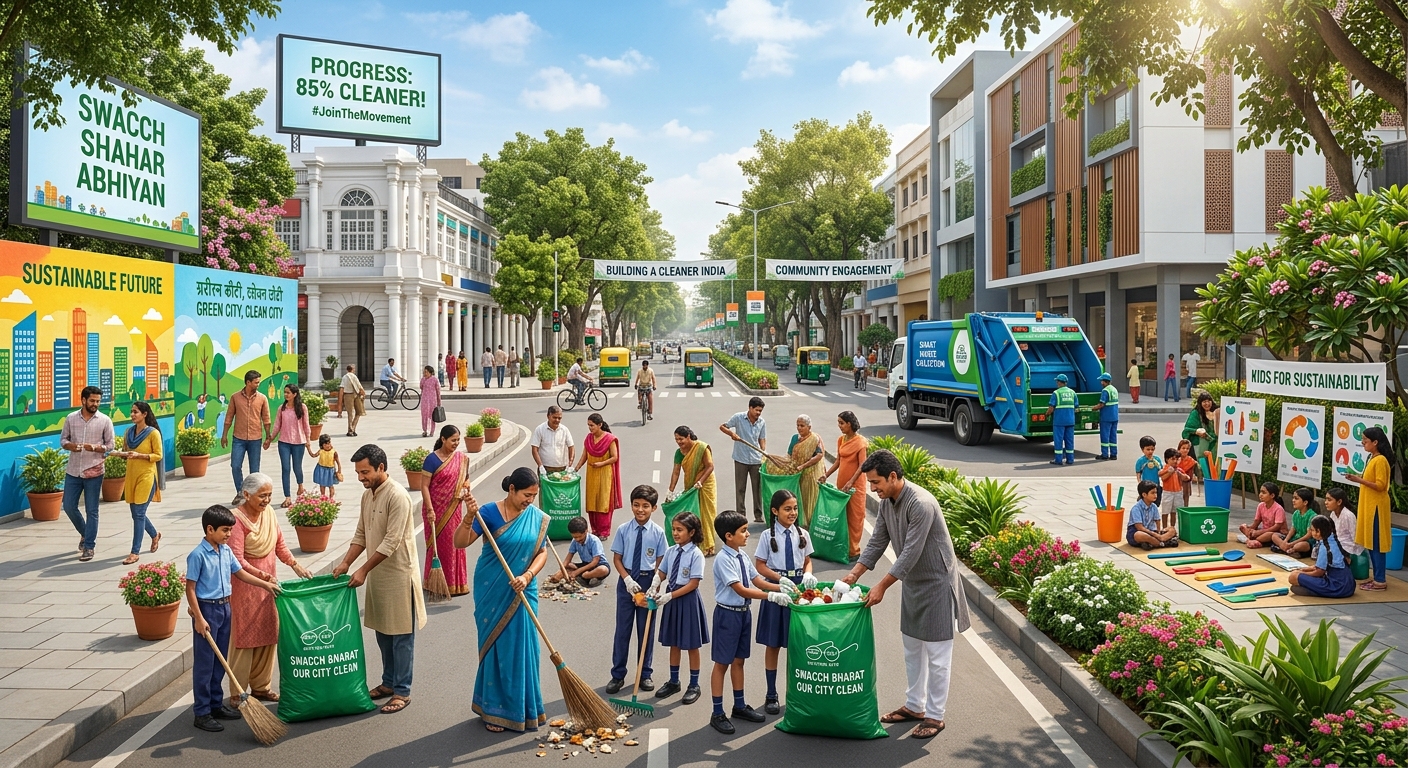
Transforming Urban Landscapes: PM’s Bold Vision to Clean Up 50 Cities is an initiative focused on revitalizing urban environments in India by addressing waste management, infrastructure renewal, and sustainable development. Launched on October 2, 2014, the campaign tackles issues like poor sanitation and environmental degradation that threaten public health and economic growth in rapidly urbanizing cities. By aligning with global sustainability objectives, the initiative promotes a combination of smart city technologies, social equity, and institutional coordination to create sustainable urban centers.
Background
The rapid urbanization in India has created urgent challenges in managing essential services, notably clean water and waste disposal. The Swachh Bharat Abhiyan (Clean India Mission), also initiated on October 2, 2014, aims to improve sanitation and waste management across towns and cities. This grassroots movement encourages public participation to foster a cleaner environment and has drawn parallels with international efforts, emphasizing a global recognition of urban cleanliness and resilience.
Vision and Objectives
The initiative envisions a sustainable urban landscape that aligns with global strategies while addressing social equity and environmental goals. It focuses on sharing local solutions for broader implementation and fostering collaboration among stakeholders. This vision includes affordable housing and restoration of urban ecosystems, aiming for holistic and inclusive urban renewal, while ensuring governance and institutional coordination through inter-agency task forces to enhance implementation strategies.
Institutional and Governance Framework
A robust governance framework is essential for managing large-scale sustainability initiatives. In India, local governance bodies have constitutional responsibilities for sanitation, supported by national agencies to enhance implementation. Citizen engagement is a key aspect, as platforms like Swachh Survekshan promote public accountability and participation in cleanliness efforts. Coordination between various government levels and stakeholders facilitates effective resource allocation and accountability, addressing the complexities of urban governance.
Implementation Strategy
The implementation strategy relies on long-term urban master plans that prioritize sustainable development and innovative financing. This includes alternative funding mechanisms and community engagement efforts to enhance urban housing and waste management. Examples from successful cities illustrate how integrated approaches and technology can improve urban environments and support healthy urban living, while addressing operational and financial challenges in urban management.
Challenges and Responses
<p Urban transformation faces challenges such as reliance on Special Purpose Vehicles (SPVs) and financial management issues that hinder coordination. Waste management remains a significant burden, requiring efficient systems to address the high costs associated with disposal. To address these challenges, a combination of policy innovation and community-driven approaches is essential, enabling localized initiatives to strengthen civic engagement and adapt urban spaces effectively.
Progress and Achievements
The initiative has seen substantial progress, with frameworks for urban renewal demonstrating effective collaboration among stakeholders. Successful project management translates visionary concepts into actionable community benefits, fostering public enthusiasm and improving urban quality of life. While efforts focus on outcomes such as improved waste management and public engagement, governance structures highlight the need for accountability in utilizing mechanisms like SPVs for sustained urban transformation.
Timeline and Phases of the Initiative
The campaign launched on October 2, 2014, mobilized extensive involvement across cities and initiated the establishment of an inter-agency task force to coordinate urban development. Key phases emphasized public participation and investment from various stakeholders while addressing governance and operational challenges. The combined efforts of institutional innovation and community engagement set the stage for realizing a significant urban transformation across India.
Future Directions and Sustainability
Future directions emphasize embedding sustainability through modern technologies and community-focused solutions. Strategies include efficient water management, smart waste systems, and collaborative urban planning that respects social and environmental dimensions. Recognizing the need for inclusive and equitable development, such initiatives aim to prevent displacement and enhance community identity, aligning with global trends toward sustainable urban environments.
Impact and Significance
The initiative has produced marked improvements in environmental quality, community cohesion, and economic vitality. Enhanced urban spaces increase property values and attract businesses, leading to job creation and enabling shared benefits across communities. This transformative agenda aims to address long-term governance concerns while integrating equity metrics to evaluate urban development, ultimately contributing to a sustainable urban future aligned with international sustainability agendas.
The content is provided by Sierra Knightley, Front Signals