
Summary
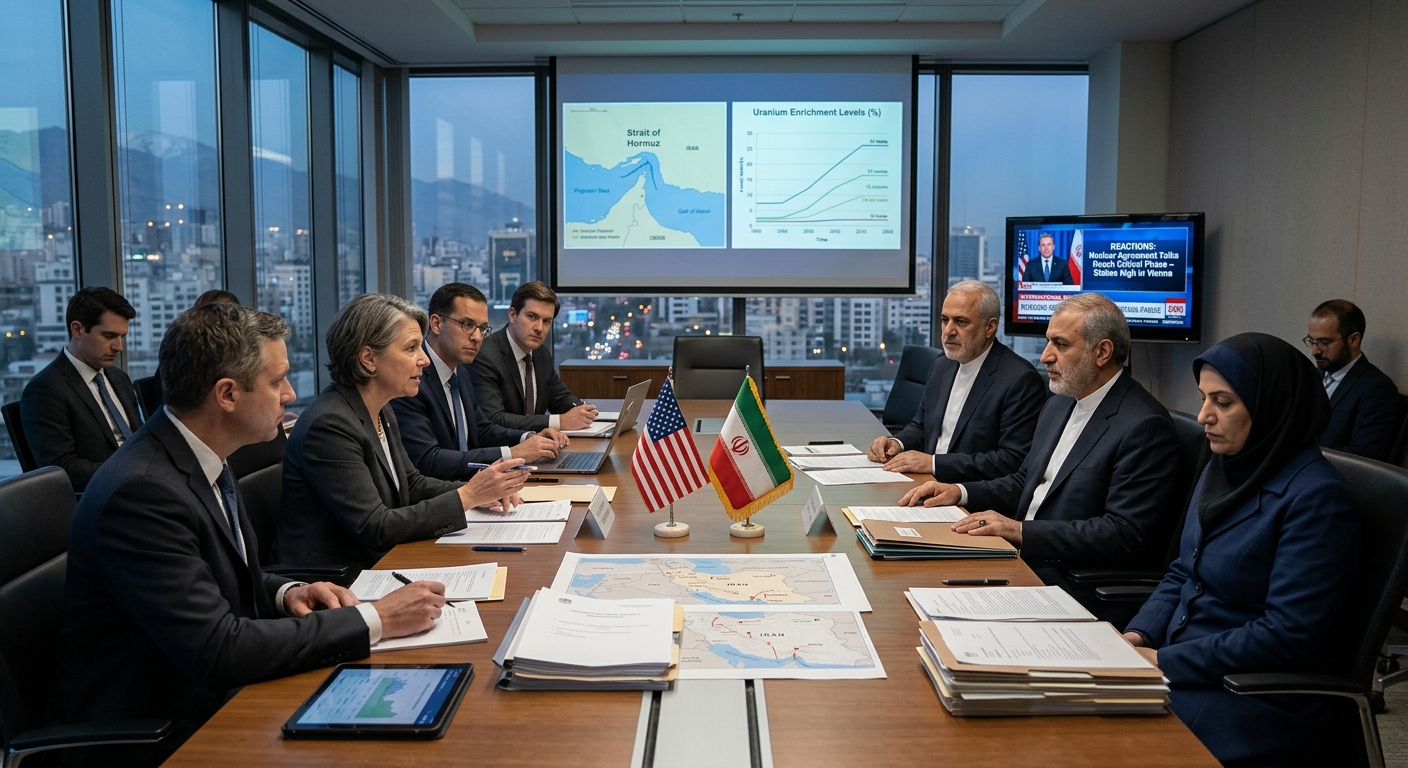
The recent U.S.-Iran diplomatic negotiations aimed at mitigating tensions over Iran’s nuclear program and regional security intensified in 2025 and 2026, amidst military confrontations and international mediation. Key issues addressed included Iran’s uranium enrichment, the handling of enriched uranium stockpiles, and the reopening of the Strait of Hormuz, vital for global oil supply. While President Trump expressed cautious optimism about the talks, deep-seated mistrust remains a significant barrier, complicated by military actions and internal political dynamics within Iran.
Escalating Tensions
Tensions escalated sharply after Israel’s military actions against Iran’s nuclear facilities in 2025, with additional confrontations in early 2026. These conflicts disrupted ongoing nuclear negotiations and prompted intense diplomatic efforts, including multilateral meetings involving China and Russia. Despite productive discussions, divergent interests hindered concrete agreements, with Iran proposing ambitious nuclear expansion plans, possibly inviting U.S. collaboration to revitalize its nuclear industry.
Negotiation Framework
Central to ongoing negotiations is a proposed memorandum addressing the reopening of the Strait of Hormuz, unblocking Iranian assets, and suspending uranium enrichment. Iran has assured the U.S. of its intention to dispose of its enriched uranium stockpiles, yet specific details on compliance remain vague. The negotiations face hurdles due to Iran’s hardline stance and uncertainty surrounding its nuclear program, requiring precise verification to ensure compliance.
Verification Challenges
Verification is essential to any deal but poses significant technical and political challenges. The International Atomic Energy Agency (IAEA) is seen as crucial for monitoring compliance, ensuring transparency, and building credibility in the agreement. However, recent military escalations have complicated oversight, creating skepticism around effective monitoring and the implications of U.S. negotiators’ strategies.
Reactions and Responses
The mixed reactions to the negotiations highlight domestic and international divides. In the U.S., criticisms emerged from various political figures regarding Trump’s approach, reflecting broader bipartisan concerns regarding his handling of the situation. Internationally, Iranian state media rejected claims made by Trump, portraying the developments as beneficial to Iran’s strategic positioning, while regional allies like Israel voiced serious opposition to any concessions made to Iran.
Political Implications and Internal Dynamics
Iran’s internal politics, marked by conflicts between hardliners and moderates, influences the negotiation landscape. While hardliners maintain hostile rhetoric against the U.S., moderates have shown cautious optimism towards potential dialogue. This internal struggle complicates negotiations, as any perceived concessions risk undermining the regime’s legitimacy.
Future Outlook
The legacy of the 2015 Joint Comprehensive Plan of Action (JCPOA) casts a long shadow over current negotiations, with past breakdowns affecting trust levels. The future hinges on the ability of both sides to engage in pragmatic diplomacy, particularly concerning verification processes that address nuclear nonproliferation. Success could stabilize the region and reopen vital shipping routes, yet unresolved mistrust and previous failures suggest any sustainable resolution will require further engagement and transparency.
The content is provided by Harper Eastwood, Front Signals