
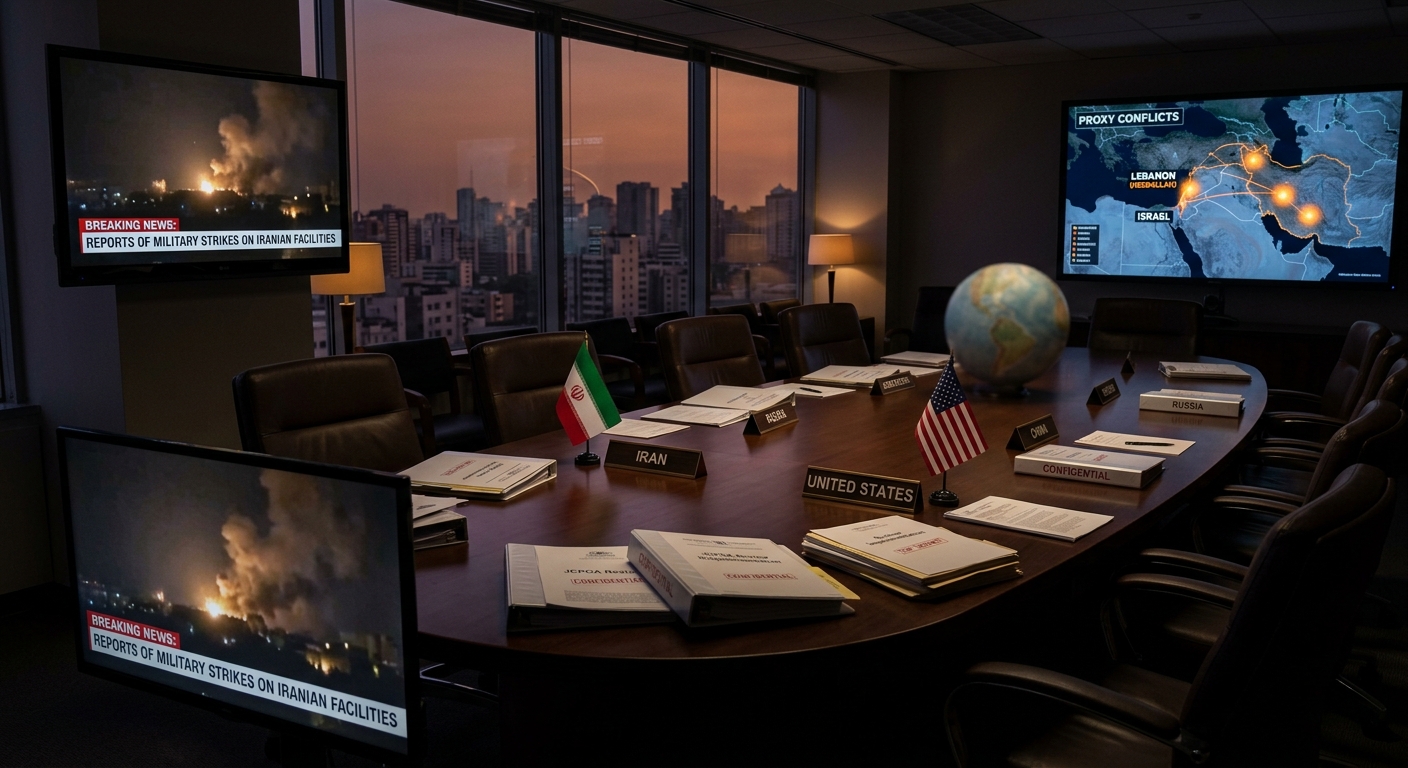
Summary of Current Negotiations
The stalled negotiations between the United States and Iran regarding the Joint Comprehensive Plan of Action (JCPOA) reveal a considerable escalation in the long-standing diplomatic deadlock centered on Iran’s nuclear ambitions and regional influence. Following the U.S. exit from the JCPOA in 2018, Iran’s uranium enrichment intensified, complicating efforts to restore the agreement amidst escalating military confrontations in the region, notably from U.S. and Israeli strikes on Iranian sites. This environment has severely eroded trust, making diplomatic resolutions ever more challenging.
Recent Developments and Challenges
Negotiations to revive the JCPOA have faced obstacles such as Iran’s advancing nuclear program, regional conflicts, and internal pressures within both U.S. and Iranian political spheres. While an earlier memorandum aimed to extend a ceasefire and progress toward renewed discussions, Iran’s strict insistence on guarantees concerning military hostilities complicated these talks. Divergent priorities, particularly regarding sanctions and security, served to deepen mistrust, casting further uncertainty over the possibility of a durable agreement.
Trump’s Position and Its Impact
President Trump’s dismissive comments about the negotiations on CNBC, where he noted indifference toward their potential collapse, highlighted a stark shift in U.S. diplomatic stance. While initially suggesting ongoing engagement, his remarks reflected frustration with the diplomatic process, which may have confused both allies and adversaries. This signaling not only complicates U.S. strategy but also influences Iran’s negotiating posture, reinforcing hardline perspectives within the Iranian leadership.
Political Reactions and Public Sentiment
Responses to Trump’s statements have illuminated divisions in political opinion within both nations. In the U.S., his approach emphasizes assertiveness mixed with skepticism about diplomatic engagement. Conversely, Iranian officials and media narratives portray the talks as failures, adhering to hardline positions while critiquing U.S. inconsistency. This dynamic intensifies the risks for future diplomacy, as mutual distrust complicates potential pathways forward.
Future Implications for Diplomacy
The breakdown in negotiations signifies notable implications for future diplomatic efforts related to Iran’s nuclear activities. With critical provisions of the JCPOA expiring, concerns about Iran’s nuclear capabilities are increasing in intensity. Despite ongoing international calls for dialogue, the pronounced mistrust and differing strategic interests create substantial hurdles to renewed agreements. Addressing both Iran’s nuclear ambitions and its involvement in regional conflicts is essential for restoring stability and trust in future negotiations.
The content is provided by Blake Sterling, Front Signals