
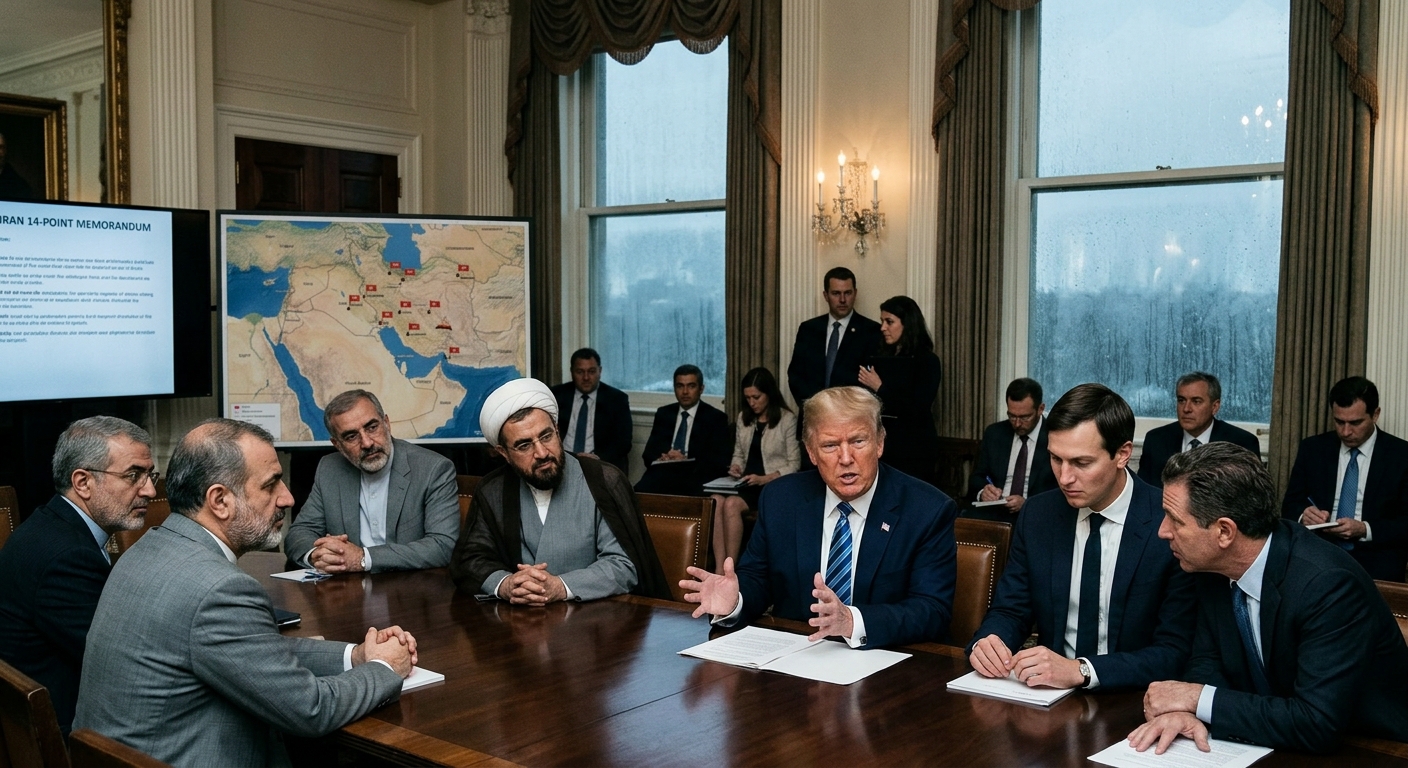
Summary of Current Tensions
In early 2026, President Donald Trump issued an ultimatum to Iran, warning of severe military consequences if the country delayed a nuclear and ceasefire agreement essential to reducing Middle Eastern hostilities. The two-week deadline aimed to push Iran towards compliance with terms designed to halt conflict involving the U.S. and Israel, pushing negotiations into a critical phase. Iran’s mixed responses and the potential for military escalation reflect the complexities of U.S.-Iran relations influenced by past agreements, particularly the 2015 JCPOA, and Trump’s previous withdrawal from this deal.
Stalled Negotiations
The U.S.-Iran dynamic has been historically fraught, dating back to the Iranian Revolution of 1979. Iran’s nuclear program remains a sticking point, leading to the original JCPOA, which was later abandoned by Trump in 2018. Since then, various negotiations resumed but achieved little, primarily due to mutual distrust compounded by regional conflicts, particularly the ongoing Israel-Hamas war. Monitoring by the IAEA has also been challenging, complicating any diplomatic resolution and contributing to continued U.S. sanctions that further erode trust.
Consequences of the Ultimatum
Trump’s ultimatum in April 2026 followed an escalation of military threats and a short ceasefire between Israel and Iran. The proposed 14-point agreement intended to normalize relations sparked skepticism within Iran, where leaders questioned the U.S. demands. International reactions were swift, with significant concerns raised regarding the legality and morality of attacking civilian infrastructure, reflecting global unease over the unfolding crisis.
Iran’s Strategic Delays
Iran’s approach has involved delaying strategies and indirect negotiations, which aid in maintaining messaging control domestically. Statements from Iranian officials have rejected U.S. demands while managing expectations through indirect channels, such as Oman, thus avoiding backlash and projecting an image of resistance. Supreme Leader Ali Khamenei’s influence helps frame these negotiations as tactical pauses rather than concessions, attempting to unify domestic support against perceived external pressures from the U.S.
Regional Implications
Responses within the Gulf region have varied, with concerns about Iranian influence in strategic areas like the Strait of Hormuz. Despite certain reconciliatory efforts, countries such as Saudi Arabia remain wary, balancing their own national security interests with ongoing dialogues about regional stability. As diplomatic efforts stabilize amidst conflicts, diverging interests between U.S. and Israeli policies may emerge depending on any forthcoming agreements.
Impact of Public Perception
Media narratives have developed around the crisis, emphasizing urgency and polarized views regarding Trump’s strategies. Dramatic coverage in Israeli media has heightened public awareness of looming deadlines while U.S. media reflected mixed perceptions of Trump’s negotiation tactics. In contrast, Iranian state narratives have depicted the situation as a righteous struggle against Western meddling, shaping domestic public perception to maintain support for their governmental stance amidst ongoing pressures and scrutiny from both sides.
The content is provided by Avery Redwood, Front Signals