
Summary of Legal and Economic Implications of Trump’s Tariffs
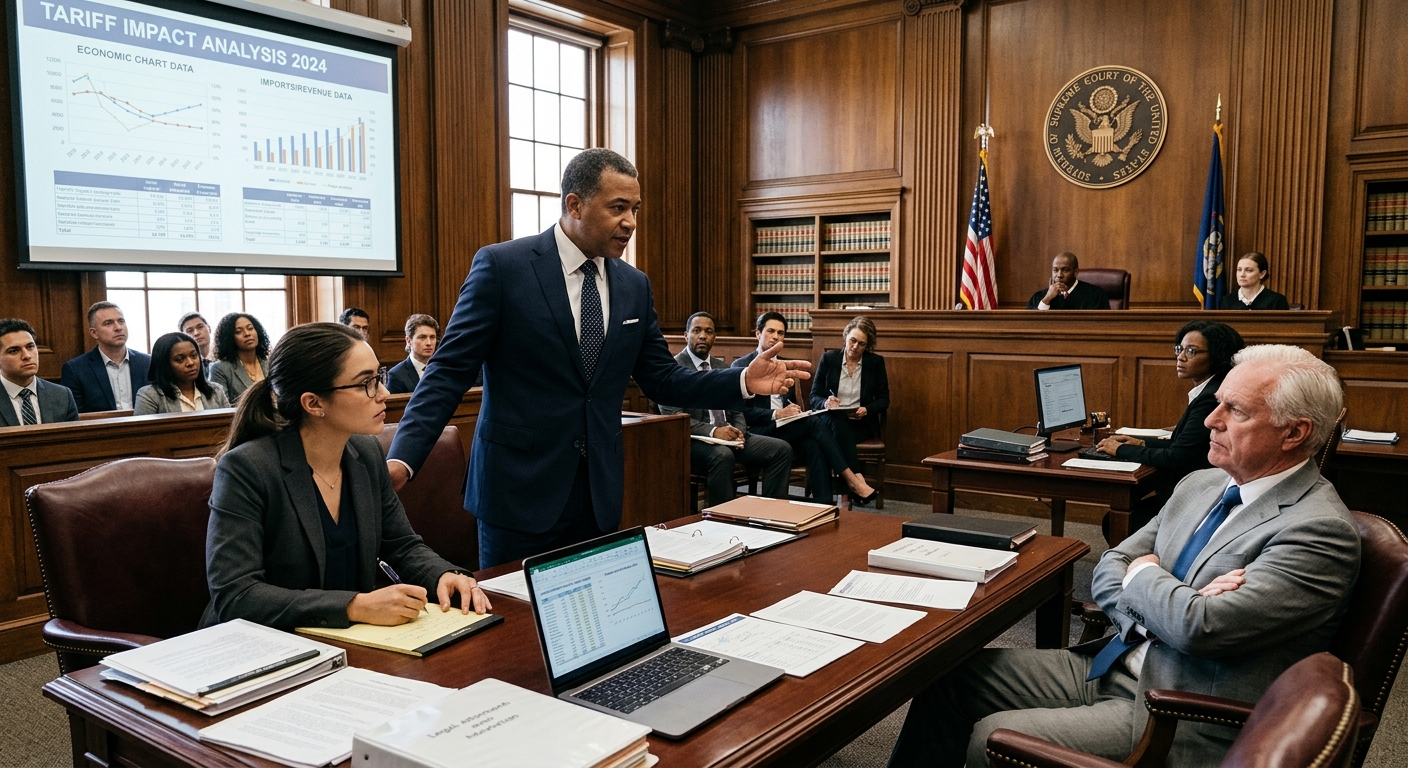
The article discusses President Donald Trump’s tariff policies during his second term, which significantly raised U.S. import duties. Central to the legal challenges against these tariffs is the question of whether executive authority can impose these duties without congressional approval. The landmark Supreme Court case, Learning Resources, Inc. v. Trump, ruled that such tariffs exceeded presidential powers, reinstating Congress’s role in tariff settings and creating avenues for importers to reclaim unlawfully paid tariffs.
Context of Tariff Implementation
Trump’s administration imposed tariffs that raised import rates from 2.5% to approximately 27%, covering a wide range of goods. Utilizing statutes like the International Emergency Economic Powers Act (IEEPA), these policies marked a clear shift towards protectionism. Legal challenges arose as courts scrutinized the constitutionality of these tariffs, with key rulings, including one striking down certain tariffs due to lack of justification, complicating the legal landscape for importers.
Opportunities for Importers to Recover Tariffs
The U.S. Court of International Trade allowed limited recovery for importers, but only for specific plaintiff groups. Most importers must actively pursue refunds, as they aren’t granted automatic relief. This situation has generated significant demand for broader judicial relief that could extend to more importers, emphasizing the need for proactive legal engagement to navigate these complexities.
Judicial Outcomes Affecting Tariff Legitimacy
Legal proceedings against Trump’s tariffs revealed challenges to the executive branch’s ability to impose such duties without clear congressional authorization. Key rulings, including the landmark decision regarding Presidential Proclamation No. 11012, highlighted the need for a valid balance-of-payments deficit justification, thus invalidating major tariff measures. This ongoing legal scrutiny emphasizes the evolving relationship between executive, legislative, and judicial powers regarding trade regulation.
Economic Impact on Importers
The post-tariff litigation period has created financial challenges for importers, with substantial sums available for recovery, provided they take necessary steps to claim refunds. The established system for processing these claims indicates that millions are already being processed, yet uncertainty remains regarding future tariff management. Companies facing tariffs have to balance absorbing costs and maintaining competitive prices, often leading to economic strain, especially for smaller businesses reliant on international supply chains.
Responses to Legal Rulings
The Supreme Court ruling on the IEEPA’s application in tariff imposition has elicited varied reactions, illustrating division among political and industrial stakeholders. Some Republicans welcomed the decision as a check on executive overreach, while concerns arose regarding the potential impacts on future executive trade authority. Industry reactions vary, with some sectors fearing negative repercussions, signaling a complex trade environment moving forward.
Wider Trade Policy Implications
The ongoing challenges to Trump’s tariff policies signify a broader dialogue on trade authority and economic strategy in the U.S. The legal environment surrounding tariffs will affect future congressional decisions regarding trade, as the boundaries of executive and legislative powers remain contested. The current disputes underscore the necessity for clarity in trade laws and their implications, not just for the U.S. economy but also for international relations. As discussions evolve, monitoring legislative and judicial developments will be crucial in navigating potential future adjustments in U.S. trade policy.
The content is provided by Blake Sterling, Front Signals