
Summary
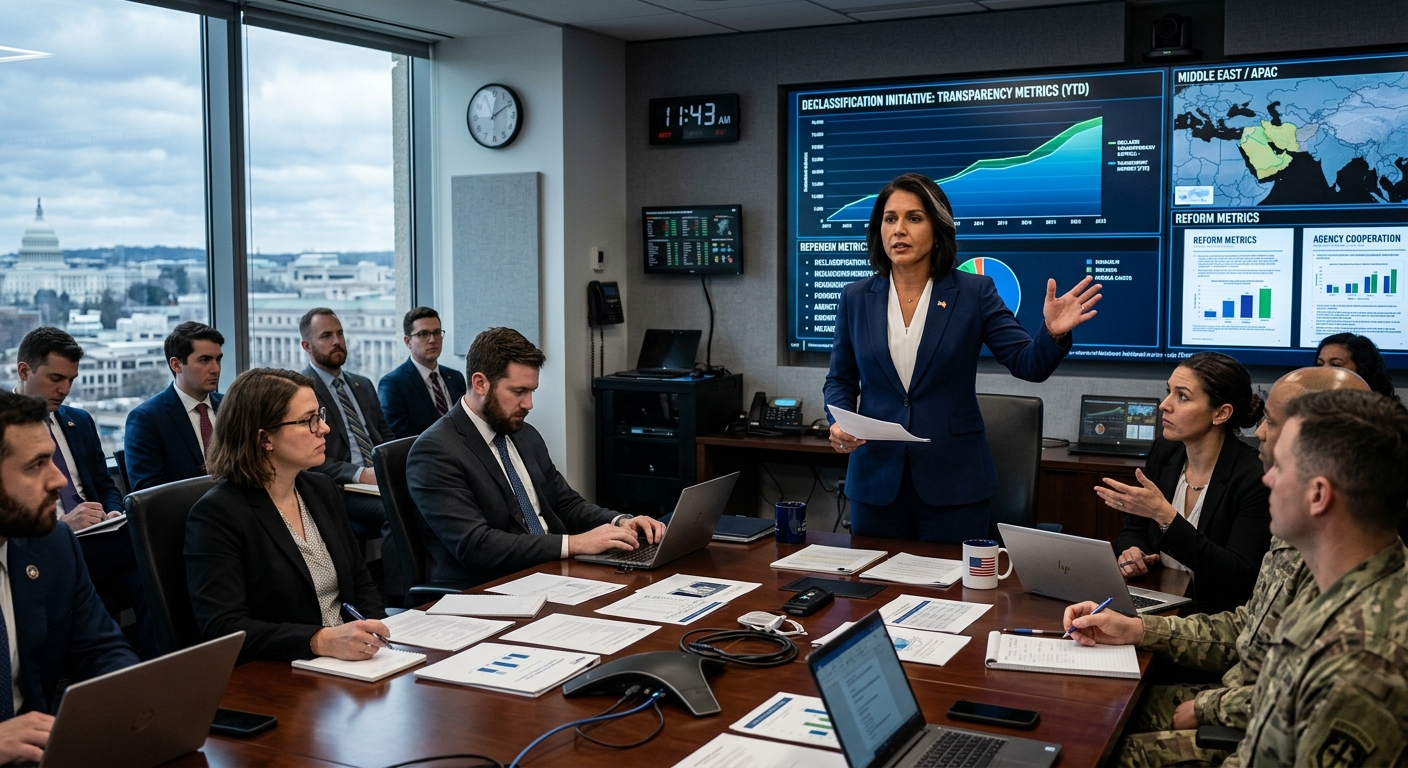
Tulsi Gabbard served as the eighth Director of National Intelligence (DNI) from February 2025 to June 2026, making history as the first female combat veteran in this role. Her tenure was characterized by ambitious reforms that emphasized transparency, cost reduction, and a focus on border security and counterterrorism, despite her unconventional approach and lack of traditional intelligence experience. Gabbard established the Director’s Initiatives Group (DIG), targeting politically charged issues like COVID-19 origins and election interference, while also pushing for extensive declassifications that sparked varied reactions among her peers.
Background
Before becoming DNI, Tulsi Gabbard, a former U.S. House Representative, gained recognition for her criticism of U.S. military interventions and her involvement in key committees addressing defense and intelligence oversight. Her appointment in 2025 triggered mixed reactions due to her past views diverging from the Trump administration’s. Gabbard’s confirmation was partly contingent on restoring the ODNI’s scope amid concerns about its direction under her predecessors, setting the stage for her controversial leadership style and actions during her tenure.
Tenure as Director of National Intelligence
Gabbard’s period as DNI included significant shifts in intelligence focus toward national security priorities that resonated with the administration’s agenda. She restructured operations by emphasizing domestic surveillance, leading to high-profile dismissals of NIC officials who opposed her directives. Additionally, her creation of the DIG aimed to tackle perceived abuses within the intelligence community, although it drew criticism for politicizing intelligence and led to the revocation of numerous security clearances.
Resignation
Gabbard announced her resignation as DNI effective June 30, 2026, primarily to care for her husband during his battle with cancer. Her departure followed mounting tensions with the Trump administration, particularly regarding her exclusion from critical national security discussions. The ensuing change in leadership, with Aaron Lukas stepping in as acting DNI, suggests a shift toward continuity amidst the controversies surrounding her reforms and initiatives.
Reactions to Resignation
Following Gabbard’s resignation, reactions varied widely among political and intelligence circles, reflecting ongoing divisions over her tenure. While President Trump praised her contributions, critics within the Democratic Party condemned her actions as prioritizing loyalty to the administration over national security. Supporters viewed her declassification efforts as legitimate, yet debates persist regarding the implications of her approaches for the intelligence community’s future.
Implications and Aftermath
Gabbard’s time as DNI raised important questions about the balance between reform, accountability, and politicization within U.S. intelligence. Her focus on transparency and operational efficiency sought to reshape the community, yet her exclusion from significant deliberations during conflicts highlighted potential fractures in the role of the DNI. The succession of Aaron Lukas indicates a desire to stabilize the agency while potentially moderating some of Gabbard’s more contentious reforms.
Legacy and Analysis
Tulsi Gabbard’s efforts as DNI reflect a complex legacy of ambitious reforms coupled with significant controversy. Her initiatives aimed at increasing transparency and reducing bureaucratic spending resulted in measurable cost savings but also raised critical concerns about the politicization of intelligence. The ongoing debates surrounding her leadership style and decisions suggests that her tenure will continue to influence discussions on the future structure and effectiveness of U.S. intelligence operations.
Related Developments
During her brief yet impactful time as DNI, Gabbard endeavored to align the intelligence community’s direction with trending political priorities. Her lack of a conventional intelligence background coupled with evolving foreign policy expectations contributed to a challenging environment as she sought to reshape institutional norms.
The content is provided by Jordan Fields, Front Signals