
Summary of Sanctions and Control Measures
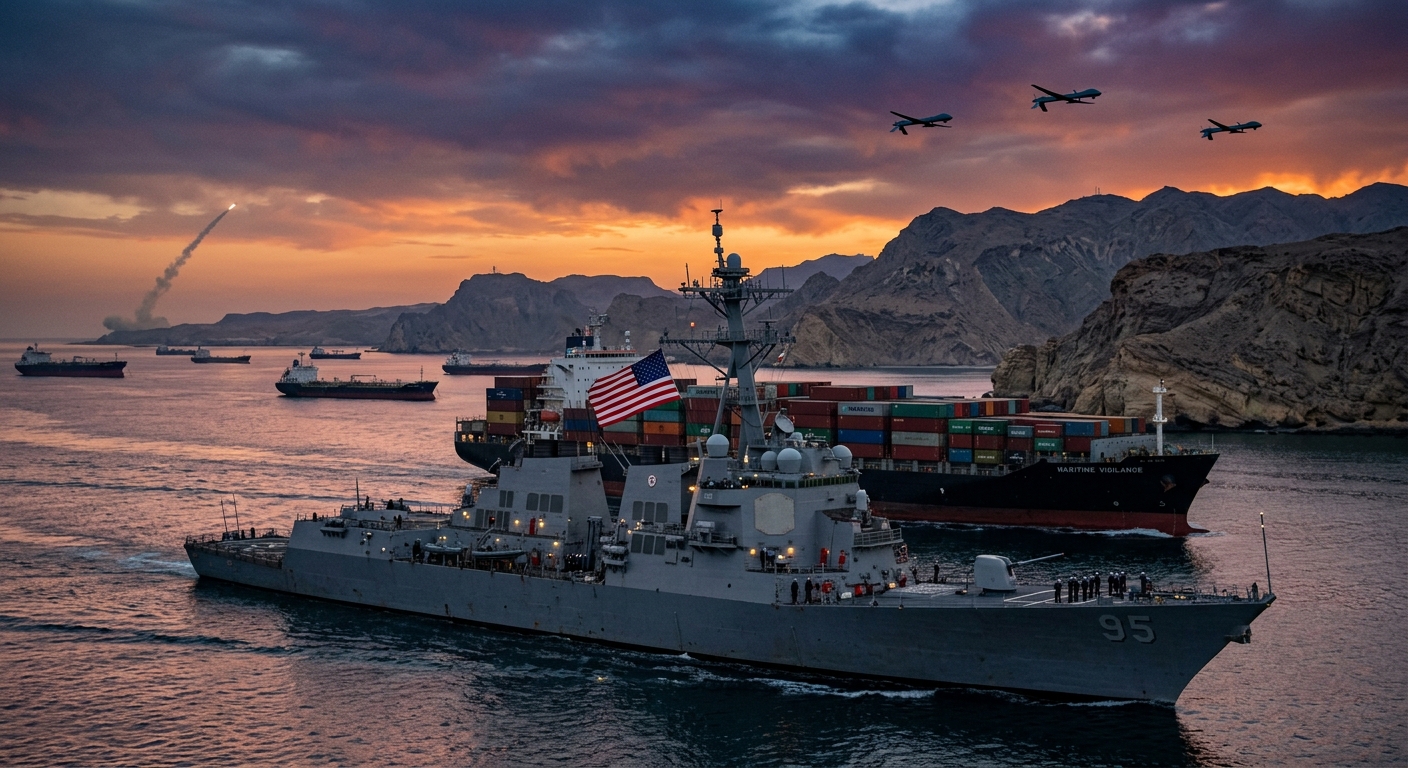
The United States has imposed sanctions on Iran’s Persian Gulf Strait Authority (PGSA) due to rising military aggression in the Strait of Hormuz, a critical route for global oil and gas exports. The PGSA, established in May 2026, is seen as a means for Iran to control maritime traffic and impose hefty tolls, raising concerns over navigation freedom and energy security. The sanctions intensified following Iran’s missile attacks on U.S. military positions, marking a shift in regional dynamics and prompting fears of conflict, as the U.S. perceives the PGSA as part of Iran’s military expansion through the Islamic Revolutionary Guard Corps (IRGC).
Strategic Importance of the Strait
The Strait of Hormuz is a vital transit corridor for over 20% of the world’s oil and liquefied natural gas exports. Since February 2026, the region has seen increased military engagements and attempts at control by both Iran and the U.S., leading to market volatility and stranding vessels. Iran’s creation of the PGSA reflects its intent to exert regulatory and economic influence over this key waterway, further complicating an already tense geopolitical landscape.
Ballistic Missile Incident Overview
On May 27, Iran launched a ballistic missile at a U.S. base in Kuwait, categorized by U.S. Central Command as a serious violation of ceasefire protocols. This missile launch followed U.S. military actions against Iranian positions, contributing to escalating fears of direct conflict in the region. With increasing Iranian military provocations, U.S. responses have included further sanctions targeting entities supporting Iran’s missile capabilities, showcasing the fragile state of U.S.-Iran relations.
Details of U.S. Sanctions on PGSA
The U.S. Treasury Department’s sanctions on the PGSA signify a direct response to Iran’s assertive control over maritime transit in the Strait of Hormuz. These sanctions prevent U.S. entities from engaging with the PGSA or facilitating payments, marking a serious financial risk for those considering operations in this area. This strategy aims to limit Iran’s ability to monetize its military control while addressing broader security concerns tied to regional destabilization.
PGSA Enforcement Mechanisms
The PGSA mandates that all vessels submit a detailed declaration before entering the Strait, introducing new compliance requirements that pose risks for non-conformance. Enforcement methods include potential military action from the IRGC against vessels disregarding PGSA regulations. This shift to regulatory control and the imposition of tolls highlights Iran’s attempts to leverage economic tools to solidify its dominance over the waterway, raising wider concerns about international shipping protocols and maritime insurance related to security risks.
Reactions from Regional and Global Players
The U.S. sanctions triggered varied responses, with Middle Eastern nations condemning Iran’s actions as violations of sovereignty and calls for unified regional resilience against Iranian aggressions. Meanwhile, the U.S. solidified its stance through sanctions aimed at both Iranian and international entities aiding its military capabilities. While the United Nations Security Council remains divided on responses due to veto powers, regional allies express urgent calls for preserving free navigation rights, underscoring the high stakes involved in the Strait of Hormuz’s future control.
Consequences of Current Actions
The sanctions and Iran’s aggressive maneuvers significantly intensify tensions in the Strait of Hormuz, critically affecting global energy supplies and rising shipping costs. Increased military threats from Iran contribute to higher insurance premiums and alter maritime compliance challenges for shipping operations. These evolving dynamics present significant implications for international trade and security, necessitating careful navigation of diplomatic efforts amidst an atmosphere of escalating conflict.
Timeline of Escalating Events
The conflict’s trajectory has evolved steadily due to Iran’s aggressive military posturing and the establishment of regulatory mechanisms that complicate international relations and maritime security in the strategic Strait of Hormuz.
The content is provided by Avery Redwood, Front Signals