Summary
Hotel housekeeping careers in Switzerland represent a vital and expanding segment of the country’s hospitality industry, offering diverse opportunities from entry-level roles to supervisory and managerial positions. Housekeeping staff are essential in maintaining the high standards of cleanliness, guest comfort, and operational efficiency that Swiss hotels are known for, contributing significantly to the nation’s reputation as a premier tourist destination. Driven by a projected 14% increase in overnight stays by 2025, the sector is experiencing growing demand for skilled workers, supported by comprehensive vocational training programs and professional development pathways.
Despite promising career prospects and competitive salaries ranging roughly from CHF 35,000 to CHF 80,000 annually depending on role and experience, the hotel housekeeping sector faces notable challenges. These include persistent labor shortages, physically demanding workloads, irregular hours, and workplace issues such as harassment, bullying, and high rates of part-time or seasonal employment. Efforts by employers and unions to improve conditions include offering flexible scheduling, incentives, and protections under collective labor agreements, though workplace health and safety concerns remain a focus for ongoing regulatory enforcement.
Candidates seeking careers in Swiss hotel housekeeping are generally expected to have relevant vocational education, certifications, and language skills, with many employers valuing prior housekeeping experience in hospitality settings. Institutions like EHL Passugg and BHSS provide specialized training that combines theoretical knowledge with practical internships, facilitating skill development and career advancement in an increasingly complex and professionalized work environment. Multilingual communication, organizational skills, and health and safety awareness are key competencies demanded by the evolving role.
Overall, Switzerland’s hotel housekeeping industry in 2025 offers significant growth opportunities amid structural challenges. The sector’s expansion aligns with broader trends in tourism and cleaning services, while ongoing attention to workforce wellbeing, occupational health, and fair employment practices will be critical to sustaining its development and maintaining the high quality standards expected by both workers and guests.
Overview of Hotel Housekeeping Careers
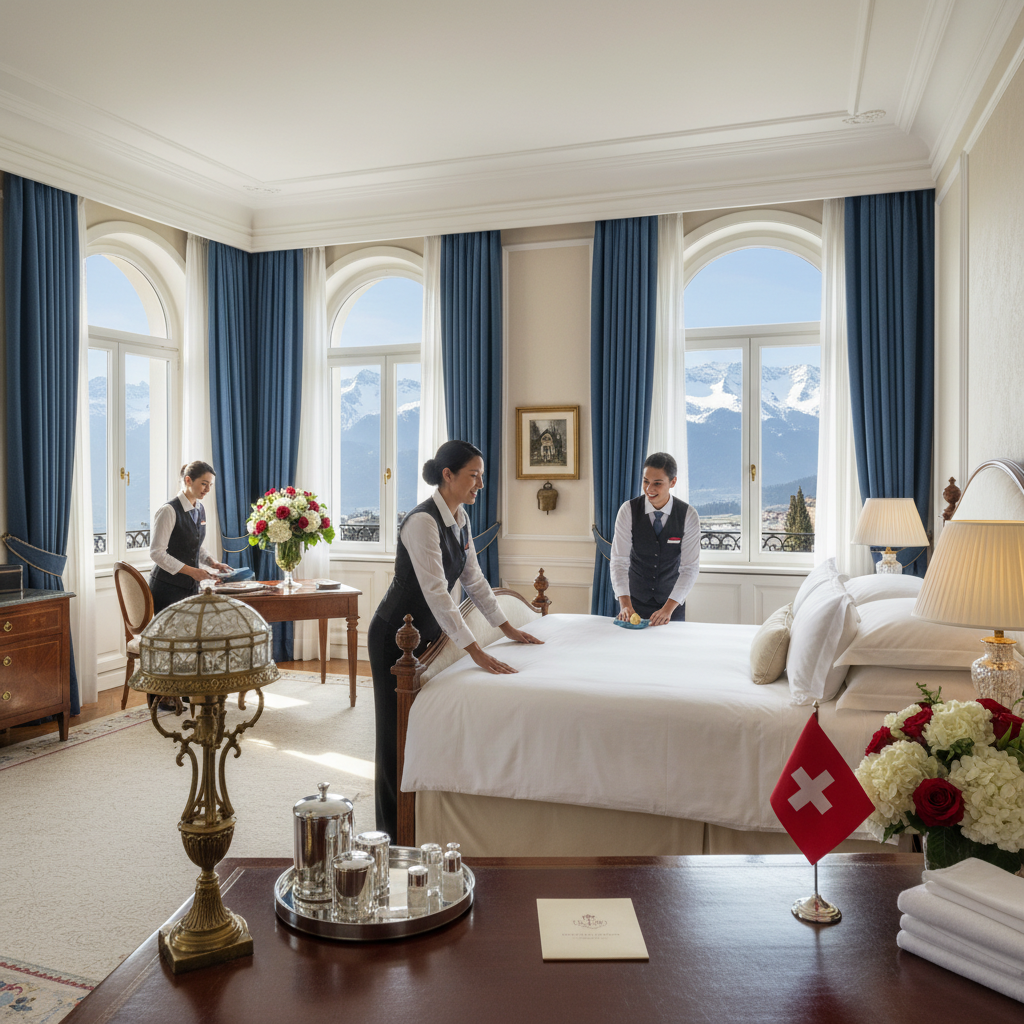
Hotel housekeeping careers in Switzerland offer a range of opportunities from entry-level positions to advanced management roles within a dynamic and thriving industry. Housekeeping staff play a crucial role in maintaining the high standards and reputation of Swiss hotels, working alongside receptionists, concierges, and other personnel to ensure excellent guest experiences. The work typically involves physically demanding tasks such as cleaning guest rooms, handling laundry, and maintaining equipment, with shifts commonly spanning from early morning to late evening. Due to staff shortages, employees often face increased workloads and short-notice shift changes; however, some employers provide flexible scheduling options and incentives to enhance working conditions. Many hotel housekeeping positions prefer candidates with previous experience in housekeeping at hotels or motels. Additionally, specialized training and certification programs are widely available through vocational schools and institutions such as EHL Passugg and BHSS. These programs offer industry-recognized diplomas and continuous education that prepare workers for career advancement within the field. Working conditions frequently include a standard 5-day workweek, often from 7:00 to 19:00, with unpaid vacations during major holidays such as Christmas and Easter, and when family members are on vacation. Meals and accommodation in separate apartments are typically provided as part of the employment package. Collaboration with other hotel departments and adherence to safety regulations are standard expectations for housekeeping staff.
Hotel Housekeeping in Switzerland
Hotel housekeeping is a vital component of the Swiss hospitality industry, encompassing roles from entry-level cleaning staff to managerial positions. Housekeepers are responsible for maintaining cleanliness, managing laundry, inspecting equipment, and reporting maintenance issues to ensure guest comfort and uphold hotel standards. The sector offers clear career progression supported by vocational training programs, including apprenticeships and diploma courses that combine theoretical knowledge with practical skills. The Swiss hotel housekeeping job market in 2025 is expanding, driven primarily by rising tourism, with overnight stays expected to increase by approximately 14%, which in turn boosts demand for housekeeping staff. Salaries typically range between CHF 35,000 and CHF 80,000 annually, depending on experience and role level. Despite this growth, the sector faces challenges such as labor shortages that increase workloads and complicate coverage. To address these issues, employers offer flexible work arrangements and financial incentives to attract and retain qualified personnel. Candidates seeking employment in Swiss hotel housekeeping are generally expected to have relevant experience, certifications, and language skills. Recruitment is commonly conducted via hotel websites, job portals, and staffing agencies, with some employers providing visa sponsorship and accommodation support for foreign workers. Job opportunities are available across numerous Swiss cities, including Zürich, Geneva, Bern, and Saint Moritz, among others. The housekeeping workforce often contends with difficult working conditions, including unpaid overtime, long or irregular hours, and instances of harassment or bullying. Additionally, a significant proportion of jobs in this sector are part-time, casual, or seasonal. Nevertheless, ongoing professional development, supported by collective labor agreements, facilitates career advancement from operational roles to supervisory and managerial positions. The Swiss cleaning services industry, closely linked to hotel housekeeping, is also experiencing steady growth, with a compound annual growth rate (CAGR) of 4.1% between 2020 and 2025. This growth is fueled by demand from hospitality and specialized sectors, while market pressures and regulatory compliance continue to influence operations. Increasingly, housekeeping roles require multitasking abilities, strong organizational skills, and knowledge of health and safety standards, with compensation reflecting these heightened skill demands. Major employers actively recruiting for housekeeping and related roles include international hotel chains and service providers such as Marriott International, Alpine Holiday Services GmbH, Good-People, and Swiss Private Staff GmbH. The job market remains competitive, and regional employment offices collaborate with employers to facilitate suitable candidate placements, reflecting the ongoing challenges in filling vacancies despite low overall unemployment rates in Switzerland.
Career Pathways and Development
Hotel housekeeping careers in Switzerland offer a diverse range of opportunities, from entry-level positions to management roles, supported by a strong framework of vocational training and professional development programs. Entry-level roles, such as housekeepers or housekeeping attendants, focus on teamwork, language skills, and performing physically demanding tasks including cleaning, laundry, and equipment maintenance. These positions often come with benefits like accommodation and meals, reflecting the industry’s commitment to employee welfare. Career advancement is facilitated through a combination of employer changes, continued education, and specialized training. The National Collective Labor Agreement (CCNT) and Switzerland’s broader commitment to professional development underpin this progression, providing pathways to roles like Housekeeping Manager, who typically oversees teams of about 12 staff members, coordinates with suppliers, and liaises with hotel leadership. Essential skills for management roles include multilingual communication, leadership experience, procurement knowledge, and customer service acumen. Vocational education plays a crucial role in career development, blending theoretical instruction with practical training. Apprenticeships and diploma programs offered by vocational schools and institutions such as EHL Passugg and BHSS equip students with the necessary technical skills and confidence to excel in the hospitality sector. These programs often include extended industry placements—sometimes up to 20 weeks—allowing trainees to gain real-world experience and strengthen customer service abilities. Health initiatives within the sector support workers in managing the physical demands of the job, further enhancing workforce sustainability and development prospects.
Skills, Qualifications, and Certifications
Hotel housekeeping careers in Switzerland require a combination of formal education, practical experience, and a diverse skill set to meet the demands of the role. Typically, candidates need at least a high school diploma or equivalent, complemented by vocational education and apprenticeships through the Vocational Education and Training (VET) system. Advanced qualifications, such as the Federal Vocational Baccalaureate or the HF Swiss Professional Degree, can further enhance career prospects and progression within the industry. Specialized training and certification programs are widely available and play a crucial role in preparing workers for housekeeping positions. Institutions like EHL Passugg and BHSS offer industry-recognized diplomas and continuous education courses designed to equip students with the technical skills required for entry-level roles in hotel housekeeping or reception departments. These programs often require proficiency in English or other relevant languages and may include placement tests to assess language competence. Practical experience is highly valued, with many employers preferring candidates who have previous housekeeping experience in hotels or motels. In addition to technical skills such as cleaning, laundry, and equipment maintenance, housekeeping staff must demonstrate strong organizational abilities, excellent communication skills, and the capacity to multitask effectively. Soft skills like teamwork, management, multilingual communication, and problem-solving are essential for working cohesively with other hotel departments and for meeting customer needs. Furthermore, the physically demanding nature of housekeeping work necessitates adherence to health and safety regulations. Swiss employers are legally obligated to implement measures that protect the health and safety of their employees, and health initiatives are often in place to support workers in managing the physical workload.
Employment Conditions and Working Environment
Hotel housekeeping in Switzerland is characterized by physically demanding tasks such as cleaning, laundry, and equipment maintenance, often carried out during long shifts that can extend from early morning until late evening. Workers frequently encounter unpaid overtime, long and anti-social working hours, as well as harassment and bullying in the workplace. Moreover, the sector has a high prevalence of part-time, casual, or seasonal employment, which can contribute to job insecurity. The labor market in this field is marked by significant horizontal and vertical segregation, concentrating many women in roles with intense time pressure, heavy workloads, and repetitive tasks. Workplaces and equipment are often inadequately designed, frequently based on male anthropometric standards, making handling difficult and contributing to physical strain. Psychosocial hazards are common, including an imbalance between work demands and available resources or control, mistreatment, and unfair task allocation. These factors collectively have a detrimental effect on the physical and mental health of hotel housekeeping staff, with effort-reward imbalance linked to musculoskeletal disorders and poorer health perceptions. Despite these challenges, collective bargaining agreements in Switzerland play an important role in defining minimum employment conditions such as wages and notice periods, and they help ensure a framework of rights and protections for hotel workers. These agreements are typically negotiated at the industry level and may be declared mandatory by governmental authorities. Employers are required to communicate any organizational changes affecting employees in advance to employee representative bodies or directly to the employees themselves. Typical working schedules for hotel housekeeping staff may involve long-term assignments on a five-day workweek, often running from 7:00 to 19:00, with vacation times commonly aligned with Christmas, Easter, or family holidays, although vacations are generally unpaid. Some employers provide meals during shifts and accommodation in separate apartments as part of the employment package. Due to labor shortages exacerbated by a growing tourism industry, employers increasingly offer flexible scheduling options and incentives to improve working conditions and attract staff. Salaries for housekeeping staff in Switzerland typically range from CHF 35,000 to CHF 50,000 annually, with variation depending on location and employer, and higher remuneration levels for management positions. Employment contracts specify salary arrangements and conditions. Swiss labor law, grounded in the Code of Obligations and the Labour Act and supplemented by collective bargaining agreements and cantonal regulations, provides comprehensive coverage of employment rights, working hours, safety standards, and termination procedures. These legal frameworks contribute to a relatively stable and secure working environment for hotel housekeeping employees, despite the inherent challenges of the occupation. Additionally, strong union representation has helped secure some of the best labor contracts for hotel workers, ensuring fair wages, benefits, and protections against unfair treatment.
Workplace Safety and Occupational Health
Hotel housekeeping in Switzerland involves various occupational hazards and is subject to comprehensive health and safety regulations. Employees are legally guaranteed the right to a safe and healthy work environment, as outlined in Swiss Labor Law, which regulates working hours, employee health protection, and building standards. Additionally, the Accident Insurance Law aims specifically at preventing occupational accidents, with enforcement carried out by cantonal labor inspectorates, the Swiss National Accident Insurance Fund (SUVA), and the State Secretariat for Economic Affairs (SECO). Housekeeping staff face multiple physical and psychosocial risks. Physically, the work is demanding, requiring cleaning, laundry, and equipment maintenance tasks that often involve heavy lifting and repetitive motions. The design of equipment and workspaces frequently fails to accommodate female anthropometric characteristics, creating additional strain. Chemical exposure to cleaning agents can lead to respiratory symptoms and skin rashes, while biological hazards include contact with broken glass, needles, human waste, and other potentially infectious materials, which increase the risk of infections. Waste disposal duties also expose workers to pathogens, broken glass, and bodily waste, posing further health risks. Psychosocial hazards are significant, as housekeeping roles are characterized by high time pressure, heavy workloads, low control over tasks, and unfair task distribution. These factors contribute to occupational stress, mistreatment, harassment, and bullying. Many workers experience effort-reward imbalances, which have been linked to musculoskeletal disorders and poorer health perceptions. Moreover, the labor market’s segregation tends to concentrate women in these demanding jobs, which often involve unpaid overtime, irregular hours, and precarious employment contracts such as part-time, casual, or seasonal work. Despite these challenges, Swiss regulations require employers to inform employees or their representatives about any significant changes affecting their work conditions, including transfers, ensuring transparency about legal, economic, and social implications. Furthermore, employers bear responsibility for identifying tasks that might involve exposure to bloodborne pathogens or other infectious materials, even though housekeeping staff in non-healthcare settings are generally not classified as occupationally exposed by OSHA standards. Ensuring employee insurance against accidents is also a mandatory duty for employers. Efforts to improve working conditions include offering flexible schedules and incentives, as well as fostering collaboration between housekeeping and other hotel departments to enhance workplace safety and health compliance. Nonetheless, ongoing attention to both physical and psychosocial workplace hazards remains crucial to protect the wellbeing of hotel housekeeping staff in Switzerland.
Challenges and Opportunities in 2025
The hotel housekeeping sector in Switzerland is poised for significant growth in 2025, driven primarily by a projected 14% increase in overnight stays due to rising tourism. This surge is expected to enhance employment opportunities across various hotel segments, from entry-level positions to management roles. However, the expanding demand also brings several challenges, particularly labor shortages that impact working conditions within the industry. To address these issues, employers are increasingly offering flexible work schedules and incentive programs to attract and retain skilled staff. Opportunities in the sector are bolstered by comprehensive vocational training programs, including apprenticeships and diploma courses that blend theoretical knowledge with practical experience. Such training supports career progression and equips housekeeping staff with essential skills such as multitasking, organizational abilities, and health and safety awareness—competencies that are becoming increasingly important as job responsibilities expand. Furthermore, the Swiss cleaning services industry, which supports the hospitality sector, is growing at a compound annual growth rate (CAGR) of 4.1% from 2020 to 2025, reflecting steady market expansion and the rising complexity of operational requirements influenced by regulatory compliance and market pressures. Additional macroeconomic factors, such as the growth of e-commerce, create competition for labor, affecting availability for housekeeping roles and prompting the industry to innovate in recruitment and retention strategies. At the same time, benefits packages including health, dental, vision, and life insurance are becoming more common, contributing to improved employee satisfaction and stability. Internship programs, such as those offered by major hotel chains, provide valuable hands-on experience and immersion into hotel operations, helping newcomers gain a clear understanding of the industry’s demands and culture while supporting workforce development. Overall, while the Swiss hotel housekeeping sector faces workforce challenges in 2025, it simultaneously offers expanding career opportunities within a thriving and evolving market.
How to Apply and Prepare for a Career
To embark on a career in hotel housekeeping in Switzerland, it is essential to acquire the technical skills necessary for entry-level positions, which can be attained through specialized courses designed to prepare candidates for roles in reception or housekeeping departments of hotels. Prospective applicants should focus on developing professionalism, trustworthiness, and a proactive attitude, as these qualities are highly valued
Case Studies and Personal Experiences
Hotel housekeeping careers in Switzerland often begin with entry-level positions that prioritize teamwork, language skills, and practical experience in maintaining cleanliness and guest comfort. Individuals with previous experience as housekeepers in hotels or motels tend to have an advantage when seeking employment in this sector. Vocational training programs, including apprenticeships and diploma courses, play a crucial role in equipping students with the technical and practical skills necessary to secure roles in reception or housekeeping departments.
Personal experiences from workers in the field highlight the importance of meeting customer needs within the housekeeping department, which is central to maintaining high standards of service and guest satisfaction. Many housekeepers report that their responsibilities extend beyond cleaning to include managing laundry, inspecting equipment, and coordinating maintenance requests to ensure a seamless guest experience.
Career progression is often supported by ongoing education and training, as well as the framework provided by the National Collective Labor Agreement (CCNT), which fosters professional development and income growth. Employees have opportunities to advance into supervisory or managerial roles such as Housekeeping Manager, responsible for team leadership and quality assurance, or Hauswirtschafter, focusing on detailed cleaning and maintenance tasks.
The anticipated growth in Switzerland’s tourism sector, with overnight stays projected to increase by 14% in 2025, has resulted in enhanced job opportunities and increased demand for skilled housekeeping staff across various hotel sectors. Many workers report that entry-level roles frequently offer benefits such as accommodation and meals, making these positions attractive for individuals seeking to enter or advance within the hospitality industry.
Future Outlook and Industry Trends
The hotel housekeeping industry in Switzerland is poised for significant growth and transformation through 2025 and beyond. Driven primarily by a projected 14% increase in overnight tourism stays, demand for skilled housekeeping staff is expected to rise substantially, creating enhanced employment opportunities across various hotel sectors. The Swiss cleaning services industry is also experiencing steady expansion, with a compound annual growth rate (CAGR) of 4.1% forecasted from 2020 to 2025, fueled by hospitality needs and specialized cleaning sectors.
Labor shortages continue to be a pressing challenge within the sector, as Swiss businesses struggle to find qualified candidates to fill vacancies despite low overall unemployment rates. To address this, regional employment offices actively propose suitable candidates to employers, who are required to provide feedback, and the list of relevant job categories is updated annually to better match supply and demand. However, the workforce faces issues such as unpaid overtime, long and irregular working hours, as well as harassment and bullying, which are compounded by the high prevalence of part-time, casual, or seasonal employment contracts in the industry.
Emerging industry trends emphasize the increasing complexity of housekeeping roles, which now demand multitasking, strong organizational skills, and comprehensive knowledge of health and safety standards. Correspondingly, salaries are adapting to reflect these higher skill requirements. Career progression is supported by vocational training programs that combine theoretical knowledge with practical experience, enabling workers to advance from entry-level positions to management roles, such as Housekeeping Manager or Hauswirtschafter (housekeeper). Educational initiatives, including specialized courses focusing on quality assurance, legal compliance, sustainability, and operational best practices, further prepare individuals for the evolving demands of the profession.
The industry also sees innovations in work models, such as increased flexibility and incentives designed to attract and retain talent amid competitive labor markets influenced by macroeconomic factors like e-commerce growth. Regulatory compliance and market pressures continue to shape operational strategies within the sector, ensuring that housekeeping services meet rising guest expectations while adhering to legal and sustainability standards.
The content is provided by Blake Sterling, Front Signals