
Summary
Unlock Top Warehouse Pick and Pack Strategies for Maximum Efficiency in 2025 explores the critical fulfillment process of picking and packing within warehouse management, emphasizing its central role in ensuring timely, accurate order delivery and sustaining customer satisfaction. As e-commerce and global supply chains continue to expand, warehouses face mounting pressure to optimize these operations for higher throughput, reduced errors, and cost-effectiveness. This article details the evolving landscape of pick and pack strategies shaped by cutting-edge technologies, operational methodologies, and sustainability initiatives projected for 2025.
Warehouse pick and pack involves selecting products from inventory and packaging them for shipment, a process that demands precision and speed. The integration of advanced automation—such as Autonomous Mobile Robots (AMRs), robotic arms with AI-powered vision, and Automated Storage and Retrieval Systems (AS/RS)—alongside artificial intelligence-driven workflow optimization, is revolutionizing how warehouses manage these tasks. These innovations not only enhance labor productivity and order accuracy but also address labor shortages and scalability challenges faced by modern fulfillment centers.
Despite these advancements, the deployment of AI-driven robotics and automation poses significant integration challenges, including system compatibility, data quality, workforce training, and cybersecurity risks. Organizations must navigate these complexities to fully realize efficiency gains while balancing human-machine collaboration. Additionally, sustainability considerations have become integral, with warehouses adopting energy-efficient technologies and green packaging solutions aligned with regulatory frameworks like the EU Green Deal to reduce environmental impact and operating costs.
Looking forward, the article highlights how strategic adoption of customizable pick and pack systems, real-time performance monitoring through key performance indicators (KPIs), and emerging technologies such as 5G connectivity and augmented reality will shape warehouse operations in 2025 and beyond. By combining technological innovation with operational agility and sustainability, warehouses can achieve maximum efficiency, resilience, and adaptability in a rapidly evolving supply chain landscape.
Overview of Pick and Pack in Warehouse Management
Pick and pack is a fundamental fulfillment process in warehouse management where items are first selected (picked) from inventory and then placed (packed) into boxes for shipping to customers. Although this process may seem straightforward in theory, in practice it resembles a high-stakes scavenger hunt. Every error—such as delays, missing items, or incorrect orders—can have a significant impact on customer satisfaction and overall business success.
The pick and pack process typically begins when a customer places an order, triggering the warehouse management system (WMS) to generate a packing slip with detailed order information. Effective coordination of inventory management technology, accurate barcode scanning, and clear communication among warehouse staff are essential to ensure a fast and reliable workflow. These components together enable quicker package fulfillment, which in turn encourages repeat business from customers.
As businesses scale and order volumes increase, adopting customized pick and pack systems becomes increasingly important. These systems include software solutions and strategic methods designed to optimize warehouse operations, improve productivity, reduce errors, and lower costs. Modern pick and pack methods also integrate automation and dimensional right-sizing techniques, which, when combined with an understanding of dimensional (DIM) weights, can significantly enhance operational efficiency and cost-effectiveness.
To effectively manage and improve pick and pack operations, warehouses utilize key performance indicators (KPIs) that measure aspects such as inventory accuracy, order fulfillment speed, equipment utilization, and overall efficiency. These metrics help identify areas for improvement and support strategic decision-making aimed at cost reduction and scalability.
Key Challenges in Pick and Pack Operations
Pick and pack operations face several significant challenges that impact efficiency, accuracy, and overall fulfillment performance. One of the primary obstacles is maintaining high labor productivity amid growing order volumes and complexity. Measuring throughput in units per hour is critical, but workforce efficiency can be hindered by manual processes and inadequate tools, requiring constant optimization of receiving and picking workflows.
Another key challenge involves reducing errors that lead to costly fulfillment mistakes and customer returns. Despite advancements in automation and quality control technologies, fulfillment error rates must be kept below 1% to minimize return rates and preserve customer satisfaction. Implementing rigorous inspection and adopting automated quality assurance procedures remain essential yet demanding tasks for warehouse managers.
Integrating advanced technologies such as AI, robotics, and autonomous systems also presents barriers. Many organizations struggle with data quality issues, legacy system compatibility, and a shortage of technical talent capable of scaling automation pilots across multiple sites. The complexity of the “last mile” of AI integration, which involves embedding these innovations into everyday operations, continues to be a major hurdle.
Additionally, time management and operational agility are critical as e-commerce accelerates demand. Warehouses must optimize picking strategies and packaging decisions dynamically to keep pace with fluctuating order profiles while controlling carrying costs and inventory levels. Failure to achieve this balance can result in bottlenecks, increased costs, and reduced customer satisfaction.
Strategies for Maximum Efficiency in 2025
Warehouse operations in 2025 are increasingly driven by advanced technologies and innovative methodologies aimed at maximizing efficiency, reducing errors, and scaling operations cost-effectively. Key strategies focus on automation, AI integration, robotics, and optimized picking methods to meet the demands of modern supply chains.
Automation and Robotics Integration
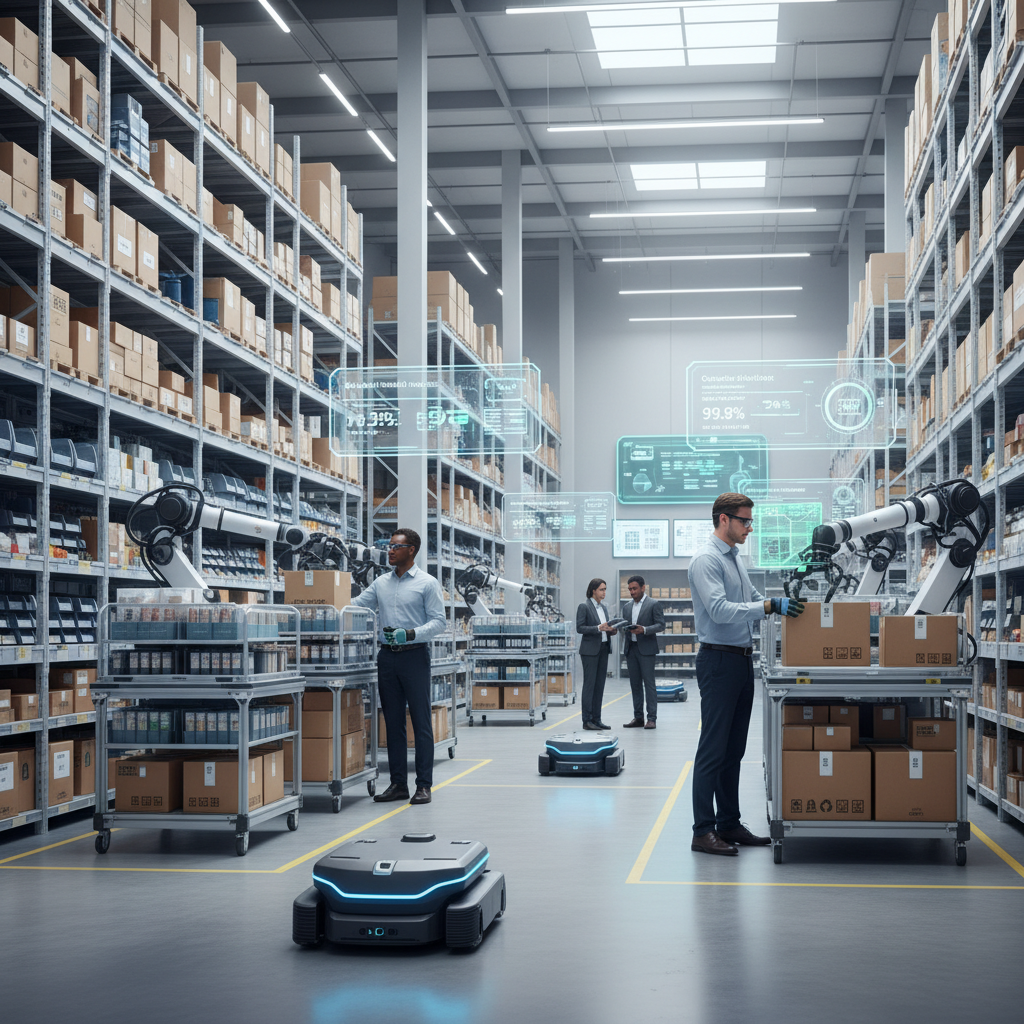
Automation remains at the core of enhancing pick and pack efficiency. Automated systems, such as Automated Storage & Retrieval Systems (AS/RS) and Autonomous Mobile Robots (AMRs), are widely adopted to transport goods between storage and picking stations, significantly reducing manual labor and processing times. AMRs, equipped with AI, sensors, and real-time mapping, dynamically navigate warehouse environments, allowing them to operate safely alongside humans while adapting to layout changes or congestion.
Robotic arms enhanced with AI-powered vision systems now pick a diverse range of items with high accuracy by recognizing different shapes, weights, and textures, greatly minimizing pick errors and handling damage. Additionally, autonomous unloading robots leverage generative AI and machine-learning algorithms to efficiently unload trailers and place items on conveyor belts, handling hundreds to thousands of cases per hour depending on size and weight.
Collaborative robots (cobots) play a pivotal role by assisting workers with repetitive and physically demanding tasks such as picking, packing, and sorting. Cobots’ adaptability and user-friendly interfaces make them suitable even for smaller businesses, contributing to improved productivity, reduced errors, and enhanced workplace safety.
AI-Driven Optimization
Artificial intelligence is transforming warehouse operations beyond automation. AI-enhanced picking systems optimize pick paths, prioritize orders, and minimize travel time, thereby boosting picking efficiency. Predictive demand forecasting uses AI to analyze historical sales data and market trends, enabling better inventory management by reducing stockouts and overstock situations by 25-40%.
Moreover, AI-powered systems automate cycle counting and inventory verification in real time, a traditionally labor-intensive process, further increasing accuracy and operational speed.
Optimized Picking Methods and Layouts
Efficient picking and packing strategies are essential for maximizing warehouse throughput. Methods such as zone picking—where workers are assigned specific zones and similar items are grouped accordingly—are well-suited for large fulfillment centers with complex inventories, provided there is a sophisticated warehouse management system in place. Wave picking, which aligns order picking with delivery schedules, is another effective approach depending on business needs.
Choosing the right warehouse layout to complement the picking method significantly enhances operational flow and reduces unnecessary travel within the facility.
Scalability and Error Reduction
Implementing automated solutions like carry grids can reduce labor costs by approximately 15%, while simultaneously minimizing picking errors and improving accuracy in order fulfillment. These systems also provide flexibility to scale operations smoothly as business demands increase.
The integration of teleoperations and energy-efficient conveyor belts further supports cost-effective scaling by enabling remote control of robotic systems and reducing energy consumption.
Future Outlook
The future of warehouse efficiency lies in the seamless integration of physical and digital warehousing, creating interconnected and intelligent systems that enable error-free, scalable, and sustainable operations. As technologies continue to evolve, continuous upgrades and system interoperability will be critical for maintaining competitiveness in fast-paced supply chains.
By combining advanced automation, AI-driven optimization, collaborative robotics, and smart layout design, warehouses in 2025 can achieve maximum efficiency, resilience, and adaptability in their pick and pack operations.
Technological Innovations Driving Pick and Pack Efficiency
The evolution of pick and pack operations in warehouses is increasingly driven by cutting-edge technologies that enhance accuracy, speed, and adaptability. Central to this transformation is the integration of Warehouse Management Systems (WMS) with advanced automation and artificial intelligence (AI) technologies, creating a digital backbone that optimizes inventory tracking, resource allocation, and workflow management in real time.
Automated Storage and Retrieval Systems (AS/RS) exemplify this shift by optimizing space utilization and reducing retrieval times with minimal human intervention. These systems offer scalability for warehouses of all sizes and significantly lower operational costs while improving accuracy in order fulfillment. Moreover, smart sensors and Internet of Things (IoT) devices enable warehouses to maintain optimal environmental conditions, such as temperature and humidity, while also automating routine tasks like cleaning, thus addressing both efficiency and operational hygiene.
Robotics play a pivotal role in revolutionizing pick and pack tasks. Modern robots equipped with machine learning algorithms, computer vision, and generative AI navigate complex warehouse environments autonomously, handling a wide range of package sizes and weights with high throughput. For example, unloading robots use onboard computing and sophisticated sensors to adapt to new settings instantly, achieving rates between 400 and 1,500 cases per hour depending on load characteristics. AI-powered robots not only execute commands but continuously learn, predict, and optimize their performance, enabling dynamic reorganization of dispatch zones and automatic restocking via intelligent conveyor systems.
The adoption of AI and machine learning further enhances warehouse operations by optimizing order picking accuracy and minimizing travel time within facilities. Algorithms analyze variables such as work type, product quantity, and storage location to improve slotting and reduce picking errors, contributing to increased throughput and revenue. AI vision systems also facilitate quality control by rapidly detecting defective or damaged products during receiving and packing processes, thereby elevating customer satisfaction.
Looking forward, the convergence of AI-driven labor planning, robotics, and generative AI models promises to create warehouses that are not only automated but intelligent, adaptive, and highly resilient. These innovations support safer work environments, address labor shortages by automating repetitive tasks, and improve overall productivity. Additionally, the deployment of 5G technology ensures seamless, low-latency communication among IoT sensors, robots, and automated systems, enabling real-time responsiveness and the emergence of smart warehouses capable of dynamic adaptation to fluctuating demands.
Energy efficiency and sustainability are also integral to these technological advancements. Modern automation systems incorporate smart power management, regenerative drives, and optimized equipment use to reduce energy consumption. High-density storage and intelligent cartonization minimize packaging waste and transportation emissions, aligning warehouse operations with environmental, social, and governance (ESG) goals.
Performance Measurement and Key Performance Indicators (KPIs)
Measuring performance through key performance indicators (KPIs) is essential for optimizing warehouse pick and pack operations. Tracking KPIs provides comprehensive insights across various operational dimensions, including productivity, accuracy, efficiency, and employee safety. These metrics act as critical navigational tools that guide improvements in order processing, picking accuracy, packing efficiency, and shipping timeliness.
Key KPIs in Warehouse Pick and Pack Operations
One fundamental KPI is the return rate due to fulfillment error, which measures the percentage of shipped orders returned by customers because of picking, packing, or shipping mistakes or product damage. Maintaining a return rate below 1% is often a target benchmark, as it directly reflects the quality and accuracy of the fulfillment process. Monitoring this KPI helps identify weak points in the pick and pack workflow that may cause errors or delays.
Labor productivity, commonly measured in units processed per hour, is another critical metric that evaluates throughput and staffing efficiency. This KPI helps warehouses align labor resources with demand while leveraging automation technologies such as Autonomous Mobile Robots (AMRs) and Warehouse Execution Systems (WES) to enhance productivity.
Carrying cost of inventory, encompassing storage, insurance, and depreciation, is a financial KPI linked to inventory management effectiveness. Optimizing inventory levels through just-in-time (JIT) methods and demand forecasting can help maintain carrying costs below 25% of inventory value, reducing overall operational expenses.
Additional Metrics for Operational Excellence
Efficiency in packing material usage is also monitored as a KPI, balancing protection of goods with cost containment. Efficient use of packing materials minimizes waste and shipping expenses, which is especially critical in high-volume centers aiming to reduce downtime and enhance performance. Selecting the right packaging for items, guided by advanced inventory management software, also contributes to cost-effective shipping and accuracy in order fulfillment.
Role of Automation in KPI Improvement
Automation plays a transformative role in improving KPI outcomes by reducing manual labor needs, minimizing human error, and accelerating processes like order picking and packing. Automated systems offer continuous operation with minimal downtime, driving improvements in throughput, accuracy, and safety. For example, automation has been shown to reduce picking errors by 50% and increase overall efficiency by 20%, while simultaneously improving packing speed by 40% and cutting packing material usage by 15%.
Strategic Benefits of KPI Monitoring
Regular analysis of warehouse KPIs enables managers to gain a clear assessment of overall performance and identify specific areas for improvement. This data-driven approach supports optimized inventory turnover, effective stock level maintenance, and minimized storage expenses. Furthermore, with growing emphasis on sustainability in 2025, warehouses integrate energy-efficient systems and waste reduction strategies aligned with ESG goals, which can be measured through KPIs related to packaging waste and energy consumption.
Leading Technologies and Automation Tools in 2025
In 2025, warehouse and distribution center operations increasingly rely on advanced technologies and automation tools to enhance efficiency, accuracy, and sustainability. Automation solutions range from energy-efficient conveyor belts and robotic systems to sophisticated warehouse management platforms that optimize every step of the fulfillment process.
Automated Storage and Retrieval Systems (AS/RS) play a pivotal role by maximizing space utilization, reducing retrieval times, and minimizing human intervention. These systems contribute to lower operational costs and improved accuracy, while their scalability accommodates warehouses of various sizes, enabling businesses to meet rising customer demands consistently.
Complementing AS/RS, Warehouse Management Systems (WMS) serve as the digital backbone of modern warehouses. By integrating real-time data from multiple automation technologies, WMS enable efficient inventory tracking, resource allocation, and workflow optimization.
The emergence of AI-driven fulfillment management systems (FMS), such as Logiwa IO, represents a new generation of cloud-native platforms that go beyond traditional WMS capabilities. These platforms provide real-time inventory visibility, smart automation, and seamless integration with existing systems, centralizing warehouse automation efforts.
Autonomous mobile robots (AMRs) have also become indispensable, with companies like Locus Robotics leading the field by deploying robots that use generative AI, machine learning, and advanced sensors to navigate complex environments and continuously improve operational performance.
The warehouse robotics market in 2025 is dominated by several key players, including Amazon Robotics, Geek+, Symbotic, GreyOrange, Swisslog, Berkshire Grey, Standard Bots, and Locus Robotics. Their product offerings encompass a diverse range of robotic solutions such as AMRs for material transport, automated guided vehicles (AGVs) for pallet movement, robotic arms for picking and packing, and sorting bots that manage order flow in fully automated fulfillment centers.
Robotic pick-and-place systems significantly accelerate packing and shipping processes. Equipped with advanced end-of-arm tooling, these robots can handle up to 300 items per minute, enhancing speed, accuracy, and overall efficiency. Companies like Toyota and Bastian Solutions provide such automated solutions, which streamline material handling and reduce manual errors in order fulfillment.
Beyond robotics, sophisticated software tools guide workers through optimized workflows in picking and packing. These systems suggest the best packaging options, automatically generate packing slips, and support complex picking strategies such as batch and zone picking. This comprehensive software integration ensures error reduction and maximizes throughput
AI and Machine Learning in Robotics and Workflow Optimization
AI and machine learning have revolutionized warehouse operations by enhancing robotic capabilities and optimizing workflows for maximum efficiency. Autonomous robots equipped with AI-driven vision systems now perform cycle counting and inventory checks in real time, scanning stock continuously to detect anomalies, misplacements, and stockouts without interrupting daily operations. Unlike older robotic systems that required uniform packaging, modern AI-powered robotic arms leverage deep learning and computer vision to recognize various shapes, weights, and textures, significantly reducing pick errors and handling damage.
Robotic systems combine generative AI and machine learning algorithms with advanced sensors, cameras, and machine-vision software to navigate dynamic environments autonomously. For example, unloading robots mounted on mobile bases use onboard computing to adjust positions inside trailers and autonomously navigate docks. These robots feature suction grippers capable of handling packages ranging from small 5-inch cubes to large 24-by-30 inch boxes and can unload between 400 to 1,500 cases per hour depending on size and weight. Their performance improves over time as AI models are fine-tuned for specific operational settings.
In addition to robotics, AI algorithms enhance the navigation and coordination of autonomous mobile robots (AMRs) within warehouses. These AMRs retrieve products from storage and deliver them to picking stations, reducing manual labor and increasing picking efficiency. Machine learning optimizes pick paths, prioritizes orders, and minimizes travel time, resulting in faster and more precise order fulfillment.
Beyond physical automation, AI integrates with real-time order management systems (OMS) to track the progress of orders during picking and packing. This visibility helps identify bottlenecks and enables timely adjustments to workflows. Proper training for employees on these systems further ensures smooth operations and maximizes efficiency.
The combined use of AI-driven robotics and workflow optimization leads to better space utilization, process accuracy, and overall productivity. Automated systems organize inventory efficiently to minimize wasted space and provide instant visibility into stock levels, preventing overstocking or shortages. Moreover, robotic systems assume hazardous tasks like moving heavy items, enhancing workplace safety by reducing injury risks. Software-led automation tools also accelerate order fulfillment, drastically reducing processing times and boosting throughput.
Together, AI and machine learning technologies empower warehouses to operate with greater precision, flexibility, and safety, positioning them to meet the growing demands of the logistics industry in 2025 and beyond.
Integration Challenges and Solutions for AI-Driven Robotics
The integration of AI-driven robotics into warehouse operations presents significant opportunities for enhanced efficiency and adaptability but also involves complex challenges that organizations must address to realize these benefits. Unlike traditional automation, AI-powered robots incorporate machine learning, computer vision, and real-time data processing, enabling them to learn, predict, and optimize performance rather than merely executing preset commands. This advanced functionality requires seamless connectivity with existing systems such as warehouse management systems (WMS) and enterprise resource planning (ERP) software, which often involves overcoming compatibility issues and ensuring robust data integration.
One key challenge is the need for substantial initial investment and comprehensive training to deploy automated systems effectively. Setting up these technologies is not a plug-and-play process; companies must allocate resources not only for installation but also for ongoing upgrades and system maintenance to keep pace with evolving technological standards. Additionally, ensuring data quality and consistency is critical, as AI and machine learning models rely heavily on accurate and comprehensive datasets for optimal operation. Organizations are advised to conduct thorough assessments of their data health and workforce readiness to identify potential operational hurdles before full-scale implementation.
The complexity of integrating AI-driven robotics also extends to cybersecurity and operational resilience. For instance, some solutions incorporate encrypted data transmission and storage, support single sign-on (SSO) authentication, and utilize geographically distributed data centers to enhance security and reliability. Furthermore, companies are increasingly focusing on creating systems that can adapt dynamically to varying case sizes, patterns, and environments from day one, leveraging generative AI combined with sensors and machine vision to improve performance over time.
Despite these hurdles, solutions are emerging that facilitate smoother integration and deployment. For example, specialized system integrators optimize robotics setups for specific warehouse tasks such as case handling, ensuring precision, fast deployment, and minimal space requirements suited to industries like food and beverage, logistics, and pharmaceuticals. Meanwhile, AI-native software suites are designed to bridge the gap between automation technologies and business outcomes by empowering human workers with complementary tools like voice technology for faster, hands-free operations. These approaches help balance robotic automation with skilled labor, supporting both efficiency and adaptability.
The future of warehouse automation lies in the convergence of AI-driven labor planning, generative AI, and real-time execution systems, which promises the development of intelligent, adaptive, and highly resilient warehouse networks. However, the “last mile” of AI integration remains challenging, as organizations continue to grapple with legacy system compatibility, talent scarcity, and scaling pilot projects across multiple sites. To overcome these barriers, companies must prioritize upskilling their workforce and fostering collaboration between humans and machines, thereby creating safer work environments and expanding career opportunities in automation and data analytics roles.
Environmental and Sustainability Considerations
In 2025, environmental and sustainability considerations have become integral to warehouse operations, driven by both regulatory requirements and evolving market demands. Companies increasingly adopt green innovations that simultaneously benefit the environment and improve operational efficiency. This includes investments in renewable energy systems, energy-efficient robotics, and right-sized packaging automation that reduce waste, lower emissions, and cut costs.
Sustainable packaging and storage solutions are pivotal in aligning warehouse practices with green logistics initiatives. Systems like PIX storage exemplify this shift by providing automation-ready solutions that support robotic picking and sorting while maximizing space efficiency and reducing environmental impact. High-density storage combined with intelligent cartonization techniques minimizes packaging waste and transportation emissions, further supporting circular logistics processes such as returns, refurbishment, and resale.
Automation plays a crucial role in enhancing sustainability. Warehouse Execution Systems act as central control units coordinating operations in real-time, enabling smarter power management, regenerative drives, and optimized equipment utilization to reduce overall energy consumption. Additionally, the integration of AI, collaborative robots, and autonomous storage solutions enhances both efficiency and environmental stewardship, making sustainability a key driver in the evolution of warehouse automation.
By 2025, approximately 60% of logistics companies incorporate green practices, compelled by regulations like the EU Green Deal and emerging carbon reporting requirements. This widespread adoption underscores that sustainability is no longer optional but a fundamental aspect of warehouse strategy to meet ESG goals and maintain competitiveness in a rapidly evolving industry.
Industry Adoption and Case Studies
Warehouse operators and logistics providers are increasingly adopting advanced automation technologies to address growing order volumes and complex fulfillment demands. The integration of robotic material handlers, cloud-based software, and rugged touch computers has become central to streamlining warehouse operations and enhancing customer experience across various sectors, particularly in e-commerce and third-party logistics (3PL) environments. These technologies enable faster and more accurate picking and packing processes, allowing businesses to manage higher throughput efficiently.
A notable trend driving adoption is the need for future-proof, omnichannel fulfillment systems. Businesses transitioning between B2B distribution, direct-to-consumer sales, and wholesale channels prioritize flexible automation solutions that can adapt to changing business models without requiring complete overhauls. This flexibility ensures resilience and operational continuity amid evolving market demands. Alongside this shift, cybersecurity has emerged as a critical concern as warehouses increasingly rely on interconnected automated systems, prompting organizations to invest in robust security frameworks to protect sensitive operational data.
Several case studies illustrate the tangible benefits of these innovations. Retailers and distribution centers adopting integrated hardware and software platforms report improved operational efficiency and responsiveness to consumer expectations. These solutions serve as comprehensive “brains” coordinating warehouse execution in real time, thus enabling organizations to navigate the complexities of modern retail supply chains. Moreover, automation is now recognized not only as a cost-reduction tool but as a strategic capability essential for overcoming labor shortages and achieving competitive differentiation in logistics.
Sustainability considerations also influence adoption patterns. By 2025, an estimated 60% of logistics companies plan to integrate green practices aligned with regulatory frameworks like the EU Green Deal. Automated warehouses contribute to these goals by optimizing resource use and reducing carbon footprints through efficient operations management. Together, these case examples underscore the transformative impact of advanced picking and packing strategies, positioning organizations to meet current challenges and future opportunities in warehouse automation.
Emerging Operational and Strategic Trends for 2025
In 2025, warehouse operations are undergoing a profound transformation driven by advances in automation, artificial intelligence (AI), and interconnected technologies. These innovations are not only enhancing operational efficiency but also redefining the strategic landscape for logistics and supply chain management.
A major trend is the rapid expansion and integration of Autonomous Mobile Robots (AMRs) and collaborative robots (cobots). Unlike traditional industrial robots, cobots safely work alongside human employees, handling repetitive tasks such as picking, packing, and material transport. This shift enables human workers to focus more on supervision, troubleshooting, and complex problem-solving. The widespread adoption of robotics—expected to surpass 30% integration in warehouses by 2024—is creating a new operational backbone for smart warehouses.
The deployment of AI-driven warehouse intelligence is another critical development. For example, unloading robots combine generative AI and machine learning with sensors and machine-vision software to navigate complex and variable environments from day one, improving performance over time. However, challenges remain in object manipulation and identification due to variations in shapes, sizes, and lighting conditions, requiring ongoing innovation and interim augmentation with cameras and barcode scanning technologies.
Seamless integration of robotics with Warehouse Management Systems (WMS), Enterprise Resource Planning (ERP), and other operational technologies is essential to avoid data silos and maximize automation benefits. Poor integration can lead to underperformance, while effective connectivity supports real-time decision-making and resource optimization. The advent of 5G technology further enhances this integration by enabling low-latency, high-speed communication between IoT sensors, robots, and automated systems, which is vital for the smooth operation of smart warehouses.
Emerging digital tools like augmented reality (AR) glasses are improving worker productivity by providing immediate, hands-free access to item information and navigation instructions directly in the field of view, reducing dependency on external devices and streamlining pick-and-pack processes. Furthermore, digital twins and simulation-first warehouse design approaches allow companies to model, test, and optimize operations before physical implementation, leading to more efficient layouts and workflows.
Sustainability has become a core strategic consideration. By 2025, approximately 60% of logistics companies will have integrated green practices, including renewable energy adoption, energy-efficient robotics, right-sized packaging automation, and compliance with regulations like the EU Green Deal. These initiatives not only reduce environmental impact but also lower operational costs.
Operational flexibility is another key trend. Customized pick-and-pack fulfillment systems enable warehouses to handle a wide range of SKU profiles—from single SKUs to bulk pallets—allowing companies to scale operations efficiently while meeting diverse client demands. This flexibility is supported by on-site engineering teams and in-house productivity management, enabling rapid adaptation to changing market needs.
Finally, maintaining optimal storage conditions, equipment maintenance, and comprehensive supply chain visibility remain fundamental to reducing product damage, optimizing resource allocation, and enhancing customer satisfaction. Tracking key performance indicators (KPIs) related to lead times, freight rates, and shipping deadlines enables continuous operational improvement.
Together, these emerging operational and strategic trends illustrate how 2025 is a pivotal year for warehouse pick-and-pack strategies—combining cutting-edge technology, sustainability, and flexibility to maximize efficiency and meet evolving market demands.
Future Outlook and Predictions
The future of warehouse pick and pack operations is poised to be transformed by advanced AI technologies and automation, driving unprecedented efficiency gains. Predictive demand forecasting, powered by modern AI systems, will continue to enhance decision-making by analyzing historical sales data, seasonal trends, and external factors to forecast future demand with high accuracy. This capability is expected to reduce stockouts and overstock situations by 25-40%, enabling warehouses to optimize inventory levels effectively.
In addition to forecasting improvements, automation technologies such as autonomous mobile robots (AMRs), robotic arms, and automated sorting systems will play a critical role in meeting the increasing customer expectations for faster delivery, including same-day and next-day services. These technologies help to cut processing times significantly, reduce picking errors, and improve overall operational speed. As a result, warehouses will be able to handle high throughput despite persistent labor shortages, a challenge highlighted by ongoing high job openings in transportation, warehousing, and utilities sectors from 2024 to 2025.
The content is provided by Harper Eastwood, Front Signals