Summary
Unlocking Affordable Living: Your Ultimate Guide to Mobile Homes provides a comprehensive overview of mobile homes—also known as manufactured homes or house trailers—as a significant and evolving component of affordable housing in the United States. Mobile homes are prefabricated dwellings built in factories on steel chassis equipped with wheels, designed for transport to a permanent or semi-permanent site. Their primary appeal lies in combining mobility with cost-effectiveness, offering an accessible homeownership option for millions of Americans, particularly low- and moderate-income families, and serving as the largest source of unsubsidized affordable housing nationwide.
Tracing their origins from early 20th-century travel trailers and even earlier mobile dwellings used by traveling groups, mobile homes have undergone substantial transformation in design, construction, and regulation. The introduction of the U.S. Department of Housing and Urban Development (HUD) Manufactured Home Construction and Safety Standards in 1976 (the HUD Code) marked a pivotal shift, establishing federal building standards that improved safety, durability, and market acceptance while distinguishing modern manufactured homes from earlier mobile homes. Today’s mobile homes range from compact single-wide units to spacious multi-wide models, often featuring amenities comparable to site-built houses, including drywall interiors, pitched roofs, and high-end finishes.
Despite their advantages—such as affordability, flexible siting options, and faster delivery times—mobile homes face notable challenges. Financing hurdles remain prevalent due to higher interest rates and shorter loan terms compared to traditional mortgages, and local zoning laws frequently restrict placement or impose stringent regulations that limit homeowners’ choices. Moreover, mobile home park dynamics, including land leasing arrangements and park management practices, have led to legal disputes and tenant protections that vary widely by jurisdiction. These complexities underscore ongoing tensions between preserving affordability and addressing concerns related to quality, community stability, and regulatory oversight.
Looking forward, mobile homes continue to play a critical role in addressing affordable housing shortages, especially in rural and suburban areas, with growing diversity in home sizes and community types—including family-oriented and senior-focused parks. However, future expansion may be constrained by zoning restrictions and local opposition, raising important questions about equitable access to affordable housing. This guide aims to elucidate the multifaceted nature of mobile homes, highlighting their contributions, challenges, and evolving place within the broader housing landscape.
Definition and Distinctions
A mobile home, also known by various terms such as house trailer, park home, trailer, or trailer home, is a prefabricated structure built in a factory on a permanently attached chassis before being transported to a site. Unlike traditional houses, mobile homes are designed to be transportable, featuring strong trailer frames, axles, wheels, and tow-hitches, although they are often placed on blocks for semi-permanent or permanent residence. The primary rationale behind mobile homes is mobility combined with affordability, making them a popular option for economical housing.
Mobile homes have historic origins linked to travel trailers, which were initially small, wheeled units used for camping or extended travel. Over time, mobile homes evolved from these basic trailers into more sophisticated living spaces with improved walls, floors, and ceilings, though they remain lighter and less robust than conventional houses to facilitate transport. This evolution reflects a transition from purely temporary or vacation use to permanent or semi-permanent housing solutions.
It is important to distinguish mobile homes from related terms such as trailers, manufactured homes, and premanufactured homes, as these words are often used interchangeably but refer to different types of structures. For example, travel trailers are primarily temporary and used for vacations, whereas mobile homes are intended for longer-term habitation despite their portability. Additionally, regulatory and jurisdictional differences exist since not all portable or semi-permanent structures fall under standard building codes, which complicates the classification and governance of mobile homes and similar housing types.
Common classifications within mobile homes include “single wide” and “double wide,” which describe the general size and layout of these dwellings, reflecting their growing complexity and customization options. Overall, understanding the distinctions and definitions of mobile homes is crucial for appreciating their unique role in affordable and flexible housing options.
History
The origins of mobile homes can be traced back to the roaming bands of gypsies in the 1500s, who traveled with horse-drawn mobile dwellings. These early mobile homes laid the foundation for the modern forms of mobile housing seen today. By the early 20th century, mobile homes evolved alongside the rise of automobiles and motorized highway travel in the United States. Travel trailers, initially designed as unpowered vehicles to be towed behind cars for hauling goods, gained popularity in the 1920s among vacationers and campers.
The first American travel trailers date back to the 1910s, such as a 1913 model built for a professor in California, which is considered one of the oldest existing examples. During this era, mobile homes and travel trailers shared similar origins but began to diverge in purpose and design. Travel trailers remained primarily temporary or vacation dwellings, while mobile homes grew larger and more furnished to serve as permanent residences.
In the mid-20th century, mobile homes increased in size, making them more difficult to transport. By the 1960s and 1970s, the wider and longer designs required special trucks for movement, diminishing their mobility and shifting terminology from “mobile homes” to “manufactured homes”. This transition was formalized in 1976 when the U.S. Department of Housing and Urban Development (HUD) instituted the Manufactured Home Construction and Safety Standards, commonly known as the HUD Code. Homes built after this date are officially referred to as manufactured homes, distinguished from pre-1976 mobile homes by improved safety, quality, and durability standards.
The establishment of HUD and its national code addressed the regional disparities in building codes, making manufactured homes a more affordable and widely accepted housing option across the United States. These federal regulations ensure that manufactured homes meet consistent construction standards, allowing them to be placed in locations where traditional site-built or modular homes are permitted.
Despite their origins as trailers on wheels with axles and tow hitches, mobile homes have evolved into cost-effective housing alternatives featuring enhanced walls, floors, and ceilings designed to balance lower cost and reduced weight for mobility. However, they remain less robust than conventional houses, reflecting their unique place within the housing market.
Types and Models
Mobile homes, also known as manufactured homes, come in a variety of sizes and configurations designed to meet diverse living needs and preferences. The most common classifications are single-wide, double-wide, and triple-wide models, which refer to the width and overall size of the units. Single-wide homes typically measure about 13.5 feet wide and up to 80 feet long, with ceiling heights comparable to site-built homes, generally ranging between 9 and 10 feet. Double-wide and triple-wide homes offer more spacious floor plans and amenities, resembling traditional site-built houses more closely in size and design.
Historically, smaller “eight-wide” units could be transported with a car, but larger homes, such as “ten-wide” and “twelve-wide” models, required professional moving services and special permits due to their size. Over time, mobile homes have evolved significantly from their origins as simple trailers. Modern manufactured homes can include high-end features like garden tubs, fireplaces, drywall interiors, granite countertops, and pitched roofs with slopes of 5 or 7/12, making them virtually indistinguishable from modular or site-built houses.
Despite the name, many mobile homes today are no longer designed for frequent relocation but are constructed to meet strict building codes and standards. Before June 15, 1976, mobile homes lacked national construction standards, resulting in varying quality and durability. After this date, the HUD Code established federal regulations to improve safety, materials, and construction methods, leading to higher-quality homes that provide deep levels of affordability for homeowners.
While mobile homes maintain the advantage of being cost-effective alternatives to traditional housing, their design balances lower weight and mobility with structural integrity. They incorporate features such as wheels, axles, and suspension, but with upgraded walls, floors, and ceilings compared to earlier trailer models. The industry continues to innovate, offering a wide range of sizes and styles to suit different tastes and budgets, from classic single-wides to spacious multi-wide homes.
Construction and Technical Specifications
Manufactured homes, commonly referred to as mobile homes, are factory-built single-family dwellings constructed entirely in a controlled factory environment before being transported to their final site for installation. These homes are built on a steel chassis fitted with wheels, enabling them to be hauled to a usually permanent location. Upon arrival, the axles and the tongue of the frame are typically removed, and the home is set onto a concrete foundation using a large crane.
Construction of manufactured homes must comply with the U.S. Department of Housing and Urban Development (HUD) Manufactured Home Construction and Safety Standards Act, a national, preemptive building code that governs homes built on or after June 15, 1976. These federal regulations are codified in Title 24, Code of Federal Regulations, Chapter XX, Part 3280, with HUD issuing interpretive bulletins to clarify specific requirements as needed.
Dimensionally, manufactured homes vary depending on design and purpose. Single-wide homes, which are compact and efficient, typically measure about 15 feet in width and approximately 72 feet in length. This size facilitates transportation and offers a well-designed interior with living areas and bedrooms optimized for space use. Door heights commonly measure 32 inches wide by 76 inches high, and crawl spaces underneath the home usually range from 28 to 42 inches in height. Custom designs can also be requested to accommodate higher ceilings or altered dimensions.
Modern technology allows prospective buyers and builders to create and customize home layouts using design software such as Plan7Architect. This software supports both metric and imperial units and enables users to design mobile home floor plans in 2D or 3D, assisting with international manufacturing specifications or building permit submissions.
Regarding structural safety features, regulatory discussions have addressed load requirements for guards and railings, particularly those above certain heights. For example, HUD has considered limiting the application of more stringent load requirements to guards exceeding 42 inches above the floor grade to avoid unnecessarily increasing construction costs without significant safety benefits. This is relevant when manufactured homes include porches or similar features, which are generally between 30 and 42 inches above the lower floor. Imposing a 30-inch guard rail structural requirement was projected to add roughly $500 per single-section home with a modest porch, potentially undermining affordability efforts.
Legal and Regulatory Framework
Manufactured housing, including mobile homes, is subject to a complex legal and regulatory framework involving federal, state, and local jurisdictions. Central to this framework is the Federal National Manufactured Housing Construction and Safety Standards Act of 1974, which established uniform national standards for manufactured homes to ensure safety, affordability, and nationwide acceptance. These standards, commonly referred to as the HUD Code, preempt local construction and safety regulations, allowing manufactured homes built to HUD specifications to be accepted in all locations where site-built or modular homes are permitted.
Federal Regulations and HUD Code
The HUD Code applies specifically to manufactured homes constructed in factories after June 15, 1976, regulating aspects such as design, construction, strength, durability, transportability, fire resistance, and energy efficiency. Unlike modular homes, which must comply with state and local building codes, manufactured homes fall exclusively under HUD jurisdiction, facilitating a nationwide distribution model. The HUD Code serves to reduce regional discrepancies in building standards, thereby lowering costs and increasing accessibility to safe and affordable housing across the United States.
Local Zoning and Land Use Restrictions
While federal law preempts construction and safety standards, local governments retain authority over zoning and land use, which significantly affects where manufactured homes may be placed. Jurisdictions commonly regulate the location, appearance, and dimensions of manufactured housing but cannot entirely exclude manufactured homes from their areas. Manufactured home communities are often zoned under residential categories such as R3 or R4, which impose stricter regulations compared to other residential zones. Additionally, manufactured home parks may exist within Planned Unit or Mixed-Use zones, though less frequently.
Courts have upheld zoning ordinances that broadly restrict manufactured home placement, citing reasons such as preserving low-density residential areas, protecting property values, reducing crime and traffic congestion, maintaining aesthetics, regulating housing quality, and addressing environmental concerns like sewage management and wind vulnerability. These rationales support local governments’ ability to impose limitations on manufactured housing while respecting federal safety standards. Notably, some municipalities have banned manufactured homes from all residential districts, a practice that has been upheld under federal constitutional and statutory law.
Mobile Home Park Regulation and Tenant Protections
Beyond zoning, specific statutes regulate mobile home parks to protect both homeowners and park management. For example, laws often require written leases or rental agreements before tenancy, define mobile home parks as parcels of land accommodating five or more occupied mobile homes operated for profit, and extend to noncontiguous parcels within the same subdivision. These laws typically assign enforcement responsibilities to state departments, such as the Department of Housing and Community Development, and mandate the development of dispute resolution programs to handle conflicts between residents and park operators.
Mobilehome Residency Laws provide a framework outlining the rights and obligations of homeowners, tenants, and park management, addressing permits, fees, and enforcement protocols. However, challenges remain, as some park operators have been reported to use retaliatory practices to limit residents’ legal rights or impose onerous conditions, highlighting ongoing tensions within the sector.
Trends and Challenges
There is a growing trend among municipalities to use zoning and land use regulations to restrict or eliminate manufactured housing within their jurisdictions, which poses risks to the availability of affordable housing options for working families. Such restrictions may also raise concerns regarding discrimination under the Fair Housing Act. Efforts to confine manufactured homes solely to designated parks, rather than allowing placement on private property, have faced legal challenges and are often viewed as infringements on private property rights.
In sum, while federal regulations provide a uniform safety and construction framework for manufactured homes, the interplay of local zoning laws, park regulations, and tenant protections creates a complex legal landscape. This framework profoundly influences the accessibility, affordability, and quality of manufactured housing across the United States.
Financing and Insurance
Financing mobile homes presents unique challenges compared to traditional site-built homes. Many lenders are hesitant to offer loans for mobile homes, often requiring higher interest rates and larger down payments, which can be particularly burdensome for first-time buyers. A common financing option is the chattel loan, a personal property loan used when the home is located on rented land. These loans typically have shorter terms and higher interest rates compared to traditional mortgage loans.
Alternatively, buyers may qualify for FHA loans if the home is placed on a permanent foundation and meets specific property standards. VA loans are available to eligible veterans for manufactured homes that are permanently affixed to land. Conventional loans may also be accessible if the home is titled as real property and attached to owned land. Choosing the appropriate financing option depends largely on the home’s foundation, location, and the buyer’s long-term ownership plans.
The emergence of better financing options has increased demand for manufactured homes and introduced securitization and secondary market practices similar to those seen in the broader housing market. However, this development also raises concerns, as observed in the mobile home finance industry during the 1990s when loose lending standards led to increasing loan defaults and industry collapse. Given that many low-income and marginalized communities, such as American Indian and Alaska Native homebuyers, rely heavily on mobile home loans, there is a critical need for sufficient protections during the loan origination process to prevent similar systemic risks.
In addition to financing, residents of manufactured home communities face complex legal and contractual challenges. Standard lease agreements often include arbitration clauses, waivers, and other provisions that may limit residents’ legal recourse and increase their costs in disputes. Furthermore, some investment firms use multiple shell companies to obscure community ownership, complicating residents’ ability to identify proper parties for legal action. In cases of eviction or other conflicts within manufactured housing communities, residents may benefit significantly from consulting experienced local attorneys to navigate these issues effectively.
Regarding insurance, while specific details were not provided in the collected information, it is generally important for buyers to consider insurance policies tailored to manufactured homes, especially
Advantages of Mobile Homes
Mobile homes present a range of advantages that make them an appealing housing option for many Americans, particularly those seeking affordability and flexibility. One of the primary benefits is their cost-effectiveness. Unlike traditional homes, mobile homes do not require the purchase of land, as they can be placed in mobile home communities where lot rents are typically much lower than the costs associated with renting an apartment, buying a house, or owning land. This affordability allows residents to live in desirable or scenic locations that might otherwise be financially out of reach.
In addition to financial savings, mobile homes offer enhanced privacy and space compared to other community living options such as apartment complexes. Unlike apartments where units share walls, hallways, and communal facilities—leading to noise and limited parking—mobile home residents often have private lots with ample parking for multiple vehicles and greater personal space. This setup contributes to a higher quality of life while remaining budget-friendly.
Mobile homes are also known for their efficient and flexible design. Single-wide models, for example, are compact—usually around 15 feet wide and 72 feet long—making them easy to transport and suitable for smaller families or individuals. These homes utilize space wisely, with well-designed interiors including living areas, bedrooms, and customizable options to fit diverse needs. Furthermore, advancements in manufacturing have significantly improved the quality of mobile homes, many of which now feature high-end finishes comparable to site-built homes, such as pitched roofs, drywall interiors, high ceilings, tile showers, and granite countertops.
Another significant advantage is the speed of acquisition and installation. From order to delivery, mobile homes can often be completed within a few weeks, providing a quick housing solution for those on tight schedules or deadlines. They can be sited on various types of land, including private lots or rented spaces within mobile home parks, offering flexibility in location choices.
On a broader scale, mobile homes contribute substantially to addressing the affordable housing shortage, especially in rural and suburban areas. They offer the largest source of unsubsidized affordable housing in the United States, sheltering millions of people who might otherwise struggle to find adequate housing. With potential design adaptations and greater acceptance by local governments and communities, their role in alleviating housing shortages could expand even further. Moreover, the affordability of mobile homes aligns with HUD’s standards, often allowing households to avoid being housing cost burdened by spending less than 30% of their income on housing.
Challenges and Disadvantages
While mobile homes offer notable benefits such as affordability and flexibility, they also come with a range of challenges and disadvantages. One significant issue is the difficulty in securing traditional mortgage financing. Mobile home loans often resemble motor vehicle loans more than standard home mortgages, featuring shorter terms and higher interest rates due to the rapid depreciation of these units in resale value. This financial aspect can limit access for many potential buyers, particularly those from low-income or marginalized communities who rely heavily on mobile home loans.
Privacy and space may also be concerns for residents. Although mobile home communities typically provide more privacy and personal lot space compared to apartment complexes, the shared nature of some community facilities and proximity to neighbors can sometimes reduce the desired level of privacy. Additionally, issues related to community rules and regulations—such as pet restrictions, parking limitations, noise control, and maintenance obligations—can pose challenges to residents’ daily living.
Zoning and land use regulations present another barrier to mobile home living. Courts have consistently upheld zoning ordinances that broadly restrict mobile home placements based on reasons including preserving low-density housing, protecting property values, controlling traffic congestion, and maintaining aesthetics. Although federal law prohibits complete exclusion of manufactured housing within jurisdictions and preempts local construction and safety standards, local governments retain significant regulatory authority over the location, appearance, and dimensions of mobile homes. This regulatory environment can limit options for placing mobile homes, especially on private land.
The ownership and management structure of mobile home parks can further complicate matters. Many parks are privately owned, and residents may face issues such as park closures or unfavorable lease terms, which jeopardize housing stability. These private ownership models may also limit residents’ control over their living environment and increase vulnerability to market and policy changes.
Finally, the mobile home finance market has experienced historical instability. In the 1990s, loose lending standards led to increased defaults and industry collapse, highlighting risks within this sector. Contemporary financing practices must therefore navigate similar institutional challenges to ensure sustainable access to affordable housing through mobile homes.
Social and Community Aspects
Mobile home communities often place a strong emphasis on fostering community engagement and creating a safe, welcoming environment for residents. Many parks implement security measures such as gated entrances and on-site security personnel to enhance safety and peace of mind. Additionally, some jurisdictions enforce standards related to community appearance, including landscaping requirements, exterior home features like siding and foundation covers, as well as regulations on signage and trash management to maintain an orderly and visually appealing neighborhood.
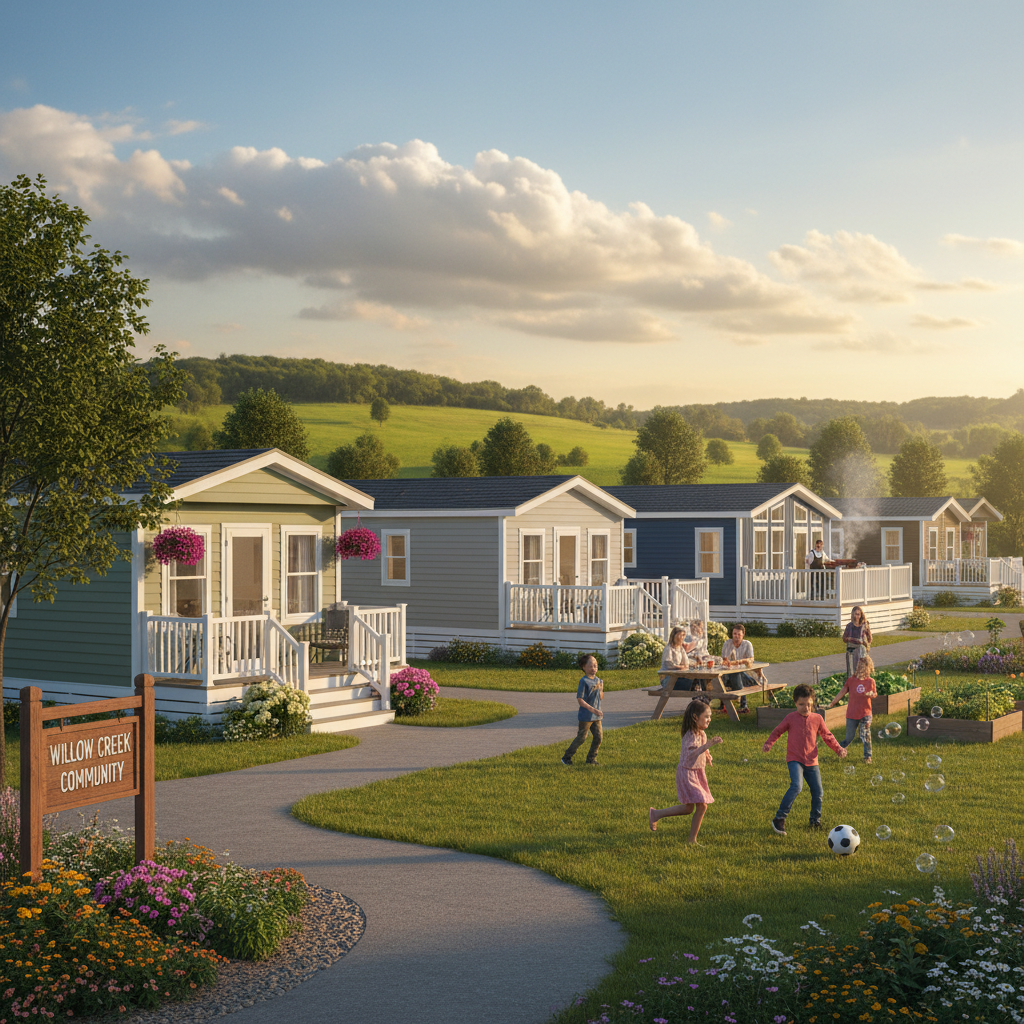
There is a wide variety of manufactured home communities tailored to different demographics and lifestyles. Family-focused communities typically offer ample outdoor spaces and recreational amenities such as swimming pools, fitness centers, tennis courts, and organized activities to promote well-being and social interaction for all ages. These communities often prioritize convenience and safety, featuring accessible entrances and sometimes on-site dining options, which allow residents to enjoy a connected, comfortable lifestyle without extensive daily commuting.
For seniors, 55+ manufactured home communities provide a distinct living environment designed with accessibility, mobility, and social engagement in mind. These communities welcome pets and foster opportunities for socialization, which is considered one of the primary benefits attracting aging adults. Residents can enjoy a serene setting with population restrictions that enhance a sense of familiarity and camaraderie. Modern senior communities often resemble resorts, offering amenities such as pools, sports areas, fitness centers, clubhouses, and frequent social events, all typically included at no extra cost. This combination of safety, accessibility, and rich social life makes 55+ communities a popular choice for retirees seeking both comfort and connection.
Mobile Home Parks and Owner Obligations
Mobile homes are frequently situated within mobile home parks, which introduces a unique dynamic between the homeowner and the park management. While homeowners own their individual mobile homes, they typically lease the land on which the home sits from the park owner, effectively making the park owner a landlord to whom residents must pay rent and adhere to park regulations. These rules can cover a variety of topics such as pets, parking, noise, maintenance of homes and lots, and the use of common or recreational facilities.
The legal framework governing mobile home parks varies by state but generally involves specific statutes and regulations aimed at protecting the rights and responsibilities of homeowners, tenants, and park operators. For example, in California, the Mobilehome Residency Law outlines the requirements for permits, fees, and enforcement responsibilities, delegating oversight to agencies like the Department of Housing and Community Development. Similarly, in New York State, the Homes and Community Renewal agency regulates mobile home parks and mandates protections such as a $15,000 grant to residents forced to relocate due to land ownership changes.
Park owners are responsible for major repairs and improvements related to the park infrastructure, including the upkeep of common areas and the maintenance or removal of hazardous trees on rental spaces if identified by public code enforcement inspectors. Meanwhile, residents must comply with park rules, which are enforceable through various means such as eviction, court injunctions, or fees related to lot maintenance.
An important consideration for residents is the issue of rent control and vacancy control. Many local or county ordinances maintain vacancy control, which restricts rent increases on mobile home pads when ownership changes hands. However, this protection can be lifted if the park owns both the mobile home and the pad, such as after a forfeiture due to nonpayment. Tenants should consult local laws to understand their protections, as certain exemptions may apply. The situation is further complicated by the fact that mobile home residents often lack the same protections afforded to traditional renters of homes or apartments, highlighting ongoing challenges faced by this community.
Lease agreements in mobile home parks may include arbitration clauses, waivers, and other provisions that affect homeowners’ rights. Additionally, financing arrangements, including rent-to-own contracts and promotional materials, are commonly involved and are subject to regulatory oversight. State-specific administrative rules, such as Colorado’s Mobile Home Park Oversight Program Administrative Rules, provide further guidance on these matters and are available in multiple languages to ensure accessibility.
Mobile Homes in the Broader Housing Market
Mobile homes, also known as manufactured homes or trailers, represent a significant segment of the affordable housing market in the United States. An estimated 5.6 percent of Americans, or approximately 17.7 million people, live in these homes, making them the largest source of unsubsidized affordable housing in the country. These homes are typically mass-produced in factories and built on steel chassis with wheels, allowing them to be transported and installed on various land parcels, often on concrete foundations after relocation.
The appeal of mobile homes lies largely in their affordability and flexibility. They currently account for around 10 percent of new single-family home purchases, providing an accessible entry point to homeownership for many low- and moderate-income families. Unlike site-built homes, which include the land and often appreciate in value, mobile homes tend to depreciate but offer lower upfront costs and greater mobility. This distinction contributes to their popularity in rural and suburban areas where land is more readily available and less expensive.
Geographically, mobile homes are most prevalent in the South and Southwest regions of the U.S., where they address affordable housing shortages on the outskirts of metropolitan areas and in rural communities. However, their acceptance varies significantly depending on local government policies and community perceptions. Some municipalities have been hesitant to support mobile home developments due to concerns over property value depreciation and aesthetic factors, although design innovations and modern manufactured home communities are helping to change these attitudes.
Despite these challenges, mobile homes play a crucial role in expanding homeownership opportunities, particularly for low-income and minority households. In many cases, they offer a viable housing solution in informal subdivisions and land-lease communities that might otherwise lack affordable options. Additionally, the cost burden—defined by the U.S. Department of Housing and Urban Development as spending over 30 percent of income on housing—is comparably distributed between manufactured and site-built homes, indicating that mobile homes can provide similar levels of housing affordability for residents.
Modern manufactured home communities often feature amenities similar to those found in traditional residential neighborhoods, including pools, fitness centers, and social events, which further enhance their appeal and quality of life for residents, including retirees who may seek 55+ communities with tailored social environments. These developments are gradually reshaping the perception of mobile homes from stigmatized trailer parks to desirable affordable housing options within the broader housing market.
Future Trends
The future of mobile homes is marked by evolving trends that aim to balance space, efficiency, and customization to better meet the needs of diverse households. One notable development is the increasing variety in mobile home sizes, as people seek more flexible living arrangements that optimize both comfort and affordability. This shift indicates that future mobile homes will likely offer a broader range of options tailored to individual preferences, allowing homeowners to customize dimensions and features more extensively than before.
In addition to physical design trends, mobile homes continue to play a critical role in expanding homeownership opportunities for low-income and minority households. Particularly in informal subdivisions, mobile homes provide affordable housing solutions that help bridge gaps in housing affordability and tenure security. This expanding role underscores the importance of nuanced policy and planning approaches to support manufactured housing as a vital component of the affordable housing ecosystem.
However, future growth and availability may face challenges from regulatory environments. There is a noticeable trend among municipalities to impose zoning and land use regulations that restrict or eliminate manufactured housing in certain areas. These restrictions have the potential to reduce the supply of affordable housing options for working families and may raise concerns under the Fair Housing Act due to their potentially discriminatory effects.
The content is provided by Blake Sterling, Front Signals