Summary
Unlocking the Future: Essential Insights on Dental Implants in 2025 explores the latest advancements and trends shaping the field of dental implantology as it enters a new era defined by cutting-edge materials science, digital technology, and patient-centered care. Dental implants have become a cornerstone of restorative dentistry worldwide, offering durable and functional tooth replacement solutions with high success rates. By 2025, innovations in implant materials—including bioactive coatings, nanotechnology, and alternative alloys—combined with sophisticated digital workflows such as 3D imaging, AI-guided surgery, and 3D printing, have significantly improved implant integration, precision, and patient outcomes.
The integration of nanostructured surfaces and advanced biomaterials enhances osseointegration and reduces infection risks, while digital technologies enable highly personalized treatment planning and minimally invasive surgical techniques. Emerging smart implants embedded with sensors promise real-time monitoring of implant stability and healing, potentially transforming postoperative care and early complication detection. These advancements reflect a broader industry shift towards comprehensive digital ecosystems and interdisciplinary collaboration between dental manufacturers and technology providers.
Despite these promising developments, challenges persist regarding cost, accessibility, regulatory hurdles, and long-term clinical validation. High expenses and complex training requirements limit widespread adoption, particularly among underserved populations, while ethical and safety concerns around AI diagnostics, nanomaterials, and regenerative therapies remain under active investigation. Furthermore, issues such as peri-implantitis and mechanical complications underscore the need for ongoing research, patient education, and individualized clinical protocols.
As dental implantology advances through the mid-2020s, balancing innovation with practical implementation and equitable access will be essential. This dynamic field continues to evolve rapidly, with future directions focusing on integrating intelligent digital workflows, novel biomaterials, and smart technologies to enhance implant longevity, aesthetics, and patient satisfaction worldwide.
Overview of Dental Implants
Dental implants have become a widely adopted treatment option in restorative dentistry, offering a durable and effective solution for tooth replacement globally. The field has experienced significant advancements driven by innovations in materials, surface modifications, and digital technologies that collectively enhance implant performance and patient outcomes. Modern implants focus on improving osseointegration—the biological process by which the implant integrates with the jawbone—thereby ensuring long-term stability and function.
Recent developments emphasize the role of nanotechnology in implant coatings, with nanostructured surfaces enhancing biocompatibility, promoting faster and stronger osseointegration, and providing antimicrobial properties that reduce the risk of peri-implant infections and biofilm formation. Various nanoparticles such as silver, gold, zinc oxide, titanium dioxide, and carbon-based nanomaterials have been incorporated to optimize the physicochemical and biological characteristics of implant surfaces, thereby mitigating complications and improving clinical success rates.
The integration of digital workflows, including virtual surgical planning and guided implant placement, has further refined implant procedures by enhancing precision and predictability. Such technologies facilitate individualized treatment approaches, aligning with the evolving landscape of patient-centered care in implantology. Moreover, collaborations between implant manufacturers and digital technology providers have accelerated the development of comprehensive digital solutions, reflecting a shift from isolated products to integrated systems within dental practice.
As dental implantology progresses into 2025, ongoing research and clinical evaluations underscore the importance of thoroughly assessing innovations to redefine the future of dentistry and bioengineering applications in implant design and therapy. This dynamic field continues to transform, driven by cutting-edge materials science and digital technology, ultimately improving durability, precision, and long-term outcomes for patients worldwide.
Advances in Dental Implant Technology by 2025
Dental implant technology has undergone significant advancements by 2025, driven by innovations in materials science, digital workflows, and surgical techniques. These developments have transformed dental implantology from a complex procedure into a more predictable, patient-friendly treatment option, improving durability, precision, and overall patient outcomes.
Material Innovations
Traditional dental implants have predominantly utilized titanium and its alloys, prized for their mechanical strength, corrosion resistance, biocompatibility, and ability to promote osseointegration with success rates nearing 95–97%. However, recent advances have expanded the repertoire of implant materials to include zirconia and titanium-zirconium alloys, which offer enhanced aesthetics and biocompatibility, especially suitable for patients with metal sensitivities and for use in visible areas such as the anterior teeth.
Beyond base materials, surface treatments and coatings have become a focal point for enhancing implant performance. Bioactive coatings improve osseointegration and peri-implant tissue health by encouraging bone cell adhesion and reducing foreign body reactions. Carbon-based coatings, including carbon nanotubes and graphene derivatives, exhibit high biocompatibility, chemical inertness, osteoconductivity, and antibacterial properties, thereby reducing bacterial adhesion and biofilm formation on implant surfaces. These coatings are applied using advanced deposition techniques such as vapor deposition, plasma spraying, and laser deposition to optimize implant surface characteristics.
Nanotechnology plays an increasingly important role in implant surface modification. Nanopatterning and nano-engineered coatings can enhance bioactivity, promote faster healing, and enable sustained release of therapeutic agents to prevent infections and improve osseointegration. While nanoparticles offer promising physicochemical and biological properties, ongoing research addresses potential cytotoxicity and inflammatory risks associated with some nanomaterials.
Digital and Surgical Innovations
Technological advancements in imaging and digital planning have revolutionized implant placement accuracy. Cone Beam Computed Tomography (CBCT) provides detailed three-dimensional imaging of the jaw, allowing precise assessment of bone structure and optimal implant positioning. Coupled with advanced treatment planning software, clinicians can virtually simulate the entire implant procedure, reducing intraoperative errors and enhancing surgical outcomes.
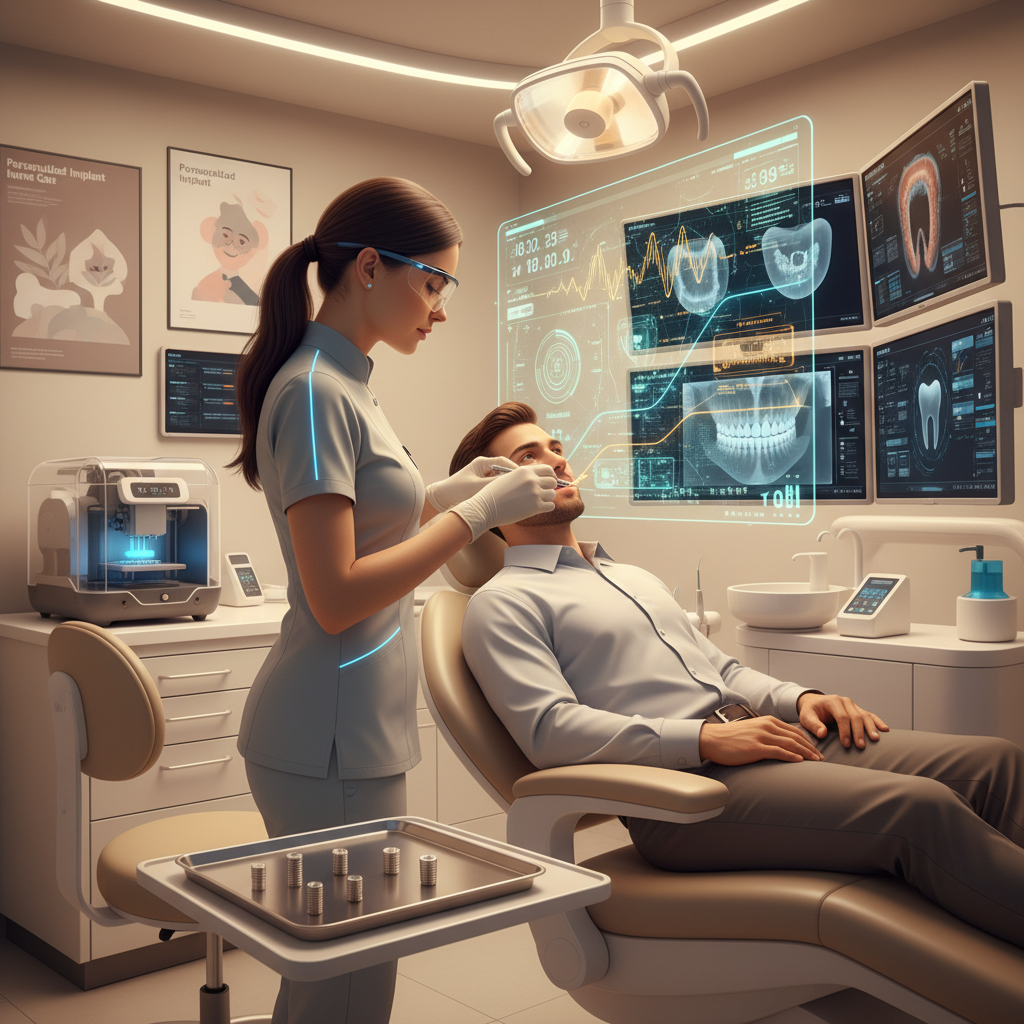
The integration of 3D printing technology enables custom fabrication of patient-specific implants and surgical components. This approach tailors implants precisely to the patient’s unique jaw anatomy, based on digital scans and modeling software, promoting faster healing and better long-term stability. Additionally, AI-guided surgery and robotic-assisted systems are emerging to assist in semi-automated, high-precision implant placement, though widespread clinical adoption remains limited due to cost and training requirements.
Digital impression systems further improve implant procedures by replacing uncomfortable traditional molds with accurate, non-invasive intraoral scanning techniques, facilitating better-fitting restorations and streamlined workflows.
Procedure and Techniques
Dental implant procedures in 2025 have been profoundly transformed by digital technology, enhancing precision, safety, and patient outcomes. Central to modern techniques is computer-guided surgery, which utilizes advanced imaging modalities such as cone beam computed tomography (CBCT) to generate detailed three-dimensional images of the jawbone. This allows for meticulous preoperative planning and accurate implant placement, minimizing surgical invasiveness and improving patient comfort.
Virtual implant planning integrates multiple data sources, including radiographic scans and intraoral impressions, to create comprehensive treatment plans. Digital templates, navigation systems, and robotic assistance enable seamless transfer of these virtual plans into the clinical setting, significantly improving surgical accuracy and reducing intraoperative errors. Robotic systems, although still evolving, offer enhanced precision and efficiency, representing a cutting-edge trend in implant surgery with prospects for further automation and real-time intraoperative feedback.
The use of 3D printing technology has also become integral in producing patient-specific surgical guides and customized implants. These innovations facilitate minimally invasive approaches by ensuring precise osteotomy and implant positioning, which contribute to faster recovery times and reduced complications. Additionally, digital workflows extend to restoration delivery, with intraoral scanners and AI-driven shade-matching software streamlining prosthesis fabrication and enhancing aesthetic outcomes.
Emerging implant materials and biologic enhancements further refine surgical techniques. Implants enriched with stem cells combined with bioengineered scaffolds promote accelerated osseointegration and improved bone healing, thereby enhancing implant stability and longevity. Despite these advancements, challenges such as high equipment costs, operator training requirements, and workflow integration barriers continue to affect widespread clinical adoption.
Clinical Outcomes and Patient Experience
Dental implant success is predominantly measured by implant survival rates, which remain the most frequently reported clinical outcome in implantology studies. A comprehensive retrospective cohort study involving 143 patients and 161 implants reported an overall survival rate of 92.5% over a minimum five-year follow-up period, highlighting the importance of patient-specific factors such as gender, smoking status, and parafunctional habits in influencing outcomes. Female patients and non-smokers demonstrated significantly higher survival rates, underscoring the impact of systemic health and lifestyle choices on implant longevity.
Clinical decision-making extends beyond survival metrics to include esthetic, biological, mechanical, and technical complications that may arise post-implantation. Complications such as peri-implantitis require ongoing monitoring and management, with successful supportive peri-implant therapy characterized by implant survival, stable probing depths, and absence of progressive bone loss. The integration of minimally invasive surgical techniques, including flapless procedures, has been shown to reduce postoperative discomfort and expedite healing, thereby improving patient experience and outcomes.
Patient selection remains critical; ideal candidates possess adequate bone quality and healthy gums, although regenerative techniques now allow a broader range of patients—including older adults and those with bone deficiencies—to benefit from implants. Maintaining oral hygiene through regular professional cleanings and dental check-ups is essential for early detection of complications and implant longevity. Smoking cessation and healthy lifestyle habits further enhance implant success by minimizing risks associated with compromised healing and infection.
Emerging technologies, such as digital planning systems and advanced implant materials, contribute to improved durability and aesthetics, enhancing patient confidence and satisfaction. Moreover, the development of smart implants capable of real-time feedback promises to revolutionize post-surgical care and long-term monitoring, fostering proactive oral health management. Collectively, these advances underscore the importance of individualized care approaches in achieving optimal clinical outcomes and enriching the patient experience in dental implantology.
Benefits and Challenges
Advancements in dental implant technology in 2025 have introduced numerous benefits that enhance patient outcomes and long-term oral health. Modern implants offer a permanent solution for missing teeth, closely replicating the appearance and function of natural teeth. Compared to traditional dentures and bridges, implants require fewer adjustments and have the potential to last a lifetime with proper care, making them a sound long-term investment. The use of advanced biocompatible materials such as improved titanium alloys, ceramic-based implants for metal-sensitive patients, and bioactive surface treatments promote faster osseointegration and healing, contributing to higher success rates and patient comfort.
Early intervention is critical in preventing complications by reducing risks related to poor healing and implant stress. Additionally, wireless technology integration with mobile applications allows for real-time monitoring of implant stability, offering personalized insights into patients’ oral health and enabling timely clinical interventions. Factors such as patient age, systemic health conditions, smoking status, and prosthetic design significantly impact implant survival, necessitating comprehensive evaluations to optimize outcomes.
Despite these benefits, several challenges remain. Although innovative materials and technologies may improve soft tissue compatibility and reduce biofilm formation, their long-term clinical performance has yet to be conclusively validated through extended studies. The high costs associated with custom-designed implants, regenerative materials, and AI-driven infrastructure limit accessibility, especially for underserved populations. Furthermore, many emerging procedures are not covered by insurance, and regulatory agencies impose lengthy approval processes for technologies such as AI diagnostics, 3D-printed systems, and stem cell therapies, complicating their widespread adoption. Ethical considerations further add to the complexity of integrating these innovations into routine practice.
Another significant challenge is the current lack of real-time depth measurement and robot-assisted implant placement, which constrains surgical precision. While preoperative virtual planning and computer-assisted implant surgery (CAIS) have improved placement accuracy, these methods still have limitations. CAIS techniques include static and dynamic approaches, but further technological advances are anticipated to overcome existing constraints and enhance surgical outcomes. Moreover, clinical decision-making must consider potential esthetic, biological, mechanical, and technical complications beyond survival rates to ensure comprehensive patient care.
As dental innovation accelerates, experts emphasize the importance of rigorous evaluation and bioengineering research to redefine the future of implant dentistry, balancing the promise of new technologies with their practical and ethical implications.
Market Trends and Industry Insights
The dental implant market is experiencing significant growth, driven by technological advancements and increasing patient demand. In the United States, the market is projected to reach approximately $6.3 billion by 2025, with an estimated 3 million Americans expected to have dental implants by that time. On a global scale, the dental implant market is anticipated to expand further, reaching an estimated value of $16 billion by 2029.
Cost remains a crucial consideration for patients, with average prices ranging between $2,000 and $4,500 per tooth in locations such as Chandler, highlighting the importance of financial planning or insurance coverage to accommodate these procedures. Despite the costs, the benefits of dental implants—including their longevity, natural feel, support for jawbone health, and ease of maintenance—continue to drive consumer interest and adoption.
The industry is witnessing a convergence of traditional implant manufacturers and digital technology providers, signaling a shift towards comprehensive digital workflows rather than isolated products. For instance, TruAbutment has focused on full-arch digital workflows, positioning itself as a specialist in integrated solutions for complex implant and removable cases rather than solely a component manufacturer. Similarly, companies like W&H, historically known for mechanical dental equipment, have made strategic entries into digital dentistry with new imaging products such as CBCT technology, marking a significant pivot towards digital integration.
Technological innovation remains a key driver of market evolution. Advanced tools including 3D imaging, artificial intelligence, laser technologies, and emerging smart implants with capabilities such as wireless sensing and self-healing materials are reshaping dental practice and patient outcomes. The development and adoption of robotic-assisted implant surgery and dynamic navigation systems have also demonstrated improved accuracy, safety, and efficiency, highlighting the growing role of automation in dental implantology.
Future Directions and Research
The future of dental implantology is poised to be transformed by a convergence of innovative materials, digital technologies, and patient-centered approaches that aim to improve clinical outcomes and accessibility. Recent advances focus heavily on integrating artificial intelligence (AI), robotics, and 3D printing to enhance surgical precision, treatment planning, and implant customization. AI tools are increasingly embedded at every stage—from diagnosis to restoration—catalyzing significant growth in the implant market and promising more predictable results.
Smart dental implants represent a frontier in oral healthcare by embedding micro-sensors capable of monitoring critical parameters such as bite force, implant stability, and healing progression in real time. These sensors offer the potential for early detection of complications such as infection or bone loss before clinical symptoms arise, enabling proactive and data-driven interventions that can increase implant longevity and patient satisfaction. However, these technologies remain in early clinical stages, with widespread adoption constrained by cost, regulatory hurdles, and the need for robust long-term evidence.
On the materials front, advancements in bioengineered and carbon-based coatings are enhancing implant surface properties to optimize osseointegration and soft tissue compatibility. Titanium remains the predominant implant material due to its favorable mechanical and chemical characteristics, but its relatively low bioactivity has driven extensive research into surface modifications that promote faster and more robust integration with bone and epithelial tissues. Emerging biomolecules and regenerative materials show promise in accelerating healing, though their regulatory approval and accessibility vary internationally.
Despite technological progress, significant challenges persist. High costs and complex learning curves limit the accessibility of cutting-edge implants, particularly for underserved populations. Moreover, regulatory agencies such as the FDA and EMA impose lengthy approval processes on AI-driven diagnostics, 3D-printed implants, and stem cell therapies, which complicate clinical adoption and delay patient access. Ethical considerations also accompany the integration of AI and smart technologies, underscoring the need for transparent, patient-centered research and guidelines.
Ongoing research is therefore
The content is provided by Avery Redwood, Front Signals