Summary
Unlocking the Secrets to Finding Trustworthy Same-Day Dentures: Must-Know Tips for 2025 explores the rapidly evolving field of immediate denture technology, focusing on how patients can obtain reliable, well-fitting, and aesthetically pleasing same-day dentures in the context of 2025’s dental innovations. Same-day dentures, also known as immediate dentures, are prosthetics designed to be fabricated and placed during a single dental visit, typically immediately after tooth extraction. This approach eliminates the traditional waiting period associated with conventional dentures, offering patients immediate restoration of function and appearance while their gums heal.
The significance of same-day dentures lies in their ability to preserve facial structure, enhance patient confidence, and reduce the overall treatment timeline. Advances in digital dentistry, including computer-aided design and manufacturing (CAD/CAM) and 3D printing, have revolutionized the production process, enabling greater precision, improved fit, and faster turnaround times. Concurrently, material innovations such as biocompatible nanomaterials and zirconia ceramics have elevated the durability and natural appearance of these prosthetics, meeting the growing expectations for quality and comfort.
Despite their benefits, same-day dentures present challenges and limitations. Since they are fabricated prior to full healing of oral tissues, initial fit may be less precise than conventional dentures, often necessitating multiple adjustments during the healing phase. Potential complications include soreness, jawbone resorption affecting fit over time, and the need for diligent hygiene to prevent infections. Careful patient selection and consultation with experienced clinicians are critical to achieving successful outcomes, underscoring the importance of choosing trustworthy providers who utilize advanced technologies and adhere to rigorous quality control standards.
Looking toward 2025, the integration of artificial intelligence (AI) and augmented reality (AR) into denture design workflows promises further customization and enhanced clinical results. As digital fabrication methods become more widespread and affordable, same-day dentures are increasingly accessible, providing timely solutions that balance convenience, esthetics, and function. This article offers essential guidance for patients navigating these options, highlighting technological advances, clinical considerations, and patient experiences to inform informed decisions about immediate denture care.
Overview of Same-Day Dentures
Same-day dentures, also known as immediate dentures, are a type of denture designed to be crafted and placed within a single dental visit, typically immediately following tooth extraction. Unlike traditional dentures, which require multiple fittings and a waiting period for the gums to heal, same-day dentures allow patients to leave the dental office with a full set of teeth on the very day of their extraction. This immediate placement helps maintain esthetics and provides basic function during the initial healing phase, serving as a temporary solution while oral tissues recover.
These dentures are created using advanced dental technology that ensures they precisely match the shape and color of the patient’s existing teeth, resulting in a natural appearance. Although immediate dentures do not fully function or feel like conventional dentures that fit healed oral tissue, they act as a “band aid” by assisting with bleeding control and offering essential esthetic and functional support in the first 24 hours after extraction.
The development of same-day dentures reflects the broader advancements in denture technology leading up to 2025, where innovations in materials and fabrication techniques have significantly improved comfort, fit, and appearance. This progress aligns with the goal of dental practices to provide patients with high-quality, reliable, and aesthetically pleasing prosthetics in a timely manner.
Clinical Procedure for Same-Day Dentures
The clinical procedure for same-day dentures begins with a comprehensive evaluation of the patient’s oral condition and medical history to ensure suitability for the treatment. Key considerations include the patient’s mental attitude, medical background, condition of remaining teeth and supporting structures, and the extent of preliminary extractions required. Dentists typically suggest immediate dentures when a full mouth extraction is planned, allowing the dentures to be placed on the same day as tooth removal.
The process starts by taking a preliminary impression of the patient’s mouth using stock trays designed for edentulous patients, which can be customized with wax to enhance tray periphery if needed. To ensure accuracy, the impression is poured in dental stone while eliminating bubbles and voids using a vibrator. This impression is used to fabricate a preliminary cast, custom impression trays, and wax bite rims, which assist in establishing proper occlusion and vertical dimension. In some cases, the patient’s existing fixed prosthesis may be used as a reference to replicate vertical dimension, phonetics, and aesthetics for the immediate denture.
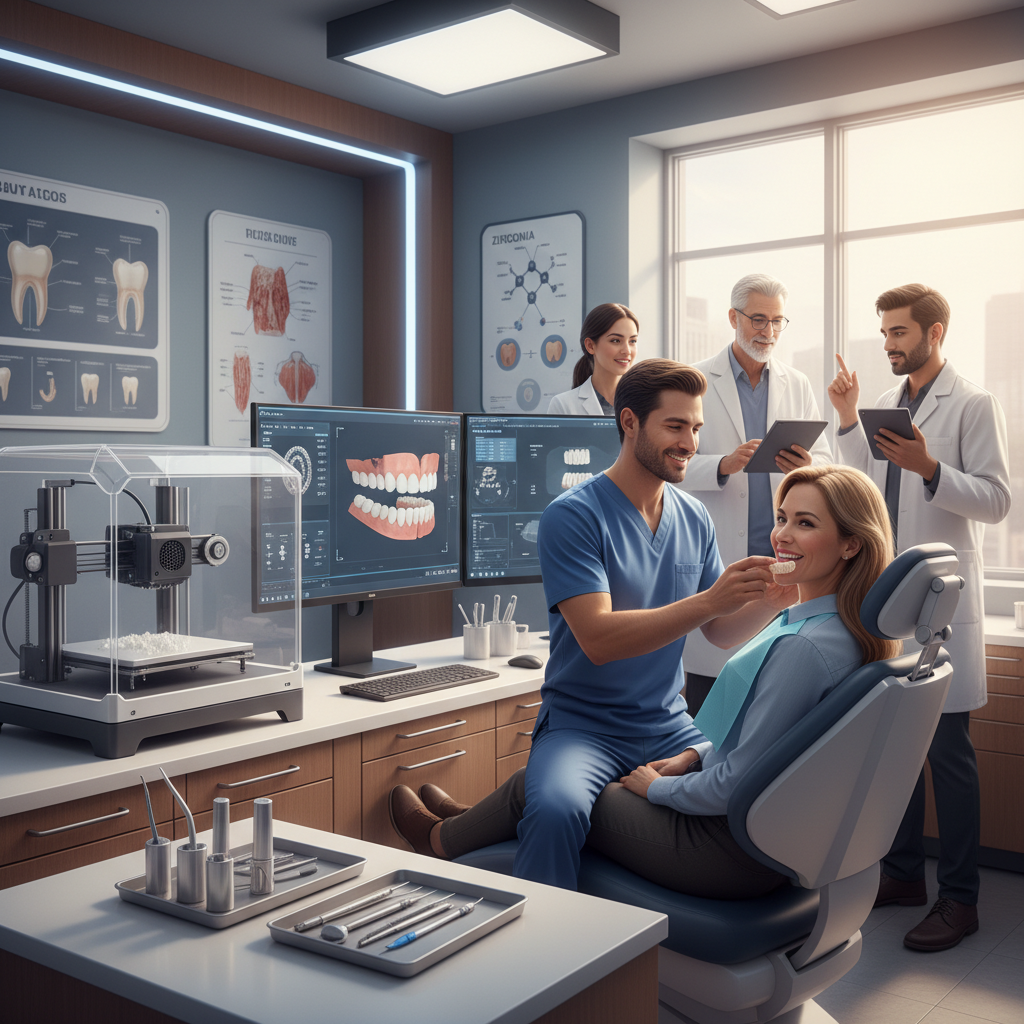
Modern advancements have significantly improved the fabrication process. The integration of CAD/CAM technology allows dentists to create digital impressions and design dentures with high precision and accuracy. This technology streamlines the design and manufacturing phases, resulting in better-fitting dentures and a more efficient overall procedure. The use of high-quality materials such as acrylic resins, polymers, and porcelain enhances the durability, aesthetics, and comfort of the final prosthesis compared to traditional dentures.
On the day of the procedure, patients typically provide a detailed patient history form to ensure tailored treatment. Following tooth extractions, immediate dentures are inserted, which helps maintain the patient’s smile and oral function without a waiting period. The dentures are tested for areas of excessive pressure and adjusted as needed to optimize fit and comfort. Although multiple extractions in a single appointment can be traumatic and require careful adaptation, the use of immediate dentures can reduce the number of visits and overall treatment time.
Post-insertion, patients may experience some discomfort, but most find that after about one month, pain and irritation decrease significantly as the mouth adjusts to the dentures. Follow-up appointments often include relines, adjustments, or repairs, many of which can be completed in a single day, sometimes even accommodating walk-in visits, without affecting the overall cost of the dentures.
Manufacturing Techniques and Technologies
The manufacturing of complete dentures has traditionally relied on a complex, multi-step hand-made process that presents challenges in quality control and efficiency. However, recent advancements in dental technology have significantly transformed denture fabrication, emphasizing precision, automation, and improved patient outcomes.
One pivotal development is the integration of computer-aided design and computer-aided manufacturing (CAD/CAM) technology. This digital approach allows dentists to create highly accurate digital impressions of patients’ mouths, which are then used to design and fabricate dentures with exceptional precision and consistency. The adoption of CAD/CAM streamlines the workflow by reducing manual steps and enhancing reproducibility.
Complementing CAD/CAM, three-dimensional (3D) printing has emerged as a revolutionary technique in producing affordable, individualized prostheses with rapid turnaround times. Utilizing advanced resin-based materials and high-precision multi-axis manufacturing, 3D printing enables dental laboratories to fabricate complete dentures that meet exacting standards of fit and esthetics. This technology also facilitates on-site denture production, allowing same-day delivery and reducing costs for patients.
Traditional fabrication methods such as compression molding and injection molding using prepolymerized or unpolymerized resins remain in use, particularly valued for their simplicity and reliable accuracy in curing acrylic resin. These conventional techniques involve preparing molds into which acrylic is packed and cured under pressure to achieve the desired hardness. Additional manual steps include the careful arrangement of teeth and the application of wax to build gingival contours that support facial muscles and produce a natural appearance. The wax is often stippled to ensure the finished acrylic gums avoid an unnaturally smooth look.
Modern denture materials have also evolved, incorporating biocompatible nanomaterials, advanced ceramics, and next-generation polymers that enhance durability, esthetics, and functionality. These materials, combined with digital manufacturing technologies, result in dentures that offer superior comfort, lifelike aesthetics, and improved longevity compared to traditional dentures.
Material Innovations in Same-Day Dentures
Recent advancements in materials science have significantly transformed the landscape of same-day dentures, enabling prosthetics that are not only more durable but also highly esthetic and comfortable. The integration of innovative materials such as advanced ceramics, biocompatible nanomaterials, and next-generation polymers has elevated the functional and visual quality of dentures to new levels.
One of the most notable material breakthroughs is the use of zirconia, a ceramic known for its exceptional strength and toughness. Zirconia-based dentures offer superior durability compared to traditional materials, making them well-suited for the rigors of daily use while maintaining a natural appearance. Additionally, polymethylmethacrylate (PMMA) continues to play a vital role as a denture base material, with improvements in fabrication methods like injection molding enhancing its accuracy and mechanical properties. Since its introduction in 1937, acrylic resin has undergone numerous refinements, including the development of vinyl resins, polycarbonates, and polyurethanes, which have expanded the options available for denture bases.
The rise of digital technology and additive manufacturing has further optimized material utilization. Techniques such as 3D printing with ceramic materials and resin-based multi-axis milling enable high-precision fabrication that improves fit and esthetics while reducing production time—a crucial factor for same-day denture services. Milling of PMMA denture bases, for instance, has been shown to possess superior mechanical properties relative to other fabrication methods, contributing to more reliable prostheses.
Moreover, modern fabrication processes incorporate meticulous steps to ensure natural-looking gingival contours and appropriate facial muscle support, often achieved through wax modeling before final curing under pressure. This attention to detail in material layering and finishing improves the overall esthetic outcome and wearer comfort.
Quality Control and Assurance
Quality control and assurance play a critical role in the successful fabrication and delivery of same-day dentures, particularly with the integration of digital technologies in modern dental practices. The adoption of computer-aided design and computer-aided manufacturing (CAD/CAM) has significantly improved the precision and reproducibility of denture fabrication, thereby enhancing quality assurance processes.
Digital workflows allow clinicians to standardize procedures and implement strict quality checks at various stages—from digital impression capture to final milling or 3D printing. The use of intraoral and facial scanning technologies ensures accurate virtual models, which reduce fitting errors and the need for adjustments after delivery. This precision facilitates better estimation of the time required for successful denture completion, allowing dentists to plan and communicate effectively with patients.
Moreover, the utilization of advanced materials such as acrylic resins, polymers, and ceramics, often processed through milling or additive manufacturing techniques, contributes to the durability and aesthetic quality of dentures. Milling, in particular, has been shown to produce denture bases with superior mechanical properties compared to other fabrication methods, further reinforcing quality control measures.
The expert consensus among prosthodontics specialists highlights the importance of establishing clear operational protocols and case selection criteria to maximize patient satisfaction and clinical outcomes. Through comprehensive diagnostic evaluation—including assessment of the patient’s existing dentures—dentists can determine candidacy for same-day dentures and, if necessary, courteously discontinue treatment to avoid unsatisfactory results.
Clinical Benefits and Limitations
Same-day dentures offer several clinical benefits that make them an attractive option for patients needing immediate tooth replacement. One of the primary advantages is the immediate restoration of appearance and function, as patients receive their dentures on the same day as tooth extraction. This immediacy helps protect the extraction sites and maintains the facial structure, preventing the sunken appearance that can occur when teeth are missing for an extended period. Additionally, same-day dentures can improve patient confidence and quality of life by allowing them to avoid the embarrassment and functional difficulties associated with being toothless during the healing period.
However, there are notable limitations associated with same-day dentures. Since these dentures are fabricated prior to the extraction and before the gums have fully healed, the initial fit may not be as precise as conventional dentures made after complete healing. This often necessitates frequent adjustments during the post-extraction healing phase to ensure comfort and proper function. Furthermore, not all patients are suitable candidates for same-day dentures; various clinical factors must be considered to determine whether this option will provide a successful outcome. Challenges such as adaptation periods, potential discomfort, and the need for ongoing maintenance are important considerations that patients and clinicians must weigh before proceeding.
Common Challenges and Complications
Patients opting for same-day dentures should be aware of several challenges and potential complications that can arise both immediately after placement and during long-term use. One common issue is jawbone shrinkage, which occurs as the gums and jawbone heal and recede over time, potentially affecting denture fit and comfort. This often necessitates periodic adjustments or relining of the dentures to maintain an optimal fit.
Soreness and irritation are frequent in the initial adjustment period. Immediate dentures are not custom-fitted to the exact shape of the mouth, which can lead to sore spots, especially during the first two weeks following insertion. These sore spots are generally manageable with dental adjustments, but if caused by sharp bone spicules, minor treatments may be required.
Poor denture hygiene can lead to serious complications such as gum irritation, fungal infections like denture stomatitis, and increased risk of gum disease. Food particles trapped beneath dentures create an environment conducive to bacterial growth, which can cause redness, swelling, discomfort, and difficulty wearing dentures. Additionally, wearing dentures continuously without removal increases the risk of oral infections and bad breath.
Another significant concern is the progressive loss of jawbone over time due to lack of stimulation, which not only alters facial structure but also compromises denture stability and fit. Regular removal and proper care of dentures can help slow this process by allowing the jawbone to maintain some degree of activity.
Moreover, changes in maxillomandibular relationships—how the upper and lower jaws align—can impact esthetics, speech, comfort, and function. It is essential that dentists carefully evaluate these relationships before fabricating or modifying dentures to avoid further complications and ensure patient satisfaction.
Finally, while same-day dentures offer the advantage of immediate tooth replacement, they often require multiple follow-up visits for adjustments, relining, or repairs. These ongoing needs can add to the overall cost and time commitment, potentially offsetting the initial convenience of same-day service.
Patient Considerations When Choosing Providers
When selecting a provider for same-day dentures, patients must carefully evaluate several important factors to ensure the best possible outcome for their oral health and satisfaction. First and foremost, consulting with an experienced dentist or prosthodontist is essential, as their expertise significantly influences the quality of the final dentures. Unlike brand names or premium materials, a skilled clinician’s ability to match the denture teeth’s shades, shapes, and fit is paramount for a natural-looking and comfortable prosthesis.
Patients are advised to research potential providers by seeking recommendations from friends and family and reviewing online patient feedback to gauge reputation and success with denture patients. It is also helpful to inquire whether the dental office accommodates walk-in appointments, especially if interested in same-day denture procedures, as early arrival and clear communication with the receptionist can facilitate timely treatment.
Financial considerations also play a significant role. Patients without dental insurance should explore whether providers offer cash discounts, low-interest financing, or 0% payment plans to make dentures more affordable. Understanding the total cost, including maintenance and potential adjustments, is crucial before committing to treatment.
Technological advancements are reshaping denture fabrication, and many reputable providers now utilize CAD/CAM and digital workflows, which enhance precision, reduce adjustment times, and often allow for same-day delivery. Patients may inquire about the technology used at the clinic, as digital fabrication methods like milling and 3D printing not only improve fit but can also lower costs by streamlining production.
Finally, a thorough oral health evaluation by the provider is critical. Dentists will assess bone density, oral tissue condition, and overall health to determine if same-day dentures are appropriate or if alternative options such as implant-supported dentures are preferable. The healing process following extractions and denture placement should also be discussed, as patients can expect a period of tissue adaptation and potential relining of dentures to maintain fit.
Patient Preparation and Aftercare
When opting for same-day dentures, proper patient preparation is essential to ensure a smooth and effective treatment process. Upon arrival at the dental office, patients may be asked to complete a “Patient History” form, which provides critical health information to the dental team to tailor
Advances and Trends for 2025
The field of denture fabrication is undergoing a significant transformation driven by rapid advancements in digital technology and material science. One of the most notable trends in 2025 is the integration of artificial intelligence (AI) and augmented reality (AR) into computer-aided design and computer-aided manufacturing (CAD/CAM) workflows. This integration allows for enhanced clinical value by enabling individualized esthetic customization and more precise denture designs tailored to each patient’s unique anatomy. Tools such as intraoral and facial scanning, combined with 3D printing and numerical control machining, are reshaping traditional workflows, resulting in improved fit and reduced need for adjustments.
3D printing technology stands out as a revolutionary force in denture manufacturing. It offers a cost-effective approach to producing highly individualized prostheses with rapid turnaround times, making same-day denture delivery increasingly feasible and accessible. This digital approach to denture production not only streamlines the fabrication process but also holds promise for broader affordability and customization options.
In addition to technological innovations, advances in materials science are playing a crucial role in enhancing denture performance. Modern dentures incorporate biocompatible nanomaterials, advanced ceramics, and next-generation polymers that improve durability, esthetics, and overall functionality. These innovative materials contribute to longer-lasting prostheses with better comfort and appearance, meeting the rising patient expectations for quality.
Same-day dentures, also referred to as immediate dentures, have gained popularity for eliminating the traditional waiting period after tooth extraction. They provide patients with immediate restoration without compromising on fit or appearance, often at comparable costs to conventional dentures. Proper care of these immediate dentures can also result in cost savings over time due to reduced clinical visits for adjustments or remakes. Many dental clinics now offer a range of denture options—from suction dentures and partials to facelifts and repair services—catering to diverse patient needs and budgets while leveraging these new technological advancements.
Patient Experiences and Case Studies
Patients seeking same-day dentures often begin their appointments by completing a detailed “Patient History” form. This form provides crucial health information that dental professionals use to tailor treatments effectively and safely, ensuring optimal outcomes for each individual.
In terms of patient experiences, many rely on personal recommendations from friends and family or consult online patient reviews to find dentists with proven expertise in denture care. This approach helps them select professionals who understand the unique needs of denture wearers and can provide compassionate, skilled treatment.
Case studies in geriatric dentistry illustrate the efficiency of streamlined denture construction techniques. For example, a one- or two-visit complete denture protocol has been successfully applied to elderly patients, reducing the number of appointments while maintaining high standards of fit and comfort. These approaches demonstrate how same-day denture services can be both convenient and effective for patients.
The content is provided by Blake Sterling, Front Signals