
Summary
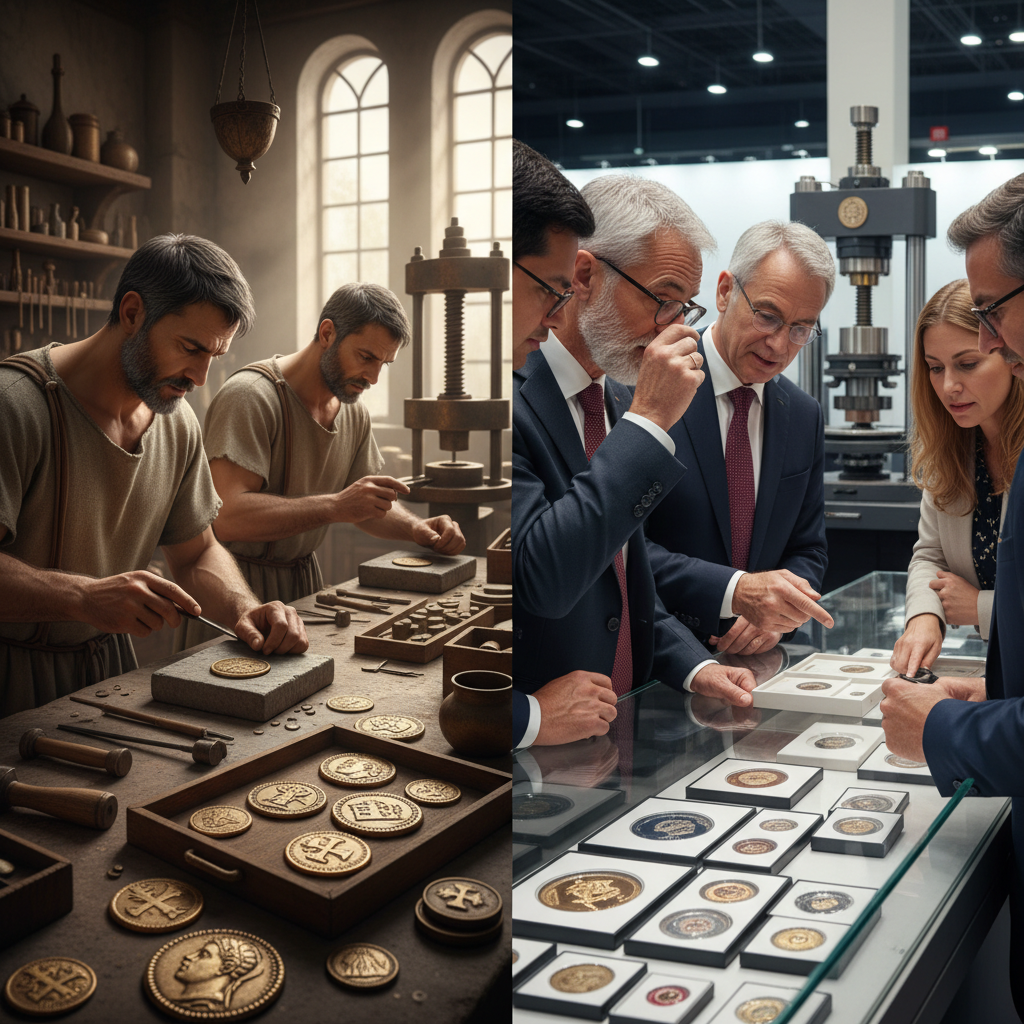
Unveiling the Intriguing Odyssey of Rare Coins: From Creation to Collectors’ Treasures explores the rich history, artistry, and cultural significance of rare coins, tracing their journey from ancient minting practices to modern-day collectibles. Coinage originated around the 7th century BCE, with early examples such as the electrum Lydian lion coins serving not only as currency but also as symbols of political authority. Over millennia, civilizations like the Persians, Greeks, Romans, and Byzantines contributed distinct designs and monetary systems that reflected their unique identities and historical contexts, making rare coins invaluable artifacts that connect us to human civilization’s economic, cultural, and political evolution.
The production of rare coins combines traditional craftsmanship with advanced technology, involving intricate design, engraving, and minting processes that ensure both artistic detail and authenticity. Factors determining a coin’s rarity include its original mintage, survival rate, condition, and market demand, with higher-grade and error coins often commanding premium status among collectors. Classification schemes consider age, design, and unique features, while grading and authentication services provide standardized evaluations essential for market transparency and value assessment.
Rare coins hold notable cultural and historical significance, serving as tangible expressions of power, identity, and artistry throughout history. Iconic collections, both public and private, such as those curated by the American Numismatic Association and collectors like Louis Eliasberg, highlight the enduring appeal and financial value of these objects. However, the industry faces challenges including fluctuating collector interests, authentication complexities, and market accessibility, all influenced by evolving technologies and global economic factors.
Technological advancements have profoundly shaped coin production and the rare coin market, from medieval innovations like screw presses to modern automated striking and digital platforms that democratize collecting worldwide. These developments have enhanced minting precision, facilitated authentication, and expanded the collector base, underscoring rare coins’ continued relevance as both historical artifacts and coveted treasures.
History of Rare Coins
The history of rare coins spans millennia, tracing the evolution of currency from its earliest forms to the treasured collectibles of today. Coinage first emerged in the ancient world around the 7th century BCE, with some of the earliest known examples originating in regions such as ancient China and the Near East. Early coins, like the Lydian lion coins minted by Alyattes of Lydia between 610 and 560 BCE, were crafted from electrum—a naturally occurring alloy of gold and silver—and served as both functional currency and symbols of authority.
As coinage developed, diverse civilizations contributed unique designs and monetary systems that reflect their cultural and political identities. The Persian Empire introduced the daric and siglos, gold and silver coins that established a bimetallic monetary standard influential throughout history. Greek coinage often featured depictions of gods, mythological creatures, and city-state emblems, revealing the rich tapestry of their society. Roman coins, particularly the denarius, became central to the empire’s economy and frequently bore images of emperors and their accomplishments, offering insights into Roman power and historical events. This tradition continued with Byzantine solidi coins and later medieval coinage, which adapted to shifting political and social landscapes.
The medieval period witnessed the centralization of minting processes, with entities like England’s Royal Mint consolidating coin production by the late 13th century. Advances in minting technology were driven by the need to combat counterfeiting and maintain coin integrity. Throughout this era, coins were not only monetary instruments but also expressions of sovereignty and status, often collected by aristocrats and royalty as symbols of wealth and power.
Rare coins from these various periods are highly prized today, partly due to their age—particularly those minted before 1800—and the presence of unique characteristics such as minting errors. Ancient and medieval coins provide a tangible connection to history, with each piece encapsulating artistic craftsmanship, cultural values, and economic realities of its time. Collectors value them not merely for their monetary worth but as miniature artifacts that tell the story of human civilization’s development.
In the modern era, technological advances and grading systems have democratized access to rare coins, allowing a broader audience to appreciate and invest in these historical treasures. Collaborations between museums, historical societies, and digital technologies have further enriched the study and collection of rare coins, bridging the past with present-day enthusiasts and scholars.
Creation and Production of Rare Coins
The creation and production of rare coins is a complex process that combines artistry, craftsmanship, and advanced technology. It begins with the design phase, where artists develop a concept that reflects cultural, political, or historical themes. This design is often prepared by hand or with the aid of computer software to produce a detailed line drawing or digital image.
Once the design is approved, skilled engravers transform it into a three-dimensional relief model. This sculpt is then used to create a master hub, which carries the negative or incuse pattern of the coin’s design. From this master hub, multiple dies are produced, including working dies used in the actual minting process. The die-making process is meticulous and time-consuming, requiring precision to ensure that each coin impression is crisp and flawless.
Before mass production begins, a test strike is performed to verify that the design transfers well onto the metal blanks, or planchets. These blanks are flat metal discs prepared through a series of mechanical processes such as unwinding, flattening, and punching from metal rolls. The choice of metal depends on factors like durability, rarity, and tradition, with precious metals such as gold, silver, platinum, and palladium commonly used, alongside base metals like copper.
The actual striking process typically uses hydraulic or electric coining presses, which do not heat the planchets prior to striking. Instead, the metal cold flows into the die under high pressure to create the coin’s design. This method balances efficiency and quality, enabling the production of thousands of coins per minute in modern mints. Edge designs are sometimes applied through separate edge-incusing machines, which imprint additional markings or ridges to deter counterfeiting.
Despite advances in automation, the minting process retains elements of traditional craftsmanship, requiring expert tool and die makers, artists, and technicians to maintain the high standards expected of rare and collectible coins. Errors or variations that occur during striking can also become unique features sought after by collectors, adding another layer of intrigue to rare coins.
Historically, coins have evolved from early electrum pieces and Persian gold darics to modern minted coins, reflecting technological progress and the continuing importance of coinage as a medium of economic exchange and artistic expression. Today’s rare coins not only represent monetary value but also serve as tangible pieces of history, culture, and human ingenuity.
Factors Determining Rarity
Rarity in coin collecting is a multifaceted concept influenced by several key factors including mintage, survival rate, condition, and market demand. While many collectors initially define rarity simply as the scarcity of an item, a deeper understanding reveals a more complex interplay of elements that determine a coin’s value and desirability.
One of the primary determinants of rarity is mintage, or the number of coins originally produced. Coins with very low mintages inherently tend to be rarer, especially when few survive over time. For example, coins minted in quantities fewer than 1,800 pieces, with only about 120 to 130 surviving today, command significantly higher prices due to their scarcity. However, rarity is not solely dictated by production numbers; the survival rate—how many coins remain in existence—is equally important. Over centuries, many coins have been lost, melted down, or damaged beyond recognition, making surviving examples more precious to collectors.
Another crucial factor is the condition or grade of the coin. Grading assesses the quality of a coin based on criteria such as strike, preservation, luster, color, and overall attractiveness. Numerical grading scales, commonly from 1 to 70, categorize coins from barely recognizable to flawless, providing a standardized measure of condition. This grade significantly affects a coin’s rarity perception and market value, as higher-grade specimens are typically much rarer and more sought after. Damage from handling, polishing, or mounting in jewelry can lower a coin’s grade, thus impacting its desirability.
Market demand also plays a pivotal role in determining a coin’s rarity. Even if a coin is scarce in absolute terms, its value and perceived rarity can fluctuate depending on collector interest. A coin with low demand despite limited availability may not see a substantial increase in value, while a highly popular coin can fetch premium prices even if moderately scarce. This dynamic is governed by the law of supply and demand, making rarity partly a reflection of market forces and collector preferences.
Lastly, certain types of coins, such as varieties or mint errors, are often considered rare due to their unique production anomalies. These coins are prized not just for scarcity but for their distinctiveness, adding another layer to rarity’s complexity.
Classification of Rare Coins
Rare coins are typically classified based on a combination of factors including their age, mintage, design, and any unique characteristics such as minting errors. Coins minted before 1800 are often regarded as rare due to their historical significance and limited availability, while many 19th-century coins are also considered rare with certain exceptions. In contrast, 20th-century coins are generally less rare, though select issues with low mintage or distinctive features can still qualify as rare collectibles.
The mintage, or total number of coins produced, plays a crucial role in rarity classification. Generally, the lower the mintage, the rarer the coin, especially in the context of early coinage which frequently had very small production runs. Collectors and investors assess rarity not only by numerical scarcity but also by demand, artistic design, and historical importance, making some coins highly sought after due to these combined attributes.
Additionally, coins exhibiting minting errors—such as misstrikes or unusual features—can be categorized as rare due to their unique deviations from standard production, which appeal to specialized collectors. The classification of rare coins is thus a nuanced process involving evaluation of age, scarcity, aesthetic qualities, and market interest. Researching similar coins and their market values can help determine a specific coin’s standing within this classification.
Notable Rare Coins and Collections
Rare coins have captivated collectors and investors alike due to their unique combination of age, design, scarcity, and historical significance. Among the most renowned collections are those preserved by institutions such as the American Numismatic Association (ANA) Museum, which houses exceptional pieces like the 1866 No Motto Quarter, a prized Civil War-era rarity. In the private sector, legendary European hoards, including the Rothschild family’s secret coin stash, point to lost fortunes and underscore the enduring allure of rare numismatics.
Prominent individuals have also played a key role in elevating the profile of rare coins. Famous actors and collectors have sought out historically significant pieces, thereby increasing the cultural value and market demand for these items. In particular, Russian coins, noted for their rarity and historical importance, frequently appear in prestigious auctions and elite private collections, further exemplifying the global fascination with rare coinage.
Historical provenance significantly influences rarity and value. Ancient coins, dating back as far as the 7th century BCE, provide invaluable insight into early civilizations. These artifacts, often crafted from bronze, silver, and gold, bear intricate designs symbolizing ruling authorities or cultural beliefs, reflecting the artistic and societal values of their time. Most ancient coins traded today originate from Greek, Roman, Persian, and Hellenistic empires, minted prior to approximately 500 AD.
Some collections have achieved legendary status through the dedication and passion of individual collectors. Louis Eliasberg, for example, amassed one of the finest-known coin collections in American history through persistent effort despite humble beginnings. Following his death, the Eliasberg collection was dispersed at auctions spanning 15 years, with many pieces now held by private collectors and prestigious numismatic institutions worldwide. Similarly, Simpson’s collection of U.S. pattern and proof coins, highly regarded by the Professional Coin Grading Service (PCGS), exemplifies discerning taste and deep knowledge in numismatic history.
Coin Grading and Authentication
Coin grading is the systematic process of assessing a coin’s condition, which is a critical determinant of its collectible value. The grade reflects several criteria including strike quality, preservation, luster, color, and overall attractiveness, sometimes also considering the country or state of minting. This evaluation allows collectors and investors to understand the coin’s current state relative to its original condition at the time of manufacture, providing a standardized language for describing coins across the numismatic community.
The most widely used grading scale ranges from 1 to 70, where 1 denotes a coin that is barely recognizable and 70 represents a flawless specimen. This scale, originally devised by William Herbert Sheldon, functions like a report card for coins: higher grades can significantly increase a coin’s market demand and investment potential. Because coins accumulate marks and blemishes from circulation and handling, grading helps quantify these effects on a coin’s quality and desirability.
Professional coin grading services have become indispensable in the industry, offering third-party, unbiased authentication and grading for tiered fees. These services employ trained graders who examine coins thoroughly to ensure accurate, standardized evaluations. Once graded, coins are encapsulated in tamper-proof holders, commonly called “slabs,” which feature individual serial numbers for traceability and protection. Companies such as the Professional Coin Grading Service (PCGS) have revolutionized the market by using advanced technology and rigorous grading protocols to affirm a coin’s authenticity and quality, providing confidence to both buyers and sellers.
Certification through these third-party services not only verifies a coin’s authenticity but also certifies its grade, enhancing its resale value and appeal among collectors and investors. Educational resources, including publications like “The Official ANA Grading Standards for United States Coins,” offer collectors comprehensive guidelines to deepen their understanding of grading standards and criteria, further supporting informed collecting and trading practices.
Distribution Channels and Market Entry
The distribution of rare coins follows a structured network that begins with official mints and extends through authorized purchasers to reach collectors and investors. For example, the U.S. Mint does not sell bullion coins directly to the public; instead, it relies on a network of authorized purchasers who act as intermediaries by buying coins from the Mint and then distributing them to wholesalers, financial institutions, and secondary retailers. This two-way market system enables liquidity and access while maintaining regulatory oversight.
Mints like the U.S. Mint produce a variety of coins—including circulating, bullion, and numismatic collector coins—across multiple production facilities utilizing specialized machinery and processes to ensure quality and authenticity. The availability and condition of coins are critical factors influencing their market entry and appeal. High-grade coins, particularly those in Mint State (MS) or Proof (PR) conditions, command premium prices and attract significant interest due to their rarity and craftsmanship.
Technology has also transformed market entry by democratizing access to rare coins. Previously, valuable coins were often confined to royal vaults or private collections accessible only to wealthy individuals. Today, advancements in grading technology and online platforms enable collectors of diverse backgrounds to participate in the market, expanding the collector base and enhancing demand. This shift has opened new opportunities for market expansion across various geographies, each with distinct demand potentials, growth trajectories, and regulatory dynamics.
Dealers and distributors continuously anticipate collector preferences and market trends to stock coins that align with current tastes and interests. Since collector demand is key to determining a coin’s value, shifts in demographic and cultural influences play a strategic role in shaping distribution strategies and market entry points. Emerging digital tools and platforms further facilitate buying, selling, and trading activities, reshaping traditional market dynamics and expanding the ecosystem for rare coins.
Market Dynamics and Economic Impact
The market dynamics of rare coins are shaped by a combination of supply and demand factors, technological advancements, and broader economic conditions. One of the primary influences on coin values is
Cultural, Historical, and Political Significance
Coins have served as potent cultural artifacts, reflecting the values, beliefs, and power structures of the societies that produced them. The imagery and inscriptions on coins conveyed themes such as strength, authority, and vitality, resonating deeply with contemporary societal ideals. For instance, early Chinese coins featured geometric patterns that symbolized philosophical and cultural principles unique to Eastern traditions, highlighting how coinage transcended mere economic function to become a medium of identity and governance.
Politically, coinage functioned as a deliberate tool for expressing authority and legitimacy. Rulers and states employed iconography and legends on coins to communicate dynastic heritage, political alliances, and shifts in power. The Artaxiad dynasty of Armenia, for example, utilized coin imagery that blended Hellenistic, Iranian, and Roman influences to project royal identity and negotiate their status between independence and vassalage during the 2nd and 1st centuries BCE. Similarly, the coins of Alexander the Great portrayed him as a divine figure, reinforcing his legacy and influence across his vast empire through powerful visual propaganda.
Historically, coins provide invaluable insight into the cultural and political landscapes of ancient civilizations. Greek coins often depicted gods, mythological creatures, or city-state emblems, revealing the rich tapestry of their religious and political life, while Roman coins focused on emperors and their achievements, offering a narrative of imperial power and historical events. Over time, coinage evolved alongside societal transformations, continuing to mirror the changing dynamics of power and culture throughout history.
Challenges and Issues in the Rare Coin Industry
The rare coin industry faces several challenges and issues that impact collectors, dealers, and the overall market. One significant challenge is accurately assessing the rarity and value of coins, which depends on factors such as mintage, survival rate, condition, and demand. Scarcity alone does not guarantee value; even highly rare coins require sufficient collector interest to maintain market demand and pricing.
Another critical issue involves authentication and grading. Coins that have been professionally certified with standardized grading are more liquid and marketable because buyers and sellers have confidence in their authenticity and condition. In contrast, uncertified coins often face limited marketability and hesitation among collectors due to doubts about their legitimacy and quality.
Manufacturing errors present both opportunities and complications in the rare coin market. Error coins—such as double denomination strikes or mules—are prized by collectors but are typically caught and destroyed during production, making genuine examples extremely rare and valuable. However, distinguishing between various types of errors requires expert knowledge, as terms like “double denomination” and “mule” refer to distinct phenomena.
The evolving tastes and interests of collectors also pose challenges for the industry. Market demand can fluctuate over time, influenced by demographic shifts, cultural trends, and economic conditions, which in turn affect coin values and dealer inventories. Additionally, the expansion of niche collecting categories adds complexity for buyers navigating the market, sometimes making it difficult to gauge the true rarity or desirability of specific coins.
Technological advances such as online platforms and digital tools have reshaped buying, selling, and trading activities, introducing both new opportunities and risks related to market transparency and authenticity verification. Lastly, the rarity and historical significance of certain coins can result in them being held in private collections or museums, limiting availability and access, which impacts overall market dynamics.
Technological Advancements and Their Historical Impact
The evolution of coin production has been profoundly shaped by technological advancements throughout history. Early innovations such as the introduction of pre-formed discs and screw presses during the medieval period significantly improved the accuracy and consistency of coin minting. These developments laid the foundation for the sophisticated and efficient coin production methods used today. While modern presses operate on a much larger scale with enhanced quality control, the fundamental process remains consistent: using one working die for the obverse, another for the reverse, and a hardened steel collar to shape the coin’s edge.
The transition from manual hammer strikes to mechanized presses marked a pivotal moment in minting technology. Early versions of the trip hammer, inspired by Leonardo da Vinci’s sketches and implemented in Germany and Sweden, harnessed gravity to replace human labor in striking coins. This innovation evolved into the tilt hammer press, further automating the process. The advent of electric presses combined with electrically powered feeding belts revolutionized coin production by automating what was once labor-intensive work. This system continues to dominate global coinage production today.
Technological progress not only transformed the physical minting process but also influenced the broader coin market. Independent third-party certification emerged as a key development, enhancing trust and transparency in buying, selling, and holding rare coins. However, despite these advances, technological breakthroughs have sometimes given rise to new misconceptions, showing that increased knowledge does not always equate to increased wisdom.
The historical importance of minting technology extends beyond economics and production efficiency; it has contributed to understanding historical events and civilizations through significant coin discoveries. Moreover, technological innovations such as milled ridges, introduced to deter coin clipping, remain in use today, highlighting the enduring impact of early minting techniques.
Finally, modern technology has also transformed the numismatic market by broadening accessibility. Online platforms and smartphone applications allow collectors worldwide to trade and expand their collections, driving market growth as the middle class expands and interest in coin collecting increases. This digital evolution, alongside factors like rarity, condition, and historical significance, continues to shape the valuation and popularity of rare coins.
The content is provided by Avery Redwood, Front Signals