Summary
Dental clips for missing teeth are specialized attachments used in removable dental prostheses, such as partial dentures, clip-on dentures, and cosmetic snap-on veneers, to improve retention, aesthetics, and oral function. These clips vary widely in design and material, including metal alloys like stainless steel and cobalt-chromium, as well as flexible polymers such as nylon, each offering distinct benefits tailored to patient needs. They serve as practical solutions for individuals seeking affordable, non-invasive options to replace or conceal missing teeth, bridging the gap between temporary cosmetic devices and more permanent restorations like dental implants and bridges.
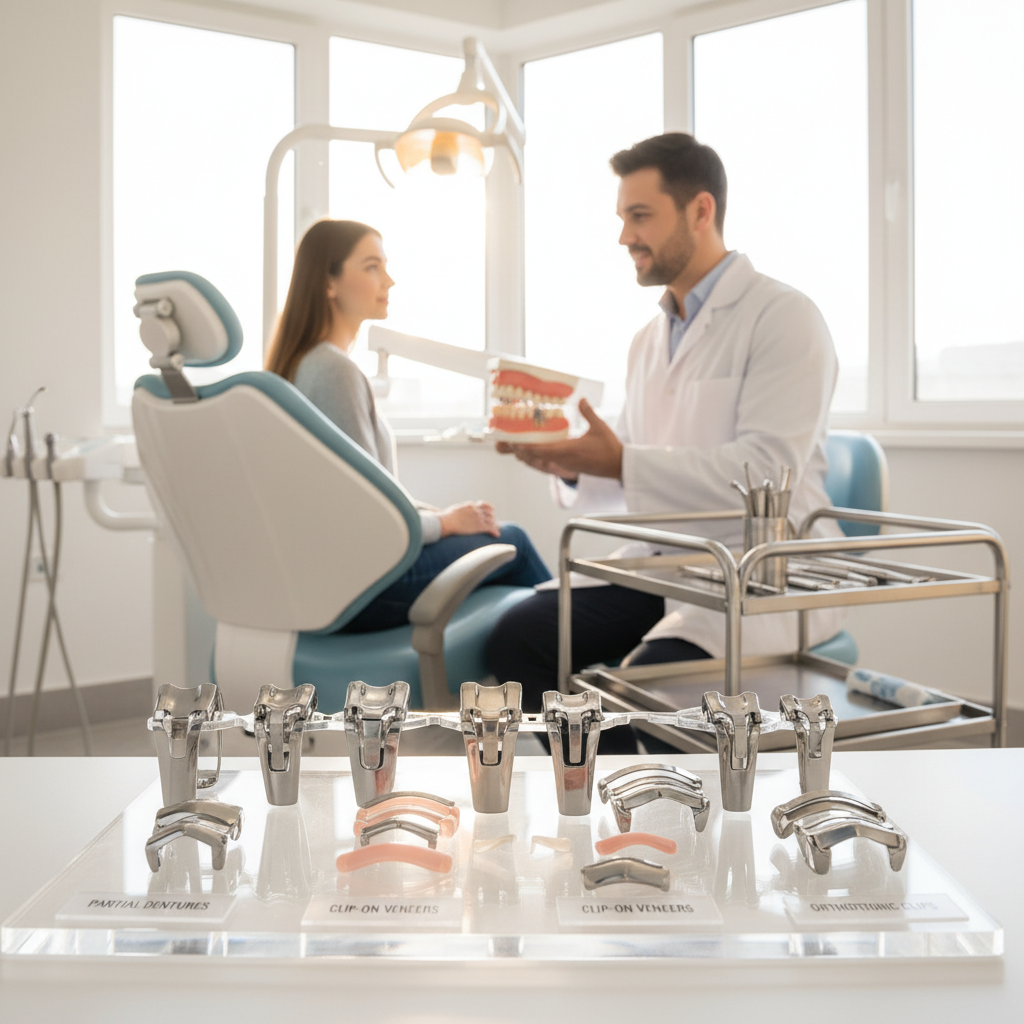
Among the different types, clip-on veneers provide a removable, cosmetic improvement by snapping over natural teeth to mask imperfections, while clip dentures use clips to enhance the stability and retention of removable partial dentures or implant-supported prostheses. More advanced systems, such as bar and clip attachments, utilize metal bars and specialized clips to secure complete dentures or implant-retained prostheses, significantly improving function and patient comfort. Additionally, orthodontic clips play a role in tooth movement and retention post-treatment, highlighting the versatility of clip designs in dental care.
Materials used in dental clips are carefully selected to balance strength, durability, aesthetics, and biocompatibility. Stainless steel, particularly the 316L alloy, remains the gold standard due to its corrosion resistance and mechanical properties, although flexible nylon and emerging materials like polyetheretherketone (PEEK) offer enhanced comfort and esthetics for certain applications. However, dental clips are not without limitations; patients may experience discomfort, durability issues, and, rarely, allergic reactions to metal components, necessitating professional adjustments and ongoing maintenance.
While dental clips provide an accessible and adaptable option for tooth replacement, they are generally considered temporary or adjunctive compared to fixed solutions like implants and bridges, which offer superior longevity and function but at higher costs and invasiveness. Advances in digital imaging, 3D printing, and material science continue to refine dental clip design and functionality, promising improved patient outcomes and expanding their role in modern prosthodontics.
Types of Dental Clips for Missing Teeth
Dental clips for missing teeth come in various forms, each designed to address specific dental needs, ranging from temporary cosmetic solutions to more permanent functional prostheses. These clips are typically used as attachments in removable dentures, partial dentures, or dental appliances, and can vary in material, design, and application depending on the intended use.
Clip-on Veneers (Snap-on Veneers)
Also known as dental clips or snap-on veneers, these are removable devices that clip onto the natural teeth to improve the appearance of the smile by covering imperfections such as discoloration, small gaps, and minor misalignment. They provide a non-invasive, temporary cosmetic solution without the need for surgery or extensive dental procedures, making them an affordable and convenient option for individuals seeking to mask common dental imperfections quickly. Typically made from flexible materials, these clips can blend with the natural teeth and gums to offer a discreet enhancement.
Clip Dentures (Snap-on Dentures)
Clip dentures, also referred to as clip-on dentures or snap-on dentures, are removable dental prostheses designed to replace missing teeth while retaining some of the natural teeth for support. These devices utilize specialized clips that attach to the remaining natural teeth or dental implants, providing improved retention and stability compared to traditional suction-based dentures. Implant-supported clip dentures combine the durability of implants with the removability of dentures, enhancing both function and comfort during activities such as speaking and eating. Materials commonly used for these clips include stainless steel and flexible polymers, selected to ensure strength and patient comfort.
Bar and Clip Attachments
Bar and clip attachments are a more specialized type of retention system for complete dentures or implant-supported prostheses. In this design, a metal bar is attached to periodontally sound abutments through metal copings, and clips engage this bar to retain the denture securely. Systems like the Hader bar and clip attachment provide economical and effective retention, significantly improving denture stability and masticatory efficiency. This method requires the presence of abutments in each quadrant and is widely used for both tooth- and implant-supported prostheses.
Orthodontic and Alignment Clips
In addition to prosthetic uses, some dental clips serve orthodontic purposes. These clips function as separators or as part of orthodontic braces systems, designed to facilitate minor tooth movements or retention after orthodontic treatment. Certain orthodontic clips replace elastic bands to hold wires, offering advantages such as faster treatment times, easier cleaning, and fewer dental visits. They are generally made of stainless steel or similar alloys, tailored for durability and patient convenience.
Materials and Designs
Dental clips are manufactured from a range of materials including stainless steel, cobalt-chromium alloys, nylon, and flexible polymers. Metal clips, often stainless steel, offer sturdy attachment but may be more visible, while flexible nylon clips provide a more comfortable and discreet option. Advanced designs also incorporate magnetic features to improve stability and ease of use. The choice of clip material and design depends on factors like durability, biocompatibility, aesthetic considerations, and patient preference.
Materials Used in Dental Clips
Dental clips, essential components used to secure replacement teeth such as dentures, partial dentures, and dental bridges, are typically made from a variety of materials chosen for their strength, biocompatibility, and comfort. Common materials include stainless steel, nylon, and flexible polymers, each offering distinct advantages depending on the application and patient needs.
Metal Materials
Stainless steel is one of the most prevalent materials used in dental clips due to its durability, corrosion resistance, and biocompatibility. Specifically, the 316L stainless steel alloy, containing chromium, nickel, and molybdenum, is favored for its enhanced resistance to corrosion within the harsh oral environment, which is characterized by moisture, fluctuating pH levels, and exposure to fluoride ions from dental products. This alloy forms a protective passive oxide film that acts as a barrier against corrosion, prolonging the lifespan of dental clips and minimizing adverse tissue reactions. However, despite its stability, corrosion can still occur due to the oral cavity’s electrolytic nature and the presence of fluoride, which can degrade protective layers and contribute to material breakdown.
Metal clips, especially those made of stainless steel, are typically hook-shaped and provide a very secure attachment to natural teeth. While highly effective in function, the metallic appearance can be a concern for some users seeking more discreet options.
Flexible Polymers and Nylon
In contrast to metal clips, flexible clips made from nylon or other thermoplastic polymers have gained popularity due to their improved esthetics and patient comfort. Nylon-like materials were introduced into dentistry in the mid-20th century, offering advantages such as flexibility, biocompatibility, and reduced visibility when compared to metal counterparts. These thermoplastic materials exhibit predictable long-term performance, resistance to thermal degradation, and improved impact and flexural strength, making them suitable for use in flexible denture bases and clips.
Flexible nylon clips tend to be softer and less rigid than metal clips, which enhances comfort but may compromise the level of retention slightly depending on the clinical situation. Their translucency or tooth-colored options provide an aesthetic benefit, particularly important for anterior prosthetic appliances.
Other Considerations
Besides stainless steel and nylon, other metal alloys and polymer composites are occasionally explored for dental clips, though stainless steel remains the gold standard due to its balance of strength, corrosion resistance, and cost-effectiveness. Emerging materials, such as polyetheretherketone (PEEK), are under investigation for use in dental applications owing to their favorable mechanical properties and biocompatibility, though their adoption in clip manufacturing is still limited.
Design and Functionality
Dental clips are typically made from flexible materials such as acrylic or metal, allowing them to blend seamlessly with natural teeth and gums. Their design is tailored to accommodate various dental conditions, providing a customized solution that fits individual needs and enhances comfort. Flexible clips adapt better to the mouth’s contours compared to traditional rigid dentures, reducing irritation and improving overall wearability. This adaptability allows users to eat, talk, and smile with confidence, making dental clips a popular choice for tooth replacement.
The primary function of dental clips is to retain prostheses securely in place, resisting forces of dislodgment along the path of placement. Retention is a critical factor in patient satisfaction, and the materials used for clips must be wear-resistant to maintain stable retention forces over time. Regular maintenance, including activation or replacement of bar clips, ensures continued effectiveness and comfort. Additionally, the aesthetic design of dental clips aims to mimic natural teeth closely, enhancing the wearer’s smile and reducing self-consciousness about dental appearance.
Beyond retention and aesthetics, dental clips can influence the alignment and pressure distribution within the oral cavity. However, improper fit or excessive tightness may exert pressure on adjacent teeth or jaws, potentially causing discomfort, pain, or shifting of natural teeth. Careful adjustment and professional oversight are necessary to minimize these risks and maintain oral health.
Following removal of dental clips, it is essential to use retainers to maintain teeth in their corrected positions. Retainers accommodate natural teeth movement over time and safeguard the long-term results of dental treatment, underscoring the importance of post-orthodontic care in conjunction with clip usage.
Emerging technologies, such as 3D printing and artificial intelligence, are poised to enhance the design and functionality of dental clips further. These innovations will allow for more precise customization and improved patient outcomes, continuing the evolution of dental prosthetic solutions.
Clinical Procedures for Fitting Dental Clips
The fitting of dental clips for missing teeth begins with a comprehensive consultation with a dental professional, such as a dentist or orthodontist. During this initial evaluation, the clinician assesses the condition of the patient’s remaining teeth, the bite, gum health, and bone density to determine the most suitable type of clip and treatment plan. This personalized approach ensures the dental clips will provide optimal retention, comfort, and function.
Once suitability is confirmed, the clinician discusses available clip options, including materials like stainless steel metal clips and flexible nylon clips. Metal clips are known for their sturdiness and strong attachment to natural teeth, while flexible nylon clips offer enhanced comfort and a less noticeable appearance. Patients are encouraged to inquire about the advantages, costs, and potential risks associated with each choice to make an informed decision.
For implant-supported clips, adequate bone density is essential to provide a stable foundation for dental implants, which serve as anchors for the clip system. The procedure involves precise digital measurements and imaging to custom design the clip and ensure proper fit and alignment. Some clinics may utilize advanced technologies for digital impressions and smile design to enhance accuracy and patient satisfaction.
After fabrication, the clips are fitted and adjusted in the patient’s mouth to ensure comfort, effective retention, and proper occlusion. It is also recommended to test the durability and wear resistance of the clip materials, such as PEEK clips reinforced with glass fiber, especially for long-term use. Patients are advised to maintain good oral hygiene and follow professional guidance for clip care and maintenance to prolong the lifespan and function of their dental prosthetics.
Consistent use of dental clips, particularly as retainers following orthodontic treatments, helps in preserving teeth alignment and supports gradual minor tooth movements when necessary. Patients should attend regular follow-up appointments to monitor clip performance and oral health, allowing timely adjustments to maintain optimal outcomes.
Benefits of Using Dental Clips for Missing Teeth
Dental clips for missing teeth, also known as dental clips or tooth clips, offer a practical and effective solution for individuals dealing with tooth loss. One of the primary advantages of dental clips is their affordability. Compared to dental implants and other advanced restorative procedures, clips are often a more budget-friendly option, making them accessible to a wider range of patients.
Comfort is another significant benefit. Modern dental clips are frequently made from flexible thermoplastic materials that can adjust slightly to fit individual mouth shapes, providing enhanced comfort compared to traditional rigid dentures. Many users report that these flexible clips reduce irritation and adapt better to the contours of the mouth, making them easier to wear throughout daily activities.
Aesthetic improvement is also a key advantage. Dental clips are designed to closely resemble natural teeth, blending seamlessly with the gums and remaining teeth. This natural appearance allows individuals to regain their confidence and smile without feeling self-conscious about missing teeth.
Functionally, dental clips help restore essential oral functions such as eating, speaking, and smiling. They are often customized as removable appliances that attach to the remaining natural teeth, providing stability and support that improve overall oral function. This makes them particularly useful as temporary solutions while waiting for permanent restorations like implants or bridges.
In addition to these benefits, dental clips offer adaptability. Their design accommodates various dental conditions and personal needs, allowing for tailored solutions that can be modified over time. This adaptability supports ongoing oral health and comfort as patients transition through different stages of treatment.
Limitations and Potential Complications
Dental clips, while offering an effective solution for replacing missing teeth, come with several limitations and potential complications that users should consider. One of the primary drawbacks is related to comfort. Although dental clips are designed to be comfortable, some individuals may initially experience irritation or discomfort in the mouth, which can require adjustments to alleviate over time. This discomfort is especially common when first adapting to the appliance.
Durability is another significant concern. Dental clips are often made from acrylic or other materials that are less robust compared to permanent dental prosthetics such as partial dentures or implants. As a result, they tend to be more fragile and prone to wear or breakage, making them unsuitable for long-term use. The material composition influences the rate of wear, and less wear-resistant materials can lead to a decline in retention and stability, ultimately affecting patient satisfaction. Replacement or repair of worn components may be necessary to maintain functionality.
Retention issues also contribute to prosthodontic complications. Approximately 33% of such complications are associated with the loss of retention, which is essential for preventing the dislodgment of the dental clip during normal activities like eating or speaking. The material of the attachment clips plays a crucial role in maintaining retention force over time; wear-resistant materials help ensure stable retention and improve overall prosthesis performance.
Allergic reactions represent another potential complication. Although rare, metal allergies have been documented in dental applications, particularly with metal alloys used in prosthetic devices such as porcelain-fused-to-metal crowns and partial dentures. Metals used in implants and orthodontic devices, including titanium alloys, can cause allergic responses in sensitive individuals, with symptoms ranging from local irritation to systemic health issues. Patch testing and specialized tests like the MELISA test may be required to detect titanium sensitization. Research into alternative materials like polyetheretherketone (PEEK) aims to reduce these risks by offering biocompatible options with comparable mechanical properties.
Lastly, while dental clips are generally easy to use and maintain, some patients may find the process of removing and replacing them for cleaning somewhat inconvenient. However, clips provide the added benefit of protecting the enamel surface of adjacent teeth by covering them and reducing the risk of injury from trauma or parafunctional habits such as clenching.
Comparison with Other Tooth Replacement Options
When considering tooth replacement solutions, dental clips stand out as a non-invasive and affordable option, especially for temporary use. Unlike dental bridges and implants, which are fixed and often more permanent, clips offer a removable alternative that can provide cosmetic improvement without extensive dental procedures. Dental clips, particularly modern designs made from flexible materials, enhance comfort and adapt better to individual mouths, often reducing irritation compared to traditional rigid prosthetics.
Dental implants are widely regarded as the most permanent and natural-feeling tooth replacement method. They involve surgically placing a titanium abutment into the jawbone, acting as an artificial root, and subsequently attaching a crown that mimics the appearance and function of a natural tooth. Implants typically offer the longest-lasting results, excellent aesthetics, and improved functionality but come at a higher cost and may require longer treatment times and suitable bone conditions. The success of implants depends significantly on the biocompatibility and surface properties of the implant materials, such as titanium, which promote osseointegration, ensuring stability and
Maintenance and Care
Proper maintenance and care are crucial for ensuring the longevity and effectiveness of dental clips used for missing teeth. Regular bar maintenance often involves activating or changing the clips, as retention—the ability of the prosthesis to resist dislodgment—is a key factor in patient satisfaction. Approximately 33% of prosthodontic complications are related to loss of retention, which can be influenced by the wear resistance of the clip materials. Therefore, it is important to use wear-resistant materials, such as PEEK reinforced with varying percentages of glass fiber, to improve durability and maintain stable retention forces over time.
Post-treatment dental hygiene plays an essential role in preserving the outcomes achieved with dental clips. A consistent oral hygiene routine, including daily brushing and flossing, helps prevent plaque buildup, which can lead to decay and gum disease. Additionally, regular dental check-ups enable early detection and management of any alignment shifts or oral health concerns. Patients are also advised to adhere to prescribed schedules for wearing retainers after the removal of dental clips to ensure that teeth remain in their corrected positions.
Ease of use is another important aspect of maintenance; dental clips are designed to be easily removable for cleaning, minimizing interference with daily activities such as eating and drinking. This user-friendly feature supports regular hygiene practices and helps maintain the appliance’s protective function, as clips can shield enamel surfaces from trauma or clenching-related damage.
Material improvements, particularly in stainless steel, have enhanced the performance and biocompatibility of dental clips. Advanced surface treatments like passivation and electropolishing have improved corrosion resistance and reduced ion leakage, promoting better tissue compatibility and antibacterial properties. These advancements contribute to the overall durability and safety of dental clips during use.
Despite these benefits, some users may experience initial discomfort or irritation, which typically diminishes over time but may require professional adjustments. Durability concerns remain relevant depending on the materials used, with some dental clips potentially wearing out or weakening, necessitating replacement or repair. Therefore, ongoing care, regular evaluation by dental professionals, and prompt attention to any issues are important to maintain the function and comfort of dental clips over time.
Evolution of Dental Clip Designs and Materials
The design and materials of dental clips have undergone significant evolution, paralleling broader advancements in dentistry over the centuries. Early dental instruments were rudimentary, but the 18th and 19th centuries marked a transformative era with the advent of modern dentistry. Innovations such as the introduction of the dental drill and anesthesia revolutionized dental procedures, enabling more precise and less painful treatments. The 19th century also witnessed the development of electric-powered handpieces, which further enhanced the efficiency of dental care.
In terms of dental clips specifically, early designs were primarily metal-based, utilizing stainless steel due to its strength and durability. These metal clips provided a secure hold on natural teeth and were instrumental in supporting dentures and bridges. However, the visibility and rigidity of metal clips sometimes posed aesthetic and comfort challenges for patients. To address these concerns, flexible nylon clips were introduced, offering a softer, less noticeable alternative that improved wearer comfort while maintaining adequate functionality.
Material science advancements have also influenced dental clip manufacturing. High-noble metal alloys, containing significant proportions of gold, platinum, and palladium, became popular in dental restorations due to their superior properties. For example, an alloy marked 750 standard contains approximately 75% gold along with platinum, silver, and copper, which together enhance hardness, elasticity, and precision in casting prosthetic parts such as clasps and frames for dentures. These high-quality materials contribute to the durability and biocompatibility of dental clips used in modern prosthodontics.
Looking ahead, emerging technologies like 3D printing, artificial intelligence, and robotics promise to further revolutionize dental clip design and production. These innovations enable the creation of highly customized and precise dental tools, improving patient outcomes and comfort. Overall, the evolution of dental clip designs and materials reflects a continuous effort to balance functionality, aesthetics, and patient well-being in dental care.
Recent Advances and Innovations
The field of dental prosthetics and restorative devices has witnessed significant advancements driven by innovations in materials and technology. Emerging technologies such as 3D printing, artificial intelligence, and robotics are poised to further revolutionize dental care by enabling the production of highly precise and customized dental tools, which enhance treatment quality and improve patient outcomes.
Historically, the introduction of electric-powered handpieces in the 19th century marked a major turning point by greatly improving the efficiency of dental procedures. The 20th century continued this trajectory with the development of high-speed drills in the 1950s, facilitating faster and more effective treatments. Additionally, advancements such as fluoride toothpaste, water fluoridation programs, composite resins, and dental implants contributed substantially to improved oral health and restoration techniques.
In terms of materials, dental alloys have evolved to meet the demands of precision and durability. Multicomponent alloys, including a 750 standard alloy composed of 75% gold, 9% platinum, 8% silver, and 7.8% copper, offer advantageous properties such as light yellow hue, increased hardness, elasticity, and minimal shrinkage during casting. These qualities are essential for producing high-precision prosthetic components like inlays, clasps, and denture frames. Moreover, studies have shown that base metal alloys such as Ni-Cr-Mo-Si compositions exhibit promising corrosion resistance in the varying pH environment of the oral cavity, potentially outperforming some noble alloys in longevity and performance.
Manufacturing techniques have also advanced, with standardized methods like ISO 22674-compliant fabrication of Co–Cr alloy specimens improving the mechanical reliability of dental components. Furthermore, welding processes have been refined to fuse metal parts with precision, enhancing the strength and integration of dental prosthetics.
Finally, patient satisfaction has been significantly impacted by innovations such as bar and clip attachments, which enhance the retention and stability of dentures, thereby improving the overall experience for denture wearers. The continued integration of advanced materials and technologies promises ongoing improvements in dental prosthetics and restorative care.
The content is provided by Blake Sterling, Front Signals