Highlights:
– President Trump's meeting with major U.S. retailers Walmart, Target, and Home Depot shed light on the challenges faced by the retail sector due to high tariffs, emphasizing the delicate balance between trade policies, economic stability, and consumer affordability.
– The dialogue between the White House and retail executives showcased a shared commitment to delivering value to American consumers despite concerns over profit margins, supply chain disruptions, and rising prices, highlighting the importance of balancing industry needs with broader policy goals.
– The meeting served as a crucial moment of engagement amidst trade tensions, signaling the administration's recognition of the impact of tariffs on businesses and consumers, while emphasizing the complexity of managing trade relationships during a time of economic uncertainty.
Summary
In April 2025, President Donald Trump hosted a private meeting at the White House with the chief executives of major U.S. retailers Walmart, Target, and Home Depot to discuss the impact of the administration’s sweeping tariff policies on the retail sector and American consumers. These tariffs, notably high on Chinese imports—reaching up to 145%—were part of a broader strategy aimed at addressing perceived unfair trade practices and revitalizing domestic manufacturing. However, they raised significant concerns among retailers heavily reliant on imports, as increased costs threatened to squeeze profit margins and raise prices amid persistent inflation and economic uncertainty.
The meeting, conducted during a 90-day pause on heightened tariffs for most countries except China, was an uncommon direct engagement between the White House and leading retail executives. CEOs of Walmart, Target, and Home Depot described the discussions as “productive” and “constructive,” emphasizing their shared commitment to delivering value to American consumers despite the challenges posed by the tariffs. The talks underscored the tension between the administration’s aggressive trade agenda and the retail sector’s need to manage supply chain disruptions and cost pressures.
Industry representatives, including the National Retail Federation, highlighted the broader economic risks tariffs pose, warning of increased uncertainty and higher consumer prices for everyday goods. While the meeting did not yield immediate policy changes, it reflected the administration’s willingness to engage with business leaders amid growing market volatility and concerns over the tariffs’ long-term effects. Retailers balanced cautious diplomacy with the need to advocate for more favorable trade conditions, illustrating the complex relationship between corporate America and the Trump administration during this period.
Overall, the meeting was significant as a rare moment of dialogue amid escalating trade tensions and underscored the interconnected challenges of trade policy, economic stability, and consumer affordability in the United States. It highlighted the delicate balance policymakers and industry leaders faced in navigating the impact of tariffs on an import-dependent retail sector while pursuing broader economic and geopolitical goals.
Background
In early 2025, the Trump administration announced sweeping tariffs on dozens of countries, with particularly high levies—reaching up to 145%—targeted at imports from China, the world’s second-largest economy. These tariffs were part of a broader strategy to address what the administration described as unfair trade practices that had made the United States heavily dependent on foreign supply chains, eroded the domestic industrial base, and hurt American workers. While a 90-day pause was granted for most countries, tariffs on Chinese goods remained in effect, generating considerable concern among U.S. businesses and consumers alike.
Major American retailers such as Walmart, Target, Home Depot, and Lowe’s rely heavily on imports from China, which account for over half of their imported goods. The imposition of steep tariffs threatened to raise costs significantly, straining profit margins and increasing prices for consumers already burdened by prolonged inflation and economic uncertainty. Industry analysts and business leaders expressed fears that the tariffs would exacerbate an already challenging economic environment characterized by high consumer anxiety and cost pressures.
The tariffs also triggered volatility in U.S. financial markets, contributing to a selloff in assets and a decline in the value of Treasury notes and the U.S. dollar. Business executives made urgent appeals to the White House, highlighting the destabilizing impact of the tariffs on supply chains and the broader economy. In response, President Trump convened a meeting with the CEOs of major retailers to discuss the trade measures and seek a collaborative path forward.
Meeting Overview
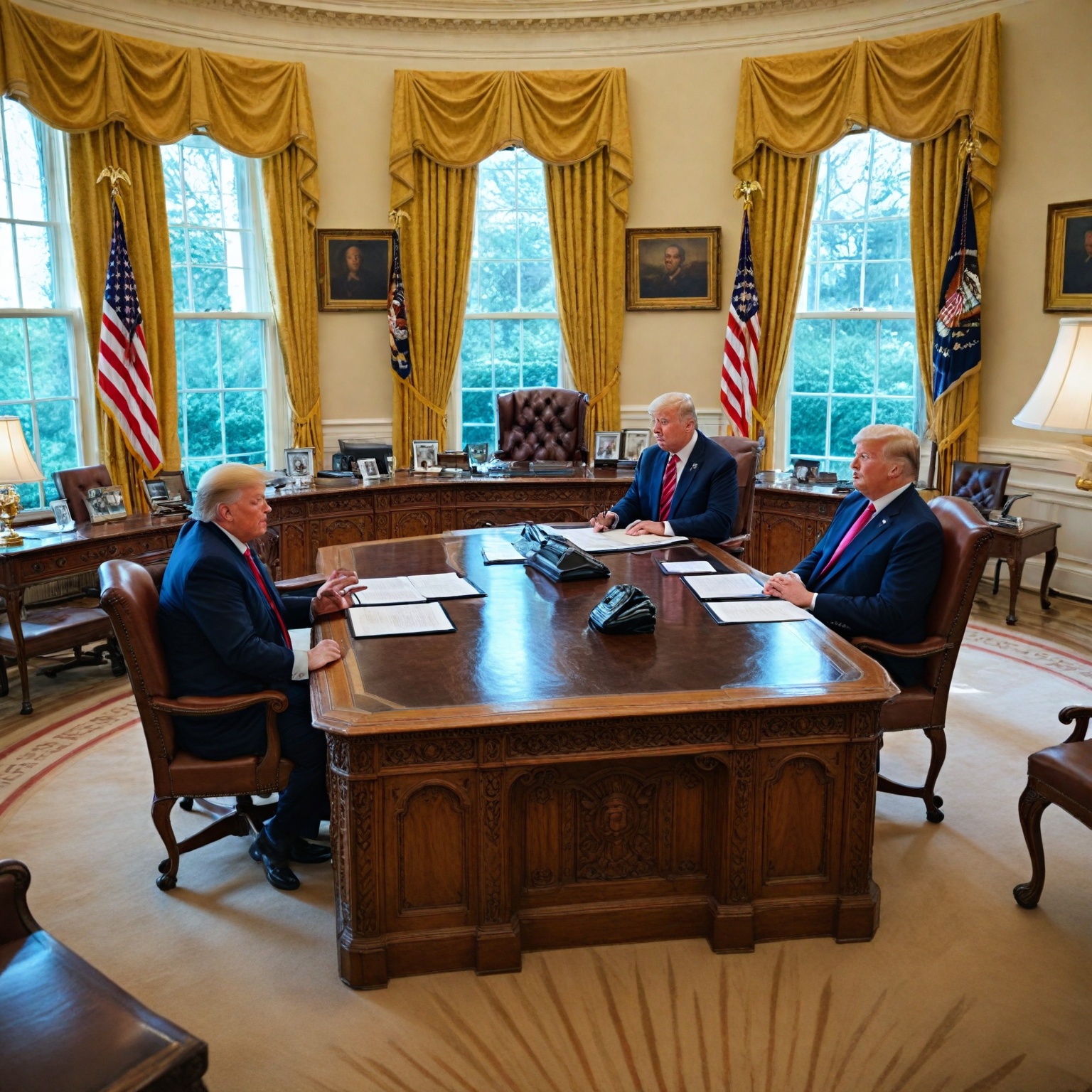
On April 2025, President Donald Trump hosted a private meeting at the White House with the chief executives of three of the nation’s largest retailers: Walmart CEO Doug McMillon, Target CEO Brian Cornell, and Home Depot CEO Ted Decker. The discussion focused on the impact of Trump’s sweeping tariff policies on the retail sector, particularly how the tariffs could affect their import-heavy business models and consumer prices.
The meeting, which was not included in the president’s public schedule, took place amid a 90-day pause on the recently announced higher tariffs on most trading partners, excluding China, which faced the steepest levies. This pause was intended to provide a window for negotiations with foreign leaders and business executives aimed at improving trade terms. Despite the pause, there was significant market anxiety, as the tariffs posed additional challenges to retailers already navigating an economically difficult environment marked by high inflation and consumer demand for low prices.
Following the meeting, all three companies released nearly identical statements describing the discussions as “productive,” “informative,” and “constructive.” Target emphasized their commitment to delivering value to American consumers, while Walmart expressed appreciation for the opportunity to share insights with the administration. Home Depot conveyed optimism about continuing the dialogue with the White House. A representative from Lowe’s was initially reported to attend but ultimately did not participate.
Industry representatives, including David French, executive vice president of government relations for the National Retail Federation, highlighted the broader concerns that escalating tariffs create increased uncertainty and anxiety for both businesses and consumers. The retailer group has also estimated that tariffs could drive up consumer costs for everyday items such as sneakers, toasters, and mattresses. The meeting underscored the tension between the administration’s trade policies and the retail sector’s focus on maintaining low prices for American consumers while managing the risks to profit margins.
Discussion Topics
The meeting between President Donald Trump and the CEOs of major U.S. retailers such as Walmart, Target, and Home Depot centered primarily on the challenges posed by tariffs and their impact on the retail sector and American consumers. A significant focus was placed on the disruptions caused by the administration’s sweeping tariffs, particularly those affecting goods imported from China, which account for more than half of Walmart’s and Target’s imports. The retailers expressed concerns about how these tariffs increase costs, leading to higher prices for consumers and potentially forcing companies to offer lower-quality merchandise.
The CEOs and President Trump discussed the effects of tariffs on profit margins, with analysts highlighting substantial hits to retailers’ financial performance, evidenced by significant declines in stock values, especially for Target. Walmart, as the largest grocer with a majority of its products made, grown, or assembled domestically, was noted to be in a relatively stronger position compared to its competitors, though still affected by the tariffs. The retailers emphasized their commitment to delivering value to American consumers despite the economic pressures.
Tariffs on a broad range of products were also addressed, including those on steel, aluminum, autos, pharmaceuticals, semiconductors, and other essential materials subject to Section 232 tariffs or potential future tariff actions. The National Retail Federation (NRF), represented in the discussions, highlighted the anxiety and uncertainty tariffs create for businesses and consumers alike, warning about the broader economic risks posed by tariff escalations.
The meeting took place amid a 90-day pause on some higher tariffs, with a temporary 10% duty imposed on certain countries that had not retaliated against the U.S., allowing time for negotiation and dialogue on trade terms. The CEOs expressed a willingness to continue constructive conversations with the White House to navigate the complexities of trade policy and its economic implications. Industry representatives acknowledged the administration’s prioritization of strengthening the U.S. economy but underscored the need to manage cost and supply chain challenges effectively as tariffs take effect.
Meeting Outcomes
The meeting between President Trump and the CEOs of Walmart, Target, and Home Depot was described by all parties as productive and constructive. Representatives from the three retail giants expressed appreciation for the opportunity to share their insights on trade policies directly with the President and his team. Walmart’s spokesperson emphasized the value of the dialogue, while Target stated that the discussion focused on finding a path forward on trade that would continue to deliver value to American consumers. Home Depot echoed these sentiments, highlighting the informative nature of the meeting and the desire to maintain ongoing communication with the administration.
President Trump characterized the meeting positively, noting that it “went very well” and that it was “an honor to have them” in the Oval Office. The gathering was not publicly scheduled in advance, underscoring its confidential and strategic nature. For the retail sector, the meeting came at a time when tariffs posed an additional challenge amid a tough economic environment marked by inflation and consumers’ heightened sensitivity to prices.
While tariff reductions were a key point of concern, business leaders approached the topic with cautious diplomacy. Goldman Sachs CEO David Solomon, who also engaged with Trump during this period, acknowledged that companies consistently seek lower tariffs but praised the President for his engagement with the business community, contrasting it with the approach of the succeeding administration. This careful rhetoric reflected the broader corporate strategy to balance support for the administration’s economic promises, such as tax cuts and deregulation, with the practical need to address the potential negative impacts of tariffs and market volatility.
The CEOs’ collective statements indicated a commitment to continuing dialogue with the White House to mitigate trade tensions and support the interests of American consumers amid ongoing tariff negotiations.
Significance
The meeting hosted by President Trump with the CEOs of Walmart, Target, Home Depot, and other major retailers was significant for several reasons. It took place amid growing concerns over the economic impact of Trump’s tariff policies, which have introduced uncertainty and increased costs for American businesses and consumers. Retailers expressed apprehension about how tariffs on imported goods, particularly those from China, would affect their profit margins and pricing strategies, especially as consumers were already facing inflationary pressures.
The discussion represented a rare moment of direct dialogue between the White House and leading retail executives during a period marked by heightened trade tensions and market volatility. Despite the challenges posed by tariffs, the companies maintained a tone of cautious optimism and constructive engagement, reflecting a broader trend of corporate America’s careful diplomacy with the administration. This approach contrasts with earlier periods when some CEOs publicly opposed Trump’s policies or actions.
For major retailers like Walmart and Target, which rely heavily on imports (with more than half of their goods sourced from China), the tariffs threatened to disrupt supply chains and raise consumer prices. Walmart’s position as a large grocer with a significant portion of domestic goods provided some insulation, but the overall retail sector faced increased uncertainty. The meeting occurred during a 90-day pause on tariffs against most trading partners except China, a critical window for negotiating potential de-escalation in trade conflicts.
Furthermore, the meeting underscored the intertwined nature of trade policy and the broader economic landscape, as market reactions to tariff announcements were immediate and pronounced. While some retail stocks briefly rallied on news of the meeting, concerns remained about the long-term effects of tariffs on the sector and the U.S. economy. The engagement signaled the administration’s willingness to listen to industry concerns, even as it pursued aggressive trade measures under the “reciprocal” tariff plan.
The content is provided by Blake Sterling, Scopewires