Highlights:
– Bessent highlighted the need for substantial reforms within the IMF and World Bank to address governance imbalances, improve accountability, and secure future U.S. funding. This emphasizes the importance of ongoing progress in implementing necessary changes within these institutions.
– By critiquing China's economic status and defending tariffs as steps to rectify global trade imbalances, Bessent showcased the Trump administration's stance on addressing key economic challenges and fostering balance in global trade relationships.
– Bessent's speech emphasized the importance of refocusing on the core mandates of the IMF and World Bank amidst broader controversies, demonstrating a commitment to maintaining these institutions' effectiveness in promoting global economic stability and addressing geopolitical challenges.
Summary
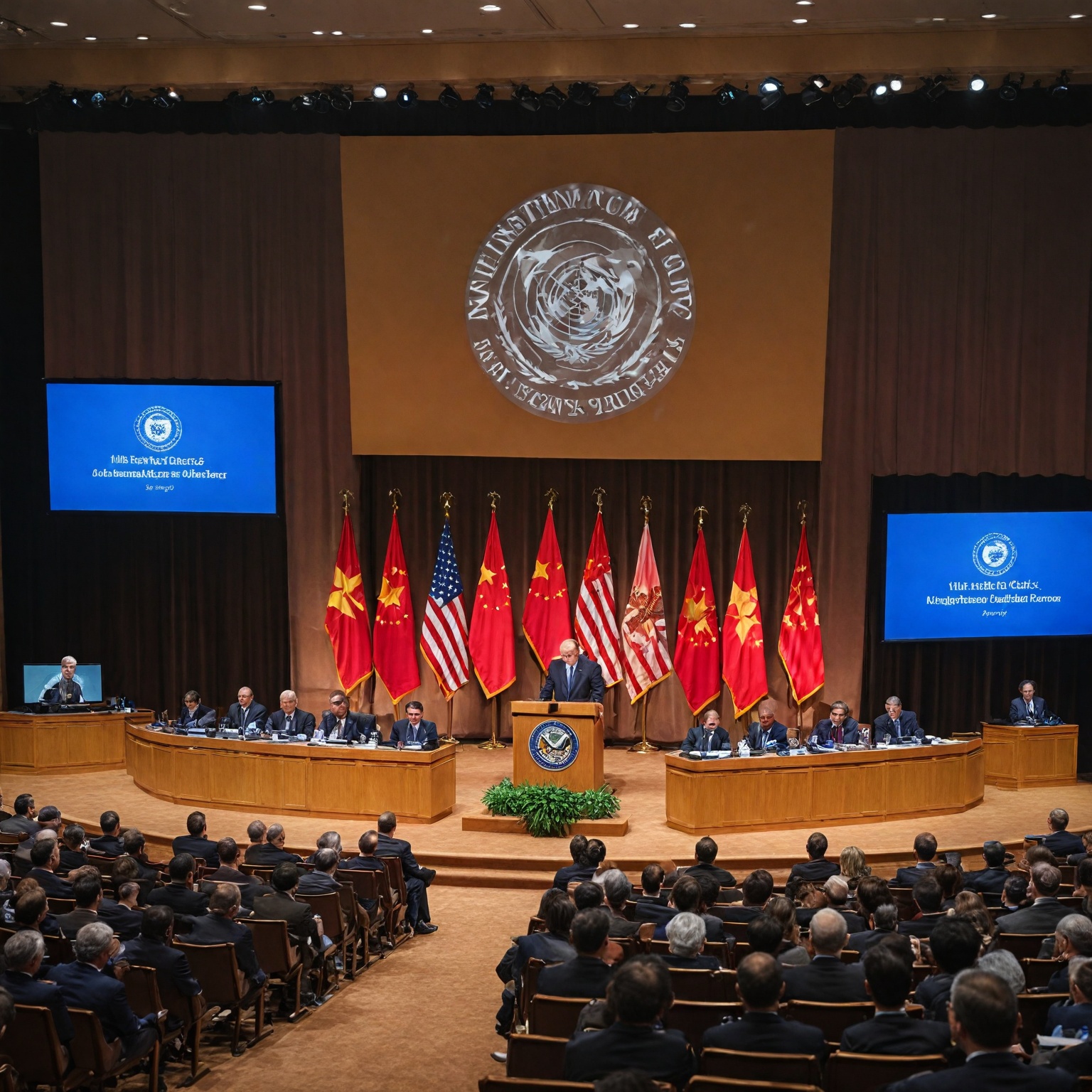
Treasury Secretary Scott Bessent’s April 2025 keynote address at the Institute of International Finance Global Outlook Forum, held during the IMF and World Bank’s Spring Meetings in Washington, D.C., marked a significant moment in U.S. engagement with the Bretton Woods institutions. In his speech, Bessent underscored the vital roles of the International Monetary Fund (IMF) and World Bank in maintaining global economic stability and development while advocating for substantial reforms to address governance imbalances and improve institutional accountability. He emphasized that future U.S. funding would depend on these organizations demonstrating measurable progress in implementing requested reforms.
A central theme of Bessent’s remarks was a pointed critique of China’s rapid economic rise and its continued classification as a “developing country,” which he called “absurd” given China’s status as the world’s second-largest economy. He urged China to transition from export-driven growth toward stronger domestic demand to help rebalance the global economy and criticized the IMF for a perceived lack of firmness in addressing Beijing’s trade and economic policies. Bessent defended the Trump administration’s tariffs as necessary steps to rectify global trade imbalances and expressed cautious optimism about ongoing negotiations with China, describing them as a difficult but essential “slog.”
Bessent’s address also highlighted broader controversies surrounding the IMF and World Bank, including concerns over political power imbalances favoring wealthier nations and the institutions’ expanding focus on social and environmental issues, which he characterized as “mission creep.” He called for a refocus on the organizations’ core mandates and praised initiatives such as the World Bank’s recent move to lift restrictions on financing nuclear energy, signaling a pragmatic approach to global energy challenges. Despite criticism from some U.S. political factions advocating disengagement, Bessent reaffirmed the administration’s commitment to active leadership within these institutions to promote a more balanced and sustainable global financial system.
The speech sparked varied reactions, reflecting the complexities of U.S.-China economic tensions and the evolving role of international financial institutions amid shifting geopolitical dynamics. Bessent’s remarks underscored the Trump administration’s strategy to leverage U.S. influence in shaping global economic governance while addressing contentious issues such as trade disputes, regulatory reform, and institutional accountability. His call for reform and renewed U.S. engagement aimed to ensure that the IMF and World Bank remain relevant and effective in fostering global economic stability in an era marked by rising geopolitical challenges.
Background
In April 2025, U.S. Treasury Secretary Scott Bessent delivered a keynote address at the Institute of International Finance (IIF) Global Outlook Forum in Washington, D.C., coinciding with the IMF and World Bank’s annual Spring Meetings. During his speech, Bessent emphasized the critical roles played by the International Monetary Fund (IMF) and the World Bank in maintaining global financial stability and fostering economic development worldwide. He underscored the Trump administration’s commitment to these Bretton Woods institutions, rejecting calls from some political allies to retreat from them, instead advocating for stronger U.S. leadership and comprehensive institutional reforms aimed at restoring balance to the global financial system.
Bessent highlighted the need for the IMF and World Bank to remain accountable and demonstrate tangible progress in fulfilling their missions to serve stakeholders effectively. A significant focus of his remarks centered on the challenges posed by China’s rapid economic rise, which he characterized as having outpaced its “developing country” status and called for Beijing to shift from export overcapacity toward fostering domestic demand to aid global economic rebalancing. He described ongoing trade tensions between the United States and China as potentially detrimental to global output, while acknowledging that negotiations with China would likely be protracted, though necessary given the unsustainability of the current status quo. Through this address, Bessent sought to articulate a vision of renewed U.S. engagement and leadership within the global economic architecture, aiming to build safer, stronger, and more prosperous economies worldwide.
Speech Overview
In his keynote address at the Institute of International Finance Global Outlook Forum held during the 2025 Spring Meetings of the IMF and World Bank in Washington, D.C., Treasury Secretary Scott Bessent emphasized the critical role of these institutions in the global economic system while advocating for substantial reforms. Bessent linked future U.S. funding approvals for the IMF and World Bank to their commitment to implementing requested reforms, underscoring the administration’s demand for accountability and measurable progress from the management and staff of these organizations.
A central theme of Bessent’s speech was the pressing need to address China’s economic policies, which he characterized as destabilizing to international trade. He criticized the IMF for its insufficient response to Beijing’s practices, suggesting the institution had been “whistling past the graveyard” and needed to adopt a firmer stance. Bessent dismissed the notion of treating China as a “developing country,” highlighting its rapid economic rise and the absurdity of such classification given its global importance. He argued that China must “graduate up” to reflect its true economic status and conform to the standards expected of a major global economy.
On trade tensions, Bessent defended the Trump administration’s tariffs, framing them as necessary measures to rebalance global trade and bring jobs back to the U.S.. He expressed optimism about a near-term de-escalation in the ongoing trade war with China, describing negotiations as a challenging but necessary “slog” given that neither side considers the current status quo sustainable. Bessent also noted the positive international response to the U.S.’s trade stance, citing engagement from over 100 countries willing to support efforts to rebalance trade.
Criticism and Reform Proposals for the World Bank and IMF
Treasury Secretary Scott Bessent highlighted significant criticisms of the World Bank and International Monetary Fund (IMF), focusing on the structural imbalances in their governance and the need for substantial reforms. A central issue identified is the political power imbalance, where voting shares are primarily determined by the size and openness of economies. This framework results in poorer countries—often the primary recipients of loans—being underrepresented in decision-making processes.
Bessent emphasized the necessity for these Bretton Woods institutions to return to their original mandates of ensuring a balanced global economic system. He criticized the current global trading system, particularly the United States’ role in absorbing excess production from manufacturing powers such as China, as unsustainable. He called on the IMF to adopt a firmer stance against China’s economic policies, which he described as globally distortive and opaque, warning that the institution had been “whistling past the graveyard” by failing to address these issues adequately.
In terms of reform, Bessent outlined a vision for the World Bank to focus more intensely on increasing global energy access. He praised the bank’s recent decision to lift long-standing prohibitions on supporting nuclear energy, with plans for World Bank President Ajay Banga to formally present a new energy strategy to the bank’s board. Furthermore, Bessent criticized the classification of China as a developing country by the World Bank, labeling such treatment as “absurd” and advocating for a reassessment.
Despite calls from some political allies to reduce U.S. involvement, Bessent affirmed that the administration would maintain and even expand its leadership role within the IMF and World Bank. He underscored the importance of pushing for “major institutional changes” to restore equilibrium to the global financial system and reiterated that U.S. funding would be contingent on the institutions delivering requested reforms.
Bessent also spoke to broader regulatory reforms, including adjustments to anti-money laundering and counter-terrorism financing frameworks, emphasizing a need to prioritize national security and material financial risks while easing burdens on lower-risk areas. He advocated for refocusing bank supervision to concentrate on significant financial risks and enhance internal controls, such as third-party risk management and information security.
Implications for the Global Economy
Treasury Secretary Scott Bessent’s remarks highlight significant challenges and opportunities within the global economic system, particularly regarding the roles of China, the International Monetary Fund (IMF), and the World Bank. Bessent emphasized the need for a more sustainable and balanced international economic system that serves not only the interests of the United States but also those of other participating countries. Central to this vision is the rebalancing of China’s economy away from export overcapacity toward greater reliance on domestic consumption, a shift that would alleviate global trade tensions and contribute to a healthier international market environment.
Bessent critiqued the continued classification of China as a “developing country,” calling it “absurd” given China’s rapid economic rise and its status as the world’s second-largest economy. This misclassification, he suggested, has allowed China to benefit disproportionately from global institutions while maintaining economic practices that destabilize international commerce. The Trump administration’s tariffs and trade policies, defended by Bessent, are positioned as necessary measures to pressure China into adopting reforms aligned with fair and stable global trade.
The Secretary also underscored the importance of IMF lending as a critical mechanism for addressing market failures. He described the IMF’s role in providing resources to countries facing balance of payments difficulties, conditional on their implementation of economic reforms aimed at fostering growth. Moreover, Bessent advocated for reforms within the IMF and World Bank to better reflect current global realities and ensure these institutions remain effective in supporting economic stability and development.
While acknowledging the difficulties ahead, Bessent expressed cautious optimism about a potential de-escalation of the US-China trade conflict in the near future, suggesting ongoing negotiations could lead to substantive progress. He also indicated that financial regulatory reforms, including enhanced focus on material financial risks such as third-party risk management and information security, are essential for strengthening the resilience of the global financial system.
Reactions and Responses
Treasury Secretary Scott Bessent’s remarks on China, the World Bank, and the International Monetary Fund (IMF) elicited a range of reactions that highlighted the complexities of the current global economic landscape. Bessent characterized China’s escalation in the trade conflict as a “big mistake,” asserting that the country was playing with a “losing hand” amid rising U.S. tariffs intended to bring trading partners to negotiations and restore American jobs. He also described negotiations with China as likely to be “a slog,” while emphasizing that neither side finds the status quo sustainable.
Bessent’s critique extended to international financial institutions, where he urged the IMF and World Bank to realign their priorities with the core mission of addressing macroeconomic imbalances rather than engaging heavily in areas such as climate change, gender, and social issues, which he described as “mission creep”. He insisted that these institutions must be held accountable for demonstrating real progress in their mandates and specifically called out surplus countries for insufficient critique by the IMF. Despite his criticisms, Bessent acknowledged the critical roles the IMF and World Bank serve in the international system and indicated openness to constructive dialogue with their leadership.
The context of Bessent’s comments was the heightened global tensions surrounding the Trump administration’s trade policies, which the IMF warned could impede global economic growth and increase the risk of a financial crisis. Bessent’s statements, delivered at the Institute of International Finance in Washington, D.C., suggested a strong push from the U.S. Treasury to influence these international institutions to better align with U.S. interests and the broader “America First” economic agenda. This stance reflects the administration’s broader intent to double down on engagement with the international economic system, including at the IMF and World Bank, to promote a more sustainable and balanced global economy.
Legacy and Significance
Treasury Secretary Scott Bessent’s remarks have underscored a pivotal moment in the evolution of the Bretton Woods institutions, highlighting both their historical roles and the pressing need for reform. He traced the transformation of these institutions from architects of the fixed exchange rate regime under the Bretton Woods System to promoters of a more flexible exchange rate framework following the system’s collapse in 1973, reflecting their adaptive yet complex mandate as defined by their Articles of Agreement.
Bessent’s speech emphasized the necessity for the International Monetary Fund (IMF) and World Bank to enact key reforms that align their operations more closely with the interests of their stakeholders, including the United States, rather than allowing the institutions themselves to dictate terms. He framed this reform as essential for restoring balance to global finance and building safer, stronger, and more prosperous economies worldwide, advocating for clear leadership from these global financial entities.
His call for reform was notably contextualized by the current geopolitical and economic challenges, particularly the contentious role of China within the global financial system. Bessent criticized the IMF for what he described as “whistling past the graveyard,” urging a firmer stance against Beijing’s economic practices, which he suggested threaten the stability and fairness of international economic governance. This critique aligns with broader tensions stemming from divergent views on climate change, international development, and economic equity between the United States and other shareholders in these institutions.
Furthermore, Bessent linked the willingness of the United States Congress to approve funding for these global financial bodies to tangible progress on requested reforms, indicating that financial support would be contingent on the institutions’ return to their foundational principles. His remarks reflect a significant moment of diplomatic pressure aimed at ensuring the Bretton Woods institutions remain relevant and effective amidst shifting global dynamics.
The content is provided by Harper Eastwood, Scopewires