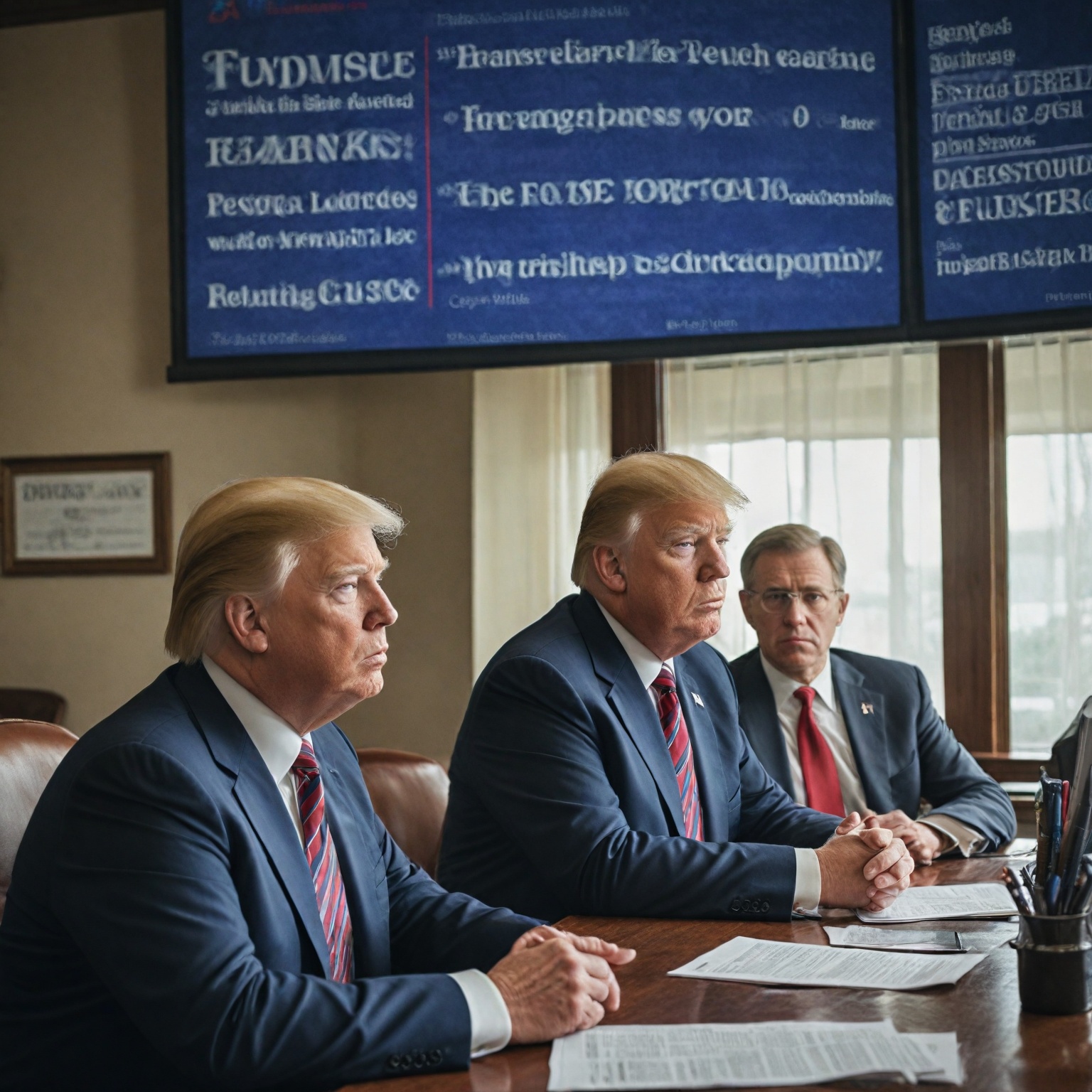
Highlights:
– Surveys by respected organizations like Pew Research Center and Fox News indicate a significant decrease in public trust in former President Trump's economic decision-making, reflecting growing skepticism due to issues like inflation and trade tensions.
– Trump's economic strategy, including tariff hikes and tax cuts, initially boosted domestic production but has led to rising inflation expectations and consumer unease, contributing to a decline in consumer sentiment and widening political divides over economic policies.
– Concerns over trade policies, inflation, and budget management have fueled disapproval of Trump's economic handling, indicating a shift in public perception regarding the effectiveness of his economic initiatives and suggesting potential challenges for future policymakers.
Summary
Public confidence in former President Donald Trump’s handling of the U.S. economy has significantly declined according to multiple polls conducted in early 2024. Once regarded as a strength during his political campaigns, Trump’s economic stewardship has faced growing skepticism amid rising inflation, trade tensions, and concerns over the impact of his tariff policies. Surveys from Pew Research Center and Fox News reveal that less than half of Americans now trust his economic decision-making, marking a notable drop from previous years and highlighting widespread apprehension about the nation’s economic future under his leadership.
Trump’s economic platform centers on four main pillars: implementing higher tariffs and tough measures against China, extending the 2017 tax cuts, deregulation to boost government efficiency, and stricter immigration enforcement. While tariffs initially appeared to stimulate domestic production with limited price increases, they have also been blamed for increasing inflation expectations and consumer uncertainty. These policy effects, combined with ongoing geopolitical tensions and cautious Federal Reserve actions, have contributed to a deteriorating consumer sentiment and amplified partisan divides in economic perceptions.
Public disapproval of Trump’s economic management is fueled by concerns over trade policies, persistent trade deficits, and the administration’s handling of inflation and the federal budget. Many Americans perceive tariffs as harmful rather than beneficial, and skepticism extends to key cabinet figures responsible for economic strategy. Despite these economic worries, partisan loyalty remains strong within Trump’s base, underscoring a deeply polarized electorate that may influence upcoming political contests.
The decline in confidence in Trump’s economic leadership is situated within a broader context of political polarization, media fragmentation, and economic uncertainty. Analysts warn that the combination of policy volatility and eroding public trust may undermine long-term economic stability and complicate future policymaking. At the same time, low confidence in Democratic economic leaders suggests persistent challenges across the political spectrum in addressing the nation’s economic concerns.
Background
Economic confidence has historically been one of Donald Trump’s stronger attributes as a political figure. During both his 2020 and 2024 presidential campaigns, many Americans expressed greater confidence in Trump’s ability to manage the economy compared to his opponents, Joe Biden and Kamala Harris. Early polling data showed perceptions of Trump’s capability to bring needed change and effectively manage government rising significantly from the latter half of his first term. However, specific details regarding Trump’s proposed economic policies remain limited, which complicates thorough analysis of their potential impacts.
Trump’s economic platform broadly centers on four pillars: imposing higher tariffs and adopting tough anti-China measures; extending the 2017 tax cuts; deregulating and increasing government efficiency; and enforcing stricter immigration controls including deportations. While tariffs have been a notable and contentious part of this agenda, recent studies have indicated that tariffs implemented during Trump’s first term reduced imports from China and stimulated domestic production with minimal price effects. Despite these findings, the U.S. continues to face a persistent trade deficit and challenges stemming from global trade dynamics and unfair practices by some international competitors.
The economic environment during Trump’s presidency was marked by mixed signals. On one hand, Republican optimism early in his second term boosted economic sentiment. On the other, consumer confidence sharply deteriorated in early 2024 amid rising inflation expectations and concerns about the impact of tariffs and federal government layoffs. These factors contributed to increasing anxiety among Americans regarding the nation’s economic future.
Public opinion polls in 2024 have reflected this growing skepticism. A Pew Research Center survey showed a notable decline in confidence in Trump’s economic decision-making, dropping 14 points from late 2023 to less than half of U.S. adults expressing trust in his abilities. Similarly, a Fox News poll found that a majority of respondents disapproved of Trump’s handling of the economy, with widespread concerns about a potential recession looming over the year. Negative news coverage about the economy has also increased among voters across party lines, intensifying perceptions of economic instability.
Amid this backdrop, the economic policy proposals and rhetoric from Trump’s campaign have faced scrutiny for their potential long-term effects. Some analysts warn that certain measures could undermine the quality of U.S. policymaking and damage international confidence in the American economy. Furthermore, geopolitical tensions and global conflicts have contributed to economic uncertainty, driving investors toward safer assets such as gold, a trend that has coincided with heightened critiques of Federal Reserve leadership from Trump.
Polling Data
Recent polling data reveals a significant decline in public confidence regarding former President Donald Trump’s handling of the U.S. economy during his second term. A series of surveys conducted in early 2024 indicate that while Trump maintains strong support among his base, broader public opinion is increasingly pessimistic about economic prospects under his leadership.
A poll conducted in April 2024 showed that 49% of the public believed the economy would worsen over the next year, marking the most negative outlook since 2023. This sentiment was echoed in a CNBC All-America Economic Survey and a Pew Research Center poll released around the same time, which found only 43% and 45% of Americans, respectively, approved of Trump’s economic decision-making—both figures representing substantial declines from prior months. For instance, confidence in Trump’s economic decisions dropped 14 points from 59% in November 2023 to 45% by early 2024.
The increasing negativity in economic news perception also differed across voter groups. Among Trump’s 2024 voters, the share reporting mostly negative economic news rose from 33% in early February to 43% in April. Kamala Harris voters, on the other hand, experienced an even sharper rise, from 53% to 82% over the same period. This disparity reflects broader partisan divides in economic outlook.
Moreover, economic concerns continue to dominate the public agenda, with 42% of Americans identifying the economy as the top issue facing the country—more than double the share prioritizing democracy, government function, immigration, or healthcare. However, mixed views about Trump’s leadership persist, as some respondents expressed approval of his policies on certain issues, like immigration, while disapproving of his economic management.
The polling methodologies generally employed stratified random samples designed to represent the U.S. adult population across demographics such as gender, age, race, education, and voter registration status. Surveys were conducted both online and via telephone, with weighting applied to ensure representativeness in terms of partisan affiliation and previous voting behavior.
Analysts interpret these polling trends as indicative of a deeply divided electorate. While Trump’s core supporters remain loyal, there is widespread skepticism about the economic trajectory under his administration. This division may play a critical role in shaping the political landscape leading into future elections, with some experts highlighting the importance of whether economic dissatisfaction among independents will grow or if the Republican base’s cohesion will persist.
Factors Contributing to Decline in Confidence
Public confidence in President Donald Trump’s handling of the U.S. economy has seen a notable decline, influenced by a combination of economic conditions, policy decisions, and partisan perceptions. Several key factors have contributed to this erosion of trust among Americans.
One significant factor is growing consumer anxiety fueled by tariff policies implemented and proposed by the Trump administration. Tariffs on imports, particularly those targeting China, have been widely criticized by consumers and businesses alike for increasing uncertainty and raising inflation expectations. Surveys indicate that Americans disapprove of across-the-board tariffs by a margin of 49 to 35, with many believing these tariffs harm American workers, contribute to inflation, and negatively affect the overall economy. Economists have observed that uncertainty about tariff policies has dampened consumer confidence and heightened concerns about inflation, which surged to 6% in recent surveys, the highest since May 2023.
Additionally, consumer confidence has deteriorated sharply, reaching its lowest level since January 2021. This decline reflects growing fears about future income, business conditions, and the labor market, with many consumers signaling worries about a potential recession and worsening economic prospects over the next year. The Conference Board’s labor market differential also declined, suggesting consumers perceive jobs as harder to obtain than before.
Political polarization plays a substantial role in shaping economic perceptions. Confidence in Trump’s economic decision-making is sharply divided along partisan lines, with Republicans more likely to express trust, while independents and Democrats show significant skepticism. Even among Republicans, support has waned on key issues such as tariffs and inflation, indicating a broader erosion of confidence beyond partisan loyalty.
The Federal Reserve’s cautious stance on interest rates amid rising inflation has further complicated the economic landscape. While the Fed paused rate cuts and embarked on a tightening cycle to tame inflation, consumers and economists remain concerned about the interplay between monetary policy and the Trump administration’s economic policies, which some fear could slow growth.
Finally, the overall atmosphere of uncertainty has been exacerbated by frequent policy shifts and concerns about the administration’s approach to trade and economic strategy. While some studies highlight the strategic intent behind tariffs to protect national security and stimulate U.S. production, the economic costs—including distortions in public policy and diminished private-sector confidence—are viewed as growing and difficult to quantify.
Together, these factors—tariff-related uncertainty, rising inflation expectations, deteriorating consumer sentiment, political polarization, and cautious monetary policy—have combined to undermine public confidence in President Trump’s handling of the economy, leading to the lowest approval ratings on this measure in recent years.
Reasons for Public Disapproval
Public disapproval of President Trump’s handling of the economy has risen due to several interconnected factors. A significant contributor is widespread dissatisfaction with his trade policies, particularly the tariffs imposed during his administration. Surveys show that 61% of respondents disapproved of his tariff management, with many Americans believing these measures have been more harmful than beneficial to the economy and consumers, causing short-term pain without long-term growth benefits. This perception has been reinforced by declining confidence in key cabinet members involved in trade policy, such as Commerce Secretary Howard Lutnick and Treasury Secretary Scott Bessent, both of whom have net negative favorability ratings and limited public recognition.
Economic uncertainty driven by tariff policies has also eroded consumer confidence. The ongoing ambiguity regarding trade measures and their effects has made consumers more apprehensive about the economic outlook and inflation prospects. This uncertainty extends beyond trade to include concerns about the federal budget and overall economic management, with 52% disapproving of Trump’s handling of the budget and 56% disapproving of his broader economic performance—figures higher than at any point in his first term.
Additionally, the persistence of a large trade deficit and offshoring of manufacturing jobs under Trump’s tenure have exacerbated economic anxieties among middle-class and small-town Americans. Critics argue that these trends have empowered non-market economies like China and undermined domestic economic stability. The erosion of confidence is further evidenced by declining consumer sentiment scores, which reflect deteriorating expectations for business conditions, personal finances, incomes, inflation, and labor markets—all warning signs of a potential recession.
Geopolitical tensions and unresolved global conflicts have also played a role in dampening economic confidence. The rising appeal of safe-haven assets like gold signals heightened investor unease amidst uncertainties surrounding international disputes, including those in Ukraine and Gaza, as well as competition in regions like the Arctic. This environment, combined with President Trump’s critical stance toward Federal Reserve Chair Jerome Powell, who has been involved in monetary policy decisions impacting inflation and growth, contributes to the public’s overall economic apprehension.
Impact and Reactions
Public confidence in President Trump’s handling of the U.S. economy has seen a marked decline, reflecting widespread economic anxiety and political division. Polls indicate that economic concerns dominate the public agenda, with 42% of Americans citing the economy as their top issue—more than double the share of those concerned about democracy, government functioning, immigration, health care, foreign policy, or climate change. This growing unease is partly attributed to the Trump administration’s trade policies and government cutbacks, which have stoked worries about job security and financial stability.
Consumer sentiment has also deteriorated significantly. The University of Michigan Surveys of Consumers highlighted multiple warning signs, including declining expectations for business conditions, personal finances, incomes, inflation, and labor markets—all factors increasing the risk of recession. Despite some official optimism, such as statements encouraging consumer trust in the president’s economic management, the prevailing mood remains cautious and uncertain.
Reactions to the administration’s policies reveal a complex political landscape. Although President Trump’s approval rating suffers amid these economic concerns—with 40% of critics asserting that his policies are currently harming the economy—this dissatisfaction has not fully translated into gains for the Democratic Party. Support for congressional control remains closely divided, with 48% favoring Democrats and 46% Republicans, showing little change from previous surveys. However, confidence in Democratic economic leadership is notably low; prominent figures such as House Democratic Leader Hakeem Jeffries and Senate Democratic Leader Chuck Schumer receive approval ratings of only 30% and 25%, respectively, with majorities expressing minimal trust in the party’s economic management overall.
Further complicating public opinion is the role of the Department of Government Efficiency (DOGE) and associated leadership under Elon Musk. While voters show tentative support for government efficiency initiatives, concerns about Musk’s execution and its impact on federal payments raise red flags that could undermine administration credibility. Additionally, the polarized media environment and rising threats to press freedom have intensified challenges in shaping public understanding and discourse about economic policies.
Analysis
Assessments of former President Donald Trump’s economic policies reveal a deeply polarized landscape, reflecting both political divisions and differing economic forecasts. His platform focused on four main pillars: imposing higher tariffs and adopting tough anti-China measures, extending the 2017 tax cuts, deregulation coupled with increasing government efficiency, and stringent immigration enforcement through deportations. Evaluations of these policies indicate a mixture of potential benefits and drawbacks, with critics highlighting the negative economic implications of tariffs and immigration policies, while supporters argue for their long-term growth prospects.
Consumer confidence has been notably affected by uncertainties surrounding tariff policies. Surveys, such as those conducted by The Conference Board, suggest that worries about inflation and the economic outlook have intensified due to unclear trade strategies. This growing apprehension among consumers reflects the broader impact of trade-related policies on public sentiment. Correspondingly, public opinion polls reveal a significant decline in confidence in Trump’s economic decision-making abilities. A Pew Research Center survey found that only 45% of U.S. adults expressed confidence in his economic decisions—a sharp 14-point drop from the previous year.
Public attitudes toward key economic figures in the administration also mirror this skepticism. Commerce Secretary Howard Lutnick and Treasury Secretary Scott Bessent both hold net negative favorability ratings, with many Americans either unfamiliar with them or critical of their roles. Notably, a plurality of respondents view recent tariffs as harmful to the economy and consumers, doubting their supposed long-term benefits. Moreover, confidence in Democratic economic leadership remains even lower, with major figures such as House Democratic Leader Hakeem Jeffries and Senate Democratic Leader Chuck Schumer garnering minimal public trust.
Historical data from Gallup tracking presidential economic confidence since 2001 shows that Trump’s initial year in office saw just under half of Americans expressing confidence, a figure lower than his immediate predecessors. This trend underscores the contentious nature of his economic management during his tenure. The decline in confidence extends beyond policy and individual leaders to encompass broader societal dynamics. The longstanding tensions between Trump, right-wing media, and mainstream news outlets have eroded public trust in information sources, further complicating perceptions of economic performance and policy efficacy. This skepticism is situated within a wider context of diminishing press freedom and increasing media consolidation in the United States, factors that contribute to the fragmented public discourse surrounding economic issues.
The content is provided by Blake Sterling, Scopewires