Summary
Discover Eco-Friendly and Affordable E-Bike Bargains for Urban Commuting explores the growing market of electric bicycles (e-bikes) tailored for city riders seeking sustainable, cost-effective transportation solutions. As urban centers face increasing traffic congestion, pollution, and demands for greener mobility, e-bikes have emerged as practical alternatives to traditional vehicles by combining electric motor assistance with pedal power. Affordable urban e-bikes offer an accessible entry point for commuters aiming to reduce their carbon footprint while enjoying the convenience and efficiency of electric-assisted travel.
This overview highlights key aspects of urban e-bikes, including their classification into speed and motor-assist categories (Class 1 to 3), advances in battery technology, and diverse frame materials that balance durability, weight, and cost. Innovations such as lithium-ion batteries, ergonomic designs, and modular components contribute to making e-bikes more user-friendly and environmentally sustainable. Popular budget models—ranging from foldable city bikes to cargo-capable electric bicycles—demonstrate how affordable options can meet varied commuting needs without compromising performance or safety.
Despite their benefits, the adoption of affordable e-bikes presents challenges, including upfront costs that may still be prohibitive for some riders and environmental concerns linked to battery production and disposal. The sustainability of e-bikes depends on ongoing improvements in battery recycling, responsible sourcing of raw materials, and supportive urban infrastructure such as dedicated bike lanes and charging stations. Integration with public transit systems and regulatory frameworks further enhances their role in sustainable urban mobility while addressing issues like traffic safety and equitable access.
Overall, eco-friendly and affordable e-bikes stand at the intersection of technology, urban planning, and environmental stewardship. They represent a promising solution to modern commuting dilemmas, offering practical advantages such as reduced emissions, lower transportation costs, and improved last-mile connectivity, while encouraging a shift toward healthier and more sustainable cities worldwide.
Classification and Technology of Urban E-Bikes
Urban e-bikes are generally classified into different categories based on their speed capabilities and motor assistance levels, which directly influence their usability and regulatory acceptance. The most common classification includes Class 1, Class 2, and Class 3 e-bikes. Class 1 e-bikes provide pedal-assist up to 20 mph without a throttle, making them the most affordable and widely accessible option for newcomers and casual riders. Class 2 e-bikes incorporate a throttle and assist up to 20 mph, while Class 3 models can assist up to 28 mph but often face restrictions on bike-only paths due to their higher speeds.
Technological advancements have played a significant role in enhancing the performance, sustainability, and convenience of urban e-bikes. Innovations such as lighter batteries and more efficient motors continue to reduce environmental impact and improve ride quality. For instance, torque sensors that respond smoothly to pedaling efforts have become common in many mid-range and budget models, offering a more natural riding experience. Some e-bikes, like the Tenways CGO800S, feature a well-balanced geometry suitable for a wide range of rider sizes, combining comfort and efficiency for urban commuting.
Motor placement also varies among models, influencing ride dynamics. Front-wheel motor kits, such as lightweight clip-on systems, can be easily attached or removed, providing pedaling assistance up to 15 mph and are ideal for city commuters who require flexibility and portability. Conversely, hub-drive and mid-drive motors are integrated into the bike’s design, with mid-drive motors generally offering smoother and more powerful performance, albeit at a higher price point. Some budget-friendly e-bikes, like the Trek Dual Sport+ 2 Stagger, utilize hub motors but compensate with features such as larger tires for comfort, hydraulic disc brakes for stopping power, and accessory mounts for racks and fenders, enhancing their versatility for urban use.
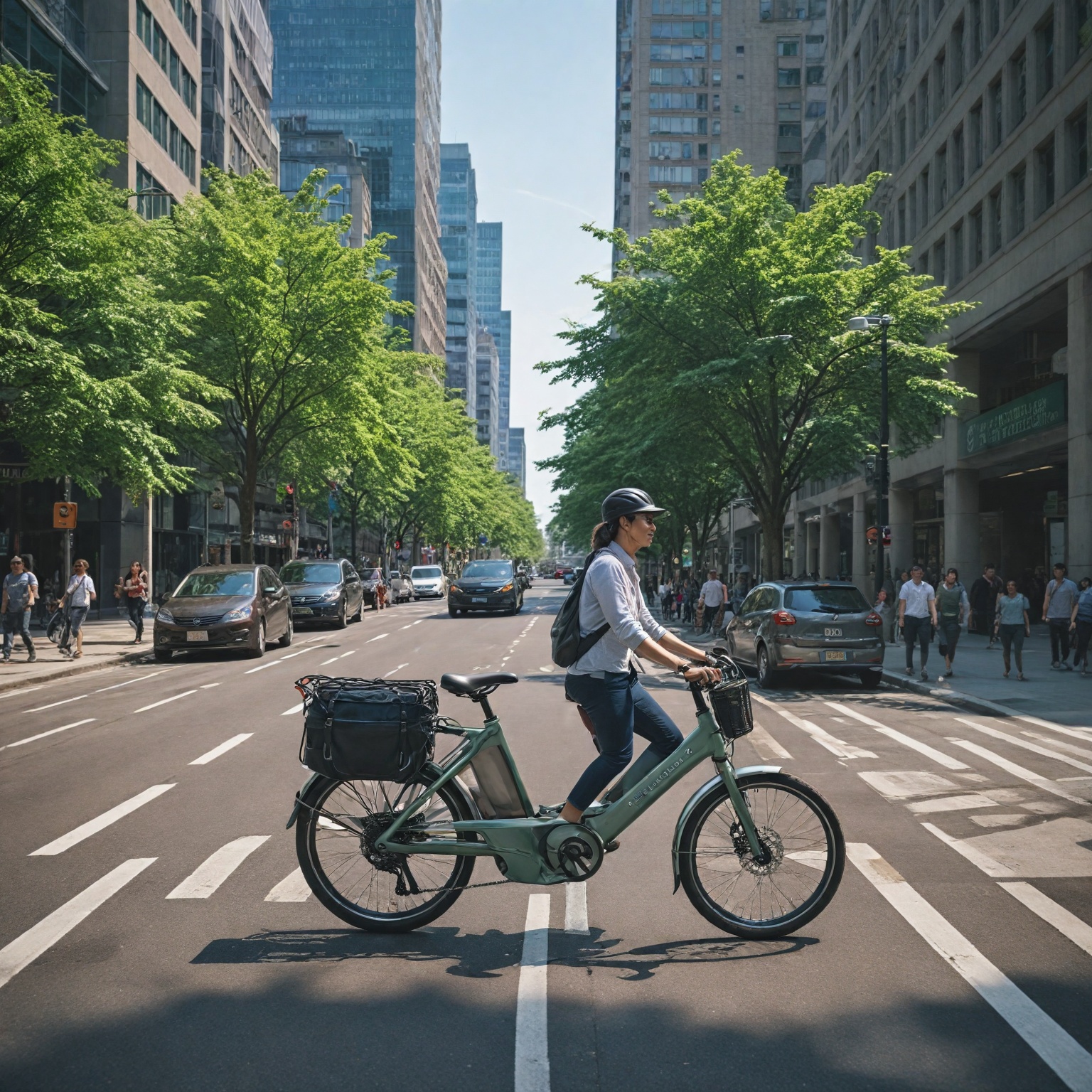
The variety of features available in urban e-bikes addresses diverse commuting needs. Many models come equipped with storage options such as racks and baskets, facilitating errands and daily transport of goods. Integrated lighting and suspension systems further improve safety and comfort in city environments. The continuous evolution in e-bike technology, combined with supportive infrastructure and urban policies, positions e-bikes as a pivotal component of sustainable urban transportation networks.
Battery Technology in Affordable Urban E-Bikes
Affordable urban e-bikes typically rely on lithium-ion batteries due to their balance of capacity, weight, and cost. While some entry-level models may still use older battery technologies, such as less efficient and heavier types, most manufacturers prefer lithium-based batteries for their superior performance and reliability. Among lithium batteries, variations like Lithium Iron Phosphate (LiFePO4) and Lithium Nickel Manganese Cobalt Oxide (NMC) are common, each offering distinct advantages: LiFePO4 batteries provide excellent thermal stability and longer lifespans, while NMC batteries are lighter with higher energy density, making them suitable for urban commuting where weight and range are critical factors.
Battery capacities for urban e-bikes often range to support typical commuting distances of 20 to 40 miles per charge, although actual range depends on factors such as riding style, terrain, and climate. A standard 36V battery pack, widely used in affordable e-bikes, operates between approximately 30V and 42V, with the higher voltage indicating a fully charged state. Battery Management Systems (BMS) ensure safe operation by preventing over-discharge and protecting battery health. For longer rides or more demanding use, battery packs with capacities between 10 and 20 Ah or higher may be considered to reduce range anxiety.
In the context of budget-friendly urban e-bikes, reputable brands often equip their models with high-quality lithium-ion cells, such as those produced by Samsung, to ensure durability and dependable performance. For instance, some models offer ranges up to 85 miles per charge, with affordable replacement options to extend the bike’s usable lifespan without significant additional investment.
From an environmental perspective, lithium-ion batteries present both benefits and challenges. While battery production involves energy-intensive processes and the extraction of raw materials like lithium, cobalt, and nickel—which can have considerable environmental impacts—advances in sustainable sourcing, renewable energy use, and recycling efforts help mitigate these effects. Notably, lithium iron phosphate batteries are considered more environmentally friendly due to their non-toxic composition and abundance of raw materials like iron. Additionally, efficient recycling programs recover a large proportion of battery materials, reducing waste and minimizing the ecological footprint of urban e-bike batteries.
Frame Materials and Design Features
Electric bike frames are commonly constructed from materials such as aluminum, steel, carbon fiber, and titanium, each offering distinct advantages and tradeoffs in terms of weight, cost, durability, and ride quality. Aluminum is widely favored for urban e-bikes due to its lightweight nature, affordability, and balanced ride characteristics. It provides a strong yet stiff frame, although it may sacrifice some long-term durability and comfort compared to steel. Aluminum’s strength-to-weight ratio makes it particularly suitable for e-bike frames, and its lower cost compared to carbon fiber or titanium adds to its popularity among budget-conscious riders.
Steel, especially high carbon steel, remains a strong contender for frame construction due to its high density, strength, and resistance to wear and deformation. Steel frames tend to offer better ride comfort and durability over time, though they are generally heavier than aluminum and carbon fiber options. The raw materials for steel are readily available, and its production cost is relatively low, making it an economical choice for many manufacturers.
Carbon fiber frames represent the lightest option available for electric bikes, with frames that can weigh as little as 2 to 4 pounds thanks to the composite’s high strength-to-weight ratio. However, carbon fiber and titanium frames come with significantly higher price tags, which can limit their accessibility for budget urban commuters. Titanium offers a combination of lightness, strength, and corrosion resistance but at a premium cost.
Design features also play a critical role in urban e-bike functionality. For example, some budget-friendly models, like the Lectric XP Lite 2.0, incorporate foldable frame designs that enhance portability and storage convenience without compromising performance. Such designs are especially valuable for commuters who need to carry or store their bikes in compact spaces.
Defining Eco-Friendly and Affordable E-Bikes for Urban Commuters
Eco-friendly e-bikes are electrically powered bicycles that serve as sustainable alternatives to cars by producing fewer CO2 emissions and requiring less energy for operation. Their environmental benefits include reducing traffic congestion and urban pollution, making them integral to greener and healthier cities. These bikes contribute to lowering the carbon footprint associated with daily commuting and short-distance travel in urban settings.
Affordability in the context of e-bikes is relative, as prices can range from under $1,000 to over $10,000. However, many budget-friendly models provide high-quality features suitable for urban commuters who seek cost-effective yet reliable transportation options. E-bikes are valued for their versatility and convenience, offering practical solutions for commuting, errands, and recreational activities. Features such as built-in storage racks and baskets enhance their functionality for everyday use.
Adopting e-bikes for urban commuting often involves balancing environmental advantages with upfront investment costs. While cheaper e-bike models exist, even the more affordable options require a significant financial commitment compared to conventional bicycles. Despite this, the long-term benefits of reduced emissions, lower transportation costs, and decreased dependence on fossil fuels position e-bikes as a promising component of sustainable urban mobility.
Strategic integration of e-bikes into urban transport systems includes infrastructure improvements like dedicated bike lanes, secure parking, and charging stations, alongside supportive regulations to maximize their eco-friendly potential. Urban planners view e-bikes as key elements in creating adaptable and sustainable cities, though it remains important to consider environmental impacts stemming from e-bike production and battery manufacturing.
Cost-Effective Components and Technologies
Entry-level and budget electric bicycles often incorporate cost-effective components and technologies that balance affordability with performance, making them accessible options for urban commuters. One common approach is the use of more economical frame materials, which come with distinct advantages and disadvantages. Understanding these materials helps buyers select the most suitable e-bike according to their needs and budget.
Battery technology plays a critical role in cost and performance. While high-capacity battery packs in the range of 10-20 Ah enhance range and versatility, many budget models utilize older or less advanced batteries to keep prices low. These outdated batteries are often found in entry-level e-bikes where affordability takes precedence, although they may limit overall range and performance compared to more modern alternatives.
Motors in budget e-bikes frequently include hub drive systems, which tend to be less powerful and smooth than mid-drive motors but still provide adequate assistance for urban riding. For example, models equipped with 750W rear hub motors and features like hydraulic disc brakes offer a comfortable and stable ride without significantly increasing costs. Similarly, some affordable e-bikes feature user-friendly control interfaces, such as integrated button controls and digital displays, enhancing usability without major price hikes.
Additional cost-saving measures include modular design elements allowing optional add-ons, like racks and fenders, which riders can purchase separately based on preference. This approach keeps the base price low while enabling customization. Furthermore, the inclusion of practical features such as integrated lights and throttle assist in some budget models adds value without substantial cost increments.
Advantages and Drawbacks Experienced by Urban Commuters
Electric bikes (e-bikes) offer several advantages for urban commuters, particularly in improving the integration of transportation modes and enhancing the overall commuting experience. One significant benefit is their ability to bridge the “last mile” gap between homes, transit stations, and final destinations, which addresses a major challenge in public transport systems. Many cities have adopted shared mobility programs that incorporate e-bikes, allowing users to seamlessly switch between different transportation modes and thus encouraging greater use of public transit.
By replacing car trips, e-bikes contribute to reduced traffic congestion in urban areas. Fewer cars on the road result in lower emissions, decreased infrastructure wear, and safer streets with fewer accidents. This reduction in vehicular traffic also leads to less noise pollution, making urban environments more pleasant. For example, urban commuters like Mark have reported arriving at work faster by using e-bikes to bypass traffic jams, demonstrating the practical benefits for daily travel.
Moreover, cities that invest in cycling infrastructure—such as dedicated bike lanes and bike-sharing programs—promote healthier and more sustainable lifestyles among residents. This shift toward active transportation can support broader environmental benefits, including reduced urban sprawl and preservation or even expansion of green spaces. Consequently, e-bikes have the potential to contribute positively to urban density and environmental sustainability.
However, there are also notable drawbacks associated with the use of e-bikes in urban commuting. Urban sprawl, which may be exacerbated by the convenience of e-bikes, can strain public transportation systems by complicating service delivery and overextending routes. Additionally, lower urban density encouraged by e-bike use might counteract efforts to maintain compact and sustainable urban environments. Furthermore, while e-bikes can be more affordable compared to some other modes of transport, the cost can still be a barrier for many; even budget-friendly models often require a significant investment ranging from under $1,000 to several thousand dollars.
Popular Affordable E-Bike Models for Urban Commuting
Several affordable electric bikes have gained popularity among urban commuters for their blend of practicality, comfort, and value. One notable model is the EVRYjourney Internal Battery 250W, which features an ergonomic frame designed to keep cyclists in an upright and relaxed position. This design reduces muscle strain and fatigue while improving visibility in traffic. The bike also includes useful commuter accessories such as rear racks for panniers and water bottle holders, making it a versatile choice for daily use.
For commuters seeking budget-friendly options with impressive features, the Ride1Up Roadster V3 stands out. Priced under $1,300, it offers a compelling set of specifications suitable for city rides, balancing cost with performance and reliability. Similarly, the VTUVIA folding e-bikes cater to urban dwellers and travelers who prioritize portability without sacrificing performance, making them ideal for navigating crowded city environments and storing in compact spaces.
Cargo e-bikes have also become more accessible, with models like the Engwe LE20 priced around $1,599. This bike supports a large payload and features dual high-capacity batteries, theoretically enabling a range of up to 211 miles under ideal conditions. While real-world tests have shown somewhat lower mileage, its capability for carrying heavy loads makes it attractive for urban users needing extra cargo space. In the same category, Tern’s GSD compact cargo bike has been recognized for pioneering the practical use of e-cargo bikes in urban and suburban settings, combining durability with the ability to replace car trips effectively.
When choosing an entry-level electric bicycle, considering frame materials and assembly quality is crucial, as these factors influence comfort, durability, and overall riding experience. Together, these models demonstrate a spectrum of affordable, practical, and well-built options that cater to the diverse needs of urban commuters looking for eco-friendly and efficient transportation alternatives.
Integration with Public Transportation Systems
The integration of e-bikes into public transportation systems has garnered significant attention due to their potential to address environmental challenges and improve urban mobility. E-bikes can help reduce greenhouse gas emissions, enhance air quality, and provide a more affordable and accessible mode of transport for both pedestrians and motorists. By bridging the gap between home, transit stations, and final destinations, e-bikes effectively overcome key limitations in the efficiency of public transit networks, facilitating seamless multimodal travel.
To promote smooth integration, urban transport systems are adopting standardized e-bike-friendly regulations combined with incentives such as subsidies and tax breaks for purchasers and infrastructure developers. These policies encourage sustainable expansion and help manage the environmental impacts associated with the production and use of e-bikes. Furthermore, extended producer responsibility schemes and product design guidelines focused on recyclability are being considered to enhance sustainability throughout the lifecycle of e-bikes.
Strategic planning and investment in infrastructure remain crucial for successful integration. This includes developing dedicated bike lanes,
Urban Infrastructure to Support Affordable E-Bikes
Integrating affordable e-bikes into urban transportation systems necessitates comprehensive planning and investment in supportive infrastructure. Key components include the development of dedicated bike lanes, secure parking facilities, and accessible charging stations to ensure convenience and safety for users. Such infrastructure not only encourages adoption but also addresses critical urban mobility challenges by providing safer, more efficient alternatives to car travel, particularly in areas lacking pedestrian-friendly design.
Charging infrastructure plays a vital role in the practical use of e-bikes. Modern public charging stations are designed to accommodate various e-bike drive systems and often feature secure lockers with electrical outlets, allowing users to charge their bikes safely while parked. Market leaders with extensive experience in e-bike infrastructure emphasize the importance of integrated concepts that alleviate local traffic congestion and connect urban spaces effectively.
Beyond physical infrastructure, supportive policies and regulations are essential to fostering widespread e-bike adoption. Implementing standardized e-bike-friendly regulations, such as speed limits and operational zones, along with incentives like subsidies or tax breaks for purchasers and infrastructure developers, can smooth the integration process into existing urban transport networks. Such measures are especially crucial in underserved neighborhoods, where unsafe streets pose significant barriers to non-car transportation modes.
Collaboration between policymakers, urban planners, and community members is key to successfully embedding e-bikes into public transit systems. Encouraging multimodal transport solutions that combine e-biking with other forms of public transit enhances overall mobility, reduces congestion, and lowers pollution levels. By learning from pioneering cities and proactively addressing challenges, urban areas can create greener, healthier, and more connected environments through the strategic support of affordable e-bike use.
Environmental Benefits of E-Bikes Compared to Cars and Public Transit
E-bikes present significant environmental advantages over traditional gasoline-powered vehicles and, in some contexts, public transit options. They are widely recognized as one of the most economical and environmentally sustainable modes of transportation, particularly for short urban commutes. Unlike cars, which emit large quantities of carbon dioxide (CO2) and other pollutants during operation, e-bikes produce virtually no emissions while in use, with their primary environmental impact occurring during manufacturing.
The energy demands for producing and operating e-bikes are considerably lower than those for traditional vehicles. Although fossil fuel-based energy sources involved in battery production can contribute to carbon emissions, the overall production process is generally considered sustainable, especially when purchasing second-hand e-bikes which reduce raw material consumption and waste generation. This lower energy footprint translates into reduced urban pollution levels and mitigates traffic congestion, as e-bikes occupy less space on city streets and can alleviate strain on transportation infrastructure.
Integration of e-bikes with public transportation systems further enhances their environmental benefits. By enabling seamless multimodal travel, e-bikes can encourage commuters to combine cycling with transit use, reducing reliance on cars and lowering urban congestion and pollution. This shift not only improves air quality but also contributes to safer, quieter streets and can promote greener urban development by mitigating urban sprawl and preserving green spaces.
Lifecycle Environmental Impact of E-Bikes
E-bikes represent one of the most environmentally sustainable forms of urban transportation due to their lower energy consumption and reduced emissions compared to traditional internal combustion engine (ICE) vehicles. Their use helps alleviate traffic congestion and reduce urban pollution levels, as e-bikes take up considerably less space on busy city streets. Innovations such as lighter batteries and more efficient motors continue to decrease the environmental footprint of e-bikes, making them increasingly accessible and sustainable for a broader population.
The manufacturing process of e-bikes involves environmental considerations primarily centered around the production of batteries. While the chassis construction—typically a combination of aluminum and steel—has environmental impacts similar to those of conventional vehicles, the battery production phase introduces unique challenges. The extraction of raw materials for batteries, such as lithium and cobalt, entails significant environmental costs, including toxic emissions and high water usage during mining. Furthermore, the carbon footprint of battery manufacturing is influenced by the energy sources powering the production facilities, with fossil fuel-dependent regions contributing to higher emissions.
Despite these concerns, the overall environmental impact of e-bike batteries is mitigated by their durability and efficient recycling processes. Batteries typically last between five years or 500 to 1,000 recharge cycles, and a large proportion of their materials are recovered and reused through recycling, which helps lower the lifecycle emissions of e-bikes. Additionally, the relatively low energy demands of e-bike operation contribute to a smaller environmental footprint throughout their use phase compared to traditional vehicles.
Factors Influencing Affordability and Sustainable Manufacturing
Affordability and sustainability in the electric bike (e-bike) market are shaped by multiple factors, ranging from material choices and manufacturing processes to consumer practices and regulatory policies.
One significant factor impacting affordability is the option to convert existing bicycles into e-bikes using conversion kits. This approach reduces costs substantially compared to purchasing a new e-bike, as it saves on both raw materials and production expenses. Converting a familiar bike also supports sustainability by extending the life of the original bicycle and minimizing waste generated from manufacturing new frames. Additionally, opting for second-hand electric bikes eliminates the need for additional raw materials and production energy, further reducing environmental impact and overall cost.
Material selection plays a critical role in both affordability and environmental footprint. Metal production and processing are costly and polluting, prompting manufacturers to explore alternative materials and frame designs that balance durability, weight, and sustainability. Entry-level e-bikes often feature frames made from common materials such as aluminum or steel, each with trade-offs in cost and environmental impact. Utilizing durable, recyclable materials coupled with eco-friendly production processes helps reduce energy consumption and contributes to sustainability goals.
Sustainable manufacturing is further encouraged through extended producer responsibility schemes, where manufacturers are accountable for the product lifecycle, including end-of-life recycling and reuse. Modular e-bike designs enable easy replacement and upgrading of components, extending product lifespans and reducing waste. To promote such practices, governments and regulatory bodies offer incentives like tax breaks or subsidies for manufacturers that incorporate recycled materials or invest in renewable energy within their production processes.
Consumer education also influences sustainable usage and maintenance, which can enhance the overall lifecycle sustainability of e-bikes. Encouraging buyers to adopt sustainable habits maximizes resource efficiency and reduces environmental impact.
Together, these factors—conversion kits, second-hand purchases, material choices, modular designs, supportive policies, and consumer behavior—combine to influence both the affordability and sustainability of electric bikes in urban commuting contexts.
The content is provided by Blake Sterling, Scopewires