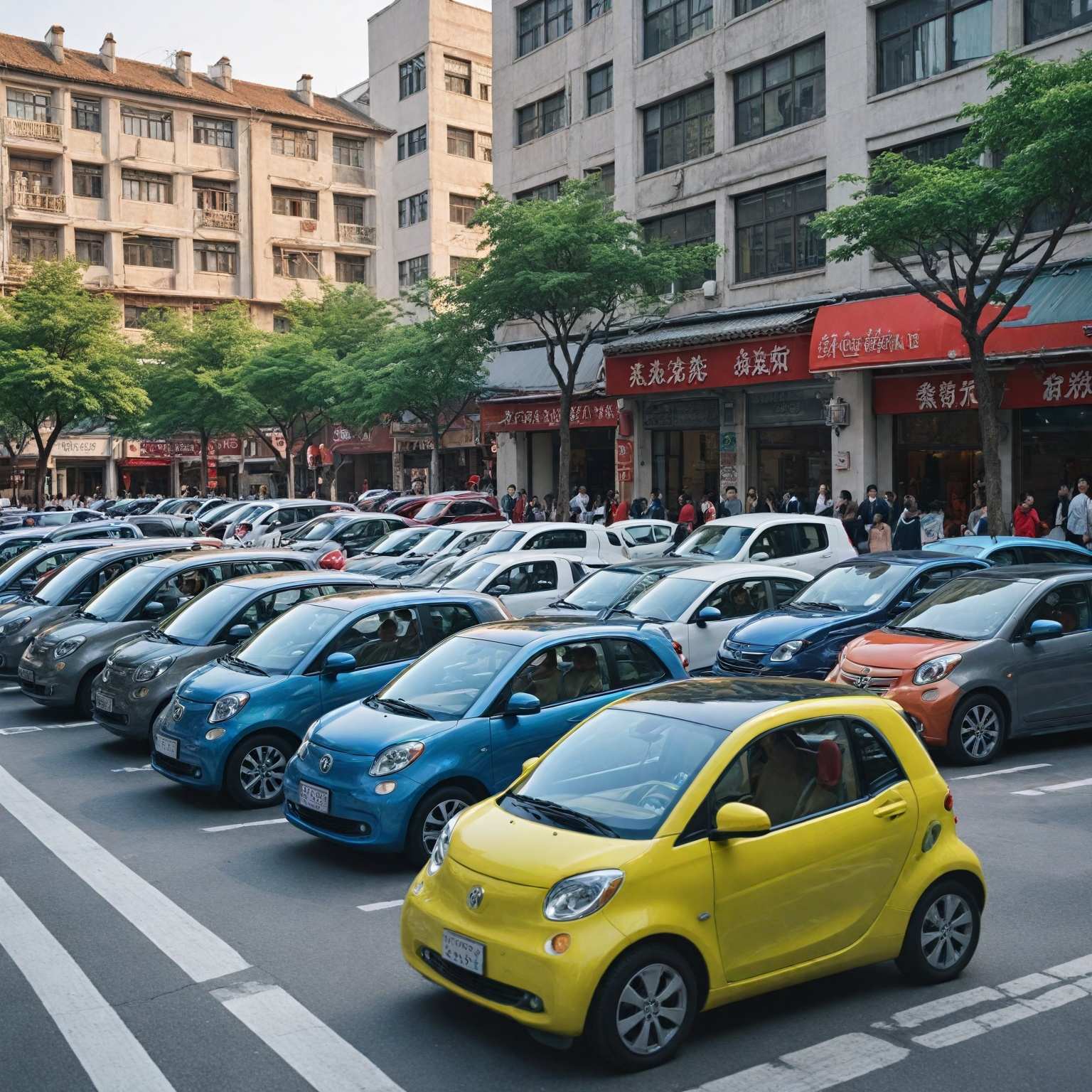
Highlights
- Rapid Growth of Small Electric Cars: Small electric cars are poised for significant expansion, driven by advances in technology and increasing consumer demand, with global electric vehicle sales projected to surpass 20 million units by 2025.
- Leading Role of China: China leads the small electric car market, with affordable prices and strong government support, accounting for nearly 60% of new EV registrations in 2023.
- Challenges and Opportunities: Despite growth, challenges like supply chain constraints exist. Future success for small electric cars hinges on balancing affordability and sustainability while adapting to evolving industrial dynamics and regulatory environments.
Summary
Small electric cars are rapidly emerging as a dominant force in the global electric vehicle (EV) market, with significant growth expected by 2025. Although currently representing less than 10% of new car sales in major markets such as China, this segment is poised to expand due to advances in battery technology, declining costs, and increasing consumer demand for efficient, low-impact urban transportation options. Globally, electric vehicle sales are projected to surpass 20 million units in 2025, accounting for more than one in four new cars sold worldwide, driven largely by policy support and expanding charging infrastructure, particularly in Europe and China.
China leads the small electric car market, accounting for nearly 60% of new EV registrations in 2023 and maintaining a strong competitive advantage through integrated supply chains and dominance in battery material production. The affordability of small electric cars is improving worldwide, with prices in key markets such as China often half those of comparable internal combustion engine vehicles, and many models priced under $50,000 in the United States and Europe. Government incentives continue to play a critical role in accelerating adoption, though recent policy shifts—such as subsidy reductions in France and the Netherlands—highlight ongoing challenges in maintaining market momentum.
Technological advancements in battery chemistry, energy density, and fast-charging capabilities have made small electric cars more practical and appealing to consumers. However, battery production and lifecycle environmental impacts, including raw material mining and recycling challenges, remain areas of concern. Battery longevity, while improving, varies significantly based on usage patterns and climate, influencing total cost of ownership and sustainability considerations.
Despite rapid growth, the small electric car market faces challenges including supply chain constraints, evolving industrial dynamics, and fluctuating policy environments. Automakers and suppliers are encouraged to future-proof their operations through diversified partnerships and investments in production capabilities to meet rising demand. As small electric cars gain market share, their success will depend on balancing affordability, technological innovation, environmental sustainability, and supportive regulatory frameworks worldwide.
Market Overview
The small electric car segment is rapidly gaining traction as a significant part of the global electric vehicle (EV) market. Although small cars currently represent less than 10% of the Chinese car market sales in 2024, this segment is poised for growth due to shifting consumer preferences and advances in EV technology. The global electric car sales are projected to reach over 20 million units in 2025, marking a 25% increase compared to 2024, with electric vehicles making up more than one in four new car sales worldwide. Europe, in particular, is expected to see a milestone of 14 million EVs on the road by 2025, with electric cars projected to constitute between 85% and 95% of new vehicle sales by 2035, eventually reaching 100% after that.
China continues to dominate the EV market, accounting for nearly 60% of all new electric car registrations globally in 2023, with EVs comprising over 35% of domestic car sales. The country’s leadership extends into battery production, controlling nearly 90% of global cathode active material capacity and over 97% of anode active material capacity, which underpins its competitive advantage in EV manufacturing. This integration of the supply chain enables Chinese manufacturers to produce EVs at competitive prices, particularly in the popular SUV segment, where battery electric vehicles (BEVs) reached price parity with internal combustion engine vehicles (ICEVs) in 2024.
Globally, OEMs and suppliers are advised to future-proof their supply chains to adapt to the accelerating shift towards EVs. This includes establishing robust relationships with tier 1 suppliers, leveraging scale, and investing in prototype and production capabilities to meet increasing demand and evolving vehicle architectures. In markets like Europe and the U.S., policy incentives and infrastructure development, such as the expansion of national charging networks, will play a critical role in supporting EV adoption. However, policy fluctuations, such as the environmental bonus limitations introduced in France in early 2024, illustrate potential challenges that could affect market growth in the short term.
The affordability of small electric cars is improving, partly driven by advances in lithium-ion battery technology and anticipated cost reductions in raw materials like lithium, cobalt, and nickel through 2025. This trend supports the emergence of more accessible and practical small EV models that appeal to urban consumers seeking efficient, low-impact transportation options. Moreover, a diverse range of small EVs, including models like the Nissan Leaf, Hyundai Kona Electric, and Fiat’s Spring, offers consumers a variety of choices that combine functionality with competitive pricing.
Features and Specifications
In 2025, small electric cars showcase significant advancements in battery technology, driving range, and charging capabilities, making them increasingly practical and competitive with traditional internal combustion engine vehicles. The majority of these vehicles utilize lithium-ion batteries, typically featuring nickel manganese cobalt (NMC) or lithium iron phosphate (LFP) chemistries, optimized for a high power-to-weight ratio and improved energy density. Battery capacities and designs are evolving rapidly, with manufacturers adjusting cathode, anode, and electrolyte compositions annually to enhance performance and longevity.
Range has notably improved, with many small electric cars offering competitive distances per charge. While premium models like the Lucid Air Grand Touring lead with ranges exceeding 800 km, smaller EVs generally provide sufficient range to alleviate common “range anxiety,” maintaining most of their capacity for many years under proper use. Real-world range can fluctuate due to factors such as driving style, weather conditions, and outside temperature, with cold weather reducing range by up to 40% in some cases; however, even the lowest-performing EVs retain over 60% of their range in extreme cold and can quickly regain power with a short charging session.
Charging technology continues to advance, with fast-charging capabilities becoming standard among many small EVs. The development of new charging standards, such as the megawatt charging standard (MCS), aims to further increase charging power up to 3.75 MW, particularly benefiting heavy-duty vehicles but also setting benchmarks for the broader industry. Typical small electric cars now support both AC and DC charging, with DC fast charging significantly reducing downtime and enhancing usability.
Battery life expectancy is improving, with predictive models estimating that current batteries may last between 12 and 15 years in moderate climates, though factors like climate, driving habits, and thermal management systems can influence longevity. Environmental considerations are also integral to battery development, as lifecycle analyses highlight the need to manage hazardous byproducts from production and recycling processes responsibly.
Price-wise, many small electric cars in 2025 are priced under $50,000, offering a balance of performance, comfort, and efficiency. These vehicles are evaluated based on a range of metrics including acceleration, handling, cargo space, and overall value, making them accessible options for a growing segment of consumers.
Pricing and Cost Analysis
The pricing of small electric cars in 2025 reflects a significant shift towards affordability and competitiveness, driven by advances in battery technology, manufacturing efficiencies, and government policies. A major factor contributing to this trend is the continuous decline in lithium-ion battery pack costs, which are projected to fall to around $113 per kWh by 2025. This reduction in battery prices, enabled by innovations such as integrated cell-to-pack designs and the adoption of lithium iron phosphate (LFP) chemistries, has been pivotal in making electric vehicles (EVs) more accessible to a broader consumer base.
In various global markets, small EVs are becoming increasingly price-competitive compared to internal combustion engine (ICE) vehicles. In China, for example, the average purchase price of small battery electric cars is about half that of equivalent small ICE vehicles, with many models priced below $25,000 USD. This affordability has propelled rapid electrification across all vehicle segments in the country, contributing to China accounting for nearly 60% of new electric car registrations globally in 2023.
In contrast, markets such as the United States and Europe still see somewhat higher prices for small EVs, though costs are steadily declining. For instance, the 2025 Nissan Leaf is priced under $50,000, with a base trim costing approximately $41,160, reflecting price adjustments to improve competitiveness in a crowded segment. In India, popular small EV models such as the Tata Harrier EV and Mahindra BE 6 are priced in the range of approximately Rs. 18.9 to 21.9 lakh, illustrating the expanding affordability in emerging markets as well.
Manufacturing and supply chain dynamics also influence pricing. Chinese original equipment manufacturers (OEMs) have been establishing assembly plants in local and export markets, such as BYD’s facilities in Brazil and Türkiye, to mitigate tariff impacts and reduce costs. However, trade restrictions and tariff hikes have occasionally caused fluctuations in pricing and supply, as seen in Brazil where imports surged before tariffs were reinstated, then dropped sharply thereafter.
Government incentives and subsidies have played a critical role in shaping EV pricing, though some markets are beginning to phase out direct purchase subsidies. For example, the Netherlands ended its electric car purchase subsidies by the end of 2024, yet sales increased by about 10% in early 2025, suggesting sustained consumer interest despite the reduced financial support. Similarly, France reduced environmental bonuses for higher-income buyers in 2024, affecting the immediate growth of the market but potentially paving the way for stronger incentives aligned with future CO2 standards.
Despite these positive trends, the upfront cost of EVs remains a consideration for many buyers, with average transaction prices rising slightly in early 2025. However, potential savings on fuel and maintenance costs offer long-term economic benefits, partially offsetting the initial investment. Battery longevity, typically ranging from 8 to 15 years depending on climate and usage, also impacts the total cost of ownership.
Supply Chain and Manufacturing
The supply chain and manufacturing landscape for small electric cars in 2025 is rapidly evolving, driven by increased production volumes and strategic positioning of suppliers and manufacturers. Tier 1 suppliers are prioritizing operational excellence by achieving high production volumes and serving multiple automakers, which helps reduce unit costs compared to limited in-house production by car companies. Collaborations with Chinese car manufacturers are particularly important, as they enable suppliers to scale operations, lower costs, and gain insights into diverse vehicle architectures. Meanwhile, global Tier 1 suppliers are expanding their competitive intelligence to monitor emerging Chinese suppliers that could extend their market presence. Investments in competence centers are crucial for mastering prototype production, which is key for successful sample phases and product launches.
Original equipment manufacturers (OEMs) are advised to future-proof their supply chains by ensuring that key suppliers take necessary steps to maintain their relevance in a changing market environment. This includes assessing supplier capabilities and commitments to innovation and scalability. Moreover, the establishment of national charging networks that meet consumer demand and preferences supports the broader adoption of electric vehicles, influencing supply chain planning and infrastructure investment.
Battery manufacturing remains a critical element of the supply chain, with significant environmental considerations. The battery life cycle—from raw material extraction through manufacturing, usage, and disposal—generates carbon emissions and hazardous byproducts such as toxic chemicals and heavy metals. Effective management of these byproducts is essential to minimize environmental contamination and safeguard human health. Additionally, end-of-life lithium-ion batteries contain valuable critical minerals needed for new battery production. Recycling these batteries is increasingly seen as a vital strategy to meet the growing demand for minerals in renewable energy storage systems and electric vehicle batteries.
The cost dynamics of battery raw materials have seen changes in recent years. For instance, the prices of materials used in NMC 811 cathode active materials have declined since 2022, contributing to lower battery costs estimated around US$20/kWh in 2024. This trend supports more competitive pricing for small electric cars.
Manufacturing capacity for battery cells is expanding significantly across key regions. In 2023, capacity increased by over 45% in both China and the United States and by nearly 25% in Europe compared to 2022. Projections indicate that, supported by policies such as the U.S. Inflation Reduction Act, U.S. battery cell capacity will surpass that of Europe by the end of 2024. However, China continues to dominate cathode active material production, with Korea and Japan holding smaller shares outside of China. Different battery chemistries require diverse supply chains, influencing regional manufacturing strategies.
Chinese OEMs are also investing in overseas assembly plants to directly serve local markets and export regions, thereby mitigating risks from tariff hikes on imports. For example, BYD has established plants in Brazil and Türkiye to supply local markets and the European Union, respectively. Additionally, significant production capacity owned by Chinese OEMs is located in the European Union, with Volvo Cars’ assembly plants producing over 160,000 electric vehicles in the previous year.
Securing critical battery manufacturing equipment has become increasingly urgent, with lead times of approximately 18 months from ordering to commissioning due to rapid gigafactory construction. To mitigate risks, companies are adopting multiple approaches to equipment procurement to ensure timely project completion and stable supply chains.
Battery Performance and Longevity
Battery longevity in small electric cars is influenced by a combination of environmental, chemical, and usage factors. Predictive modeling by the National Renewable Energy Laboratory estimates that modern electric vehicle (EV) batteries typically last between 12 to 15 years in moderate climates, while this lifespan can decrease to 8 to 12 years in more extreme conditions. Key determinants include climate, driving and charging behaviors, battery cell chemistry and design, as well as the vehicle’s thermal management system.
Charging methods significantly impact battery degradation rates. Frequent use of DC fast charging tends to accelerate battery wear compared to slower AC charging due to the increased stress on battery cells. Each charge-discharge cycle also incrementally reduces battery capacity. Furthermore, lithium-ion battery chemistries such as nickel manganese cobalt (NMC) and lithium iron phosphate (LFP) exhibit different durability profiles. Studies indicate that LFP batteries can achieve a cycle life two to four times longer than NMC batteries, which partially explains why manufacturers like Tesla recommend charging LFP batteries to 100% without a noticeable increase in degradation.
Thermal management plays a crucial role in maintaining battery health. Liquid cooling systems, as employed in vehicles like the 2015 Tesla Model S, have demonstrated lower average degradation rates (around 2.3%) compared to passive air-cooled systems, such as the one in the 2015 Nissan Leaf, which shows degradation rates near 4.2%. Effective thermal control helps prevent overheating and maintains efficiency, thereby extending battery lifespan.
On a microscopic level, battery degradation arises from electrochemical and mechanical stresses that gradually reduce capacity. Research efforts are underway to develop self-repairing battery technologies using polymeric materials to mitigate mechanical degradation of electrode crystals, potentially extending battery life by 5 to 10 years.
End-of-life considerations for lithium-ion batteries are critical due to their classification as ignitable and reactive hazardous wastes if improperly disposed of. While consumer and vehicle batteries are generally safe when properly managed, the risk of fires increases at the end of their usable life. Recycling lithium-ion batteries is essential to address environmental concerns and to recover valuable materials, though the process is complicated by the variability in battery chemistry and design, as well as safety challenges related to residual charge and fire risk. Although economically viable recycling pathways for EV batteries are still evolving, recycling remains an important component of sustainable battery lifecycle management, especially given the finite supply of critical raw materials.
Environmental Impact
Electric vehicles (EVs), particularly small electric cars, are increasingly prioritized in the automotive industry due to their minimal carbon emissions compared to petrol and diesel vehicles. While EVs produce no tailpipe emissions, their overall environmental impact must consider the entire life cycle, including manufacturing, battery production, electricity generation, and end-of-life disposal.
Life Cycle Emissions
The production of EVs, especially battery manufacturing, results in higher greenhouse gas (GHG) emissions compared to conventional vehicles at the manufacturing stage. However, over their operational lifetime, EVs tend to emit significantly fewer total GHGs than gasoline cars due to zero tailpipe emissions and improved electricity generation sources[
Consumer Adoption and Incentives
Consumer adoption of small electric cars (EVs) is being influenced heavily by government incentives and policy frameworks across different regions, which play a crucial role in accelerating the shift away from internal combustion engine (ICE) vehicles. For instance, in Europe and China, EVs are projected to represent approximately 14% of new vehicle sales by 2025, a significant increase from just 1% in 2017. This growth is partially driven by supportive policies and subsidies that lower the upfront cost of EVs for consumers, although adoption rates in the U.S. are expected to lag behind due to later policy implementation and market dynamics.
In 2024, France implemented restrictions on environmental bonuses by limiting eligibility to lower-income buyers and reducing the number of qualifying vehicles, reflecting a tightening of incentives. Similarly, the European Union’s CO2 standards, which impose progressively stricter emissions targets every five years, may have slowed EV sales growth in 2024 as automakers delayed aggressive EV marketing in anticipation of more stringent targets coming into effect in 2025. Additionally, to maintain exemption from certain regulations and retain subsidies, original equipment manufacturers (OEMs) must produce a minimum number of battery electric vehicles (BEVs) domestically, highlighting a policy push toward local manufacturing.
In contrast, Indonesia has experienced a rapid increase in EV adoption, with electric car sales tripling in 2024 while conventional vehicle sales declined by 20%, resulting in EVs capturing over 7% of the market share. This surge has been supported by the government’s reduction of the value-added tax (VAT) on electric cars from 11% to 1% and, notably, the waiver of import taxes for EVs from manufacturers investing in local production facilities starting in 2024. These measures have substantially reduced the effective cost of EV ownership, driving consumer uptake.
Meanwhile, some countries are adjusting their incentive programs. The Netherlands ended its electric car purchase subsidy at the close of 2024, yet EV sales in early 2025 increased by approximately 10% compared to the same period the previous year, suggesting growing consumer acceptance beyond direct subsidies. Italy has ceased renewing direct purchase subsidies after 2024 but continues to focus on supporting domestic EV production as a strategic priority.
Challenges and Limitations
The widespread adoption of small electric cars faces several significant challenges and limitations that span environmental, industrial, and supply chain aspects. One critical issue is the complexity and interconnectedness of sustainability dimensions involved in electric vehicle (EV) battery production, which includes tensions in land use, electricity consumption, governance, and industrial policies. These multifaceted causalities require a comprehensive approach that considers political and techno-industrial factors to effectively address them.
From an industrial perspective, Tier 1 suppliers in the battery and EV sector must achieve operational excellence at high production volumes to reduce unit costs. However, the diversity of suppliers and technologies often leads to longer product development cycles and difficulties in maintaining consistent quality. Additionally, suppliers face competitive pressure as automakers increasingly integrate vertically, producing electric powertrains in-house and thereby reducing the suppliers’ market share.
Battery materials supply is another critical constraint. The finite availability of rare earth and critical metals essential for battery manufacturing presents a looming risk of supply shortages as demand rises toward 2030. Although recycling of battery materials could alleviate supply constraints, the environmental benefits of recycling depend heavily on the specific chemistry, form factors, and processes used. Current recycling technologies require closer scrutiny to fully assess their net environmental impact.
Environmental concerns also extend to the entire battery life cycle. Manufacturing processes produce hazardous byproducts, including toxic chemicals and heavy metals, which require careful management to prevent environmental contamination and health risks. Additionally, the extraction and disposal of battery components contribute to environmental damage that must be mitigated for sustainable EV adoption.
Battery longevity and performance present further limitations. Predictive models indicate that current EV batteries typically last between 12 to 15 years in moderate climates, with reduced lifespan in extreme climates. Factors such as driving and charging patterns, battery chemistry, and thermal management systems significantly impact battery degradation. Electrochemical phenomena, such as the growth of the Solid Electrolyte Interface (SEI), consume lithium ions and reduce battery capacity over time.
Finally, the automotive industry must prepare for shifts in supply chains and infrastructure to support EV growth. A robust, national network of charging stations that meets consumer demand and preferences is essential to encourage EV adoption. Original Equipment Manufacturers (OEMs) are advised to future-proof their supply chains by ensuring suppliers are capable of adapting to evolving market dynamics and regulatory environments. Regional differences in adoption rates are expected, with the U.S. lagging somewhat behind Europe and China, yet the global nature of the automotive supply chain necessitates a worldwide strategic approach.
Future Outlook
The future outlook for small electric cars in 2025 is marked by significant growth, technological advancements, and evolving market dynamics. Global electric vehicle (EV) sales are projected to increase by approximately 25% in 2025, with over 20 million electric cars expected to be sold worldwide, representing more than one in four vehicles sold globally. This growth is driven by expanding consumer acceptance, government policies, and improvements in battery technology, although regional adoption rates may vary, with the U.S. expected to lag somewhat behind Europe and China due to different market and regulatory conditions.
Battery technology remains a critical factor shaping the future of small electric cars. Lithium-ion nickel manganese cobalt oxide (NMC) batteries, widely used in EVs, are expected to see further cost reductions and performance improvements through 2025, aided by advances in multi-factor learning curve models and increased production volumes. Meanwhile, lithium iron phosphate (LFP) batteries are gaining prominence due to improvements in energy density and lower costs, potentially becoming the preferred chemistry for many EV manufacturers to overcome price barriers. However, the lack of transparency and standardization in battery composition poses challenges for manufacturers and consumers alike.
Sustainability concerns are increasingly influencing the outlook for small electric cars. While EVs are generally viewed as a planet-saving technology, the environmental impact of battery production, power generation for charging, and end-of-life disposal remain critical issues. Comprehensive life cycle analyses highlight the carbon emissions and hazardous byproducts associated with battery manufacturing, underscoring the need for responsible resource management and recycling to mitigate environmental damage. Additionally, the carbon footprint of electric cars heavily depends on the electricity generation mix of each country, with regions relying on clean energy sources like hydropower achieving much lower emissions compared to those dependent on coal-fired power plants.
From a market and industry perspective, original equipment manufacturers (OEMs) and suppliers are encouraged to future-proof their supply chains to remain competitive amid the shift from internal combustion engine vehicles to EVs. High-volume production and partnerships with diverse automakers, especially Chinese companies, are strategic priorities for Tier 1 suppliers aiming to reduce costs and innovate efficiently. Furthermore, expanding national networks of charging infrastructure tailored to customer demand and preferences is vital to support widespread adoption of small electric cars.
The content is provided by Avery Redwood, Scopewires