Highlights
- Transform your kitchen with innovative smart storage solutions that enhance functionality and aesthetics.
- Embrace sustainability through minimalist design principles and eco-friendly materials for efficient organization.
Summary
“Maximize Your Kitchen Smart Storage Strategies You Need” is a guide on optimizing kitchen storage with practical, innovative, and sustainable solutions. It addresses storage challenges in kitchens of all sizes, especially compact ones, focusing on efficient organization, smart technologies, and eco-friendly materials. The article covers vertical storage, pull-out shelves, smart home integration, and layout planning to enhance accessibility and workflow. It highlights innovations like vertical pull-out pantries and built-in waste management, while warning against common pitfalls such as poor drawer organization. Through expert advice and case studies, it emphasizes that maximizing storage improves convenience, sustainability, and adaptability for diverse users.
Challenges and Importance of Smart Storage
Small kitchens face limited space and bulky appliances, making it hard to balance storage and workflow. Layouts like galley kitchens restrict design flexibility, complicating storage solutions. Proper organization with designated zones and corner solutions is crucial to avoid clutter and inefficiency. Minimalist principles promote streamlined furniture and open shelving to maximize space.
Smart storage integrates technology—motion-activated lighting, motorized lifts, IoT-enabled pantries—that improves accessibility and reduces clutter. These solutions transform kitchens into efficient workspaces suited to modern lifestyles, enhancing convenience and usability.
Benefits and Planning
Maximized kitchen storage creates clutter-free, spacious environments, improves workflow, and supports sustainability by reducing waste and encouraging eco-friendly habits. Personalization through open shelving and multipurpose furniture adds style without sacrificing function.
Effective planning involves analyzing storage needs, designating zones for frequently used items, and choosing appropriate layouts (galley, L-shaped, U-shaped) that optimize space and workflow. Combining eco-friendly containers and stackable storage enhances organization and freshness.
Smart Storage Strategies and Innovations
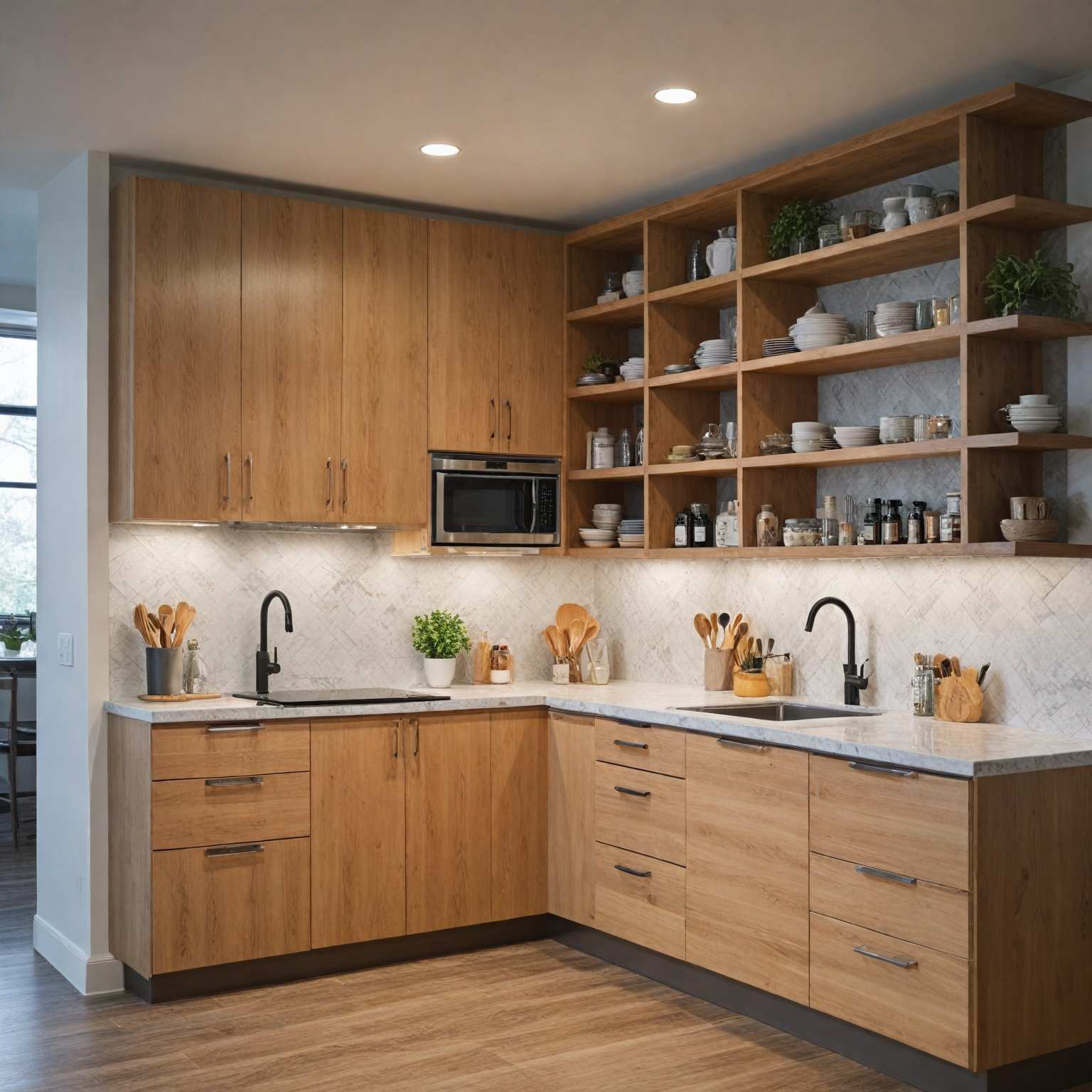
Vertical storage using shelf risers, wall-mounted racks, and pull-out shelves increases capacity and accessibility. Open shelving balances visibility and aesthetics, while corner solutions like Lazy Susans maximize awkward spaces. Frameless cabinetry and custom interiors further enhance storage efficiency.
Built-in waste systems and smart home devices enable organized, eco-friendly kitchens with real-time inventory management. Innovations such as vertical pull-out pantries, magnetic racks, and IoT-enabled refrigerators improve space use and reduce waste. DIY upcycled materials offer sustainable, affordable storage alternatives.
Materials and Technologies
Kitchen storage materials include moisture-resistant metal, sealed wood, plastic, and wrought iron, chosen for durability and style. Smart technologies incorporate motion sensors, motorized lifts, and connected pantries to streamline food management and reduce clutter. Sustainable materials and upcycled items support environmental responsibility while maintaining functionality and aesthetics.
Minimalist and Sustainable Storage Solutions
Minimalist kitchens use streamlined furniture like barstools instead of bulky tables and open or boxed-in shelving to maintain openness. Features such as lift-up shelves and shelf risers increase convenience and vertical space use. Designated zones and corner solutions improve workflow and accessibility, supporting a clutter-free environment.
Sustainable storage combines eco-friendly materials with smart design, encouraging recycling, composting, and reduced plastic use. Open storage and smart features like pull-out trays enhance efficiency while promoting environmental responsibility. Daily habits reinforcing organization sustain a functional, minimalist kitchen.
Maintenance, Common Mistakes, and Practical Examples
Maintaining organization requires habits like returning items promptly to designated spots and using drawer organizers to limit clutter. Regular decluttering and prioritizing essential items keep kitchens tidy and efficient. Avoiding overcrowding and neglecting storage aids like pantry bins or turntables prevents wasted space and frustration.
Flexible furniture use and adherence to design standards from organizations like NKBA help create adaptable, accessible kitchens. Sustainability-focused practices include replacing disposables with reusable alternatives, combining space optimization with eco-friendly living.