Highlights
- Comprehensive fall prevention integrates exercise, home safety modifications, and advanced technologies.
- Evidence-based solutions significantly reduce fall risks, improving health outcomes for older adults.
Summary and Causes of Falls
Falls are a leading cause of injury and disability among adults aged 65 and older, stemming from intrinsic factors like muscle weakness and balance impairments, and extrinsic factors such as environmental hazards. Effective prevention combines physical exercise to improve strength and balance with home modifications like non-slip surfaces and better lighting. Assistive technologies and wearable devices enhance fall detection and response. Standardized risk assessments, including the Johns Hopkins Fall Risk Assessment Tool (JHFRAT) and CDC’s STEADI program, help identify high-risk individuals. Challenges include optimizing adherence, integrating behavioral components, and addressing disparities in implementation.
Impact and Overview of Prevention Solutions
Falls cause significant injury, disability, and healthcare costs worldwide, with millions of older adults treated annually for fall-related injuries. Prevention strategies address physical function through exercises such as gait training, resistance, and balance work, alongside environmental adaptations like home safety assessments and assistive devices. In occupational settings, certified fall protection systems reduce risks. Combining these approaches supports safer mobility and reduces fall incidence.
Exercise and Physical Activity Programs
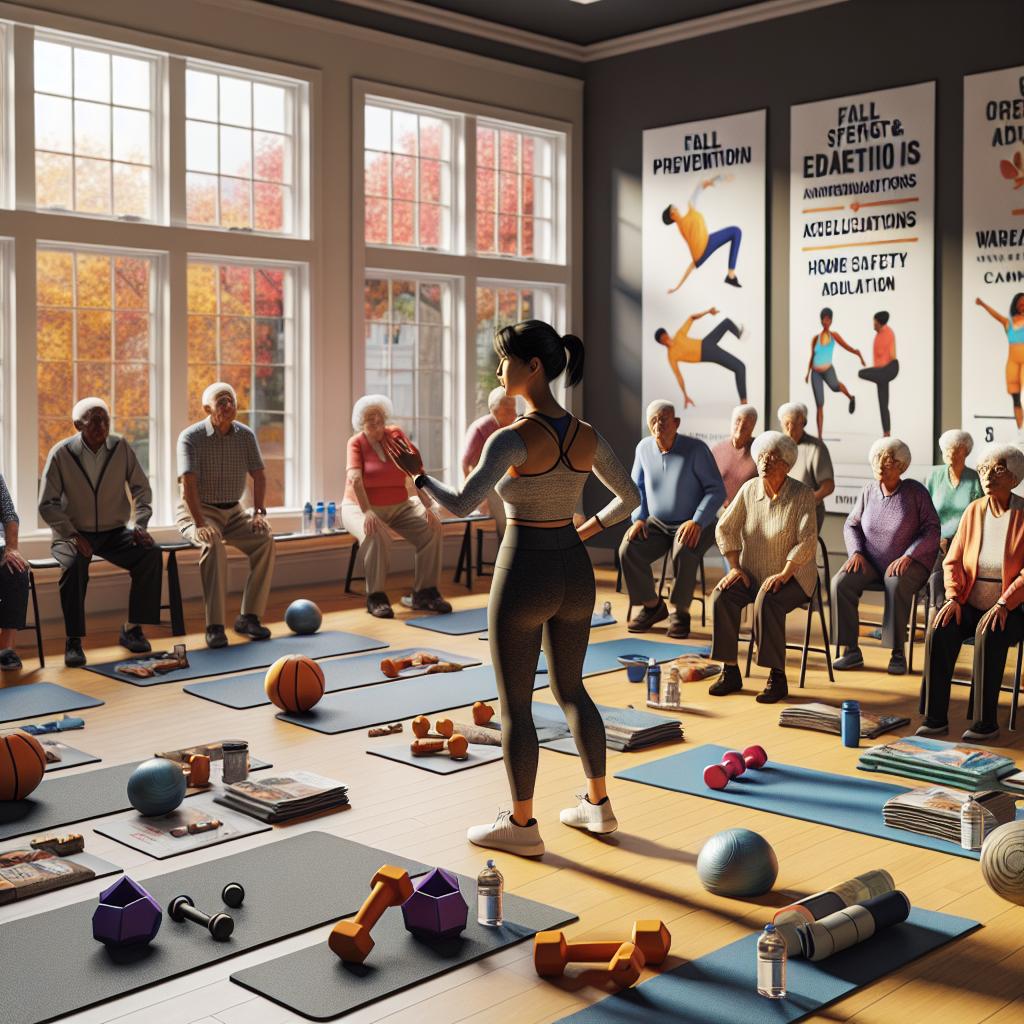
Exercise programs targeting strength, balance, and mobility are central to fall prevention. Multi-component programs combining these elements show the greatest effectiveness in reducing falls and injuries. Balance training improves postural control, and specific programs like the Otago Exercise Program have proven accessible and effective. While strength training alone is less impactful, tailored single-component interventions such as Tai Ji Quan may also be beneficial. Adherence depends on social support, healthcare guidance, and engaging delivery methods. Ongoing research supports adapting programs for diverse populations worldwide.
Clinical and Medical Interventions
Clinical fall prevention involves reducing environmental hazards and enhancing individual capabilities through assistive devices, pathway clearing, and behavioral modifications. Risk assessment tools vary in predictive accuracy, with combined use improving detection of high-risk individuals. The CDC’s STEADI initiative integrates screening, assessment, and tailored interventions, including medication review (STEADI-Rx). Multicomponent approaches involving home modifications, exercise, and education effectively reduce fall risk and promote social engagement. Education programs enhance awareness and self-efficacy, supported by frameworks like IPEST to ensure sustainability.
Technology-Based Solutions
Wearable devices and smart home technologies aid fall prevention by monitoring movements and providing alerts, improving safety especially when supervision is limited. Devices like Safe-T-Mate automatically detect falls or unsafe movements and notify caregivers. Smart lighting and AI sensors reduce environmental risks. Digital exercise programs offer scalable alternatives to in-person training, overcoming accessibility barriers. Government-supported education and home modification programs facilitate technology adoption, complementing established clinical frameworks.
Effectiveness and Comprehensive Programs
Eliminating environmental hazards remains one of the most effective fall prevention strategies, complemented by exercise interventions proven to reduce fall incidence by up to 50%. Comprehensive programs combine environmental, behavioral, and physical interventions tailored to individuals, emphasizing safety adaptations over major structural changes. Adherence is crucial and enhanced by initiating feasible modifications, social engagement, and case management. Multicomponent programs that integrate physical and social elements show superior outcomes in reducing falls among older adults.
Implementation Challenges and Future Directions
Successful implementation requires evidence-based tools, multidisciplinary teams, and personalized approaches to overcome barriers such as low self-efficacy and limited social support. Facilitators include peer influence and multimedia resources. Future research should focus on improving educational interventions, refining risk assessments, and validating home modification strategies. Long-term adherence to exercise remains a challenge, necessitating strategies to support sustained behavioral change. Advances in user-friendly monitoring technologies and development of context-specific assessment tools will enhance prevention efforts, especially for vulnerable populations.
The content is provided by Jordan Fields, Scopewires