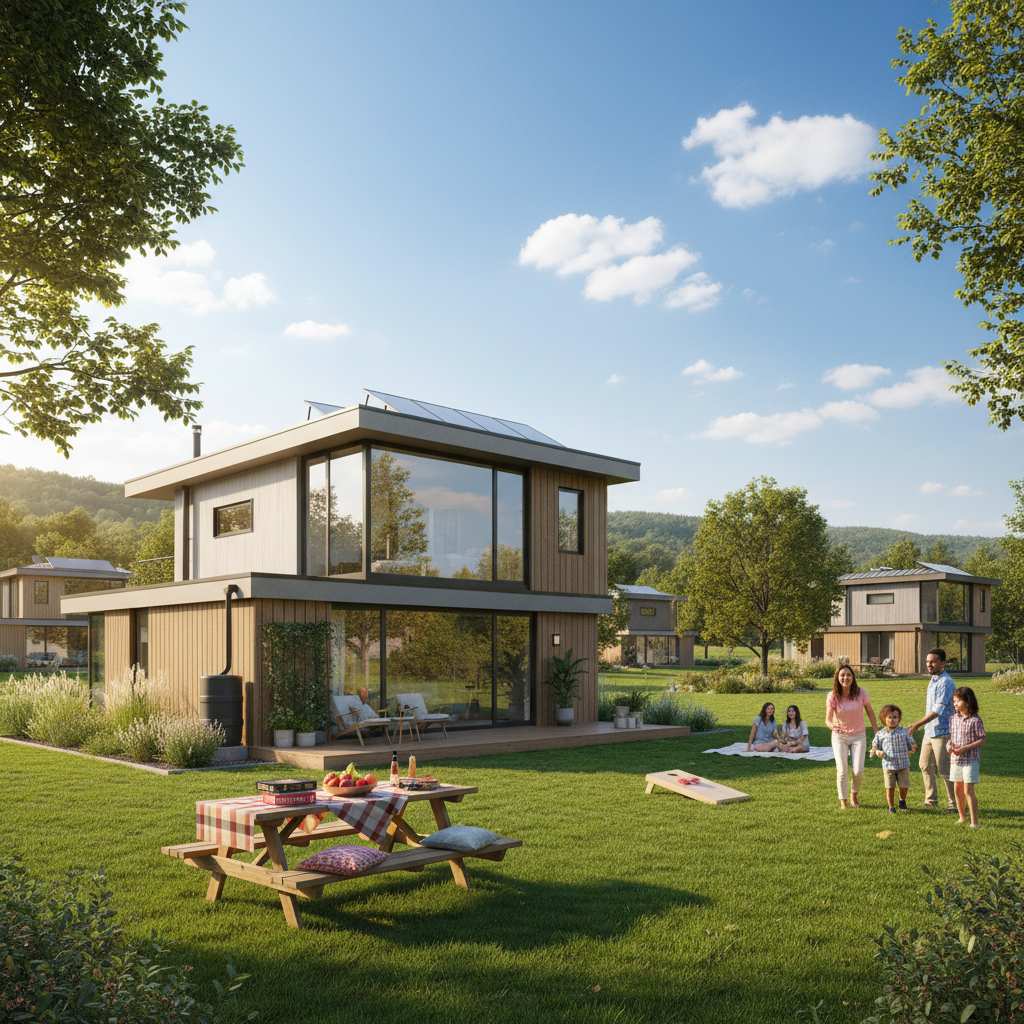
Highlights
- Prefabricated homes offer significant cost efficiency and reduced construction time for modern living.
- Modern advancements in prefab housing align with sustainability goals and energy-efficient designs.
Summary and History
Prefabricated homes, or prefab homes, are built from factory-made components assembled onsite. Originating centuries ago, such as in 16th-century India and 19th-century North America, prefab construction evolved through industrialization and wartime housing needs. It offers faster construction, cost savings, and quality control. Types include modular, panelized, manufactured, kit, tiny, container, and SIP homes. Prefabrication has addressed housing shortages post-World Wars and now benefits from digital design tools and eco-friendly materials, reducing emissions and waste. However, challenges remain, including environmental impacts from manufacturing and transport, stigmas about design limitations, regulatory hurdles, and financing difficulties. Prefab homes serve diverse needs from single-family to large affordable housing projects.
Types of Prefabricated Homes
Prefab homes vary by construction method and customization:
- Modular Homes: Factory-built sections assembled onsite, customizable, comply with residential codes.
- Panelized Homes: Factory-made large structural panels assembled onsite, balancing efficiency and design flexibility.
- Manufactured Homes: Built fully in factories, movable, HUD-compliant, cost-effective but less customizable.
- Kit Homes: Pre-cut materials delivered for onsite assembly, popular for DIY building.
- Tiny Prefabs: Small, affordable, energy-efficient homes under 400–500 sq ft.
- Container Homes: Converted shipping containers offering durability and modular design.
- SIP Homes: Panels with foam cores providing excellent insulation and reduced construction time.
- Other Methods: Timber framing and precast concrete panels add versatility in structure and aesthetics.
Design, Construction, and Materials
Components are factory-made then transported for onsite assembly, accelerating construction and reducing waste by up to 90%. Common materials include wood (for insulation), steel (for structure), and precast concrete (for durability). SIPs and mineral wool insulation improve energy efficiency. Emerging materials like bamboo offer sustainable alternatives. Quality control in factories ensures durability and compliance, using statistical methods to balance inspection and cost.
Advantages and Disadvantages
Advantages include rapid construction, cost savings from reduced labor and waste, enhanced quality control, energy efficiency through insulated materials, and design flexibility. However, challenges include the need to own land, potential delays from site preparation and permitting, environmental concerns over manufacturing and transport energy use, financing complexities requiring upfront payment, limited research on quality assurance, and lingering stigma over standardized designs affecting market acceptance.
Environmental Impact and Sustainability
Prefab homes use eco-friendly materials like recycled steel and sustainable wood, reducing construction waste and greenhouse gas emissions by about 53% compared to traditional buildings. They generate roughly half the lifetime CO2 emissions and support circular economy principles. However, embodied energy from manufacturing and transport can offset some benefits, making environmental performance variable depending on project specifics.
Applications and Modern Trends
Prefabrication addresses housing affordability and shortages, historically significant in post-war reconstruction and now applied in multifamily and modular projects worldwide. Technologies like BIM, 3D printing, and automation enhance efficiency and sustainability. Modern prefab homes meet green building standards and respond to labor shortages and climate challenges, offering affordable, fast, and environmentally responsible housing solutions.
Legal, Regulatory, and Market Considerations
Prefab homes must comply with local building codes and licensing, often treated as personal property (e.g., tiny homes on wheels require DMV registration). Quality control involves factory inspections and adherence to technical standards. Government programs have historically driven prefab adoption for emergency housing. The market has evolved from shell packages to fully finished homes, with prefab comprising about 3% of US single-family completions in 2020. Despite stigma, sustainability and technological advances are increasing acceptance and market share.
Case Studies
Post-WWII Britain used timber-framed prefab homes to address housing shortages, showcased in public exhibitions. Countries like Germany, Japan, and Scandinavian nations have high prefab housing shares, reflecting successful adoption. Research in China and comparative studies highlight environmental benefits and challenges. After decline in the 1960s due to standardization criticisms, prefab housing is resurging with improved customization and sustainability, illustrating its evolving role from emergency shelter to modern green housing.
The content is provided by Blake Sterling, Scopewires