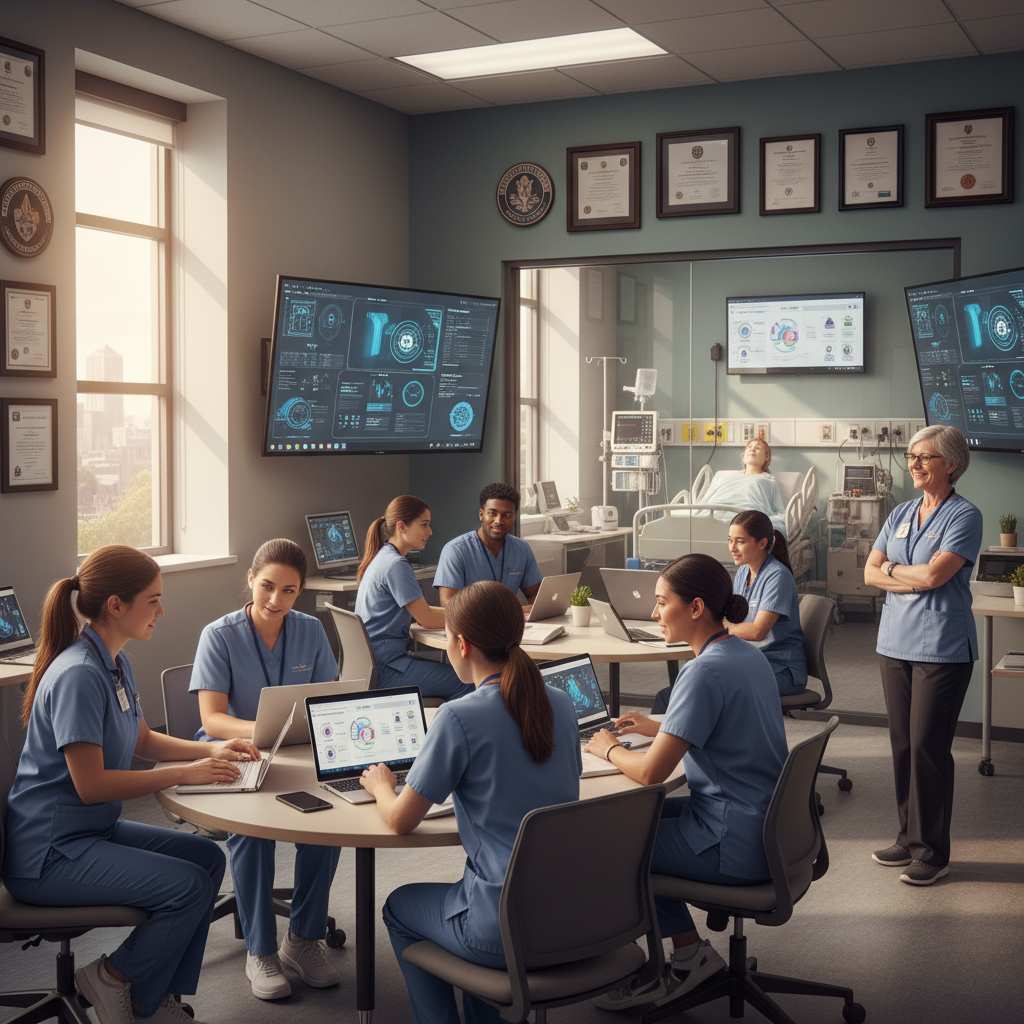
Highlights
- Specialized nursing courses enhance clinical expertise, preparing nurses for advanced roles in healthcare.
- Advanced education in nursing meets evolving demands and improves patient outcomes through specialized training.
Summary and Overview of Specialized Nursing Courses
Specialized nursing courses are advanced programs beyond the BSN degree, typically at the MSN or DNP level, that prepare nurses for focused roles like nurse practitioners, clinical nurse specialists, nurse-midwives, and nursing informatics specialists. These programs enhance clinical expertise and align with certification standards to meet evolving healthcare needs such as primary care shortages and mental health services. Despite challenges like financial costs and regulatory complexities, accreditation by bodies such as CCNE and ACEN ensures quality, while specialized curricula foster leadership and evidence-based practice. The field is evolving with flexible learning and technology integration to support specialized, patient-centered care.
Popular Specialized Nursing Fields
Common specialties include nurse practitioners (NPs), certified nurse-midwives (CNMs), clinical nurse specialists (CNSs), nursing informatics, medical-surgical nursing, nurse educators, and critical care. NPs often specialize in family health, psychiatric-mental health, or pediatrics. CNMs focus on women’s health and maternal care. CNSs provide expert consultation and lead practice improvements. Nursing informatics integrates clinical knowledge with data management to improve healthcare delivery. Certifications like CCRN and PALS are critical for certain specialties. Emerging fields such as travel nursing, nurse administration, and telemedicine offer dynamic opportunities.
Admission and Curriculum
Admission requires a BSN, one year of RN clinical experience, foundational courses in biology and microbiology, and sometimes specialty certifications like PALS. Candidates must meet professional competency standards. Curricula cover core subjects such as health assessment, pathophysiology, pharmacology, and disease management, with specialized tracks tailored to specific nursing roles. Leadership, evidence-based practice, and healthcare policy are integrated, especially at the doctoral level. Programs align with state and national regulatory requirements, including clinical hours and continuing education to maintain certification.
Accreditation and Certification
Accreditation by the Commission on Collegiate Nursing Education (CCNE) and the Accreditation Commission for Education in Nursing (ACEN) ensures program quality. The Accreditation Board for Specialty Nursing Certification (ABSNC) accredits certification programs, supporting high industry standards and recognition for designations like Magnet status. Prospective students should verify accreditation to align with career goals. Regional accreditation bodies also contribute to quality assurance.
Career Advancement and Paths
Specialized nursing courses enhance career opportunities, enabling nurses to pursue advanced roles with higher salaries and leadership responsibilities. Advanced degrees and certifications open pathways to APRN roles such as nurse practitioners, certified nurse-midwives, clinical nurse specialists, and nurse anesthetists. Beyond clinical roles, positions in nursing education, administration, and emerging specialties like informatics are available. Specialization fosters job satisfaction through greater impact on patient care and healthcare systems.
Challenges and Strategies
Barriers to specialized nursing education include the time and financial investment, regulatory requirements, workforce shortages, and diversity challenges. To overcome these, nurses benefit from clear career goal-setting, continuing education, leadership development, networking, and mentorship. Flexible online programs facilitate balancing work and study. Awareness of scope of practice and professional standards supports safe role expansion. Supportive policies and accessible educational pathways are essential to address these challenges.
Future Trends in Specialized Nursing Education
Specialized nursing education is expanding with advanced degrees and continuing education emphasizing critical thinking and specialized knowledge for complex clinical settings. Growing demand exists for nurse practitioners, educators, and informatics specialists who leverage data and AI to improve care. Online and flexible formats increase accessibility. Emerging specialties and interdisciplinary approaches will continue to shape nursing education, ensuring nurses meet modern healthcare demands.
The content is provided by Jordan Fields, Scopewires