Highlights
- Senior speed dating fosters authentic connections in a supportive, inclusive environment.
- Engage with peers your age to combat loneliness and enhance emotional well-being.
Summary and Overview
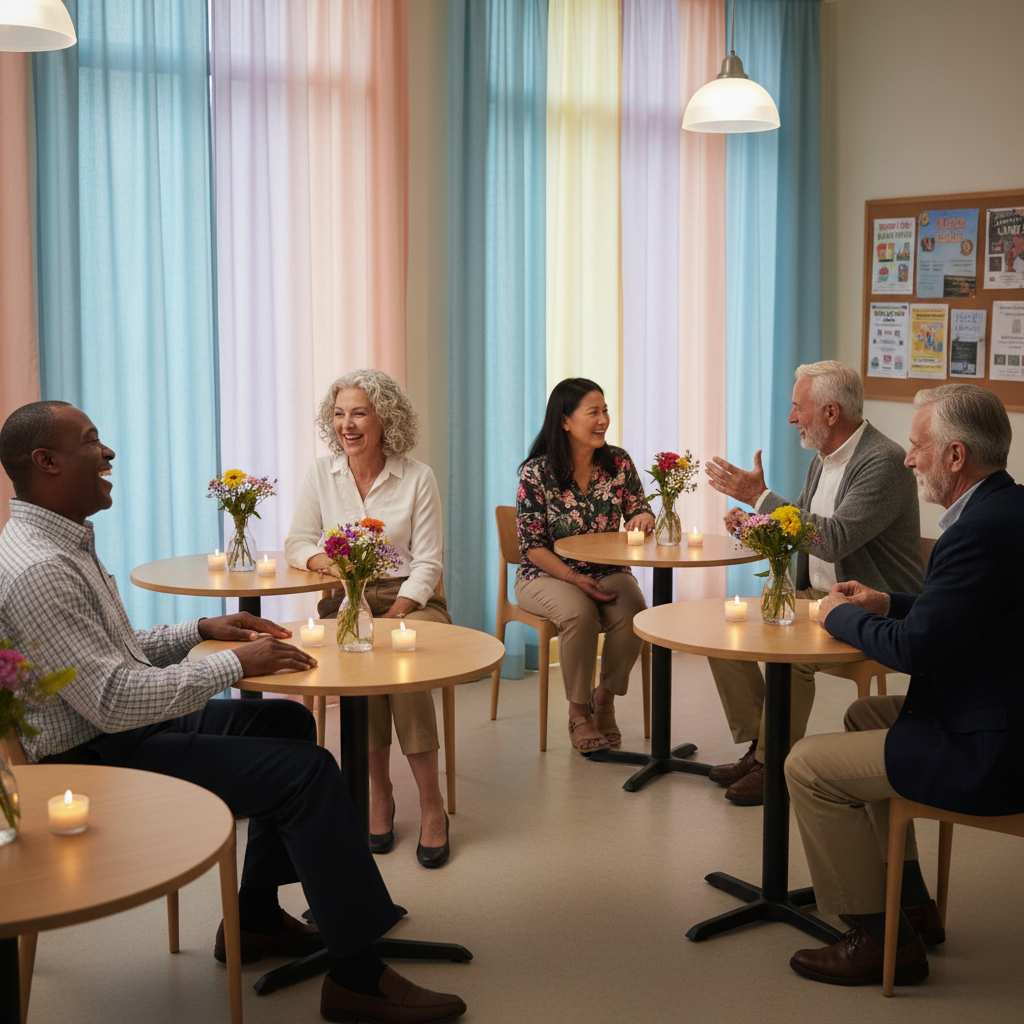
Senior speed dating is a structured, time-efficient social activity designed for adults aged 50 and above to meet multiple potential partners in a comfortable, low-pressure environment. Originating from the late 1990s speed dating concept, these events focus on face-to-face interactions, often held in quiet venues like community centers or private homes, with some available online to accommodate mobility or geographic constraints.
Participants engage in brief mini-dates lasting three to ten minutes, enabling them to quickly gauge compatibility while managing social anxiety. Preparation, including authentic presentation and conversation starters, enhances the experience. Organizers emphasize inclusivity and address emotional challenges such as fear of rejection and past relationship experiences. Despite some challenges, senior speed dating offers benefits like reducing loneliness and promoting social engagement.
Format, Venues, and Preparation
Events typically last about two hours, featuring 10 to 15 mini-dates where one group remains seated while the other rotates. Conversations last 3 to 7 minutes, allowing quick introductions without pressure. Venues are chosen for comfort and low noise, including private homes, community centers, or pubs, with online formats expanding accessibility.
Preparation involves selecting comfortable, confidence-boosting attire, grooming, and bringing notes to remember participants. Attendees are encouraged to be authentic, prepare friendly conversation starters about hobbies or travel, and practice active listening to foster connection during brief interactions.
During the Event and Communication Skills
Participants rotate through brief one-on-one conversations, often with 10 to 20 people, aiming to identify mutual interest. Conversations focus on shared interests and values in a relaxed setting. Effective communication includes preparing open-ended questions and practicing the 60/40 listening-to-speaking ratio to create engaging exchanges without overwhelming the limited time.
Post-event, mutual matches result in contact information exchange, facilitating further communication. Safety is emphasized, advising initial meetings in public places and cautious sharing of personal information. Combining in-person events with online platforms broadens connection opportunities.
Emotional Considerations and Overcoming Anxiety
Seniors may face emotional challenges such as past relationship baggage, fear of rejection, and anxiety about the speed dating format. Recognizing these issues and preparing through understanding the process and practicing conversations can reduce stress. Maintaining a positive mindset and focusing on enjoyment rather than performance helps ease nerves.
Event organizers foster welcoming, inclusive atmospheres with quiet, comfortable settings that promote belonging regardless of background or orientation. Strategies like focusing on connection rather than perfection and managing time effectively support participants in overcoming social anxieties.
Common Challenges and Post-Event Steps
Challenges include nervousness about the format, safety concerns, age-related stigma, and physical or cognitive limitations. Preparation, clear communication, and inclusivity help address these issues. Age requirements usually start at 50 or 55 with some flexibility, and physical accommodations are encouraged.
After events, participants receive contact details for mutual matches and are advised to engage in friendly, cautious follow-up communication. Prioritizing shared interests and values aids in developing meaningful relationships beyond the event.
Benefits and Formats
Senior speed dating offers efficient socializing, reducing loneliness and fostering genuine face-to-face connections without the pressures of traditional or online dating. It promotes emotional well-being and can improve physical health through companionship. Informal mixers often follow events, enhancing social engagement.
Both in-person and online formats exist. In-person events provide direct social interaction, while online options offer accessibility for those with mobility issues or remote locations. Combining both can expand social networks and dating opportunities for seniors.
Resources and Support
Numerous resources support seniors interested in speed dating, including community-hosted events and online platforms like OurTime, SilverSingles, and SeniorMatch.com. Senior centers also offer social activities that facilitate natural relationship building. Organizers and therapists emphasize creating supportive environments that address seniors’ unique preferences and life experiences, with counseling services available to assist with emotional aspects of dating.
The content is provided by Blake Sterling, Scopewires