Highlights
- Smart home technologies enhance security, convenience, and energy efficiency for homeowners.
- Embracing smart upgrades can significantly boost property value and reduce utility costs.
Summary and Benefits of Smart Home Improvements
Smart home improvements use technologies like thermostats, lighting, locks, cameras, and energy management systems to enhance security, convenience, energy efficiency, and property value. They allow remote monitoring and automation, reducing utility costs and improving comfort. Security devices such as smart locks and cameras provide real-time alerts, while energy management tools optimize consumption and support renewable energy integration. Smart entertainment systems and centralized control hubs simplify user interaction across platforms like Amazon Alexa and Apple HomeKit. Challenges include device compatibility, network security, and privacy, which industry standards like Matter aim to address. Gradual adoption and consumer education are key to maximizing benefits.
Categories and Popular Smart Home Devices
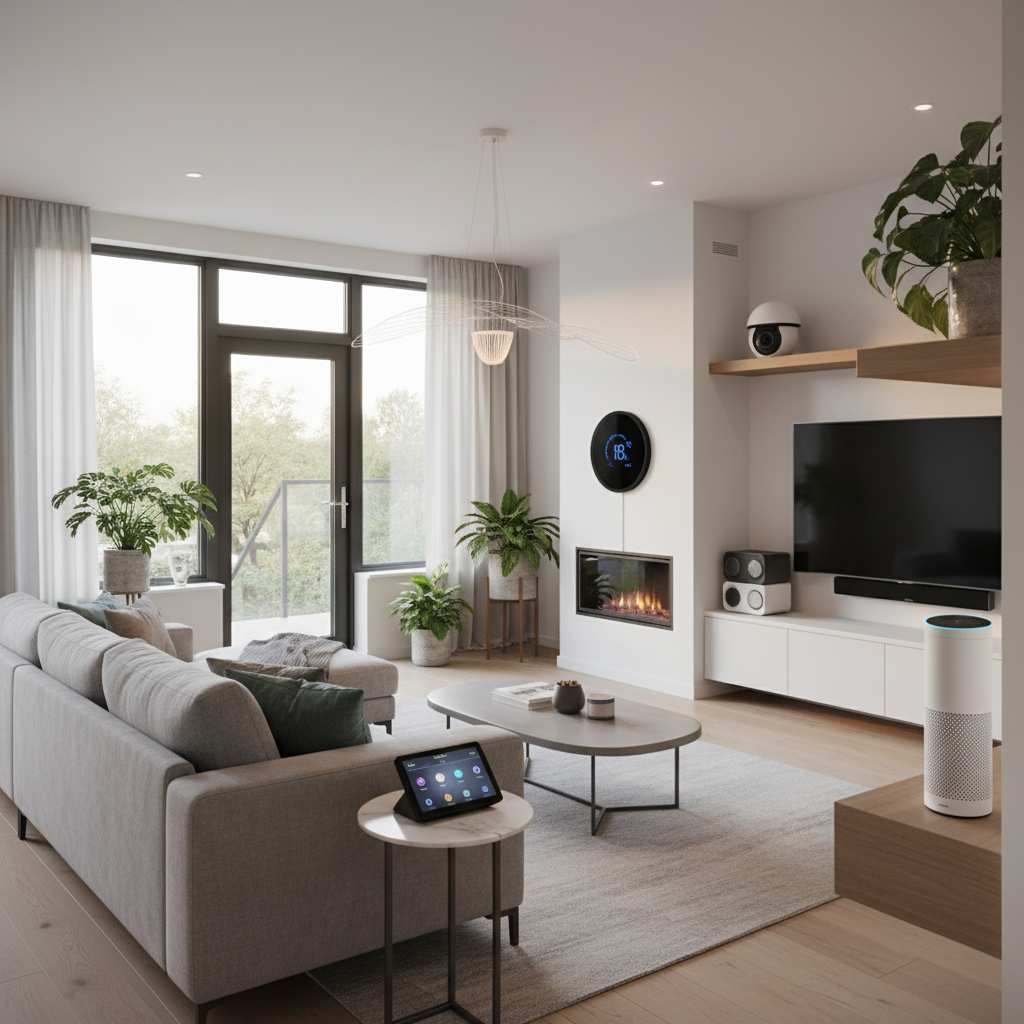
Smart home improvements fall into categories including security, energy management, lighting, climate control, and entertainment. Popular devices include smart doorbells, cameras, locks, thermostats, plugs, switches, and window coverings. Security devices offer remote monitoring and alerts; energy devices like Nest thermostats optimize heating and cooling; smart lighting provides energy-efficient control; climate control devices manage room temperatures; and entertainment systems offer wireless audio and centralized device management. Smart hubs integrate diverse devices and protocols to enable seamless control.
Tools and Installation Considerations
Installing smart home devices requires basic tools such as screwdrivers, wire strippers, pliers, and voltage testers for safety. Turning off power before installation is essential. Advanced tools enable more complex projects. Proper installation ensures device functionality and safety, while professional guidance can help with intricate setups.
Integration with Smart Home Ecosystems and Protocols
Smart home ecosystems like Amazon Alexa, Apple HomeKit, and Google Assistant provide centralized control of multiple devices. Universal standards like Matter improve interoperability across brands. Smart hubs, including cloud-free options, enhance local control and privacy. Communication protocols commonly used include Zigbee, Bluetooth Low Energy (BLE), Wi-Fi, Z-Wave, Thread, and Ethernet. Each serves specific roles in range, power consumption, and data rates. Selecting compatible devices and protocols is vital for a cohesive smart home system.
Security, Privacy, and Challenges in DIY Smart Home Setups
Smart home security systems integrate various devices to provide comprehensive protection, relying on encrypted Wi-Fi networks and multiple protocols. Strong passwords, firmware updates, and secure authentication are crucial to prevent breaches. DIY installations face challenges such as device incompatibility, complex wiring, and rapid expansion management. Mistakes can lead to malfunctions or safety risks. Emerging standards like Matter aim to simplify integration and improve reliability, but professional advice is recommended for complex setups.
Energy Saving Features and Smart Appliances
Smart devices contribute to energy savings by automating lighting, heating, and appliance use. Smart lighting and thermostats reduce energy consumption through scheduling and occupancy sensing. Appliances like refrigerators, dishwashers, and laundry machines offer remote monitoring and off-peak operation to lower costs. ENERGY STAR-certified Smart Home Energy Management Systems (SHEMS) coordinate multiple devices for optimized efficiency. These technologies support more sustainable energy use and align with smart grid developments.
Future Trends in Smart Home Technology
The future of smart homes emphasizes enhanced automation, interoperability, and energy efficiency. The Matter protocol enables secure, unified communication across devices and ecosystems. Smart appliances with grid-responsive features and improved mobile connectivity will become standard. Increased user education and gradual device integration will help avoid common pitfalls, ensuring more effective and user-friendly smart home environments.
The content is provided by Blake Sterling, Scopewires