Highlights
- Mobile brake repair offers convenience and affordability by bringing services directly to you.
- Choosing reputable mobile services ensures quality repairs and enhances customer satisfaction.
Summary and Overview
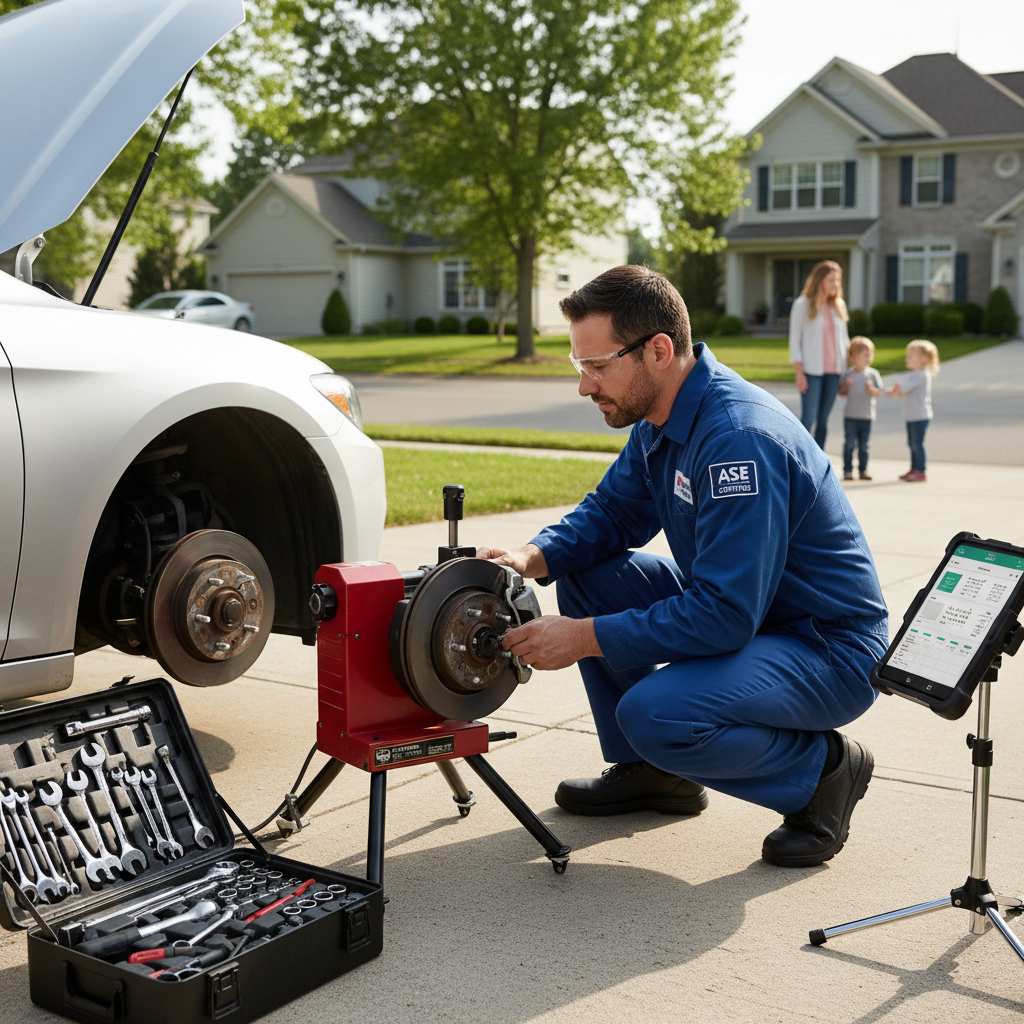
Mobile brake repair involves certified technicians traveling to a customer’s location to perform brake inspections, maintenance, and repairs. This service offers a convenient, often more affordable alternative to traditional shops by eliminating the need for vehicle transport. Technicians use portable tools to handle services like brake pad and rotor replacement, fluid exchange, and diagnostics for most passenger vehicles. While larger vehicles and complex components may require specialized facilities, mobile repair is growing due to time savings, transparent pricing, and precise scheduling. ASE-certified mechanics provide warranties comparable to brick-and-mortar shops, ensuring quality and reliability. Customers should select reputable providers to avoid substandard parts or repairs. The industry is expected to expand with advances in technology and training, blending traditional expertise with innovative logistics.
Service Process and Tools
Customers book appointments online, often with same- or next-day options, and receive narrow one-hour arrival windows and real-time technician tracking. Upon arrival, a free brake inspection is conducted, followed by a clear explanation of findings and repair options without obligation. Technicians carry essential portable tools—such as brake bleeders, caliper piston reset tools, and lubricants—to perform brake pad, rotor, and fluid services according to manufacturer standards. They stay updated with evolving automotive technology to effectively service modern braking systems.
Benefits and Common Services
Mobile brake repair offers convenience by servicing vehicles at home or work, saving travel and wait times. Lower overhead costs enable pricing 10%–20% below dealerships, with transparent upfront estimates. ASE-certified technicians deliver quality repairs backed by warranties, often two years or 24,000 miles on pads and rotors. Common services include brake pad and rotor replacement, brake shoe replacement, fluid exchange, leak repair, and comprehensive inspections to identify issues early and prevent costly damage.
Customer Experience and Operational Management
Appointments typically take 30 to 90 minutes, with timely communication such as technician arrival notifications. Customers value repair quality, honest pricing, and good service, while avoiding unusually low-cost providers who may compromise quality. Clear communication about brake issues and repair scope enhances satisfaction. Operationally, scheduling and route optimization software minimize travel time and delays. Employing full-time, ASE-certified technicians ensures consistent service quality, with technicians equipped for on-the-spot repairs across major systems.
Technical Challenges and Industry Outlook
Technicians face challenges from advancing vehicle technologies and diverse brake systems, requiring continuous education and updated diagnostic skills. Safety during repairs and selecting appropriate brake materials are critical. Mobile services balance repair complexity with available tools, relying on effective communication to ensure accurate diagnosis and resolution. Compared to traditional shops, mobile repair offers greater convenience, upfront pricing, and time savings. Looking ahead, the industry will integrate advanced scheduling, broaden service offerings, and emphasize technician expertise to maintain trust and quality amid growing demand.