Highlights
- The U.S. is expanding its military based on the 2026 National Defense Strategy for strategic dominance.
- Increased deployments emphasize a commitment to deter aggression in the Indo-Pacific and Western Hemisphere.
Summary
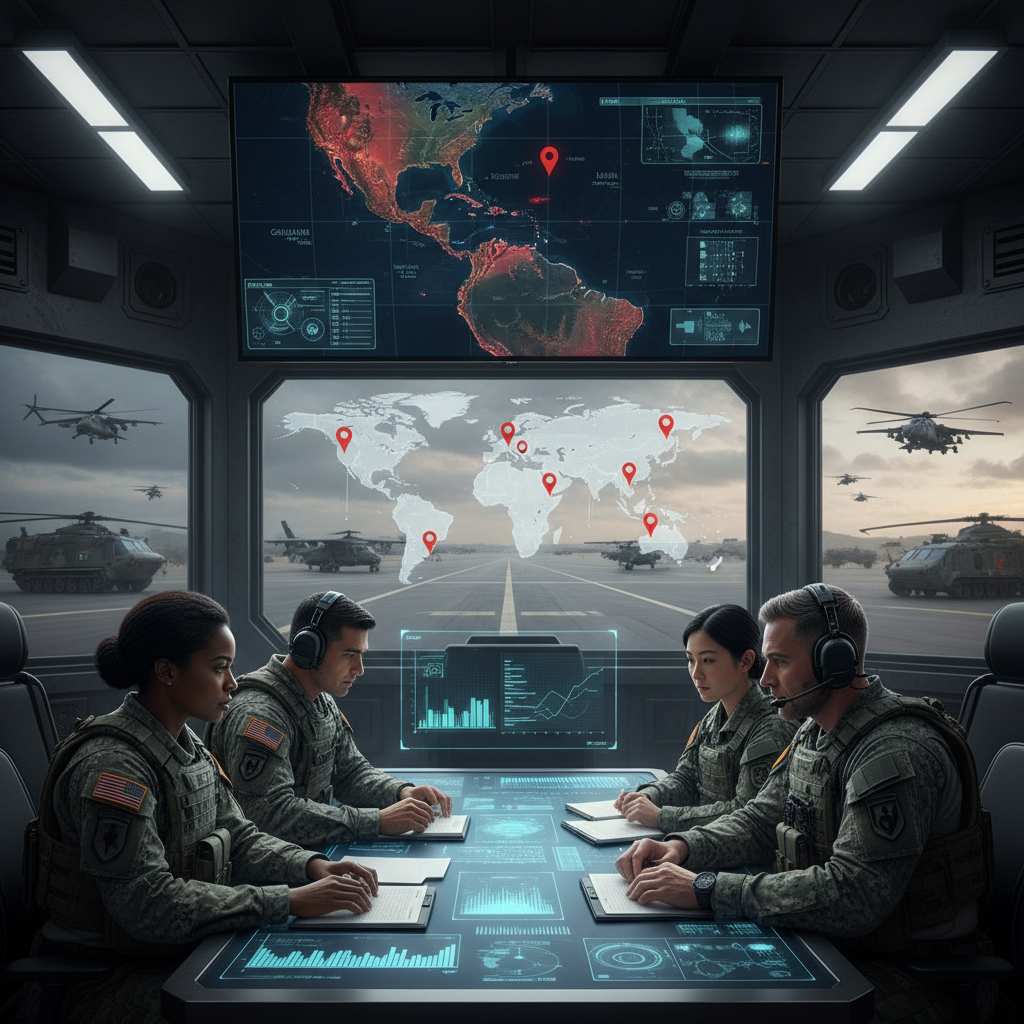
The United States military underwent a significant expansion and restructuring in 2026 to address global tensions and security challenges. This movement reinforced homeland defense, restored dominance in the Western Hemisphere, and aimed to maintain strategic advantages, particularly in the Indo-Pacific. Force realignments and infrastructure modernization included the establishment of the Army Western Hemisphere Command and a deployment of around 11,000 troops to the Caribbean, reflecting the strategic outlook indicated in the 2026 National Defense Strategy.
Strategic Objectives
The 2026 military posture emphasizes building alliances and expanding global engagement rather than pursuing unilateral military strategies. Economic security remains a priority, with military power expected to safeguard access to critical resources. A particular focus is on the Western Hemisphere, with efforts to restore military dominance and secure the U.S. homeland. Collaborative security measures, such as joint military exercises, are being enhanced to bolster defense in key regions.
Military Expansion Overview
In 2026, the U.S. military restructured under the Army Transformation Initiative, converting existing brigades into more responsive units. The budget supports 31 Active Component Brigade Combat Teams and activates new commands like the U.S. Army Western Hemisphere Command to improve regional coordination. Alongside significant troop deployments to the Caribbean, infrastructure improvements are underway to facilitate operational capabilities. The emphasis remains on maintaining a strong military presence in both the Caribbean and the Indo-Pacific.
Major Events and Operations in 2026
Significant military operations in 2026 included the intervention in Venezuela under Operation Absolute Resolve, which escalated U.S. involvement in the region. Increased military presence in the Middle East aimed to deter Iranian aggression amid escalating tensions. Domestically, the National Guard’s deployment to address crime and immigration concerns reflects a growing reliance on military support for law enforcement, despite legal and ethical challenges.
Policy and Legislative Framework
Key legislative measures, including the FY 2026 appropriations bills and the National Defense Authorization Act, outline the funding and strategic priorities shaping U.S. military expansion. These frameworks indicate a shift towards more accountable and member-driven budgeting processes, emphasizing military readiness and defense modernization while navigating political balances between congressional oversight and executive authority.
Geopolitical Factors Influencing Expansion
Geopolitical dynamics such as rising tensions in the Western Hemisphere and the Indo-Pacific strongly influence U.S. military expansion. The significant troop surge in the Caribbean is positioned as a response to regional threats, notably from Venezuela. Concurrently, Taiwan’s ongoing disputes and North Korea’s military actions highlight the complex security landscape that necessitates adaptive U.S. military strategies across multiple regions.
Role of Alliances and Partnerships
The military expansion is underpinned by the reliance on existing alliances and partnerships, particularly within NATO and the Indo-Pacific region. Joint exercises and defense engagements exemplify a commitment to regional security, emphasizing interoperability among allies. The focus remains on enhancing defense cooperation while maintaining U.S. military presence across critical global theaters.
Challenges and Controversies
The expansion has faced domestic political disputes regarding military spending and operational oversight, reflecting broader ethical debates over U.S. alliances with non-democratic regimes. Additionally, military expansions have intensified concerns about potential escalations in regions like the Korean Peninsula and the Taiwan Strait, raising the specter of direct conflict with major powers. These complexities highlight the difficulties in aligning national security objectives with the principles of democratic governance.
Future Prospects and Implications
The future military posture suggests a focus on enhancing regional stability and homeland security, with potential long-term bases in strategic locations. While shifts in force structure aim to address emerging threats, sustaining military presence amid fiscal constraints poses challenges. The United States’ strategy reflects a commitment to balancing global security needs with evolving defense priorities, acknowledging the multifaceted nature of modern military engagements.
The content is provided by Jordan Fields, Scopewires