Highlights
- Bank-owned boats offer below-market prices, but buyers must carefully inspect their condition.
- Understanding the repossession process and legal implications is crucial when considering a purchase.
Summary
Bank-owned boats are vessels repossessed by banks after borrowers default on secured loans. These boats are usually sold “as-is” at prices below market value, allowing buyers to potentially acquire quality vessels at reduced costs. However, buyers should be aware of the boat’s condition and the complexities involved in legal ownership transfer, lien clearance, and inspections, which necessitate working with knowledgeable professionals to ensure a sound investment.
Overview of Bank-Owned Boats
Bank-owned boats can vary in condition and age, with some being well-maintained models, while others may require repairs. Buyers should assess the vessel’s true value, considering factors like age and market trends, to inform their purchase decisions. Additionally, borrowers facing repossession have various legal rights they may need to navigate, making legal counsel essential for protecting their interests during such processes.
Legal and Procedural Aspects of Repossession
Repossession laws differ by state, impacting borrowers’ rights and options. In many instances, borrowers can remedy defaults through reinstatement or redemption options, but these depend on the loan agreement and applicable laws. Borrowers should understand these rights to effectively address potential repossession, ideally with the guidance of legal professionals.
Types and Categories of Bank-Owned Boats
Bank-owned boats primarily include vessels repossessed due to loan defaults, but they can also encompass boats taken for other legal reasons. While some repossessed vessels are in good condition, others may require significant repairs, often sold below market value. The variety in age, condition, and reason for repossession creates a diverse market that can attract budget-conscious buyers.
Acquisition Process by Banks
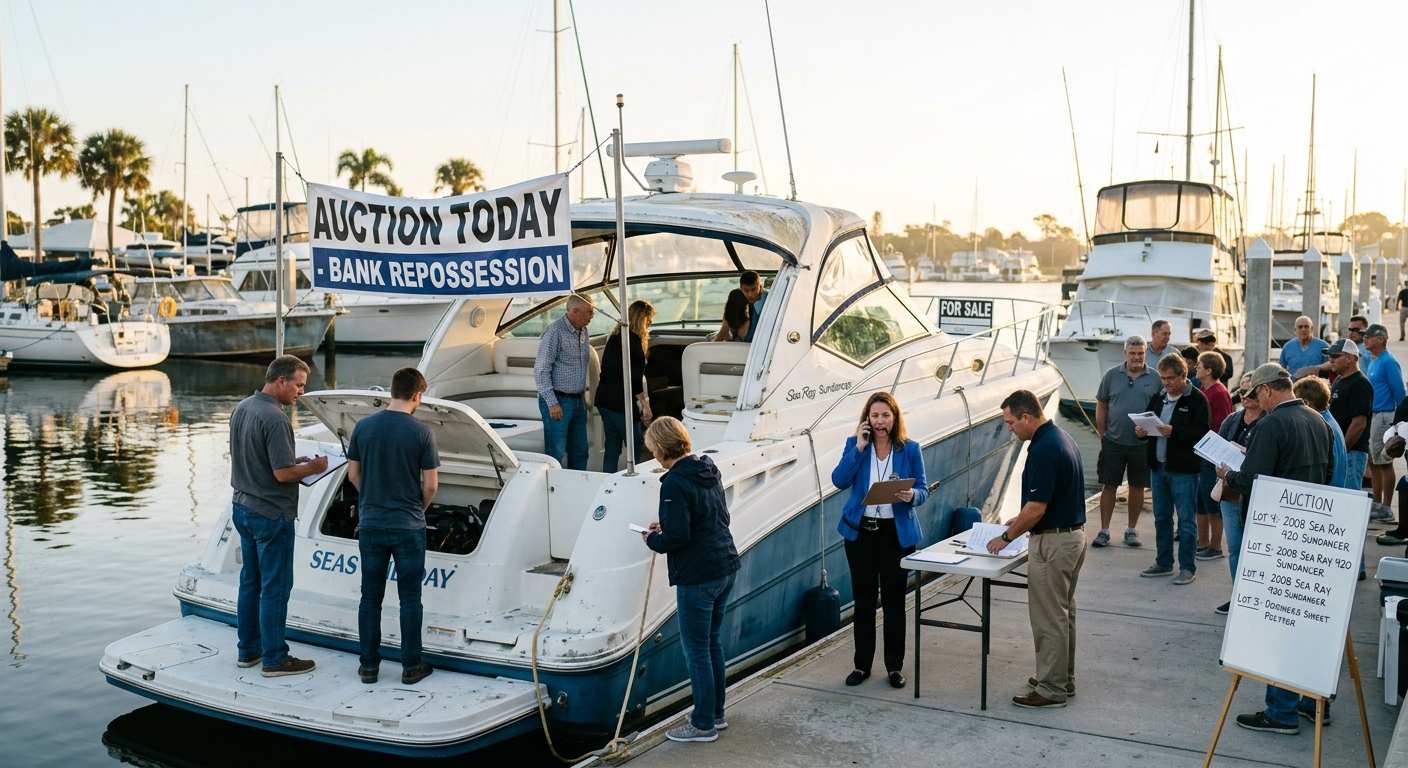
The repossession process begins when a borrower defaults, prompting the bank to reclaim the vessel through specialized repossession firms. Upon recovery, the boat is sold via auctions or online platforms. The seller must notify the borrower of the sale, and if the sale doesn’t cover the debt, the borrower may be responsible for the remaining amount, underscoring the need for thorough legal understanding during this phase.
Sales and Liquidation of Bank-Owned Boats
Bank-owned boats are typically sold “as-is” through various auction formats. Buyers should prepare for limited seller concessions, as financial institutions focus on quick sales to minimize holding costs. Ensuring proper title verification and completing necessary paperwork efficiently are critical steps for successful transactions involving repossessed boats.
Challenges and Considerations in Liquidation
Liquidating bank-owned boats poses challenges such as potential condition issues from previous neglect that can affect valuation. Buyers should also familiarize themselves with potential legal implications, especially regarding bankruptcy scenarios, as negligence in proper procedures can lead to complications for both sellers and buyers. Market conditions further influence the sale dynamics, where timing and awareness of trends can be crucial for successful transactions.
Buyer Considerations and Market Demographics
Buyers considering bank-owned boats can find lower prices but must be vigilant regarding the boat’s maintenance history. Understanding additional costs beyond the sale price is critical, as fees for title changes and potential financing can add to the overall expense. Knowing how to navigate negotiations with banks or asset managers is essential for both securing favorable terms and ensuring compliance with legalities specific to repossession sales.
Advantages and Disadvantages of Buying Bank-Owned Boats
Buying bank-owned boats often presents the advantage of lower purchase prices aimed at expediting sales. However, the downside may include the vessels being sold with unknown maintenance issues or hidden defects, requiring buyers to approach these transactions with caution and thorough due diligence.
Market Trends and Industry Overview
The bank-owned boat market is influenced by factors like boat types and economic conditions, impacting demand and pricing. Legal frameworks governing repossession and sales can vary, affecting how lenders and borrowers interact. Prospective buyers should be prepared to act swiftly, as repossessed boats typically sell quickly, highlighting the need for readiness in the purchase process.
Resources and Further Information
Individuals exploring bank-owned boats should leverage available resources, such as reviewing loan agreements and seeking legal counsel for clarification on rights and procedures. Engaging experienced brokers can streamline title transfer and financial negotiations. Additionally, conducting thorough inspections prior to purchase—even if inspections are limited—will provide buyers with vital information for making informed decisions and ensuring successful ownership transitions.
The content is provided by Avery Redwood, Scopewires