Highlights
- Demodex mites can exacerbate skin conditions; discover effective treatments for lasting relief.
- Early diagnosis of Demodex infestation is key; explore advanced diagnostic methods today.
Summary
Demodex mites are common inhabitants of human skin, primarily identified as Demodex folliculorum and Demodex brevis. Although these mites are generally harmless, their overgrowth can cause demodicosis, characterized by symptoms such as itching and inflammation. Factors such as host immune status, skin environment, and certain medications can promote mite proliferation, leading to exacerbation of conditions like rosacea and blepharitis. Diagnosis is typically through microscopic examination methods, while treatment focuses on controlling mite populations with acaricidal agents and maintaining skin health.
Taxonomy and Biology
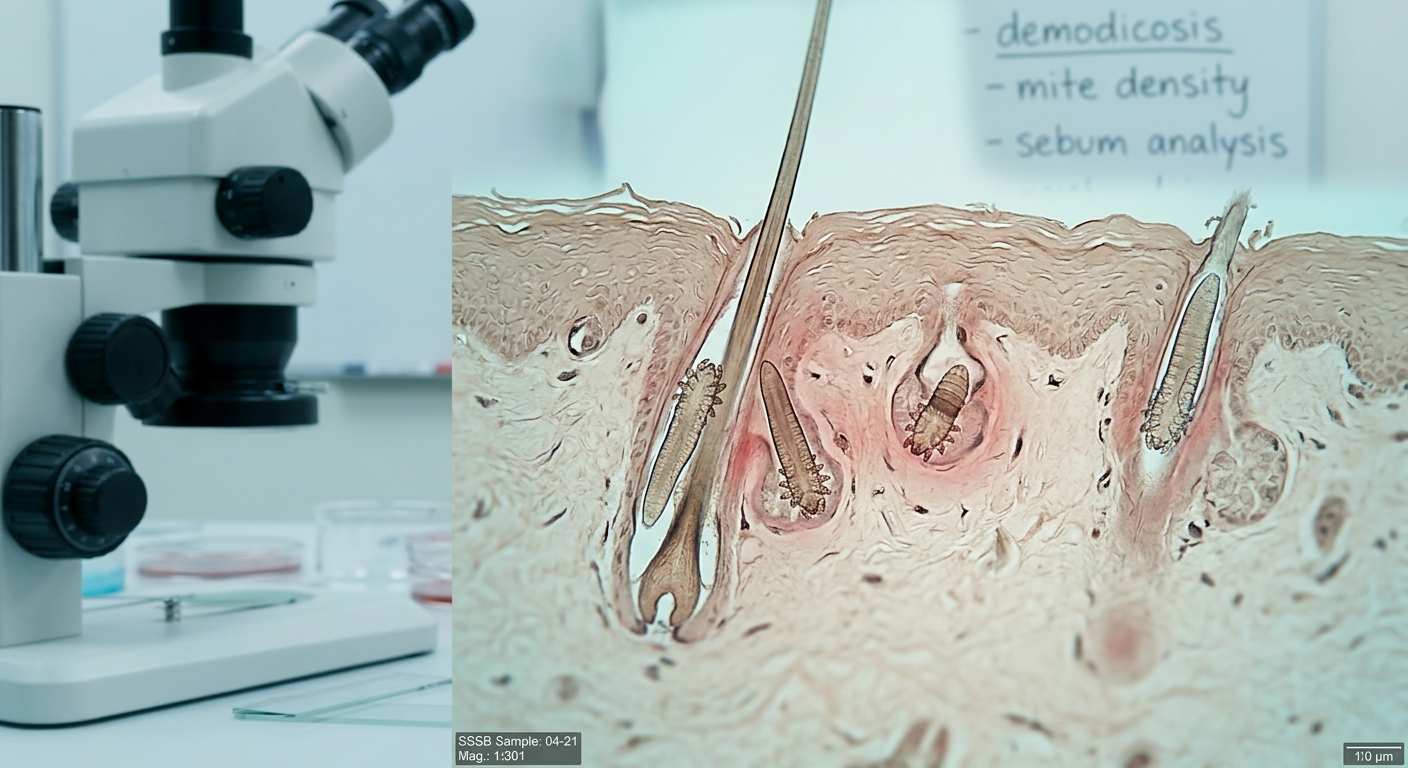
Demodex mites belong to the genus Demodex within the family Demodecidae. Two key species in humans, D. folliculorum and D. brevis, are primarily found in hair follicles and sebaceous glands, respectively. The life cycle of these mites spans approximately three to four weeks, with increased prevalence noted in older adults and a higher infestation rate in males. Understanding the taxonomy can aid in developing better diagnostic and treatment methods for demodicosis.
Causes and Risk Factors of Infestation
Risk factors for Demodex infestation include age, immunosuppression, and various skin conditions such as rosacea and diabetes. Environmental factors impacting skin moisture and pH also play a role, as well as lifestyle aspects like stress and obesity. Individuals with disrupted skin microbiomes or those using immunosuppressive medications may experience increased mite density and subsequent symptoms, indicating the need for careful management of these contributing factors.
Demodex Mite Population Dynamics
The population dynamics of Demodex mites are influenced by the host’s skin environment and immune status. Changes in factors like skin pH and moisture can enhance mite proliferation, potentially leading to skin disorders. There is also a complex relationship between Demodex and the skin microbiome, with disruptions linked to conditions such as acne and rosacea, highlighting the need for balanced skincare strategies.
Clinical Presentation
Demodex infestations manifest as various dermatological and ocular symptoms, including itching, redness, and lesions. The association between mite density and symptom severity suggests that higher concentrations can lead to more pronounced clinical presentations, particularly in conditions like rosacea and blepharitis. Understanding these symptoms is essential for effective diagnosis and treatment planning.
Diagnostic Methods
Diagnosis of Demodex infestations typically involves microscopic examination techniques, with Standardised Skin Surface Biopsy (SSSB) being more sensitive than Direct Microscopic Examination (DME). Newer methods, such as online symptom questionnaires, offer a preliminary assessment tool, but clinical reliance on proven microscopic techniques remains essential for accurate detection.
Immunological Response
The immune response to Demodex involves local inflammatory mechanisms rather than broad systemic changes. Toll-like receptors, particularly TLR-2, activate local immune responses, leading to increased inflammation in response to mite presence. This localized immune activity underscores the importance of understanding host-mite interactions for effective treatment strategies.
Treatment Strategies
Managing Demodex infestations focuses on reducing populations through acaricidal agents, with oral ivermectin used for severe cases. While treatment can initially worsen symptoms due to mite die-off reactions, sustained therapy is key for resolution. Caution is advised in using topical immunosuppressants, which may exacerbate mite growth. A balanced skincare routine that maintains skin health while targeting mite populations is essential for effective treatment.
Prevention
Preventing Demodex overpopulation emphasizes maintaining a healthy skin environment by avoiding harsh skincare practices that could disrupt the microbiome. Regular symptom monitoring and gentle skincare, especially for sensitive individuals, can help manage mite density effectively. Seeking professional advice when symptoms arise ensures targeted treatment and prevention strategies.
Complications and Associated Conditions
While typically harmless, Demodex mites can lead to complications like rosacea and blepharitis due to increased inflammation. Conditions such as seborrheic dermatitis may also be exacerbated by mite overgrowth. Identifying risk factors that contribute to demodicosis is crucial for effective management and to mitigate potential long-term consequences.
Research and Future Directions
Ongoing research aims to clarify the role of Demodex mites in skin health and disease. The lack of reliable culture methods for these mites presents challenges in studying their biology and pathogenicity. Future research should focus on molecular interactions, immune responses, and the relationship between Demodex and the skin microbiome to develop more effective treatment options and improve patient outcomes.
The content is provided by Jordan Fields, Scopewires